
16 min walk
Prasat Leak Neang
- Must see
- Historic monument
Language · 11 published
Place of worship · Siem Reap
ប្រាសាទមេបុណ្យខាងកើត

| Monday | 07:00 – 17:30 |
|---|---|
| Tuesday | 07:00 – 17:30 |
| Wednesday | 07:00 – 17:30 |
| Thursday | 07:00 – 17:30 |
| Friday | 07:00 – 17:30 |
| Saturday | 07:00 – 17:30 |
| Sunday | 07:00 – 17:30 |
Checked 2026-08-31 · Source
Read from the OpenStreetMap access tags; anything not listed has no tag recorded.
Set the group type to family in the planner and the day window contracts to about three quarters of a solo day.
East Mebon is a tenth-century Khmer temple in Angkor Archaeological Park, built during the reign of King Rajendravarman II. It was dedicated to Shiva and commemorated the king’s parents. The temple originally stood on an island in the East Baray, a vast reservoir that is now dry. That former setting explains why the monument feels unusually exposed: its terraces rise from the open baray landscape rather than from dense forest. East Mebon is a compact temple-mountain whose surviving brick towers, laterite terraces and guardian sculptures make it a distinctive stop on Angkor’s eastern circuit. No. East Mebon and Pre Rup are separate temples with similar architectural styles from the same period, located approximately 1.5 kilometers apart.
Checked 2026-09-02 · Source
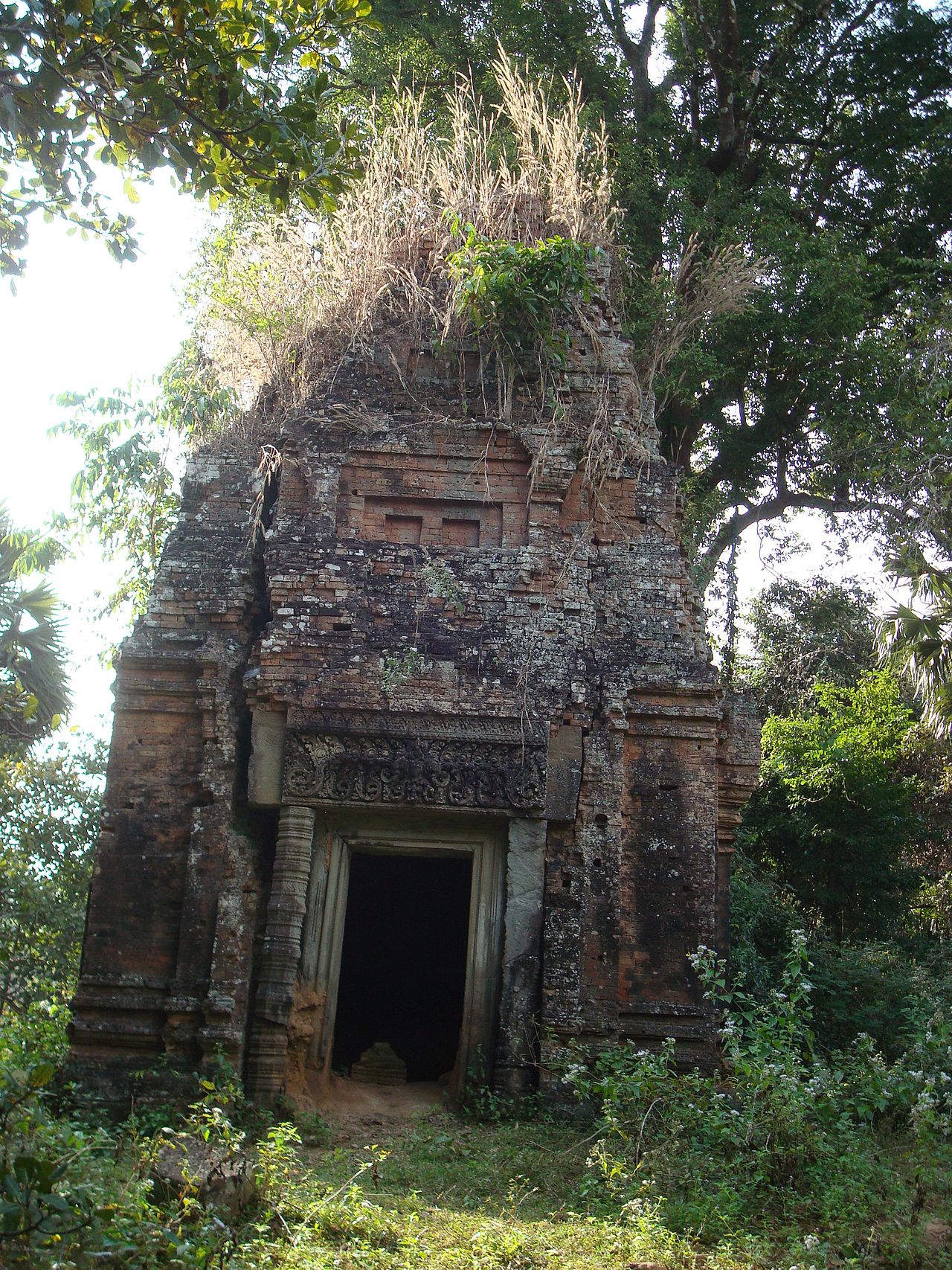
The monument is arranged on three laterite terraces, with five brick towers forming the principal composition: one central sanctuary above and four subsidiary towers around it. Sandstone lions guard the stairways, while large elephant sculptures occupy the terrace corners and provide the site’s most immediately recognisable detail. Look also for carved lintels and false doors on the towers. The fabric is weathered, and restoration is part of the monument’s present appearance, but the layout remains easy to read. Walking around the levels lets you compare the brick, sandstone and laterite elements at close range.
Checked 2026-09-02 · Source
Allow about 45 minutes to one hour for East Mebon itself. That gives enough time to walk around the terraces, examine the elephants and lions, and pause for the brick towers and lintels. A more deliberate visit takes longer, especially if you attempt the upper level carefully or want architectural photographs from several sides. Pairing East Mebon with nearby Pre Rup creates a practical temple stop of roughly 90 minutes to two hours, because the two monuments are only about 1.5 kilometres apart but are separate sites.
Checked 2026-09-02 · Source
The recorded visiting schedule is 07:00 to 17:30 every day. Early morning is especially comfortable at this exposed monument, with softer light on the eastern façades and less accumulated heat on the terraces. Late afternoon can also suit photography, although the site remains open and sun-exposed for much of the day. November to March is generally the more predictable travel season, while wet-season visits may bring humidity or rain. Because shade is limited, a morning visit is a sensible choice for visitors sensitive to heat.
Checked 2026-09-02 · Source
Entry is covered by the Angkor Archaeological Park ticket system rather than by a separate East Mebon admission. The recorded official admission is 37 USD per person. Buy or validate the applicable Angkor pass through Angkor Enterprise and carry it when visiting the temple circuit. The pass covers access to multiple temple sites according to its terms, so East Mebon should be planned as one stop within a wider Angkor day. Ticket products and conditions can change, but this guide records the supplied official fare rather than an inferred local price.
Checked 2026-09-02 · Source
East Mebon is approximately 1.5 kilometres east of Pre Rup inside Angkor Archaeological Park. The park road network makes it reachable by tuk-tuk, motorbike, bicycle or car. Many visitors include it on the Grand Circuit or combine it with Pre Rup and other eastern temples. Cycling is feasible for experienced riders, but the distance, heat and open roads matter more here than the short temple-to-temple measurement suggests. A tuk-tuk or car arranged through accommodation or a Siem Reap operator provides straightforward return transport after the circuit.
Checked 2026-09-02 · Source
The stairways are steep, narrow and worn, so use deliberate footing on both ascent and descent. Access to the upper terraces is limited rather than step-free, and the exposed setting offers little shade. Bring drinking water, sun protection and suitable footwear. Uneven laterite and scattered debris may make the surfaces difficult for children, older visitors or anyone with reduced mobility. Keep clothing and behaviour respectful at this religious monument, and do not treat the elephants or other carved elements as climbing surfaces. Allow extra time if the heat slows your pace.
Checked 2026-09-02 · Source
The elephant sculptures are the strongest visual signature of East Mebon, particularly when photographed with the upper brick towers behind them. The open former baray setting gives wide views and uncluttered sky, while the three-tiered terraces create strong horizontal lines. Morning light can work well on the east-facing structures; later in the day, look for deeper shadows under the lintels and around the tower openings. A wide lens suits the full composition, while a shorter telephoto lens helps isolate carved details without needing to climb every level.
Checked 2026-09-02 · Source
No. They are separate Khmer temples from a similar period, located approximately 1.5 kilometres apart within Angkor Archaeological Park.
Visitors can attempt the upper level, but the stairways are steep, narrow and worn. Careful footing is needed for both ascent and descent.
No. Entry uses the Angkor Archaeological Park admission system, and the recorded official fare is 37 USD per person rather than a separate East Mebon ticket.
No. The temple has limited tree cover and an exposed former reservoir setting, so sun exposure can be significant, especially around midday.
Its large elephant sculptures at the terrace corners and its original island position within the East Baray make East Mebon especially distinctive among Angkor’s temples.
They are original Khmer-period works, although the monument has also undergone restoration and the sculptures should be understood as part of a conserved historic site.
Loading the interactive map…
The interactive map could not be loaded.

Last updated:
Source: OpenStreetMap contributors, Wikidata ·