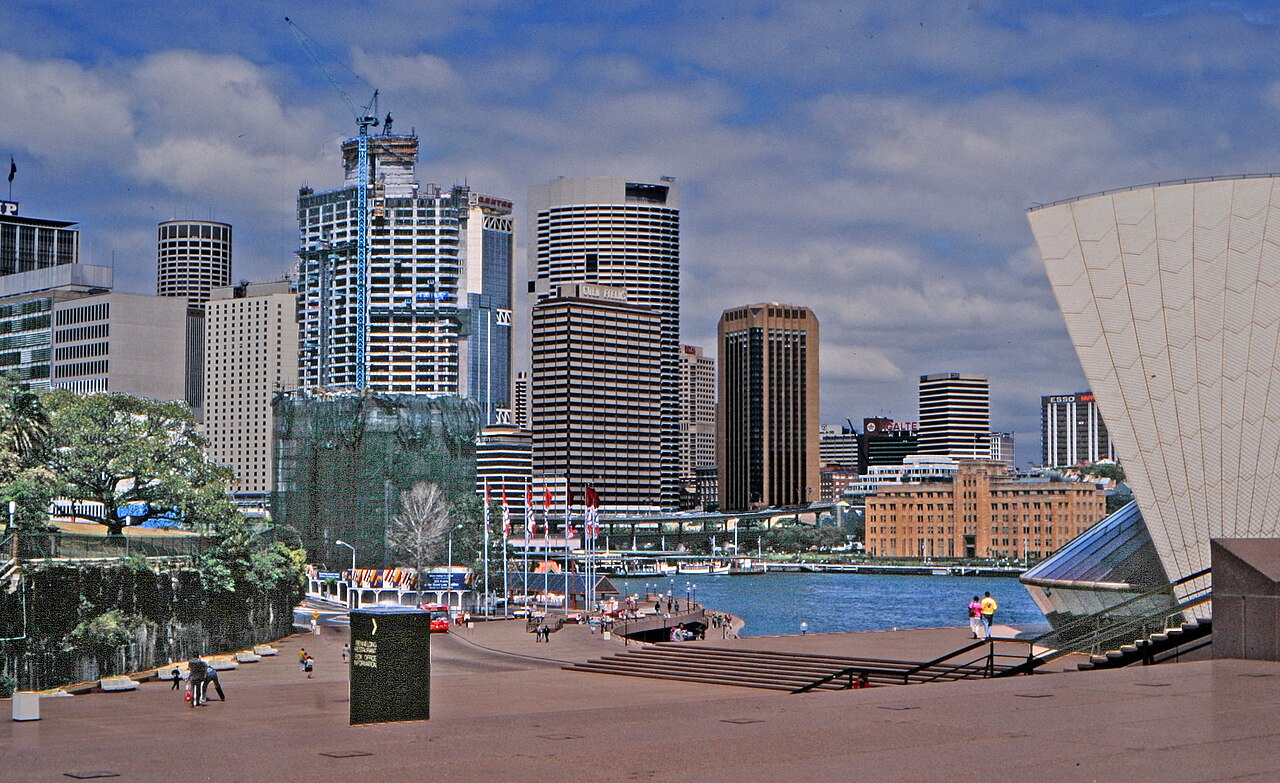
Sydney Opera House
Sydney Opera House is a performing-arts complex at Bennelong Point, where its white sail-like roof shells project into Sydney Harbour beside Circular Quay.
- Must see
- Historic monument
Language · 11 published
City guide · Australia
Sydney is divided by a drowned harbour, steep headlands and long coastal corridors. Circular Quay anchors the Opera House, The Rocks and harbour crossings, while the central business district runs south toward Town Hall and Darling Harbour. Bondi and the eastern beaches occupy a different corridor; Manly begins with a harbour crossing. The city's geography makes transport choices part of the sightseeing plan.
Reviewed by Elena Voss · SSMTour Travel Editor
Set your days, your pace and the hours you actually want to be out. The planner works around closing days and travel time, and leaves room to eat.
Ranked by importance — sitelinks, pageviews and heritage status, not editor preference.
67 places match
Category
Typical visit duration
Interests
Sydney Opera House is a performing-arts complex at Bennelong Point, where its white sail-like roof shells project into Sydney Harbour beside Circular Quay.
The Sydney Harbour Bridge is a steel through arch bridge spanning Sydney Harbour, connecting the Sydney central business district with the North Shore. Opened in 1932, it carries rail, vehicular, bicycle and pedestrian traffic.
Bondi Beach is Sydney’s broad, crescent-shaped Pacific shoreline, where a long sweep of sand meets surf, sandstone headlands and the busy Bondi promenade.
Royal Botanic Garden
The Royal Botanic Garden Sydney is a major botanical garden occupying a prominent harbourside position in the Sydney central business district.
The Rocks is a historic precinct on the western fringe of Sydney Cove, forming the birthplace of European settlement in Australia. Its sandstone warehouses, laneways, and terraces survive from convict-era foundations through maritime commercial periods to contemporary adaptive reuse.
Art Gallery of New South Wales is a major public art museum beside the Domain, combining historic collections with contemporary exhibition spaces.
Taronga Zoo Sydney is a major zoological garden located on the shores of Sydney Harbour in the suburb of Mosman. Established in 1916, it occupies a prominent harbourside position offering views toward the Sydney Opera House and Sydney Harbour Bridge.
Darling Harbour is Sydney’s waterfront public precinct around Cockle Bay, where a broad promenade connects working harbour views with pedestrian bridges, Tumbalong Park, Darling Quarter, museums and event venues.
Manly Beach is a broad ocean beach reached through the Manly peninsula, combining surf frontage with a harbour-to-ocean visitor route.
The Australian Museum is Sydney’s natural-history and cultural museum on William Street, opposite Hyde Park and St Mary’s Cathedral. Its collections and exhibitions connect Australian wildlife, geology and biodiversity with First Nations cultural material.
Circular Quay is a harbourfront precinct and major transport interchange in Sydney, New South Wales. It serves as the primary ferry terminal for Sydney Harbour, connecting passengers to locations including Manly, Taronga Zoo, and Parramatta.
Museum of Contemporary Art
Museum of Contemporary Art Australia occupies the former Maritime Services Board building on Circular Quay West, beside Sydney Harbour. Its galleries bring contemporary art into direct conversation with the waterfront, ferry movement and the Opera House across the quay.
Barangaroo Reserve
Barangaroo Reserve is a landscaped harbour headland built around sandstone terraces, foreshore paths, and views across western Sydney Harbour.
Sydney Tower Eye is Sydney’s elevated observation attraction, reached through Westfield Sydney in the central business district.
The Queen Victoria Building is a heritage-listed late nineteenth-century building in the Sydney central business district. Designed by architect George McRae and completed in 1898, it occupies an entire city block.
Hyde Park is a 16-hectare public park in the centre of Sydney, stretching between the city’s museum and civic precincts. Governor Macquarie proclaimed and named it in 1810, and the City of Sydney identifies it as Australia’s oldest park.
St Mary's Cathedral
St Mary's Cathedral is a significant ecclesiastical structure in Sydney, recognised as a meaningful visitor destination within the documented city scope. The cathedral represents an important example of Gothic Revival architecture in Australia.
Mrs Macquarie's Chair is a historic carved sandstone bench located on a peninsula in Sydney Harbour. It was hand-carved by convicts in 1810 for Elizabeth Macquarie, the wife of Governor Lachlan Macquarie, who enjoyed sitting and viewing the harbour.
The Australian National Maritime Museum is a major cultural institution located in Sydney's Darling Harbour. It preserves and presents Australia's maritime heritage through exhibitions, vessels, and programs.
SEA LIFE Sydney Aquarium
SEA LIFE Sydney Aquarium is a large public aquarium situated in Darling Harbour, a waterfront entertainment precinct in central Sydney.
WILD LIFE Sydney Zoo
WILD LIFE Sydney Zoo is a wildlife attraction located in the Darling Harbour precinct of Sydney. The facility presents Australian native animals in themed habitat zones designed for visitor engagement and education.
The Chinese Garden of Friendship is a traditional Chinese garden located in Sydney. It was established as a symbol of friendship between Sydney and its sister city in China, Guangzhou.
Sydney Observatory is a heritage astronomical observatory and museum located in The Rocks area of Sydney. Established in 1858, it occupies a prominent position on Observatory Hill near the harbour.
The State Library of New South Wales is Australia's oldest library, established in 1826. It occupies a prominent position on Macquarie Street in Sydney's central business district, adjacent to the Royal Botanic Garden.
Capitol Theatre is a heritage-listed theatre located in Sydney, Australia. The building occupies a prominent position within the city's entertainment district. Originally constructed in the early twentieth century, the theatre has undergone various transformations throughout its history.
Cadman's Cottage
Cadmans Cottage is a historic sandstone building in The Rocks, beside Sydney Cove. Built during Sydney’s early colonial period, it is one of the city’s oldest surviving residential buildings.
Susannah Place Museum preserves a terrace of four houses built in 1844 in Sydney’s The Rocks. The site presents working-class domestic life across more than 150 years, showing how successive families lived within a compact urban terrace.
The Museum of Sydney is a history museum near Circular Quay on the site of Australia’s first Government House, built in 1788. It explores Sydney’s colonial foundations, Indigenous history and continuing urban development through archaeology, objects, art and multimedia.
Hyde Park Barracks is a historic Georgian building on Macquarie Street beside Hyde Park in central Sydney. Built in the early nineteenth century, it first housed transported convicts and later served as an immigration depot and government offices.
The Mint
The Mint is a heritage building in Sydney associated with Australia’s colonial period and the early development of the city. Its sandstone construction reflects the architectural character of historic Sydney.
Angel Place Birdcages, also known as Forgotten Songs, is an outdoor artwork in Sydney’s central business district. Suspended cages fill the pedestrian laneway overhead, while recorded birdcalls recall species that once lived around the Tank Stream valley before European settlement.
White Rabbit Gallery is a contemporary art museum in Chippendale, Sydney, founded by Judith Neilson to present her collection of twenty-first-century Chinese art. The gallery occupies a converted four-storey knitting factory, giving the visit an industrial architectural setting.
Brett Whiteley Studio is a gallery and studio museum in Sydney dedicated to the life and work of Australian artist Brett Whiteley. The preserved working environment offers a more intimate encounter than a large museum collection.
Elizabeth Bay House is an 1830s colonial residence built for Alexander Macleay, the colony’s colonial secretary, in Sydney’s inner east.
Nielsen Park is a heritage-listed public park situated within Sydney Harbour National Park in the eastern suburbs of Sydney. The park occupies a prominent harbour foreland position in Vaucluse, offering sheltered swimming beaches and picnic grounds.
Watsons Bay is a harbourside suburb and visitor destination in eastern Sydney, New South Wales. It sits at the southern head of the entrance to Sydney Harbour, offering views across the water to the North Head.
Hornby Lighthouse is a heritage-listed active lighthouse situated at the southern entrance to Sydney Harbour, on the tip of South Head in Watsons Bay.
Rose Bay Beach is a harbour beach in Sydney’s eastern suburbs, facing the waters of Port Jackson. It offers a coastal pause within the metropolitan city, with space for swimming, walking, and relaxing beside the harbour.
Bronte Beach is a coastal beach within the Sydney metropolitan area, located in the eastern suburbs. It forms part of the sequence of beaches along Sydney's southeastern coastline.
Tamarama Beach is a compact crescent on Sydney’s eastern suburbs coast, positioned between Bondi Beach and Bronte Beach. Steep sandstone headlands press close around the sand, making the Pacific feel immediate and powerful.
Coogee Beach is a sandy ocean beach in Sydney’s eastern suburbs, facing the Tasman Sea. It is a straightforward place for swimming, sunbathing, shoreline walks and relaxed coastal views.
Clovelly Beach is a compact coastal inlet in Sydney’s eastern suburbs. Its narrow, channel-like shape differs from a broad surf beach: concrete platforms and promenades follow rocky edges around the water.
Bare Island Fort is a preserved coastal defence structure on a rocky island in Botany Bay, reached from La Perouse by a narrow causeway. Built in the late nineteenth century, it forms part of Sydney’s military and maritime heritage.
Kamay Botany Bay National Park protects coastal landscapes and culturally significant places around Botany Bay in Sydney. Its two principal visitor areas are Kurnell and La Perouse.
Royal National Park is a large protected landscape on Sydney’s southern edge, stretching between eucalyptus forest, sandstone country, coastal heath and the Pacific shoreline. Established in 1879, it is recognised as one of the world’s oldest national parks.
Cockatoo Island is the largest island in Sydney Harbour, positioned where the Parramatta and Lane Cove rivers meet. It forms part of the Australian Convict Sites UNESCO World Heritage property.
Fort Denison is a heritage-listed former penal site and defensive facility located on a small island in Sydney Harbour, New South Wales.
Shark Island is a small harbour island within Sydney Harbour National Park. Its name refers to historical maritime associations, while the visitor experience centres on vegetation, rocky shoreline, picnic areas and views across the harbour.
North Head Sanctuary is a protected coastal headland area located at the northern entrance to Sydney Harbour. The site forms part of the traditional lands of the Gayamagal people and holds significant Aboriginal cultural heritage.
Freshwater Beach is a sandy coastal cove in Sydney’s Northern Beaches, set between two headlands. Its sheltered shape makes it a natural place for swimming, surfing, sunbathing and a relaxed seaside walk.
Palm Beach is a coastal suburb and beach at the northern end of Sydney's Northern Beaches peninsula. A narrow isthmus places the Pacific Ocean on one side and Pittwater on the other, giving the area two contrasting waterfronts.
Ku-ring-gai Chase National Park is a protected national park located north of Sydney. It encompasses significant natural landscapes including bushland, waterways, and Aboriginal heritage sites.
West Head Lookout is a scenic vantage point in Sydney, positioned within Ku-ring-gai Chase National Park on the city's northern peninsula. The lookout offers panoramic views across Broken Bay, Pittwater, and toward the Central Coast.
Parramatta Park is a large public park in Parramatta, western Sydney, beside the Parramatta River. It combines open lawns, mature trees, garden areas, walking paths and colonial heritage associations.
Elizabeth Farm is a historic house museum in Sydney's Parramatta area and one of Australia's oldest surviving European buildings. John and Elizabeth Macarthur's house was constructed in 1793 and is closely connected with the beginnings of Australia's wool industry.
Experiment Farm Cottage is a heritage property in Parramatta, western Sydney, connected with Australia’s early colonial agricultural history. The cottage represents the period when European settlers experimented with farming and food production around the developing colony.
Brickpit Ring Walk
Brickpit Ring Walk is an elevated circular walkway over a former industrial brickpit in Sydney. The route lets visitors look down into the excavated landscape while remaining on a maintained structure above it.
Blaxland Riverside Park is a public park situated along the Parramatta River in Sydney. It forms part of the broader Sydney Olympic Park precinct, developed from the site of the 2000 Olympic Games.
Sydney Fish Market is a working seafood market and visitor destination near Blackwattle Bay in Sydney. Fishmongers, retailers and food vendors serve local shoppers and travellers looking for fresh seafood or prepared meals.
Raging Waters Sydney
Raging Waters Sydney is a commercial outdoor water park in the greater Sydney region. It is designed around water-based recreation, giving visitors a destination for swimming, slides, and active leisure during suitable seasonal conditions.
Featherdale Wildlife Park
Featherdale Sydney Wildlife Park is a wildlife park located in the Greater Sydney region, offering visitors opportunities to encounter native Australian animals. The facility focuses on Australian fauna including kangaroos, koalas, wallabies, and various bird species.
Sydney Zoo is a zoological park in the Sydney metropolitan area, designed around animal exhibits, wildlife education, and conservation engagement. It gives visitors a dedicated setting for seeing animals while learning about the natural world.
Shrine of Saint Anne Catholic Church
St Maroun's Cathedral
Source: OpenStreetMap contributors, Wikidata ·
Begin at Circular Quay for the Opera House, The Rocks and the harbour edge, then continue south through the city only if the day's museums fit. Darling Harbour forms a western loop from the central grid. Give Bondi and the eastern beaches their own route, and make Manly a ferry-led outing. The Blue Mountains are a regional rail day, not an addition to a central afternoon.
Checked 2026-08-26
Transport for NSW coordinates metro, trains, buses, ferries and light rail, but each mode answers a different piece of Sydney's geography. Ferries serve harbour destinations, rail handles long urban and regional corridors, and light rail or buses connect areas away from heavy rail. Walk within The Rocks, the central grid or one beach district. Check live service information before relying on a harbour or outer-suburban return.
Checked 2026-08-26
Sydney has no single officially recorded stay length. Cover Circular Quay, The Rocks and the central city first, then budget separate time for an eastern-beaches route, Manly or a regional excursion.
Group the Opera House and The Rocks around Circular Quay. Continue through the central grid to Darling Harbour on another loop, and avoid combining Bondi with Manly merely because both are coastal names.
Choose among metro, train, bus, ferry and light rail according to the corridor. Transport for NSW publishes the current journey and disruption information; harbour crossings should be checked like any other scheduled service.
Circular Quay, The Rocks and much of the central grid connect well on foot. Harbour water, steep approaches and the distance to the beaches prevent the wider destination from becoming one continuous walk.
Manly depends on a harbour crossing, the eastern beaches use a different urban corridor, and the Blue Mountains require a regional journey. Check the final workable return for whichever outward trip is chosen.