-06352.jpg)


-06354.jpg)
-06355.jpg)
-06356.jpg)
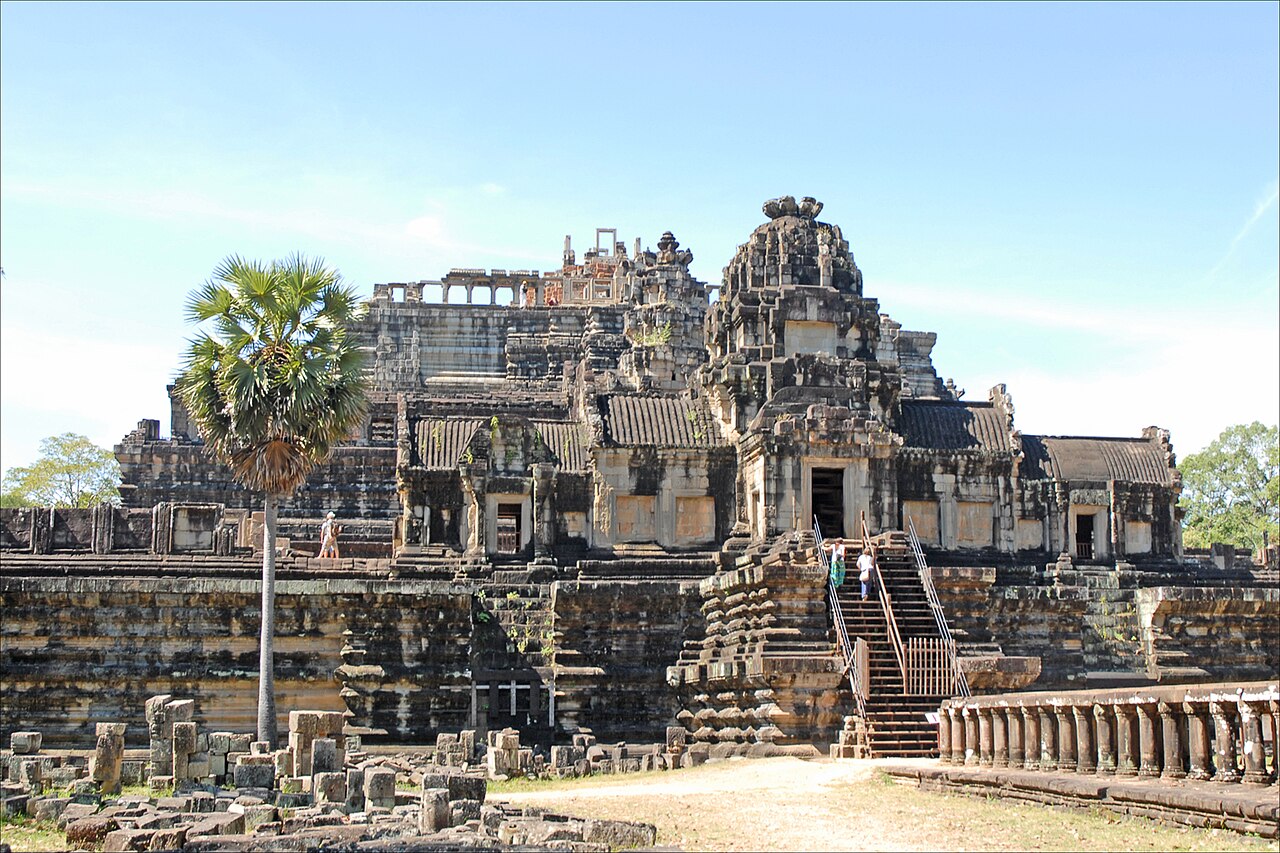
6 min walk
Baphuon
- Must see
- Place of worship
Language · 11 published
Historic monument · Siem Reap
ប្រាសាទបាយ័ន

Bayon stands as the central temple of Angkor Thom, the walled city built during the Khmer Empire. Constructed in the late twelfth or early thirteenth century, it is distinguished by its multitude of serene stone faces carved into tower peaks, believed to represent Avalokiteshvara or perhaps the king himself. The temple marks a shift from Hindu to Mahayana Buddhist devotion in Angkorian state religion. Its labyrinthine galleries and compressed architectural mass create an intimate, almost enigmatic atmosphere distinct from the grand horizontal sweep of nearby Angkor Wat. The structure has undergone extensive restoration by Cambodian and international teams.
Checked 2026-08-26
The temple's upper terrace features approximately fifty-four towers, many bearing the famous four-faced visages gazing toward cardinal directions. Bas-reliefs on outer and inner gallery walls depict historical events, daily Khmer life, and mythological narratives in remarkable detail. Scenes include market transactions, fishing, cockfighting, and military processions alongside Hindu and Buddhist cosmological stories. The central sanctuary originally housed a Buddha figure later modified during subsequent Hindu resurgence. Narrow passages and steep stairways connect levels, creating a maze-like interior. Later additions and alterations complicate reading the temple's original design sequence.
Checked 2026-08-26

Visitors typically allocate between ninety minutes and two hours for meaningful exploration of Bayon, though devoted enthusiasts may linger longer deciphering bas-relief narratives. The compact footprint relative to Angkor Wat permits thorough circumnavigation without excessive walking distance. Crowd patterns significantly affect pacing; early arrival allows contemplative movement through narrow corridors before tour groups concentrate. Photography, rest stops, and repeated circuit attempts to orient oneself within the confusing interior extend duration. Combining Bayon with neighboring Angkor Thom structures—Baphuon, Terrace of the Elephants, Terrace of the Leper King—constitutes a logical half-day itinerary for efficient temple pass utilization.
Checked 2026-08-26
Dry season months from November through February bring relatively cooler temperatures and reduced rainfall, though this coincides with peak visitor concentration. March through May delivers intense heat that complicates climbing and extended exposure. Monsoon period from June through October presents intermittent downpours and occasional flooding that may restrict access; morning visits sometimes precede afternoon storms. Sunrise and sunset afford dramatic lighting on the stone faces but require personal safety assessment in low-visibility conditions. Visitors should verify current access schedules through official APSARA Authority channels before finalizing arrangements. Check the operator's own site for the travel date before relying on a schedule or fare.
Checked 2026-08-26
Bayon sits within the Angkor Archaeological Park admission system; separate temple-specific ticketing does not apply. Pass options historically have included single-day, three-day, and seven-day variants permitting multiple entries within validity windows. Prices and purchase procedures have undergone revisions requiring direct confirmation. Passes must be obtained at official park ticket centers with personal identification; digital or third-party alternatives risk invalidation. Some visitors qualify for reduced rates per Cambodian government policy. Current regulations, payment methods, and any COVID-era modifications remain subject to official APSARA Authority announcement rather than presumption. Check the operator's own site for the travel date before relying on a schedule or fare.
Checked 2026-08-26

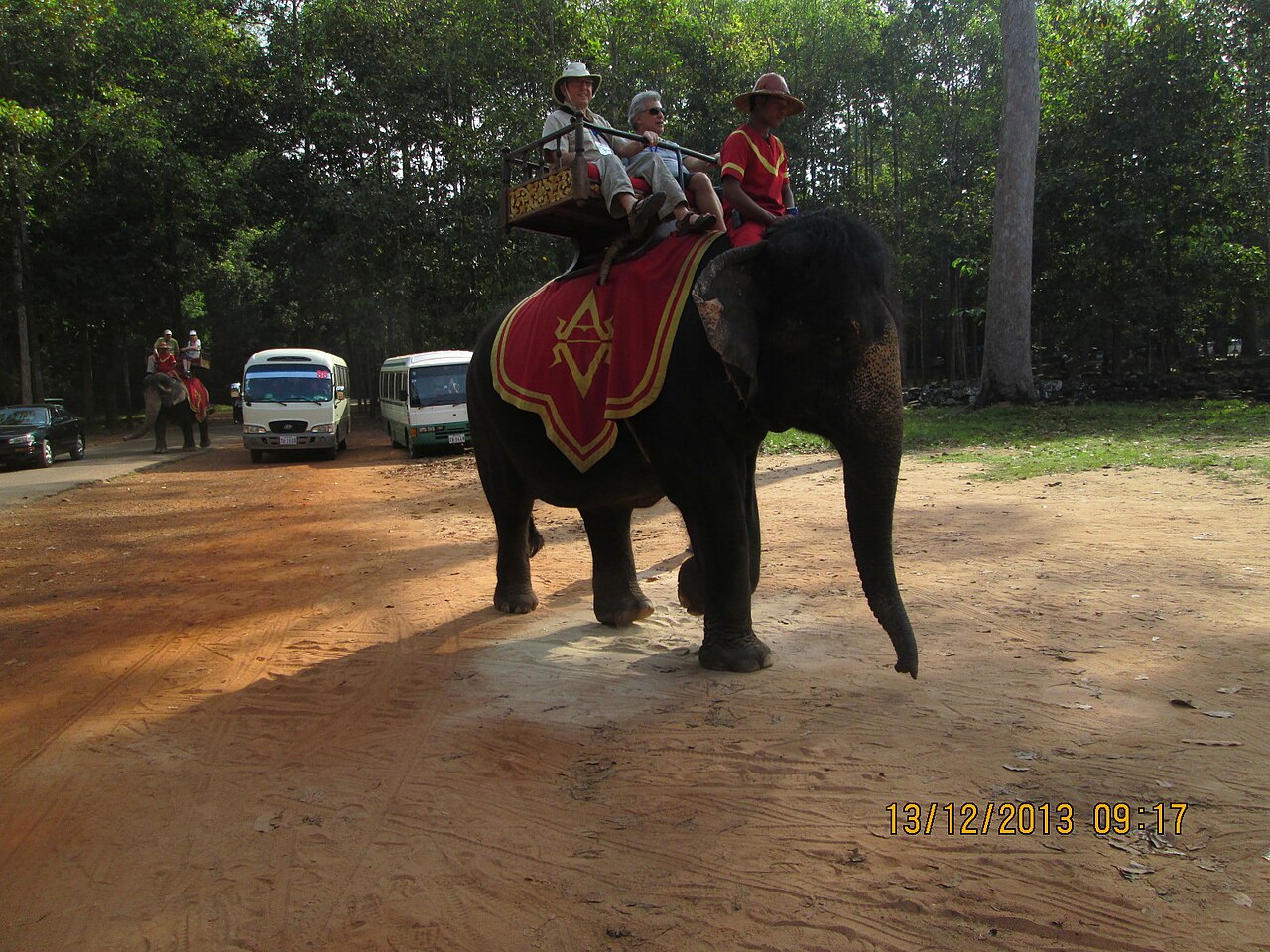
Bayon occupies the geographical heart of Angkor Thom, approximately eight kilometers north of Siem Reap town center. Transportation options include hired tuk-tuk, private car with driver, bicycle, or organized tour vehicle. The walled city enclosure features multiple access gates, with the south gate most commonly traversed for its preserved causeway and guardian figures. Internal roads permit vehicle approach to proximate parking areas, though final access proceeds on foot. Independent cyclists should anticipate dusty or muddy conditions seasonally. Pre-dawn departure from Siem Reap proves necessary for sunrise arrival; return journey timing should account for potential vehicle congestion at park exits during peak departure windows.
Checked 2026-08-26

Steep, narrow stairways with worn surfaces present significant fall risk, particularly in damp conditions; handrails are absent or inadequate at multiple points. Loose stones and uneven flooring throughout interior passages demand attentive foot placement. The compact structure concentrates visitors, creating bottlenecks where patience prevents collision or injury. Heat exhaustion threatens during midday exposure with limited shade on upper terraces. Unofficial guides may offer services of variable quality and knowledge; official licensed guides carry identification. Vendors operate at peripheral locations. Sacred character warrants respectful behavior including covered shoulders and knees. Structural instability in restored sections may prompt temporary access restrictions without advance notice.
Checked 2026-08-26

The face towers reward patient positioning to capture direct eye contact with carved visages against sky backgrounds. Morning and late afternoon sidelight emphasizes facial modeling and bas-relief depth. Wide-angle lenses accommodate tight interior spaces; telephoto options isolate face details from crowded upper terrace. Tripod use may face practical constraints in narrow passages and should respect visitor flow. Flash photography potentially damages sensitive pigments and disturbs atmosphere; natural light exploitation proves more effective. Monsoon cloud formations create dramatic sky contexts. Drone operation falls under strict Cambodian regulation requiring permits. Commercial or publication usage necessitates additional APSARA Authority permissions beyond standard visitor admission.
Checked 2026-08-26
No. Bayon is the central temple of Angkor Thom, a separate walled city north of Angkor Wat. They represent different periods, architectural styles, and religious emphases within the Khmer Empire.
No. Bayon lies within the Angkor Archaeological Park, which requires a valid park admission pass. There is no separate ticket for this temple alone.
Scholarly interpretation varies. The faces may represent the bodhisattva Avalokiteshvara, King Jayavarman VII, or a deliberate fusion of divine and royal identity. Definitive attribution remains debated.
No. The temple features steep stairs, narrow passages, and uneven surfaces without comprehensive accessibility accommodations. Independent navigation presents substantial challenges for many visitors.
Unofficial guides may approach visitors, but verifying official licensing through identification is advisable. Quality and accuracy vary significantly among self-appointed guides.
Extensive restoration has occurred, including anastylosis reassembling original fragments. Some portions remain partially ruined, and ongoing conservation continues. The temple does not represent complete original preservation.
Loading the interactive map…
The interactive map could not be loaded.

Last updated:
Source: OpenStreetMap contributors, Wikidata ·