
-07032.jpg)
-07034.jpg)
-07036.jpg)
-07037.jpg)
-07038.jpg)
3 min walk
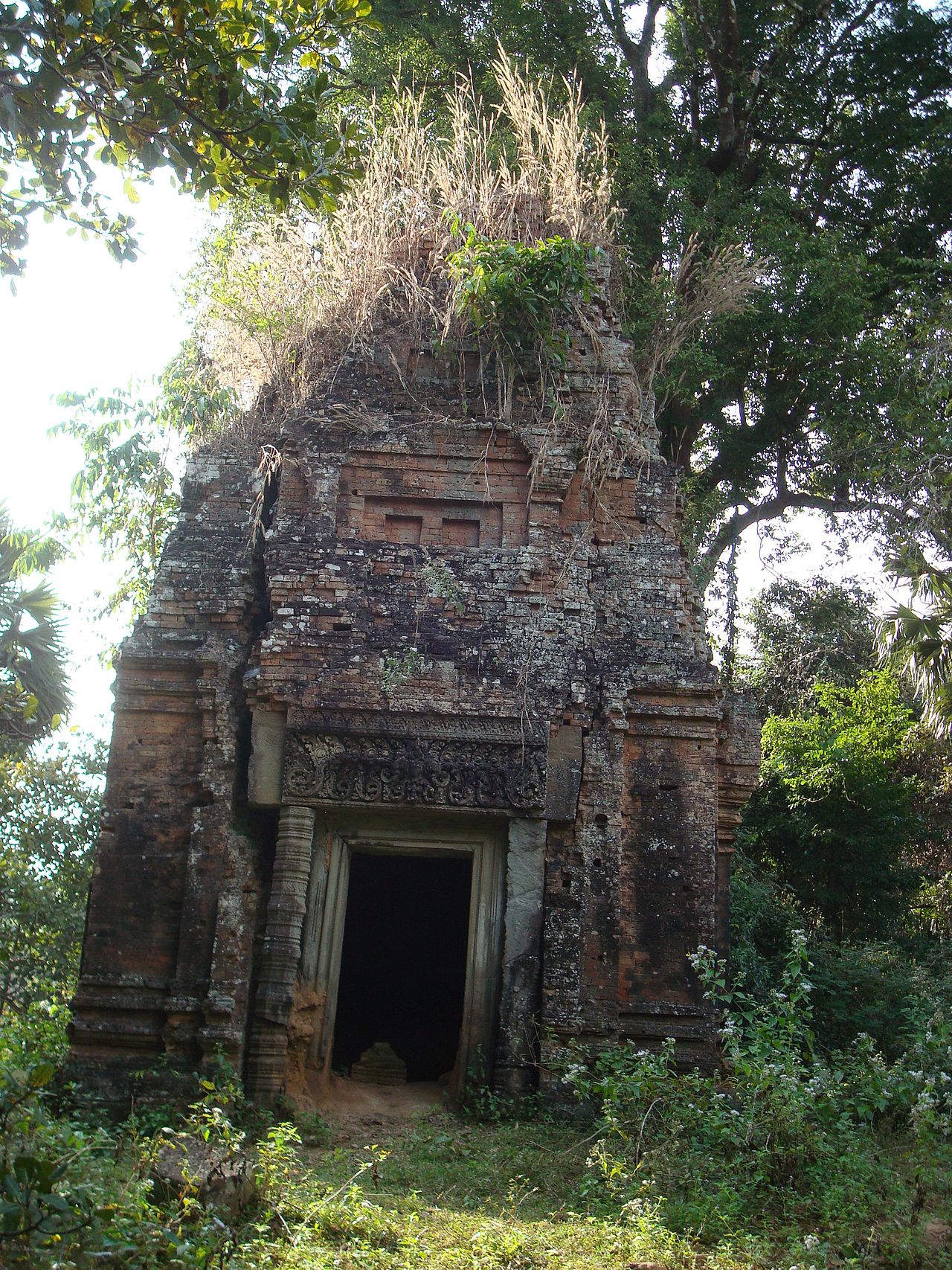
Prasat Leak Neang
- Must see
- Historic monument
Language · 11 published
Historic monument · Siem Reap
ប្រាសាទប្រែរូប

Pre Rup is a Hindu temple at Angkor, Cambodia, built as the state temple of Khmer king Rajendravarman and dedicated in 961 or early 962. It is a temple mountain of combined brick, laterite and sandstone construction. The name is a modern one meaning turn the body, reflecting the Cambodian belief that funerals were conducted at the temple, with the ashes of the body being ritually rotated in different directions as the service progressed. It stands on a former ashram of Yasovarman I.
Checked 2026-08-26
The temple complex features a pyramid-shaped structure with five brick towers arranged on the upper terrace. The outer enclosure contains a false door on each side. The central tower reaches the highest point. The brick towers once held plaster coatings with carved decorations, much of which has eroded. Laterite was used for the outer walls and platforms, while sandstone was employed for doorways and decorative elements. The architectural style represents the Khleang style transitional to the Baphuon style. Pre Rup also earns time in a siem reap itinerary because A meaningful siem-reap visitor landmark retained in the breadth-first top 100; production has no city POI pool for an exact match. Its value becomes clearer when the stop is compared with the surrounding streets and the other ranked places nearby.
Checked 2026-08-26

Visitors typically spend between forty-five minutes and one and a half hours at Pre Rup. The site is compact compared to major Angkor complexes, with a straightforward layout that does not require extensive navigation. The climb to the upper terrace involves steep stairs that demand careful ascent and descent. Those interested in architectural details or sunset viewing may extend their stay. Combining Pre Rup with nearby East Mebon in a single excursion is common practice for efficient itinerary planning.
Checked 2026-08-26

Pre Rup is widely visited for sunset photography due to its elevated position and relatively open western vista. Morning visits offer cooler temperatures and softer light on the eastern facades. The dry season from November to March brings more predictable conditions, though crowds peak during this period. The wet season presents lush surroundings but afternoon storms may interrupt visits. Operator-confirmed hours are Not recorded pending review. Visitors should verify current access times with official sources before planning their arrival.
Checked 2026-08-26
Pre Rup is located within the Angkor Archaeological Park and requires a valid park admission pass for entry. Passes are purchased at the official ticket center and are subject to park-wide regulations. Multi-day options may be available for extended exploration of the temple complex. Prices and specific pass categories are Not recorded pending review. Visitors must carry their passes as checkpoint verification occurs at various locations throughout the park. No separate temple-specific fee structure applies to Pre Rup individually.
Checked 2026-08-26

Pre Rup sits on the Large Circuit of the Angkor Archaeological Park, east of Angkor Thom and north of East Mebon. The temple is accessible via the paved road network connecting major Angkor sites. Most visitors arrive by hired tuk-tuk, motorbike taxi, bicycle, or as part of organized tour transport from Siem Reap town. The journey from central Siem Reap takes approximately twenty to thirty minutes depending on transport mode and traffic conditions. Self-navigation by bicycle requires reasonable fitness due to distances between temple clusters.
Checked 2026-08-26

The staircases at Pre Rup are exceptionally steep and narrow, with worn surfaces that become slippery after rain. Descent requires particular caution and use of handholds where available. The upper terrace lacks guardrails, presenting fall risks especially during crowded sunset periods when visitors jostle for position. Heat exposure is significant during midday with minimal shade on the summit. Proper footwear with grip is essential. The remote location means limited immediate assistance for injuries. Visitors with mobility limitations should assess stair climbing feasibility carefully.
Checked 2026-08-26

Pre Rup offers commanding elevated views across the surrounding forest canopy, particularly valued during sunset when the western sky provides color. The brick towers display textured surfaces that photograph warmly in angled light. Morning light illuminates the eastern doorways and lintel carvings more favorably. The compact site means compositions include other visitors during peak hours. Tripods may be restricted or impractical on narrow stairs. The summit platform becomes congested at sunset, requiring patience for unobstructed shots. Wide-angle lenses accommodate the tight terrace spaces between towers.
Checked 2026-08-26
The modern Khmer name translates to turn the body and reflects a traditional belief that funerary rites occurred here, though scholarly interpretation of its primary function varies.
No, Pre Rup lies within the Angkor Archaeological Park and requires valid park admission purchased at the official ticket center.
The stairs are steep, narrow, and worn, requiring caution especially during descent and in wet conditions; they present genuine difficulty for those with limited mobility.
Sunset is more popular due to the western outlook and elevated position, though morning offers cooler conditions and different lighting on architectural details.
Not recorded; the temple's relatively remote position on the Large Circuit suggests limited on-site services compared to major complexes like Angkor Wat.
Both are temple mountains from the same period with brick towers, though Pre Rup is slightly later and larger; they are commonly visited together in one excursion.
Loading the interactive map…
The interactive map could not be loaded.

Last updated:
Source: OpenStreetMap contributors, Wikidata ·