

-06245.jpg)
-06248.jpg)
-06260.jpg)
-06261.jpg)
12 min walk
Ta Prohm Kel
- Must see
- Historic monument
Language · 11 published
Historic monument · Siem Reap
អង្គរវត្ត
| Monday | 05:00 – 17:30 |
|---|---|
| Tuesday | 05:00 – 17:30 |
| Wednesday | 05:00 – 17:30 |
| Thursday | 05:00 – 17:30 |
| Friday | 05:00 – 17:30 |
| Saturday | 05:00 – 17:30 |
| Sunday | 05:00 – 17:30 |
Checked 2026-08-31 · Source
Read from the OpenStreetMap access tags; anything not listed has no tag recorded.
Set the group type to family in the planner and the day window contracts to about three quarters of a solo day.
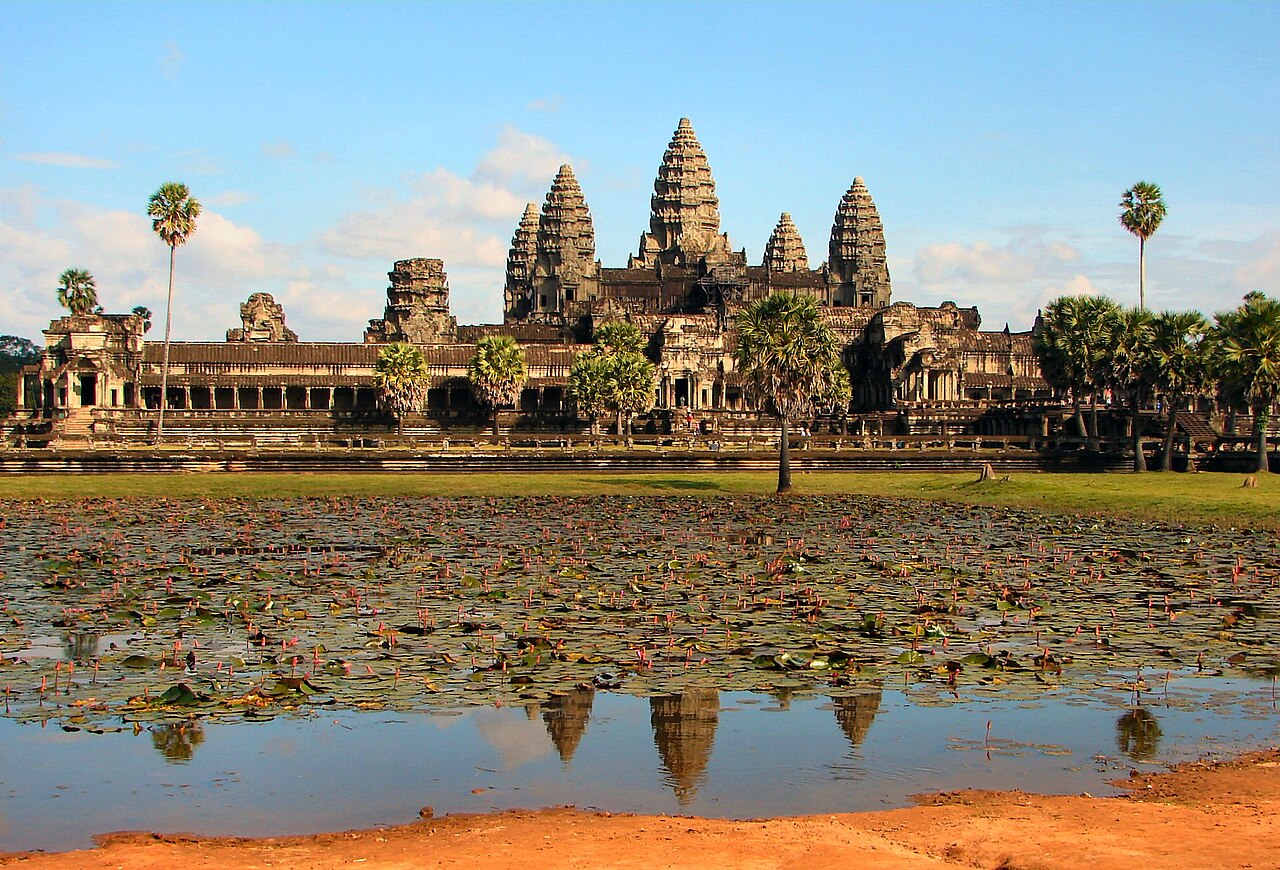
Angkor Wat is a temple complex in Siem Reap Province, Cambodia. Constructed in the early 12th century by King Suryavarman II, it was originally dedicated to the Hindu god Vishnu before gradually transforming into a Buddhist site. The complex represents the pinnacle of Khmer architecture and remains the largest religious monument in the world by land area. It serves as the centerpiece of the broader Angkor Archaeological Park, a UNESCO World Heritage Site since 1992. The structure's five lotus-shaped towers have become an iconic symbol of Cambodia, appearing on the national flag.
Checked 2026-08-26
The temple complex features extensive bas-relief galleries depicting Hindu epics including the Mahabharata and Ramayana. Central to the layout is a quincunx of towers rising from the main sanctuary, surrounded by concentric galleries and courtyards. The outer enclosure contains a moat spanning approximately 190 meters in width. Interior spaces include the Hall of a Thousand Buddhas, where visitors have historically left Buddha images. The western approach extends along a 475-meter causeway crossing the moat. Devatas and apsaras carved into walls number in the thousands, displaying distinctive Khmer artistic conventions.
Checked 2026-08-26

A thorough visit to Angkor Wat typically requires between two and four hours, though dedicated visitors may spend considerably longer examining bas-reliefs and architectural details. The complex rewards multiple visits at different times of day, as lighting conditions dramatically alter the appearance of stone surfaces and shadow patterns. Many visitors combine Angkor Wat with other nearby temples such as Angkor Thom and Ta Prohm, constituting a full day of exploration. Dawn visits are particularly popular for observing sunrise behind the central towers, though this entails arriving well before first light.
Checked 2026-08-26

Cambodia experiences distinct wet and dry seasons affecting visitor conditions. The dry season from November to March brings cooler temperatures and reduced humidity, generally considered more comfortable for extended walking. The wet season from May to October sees fewer visitors and lusher surrounding vegetation, though afternoon rainfall is frequent. Visitors should consult the APSARA National Authority or official tourism channels for current operating schedules before planning. Sunrise and sunset visits require particular attention to confirmed entry and exit times. Check the operator's own site for the travel date before relying on a schedule or fare.
Checked 2026-08-26
Access to Angkor Wat requires admission to the broader Angkor Archaeological Park. Multiple ticket categories exist for varying durations of validity. The APSARA National Authority manages ticketing and revenue collection for temple conservation. Visitors must purchase tickets from official designated outlets; temporary photographic passes are typically issued at point of sale. International visitors should carry valid identification. Revenue supports ongoing conservation efforts across the park complex. Current fee structures and payment methods should be verified through official channels before arrival to ensure accurate budgeting. Check the operator's own site for the travel date before relying on a schedule or fare.
Checked 2026-08-26

Siem Reap city serves as the primary gateway to Angkor Wat, located approximately five kilometers north of the temple complex. Transportation options include motorbike taxis, tuk-tuks, bicycles, and private vehicles. Many visitors arrange day-long transport with local drivers familiar with temple routing. The road network connecting major temples within the archaeological park is generally passable year-round, though wet season conditions may affect unpaved sections. Organized tours departing from Siem Reap hotels offer structured itineraries. Independent travelers should negotiate return transportation in advance, as remote temple areas lack reliable spontaneous transport availability.
Checked 2026-08-26

Stone surfaces throughout the complex become extremely slippery when wet, requiring cautious foot placement especially on steep staircases. Some original staircases have been replaced with wooden alternatives for safety. The tropical climate demands adequate hydration, sun protection, and appropriate clothing covering shoulders and knees as a courtesy at religious sites. Persistent vendors operate near main entrances. Unofficial guides may approach visitors; licensed guides wear official identification. Wildlife including monkeys inhabits surrounding forest; maintaining distance is advisable. Structural conservation work periodically restricts access to certain areas. Visitors should respect cordoned sections and follow posted guidance.
Checked 2026-08-26

Angkor Wat permits photography throughout most accessible areas, with the central upper sanctuary historically restricting camera use during active worship periods. The bas-relief galleries present challenging low-light conditions favoring cameras with manual controls. Tripods may attract scrutiny from security personnel; discrete use is advisable. Dawn photography from the western causeway and northern reflecting pond remains exceptionally popular, requiring early arrival for optimal positioning. The warm stone surfaces produce strong color temperature variations across daylight hours. Drone operation is prohibited within the archaeological park without explicit authorization from APSARA National Authority. Commercial photography requires permits.
Checked 2026-08-26
Yes. Though originally Hindu, Angkor Wat has functioned as a Buddhist temple for centuries and continues to host religious observances. Visitors should behave respectfully, particularly in areas where worshippers are present.
Access to the upper central sanctuary is periodically restricted for conservation or religious reasons. When open, steep staircases require physical effort. Current access status should be confirmed on arrival.
The complex presents significant challenges due to uneven surfaces, stairs, and limited barrier-free infrastructure. Some outer areas are more navigable than the central structure. Visitor judgment regarding personal capabilities is essential.
No permanent food service operates within the temple proper. Small vendors may operate near perimeter areas. Visitors should carry water, particularly given heat exposure during extended exploration.
Shoulders and knees should be covered as this remains an active religious site. Comfortable walking shoes with good grip are strongly recommended given uneven and slippery stone surfaces.
Visitor concentration varies seasonally and daily. Dawn hours and peak dry season months see highest attendance. The complex's scale allows dispersal, though iconic viewpoints become congested.
Loading the interactive map…
The interactive map could not be loaded.
Last updated:
Source: OpenStreetMap contributors, Wikidata ·