
-06955.jpg)
-06956.jpg)
-06958.jpg)
-06960.jpg)
-06961.jpg)

25 min walk
Krol Ko
- Must see
- Historic monument
Language · 11 published
Historic monument · Siem Reap
ប្រាសាទតាសោម
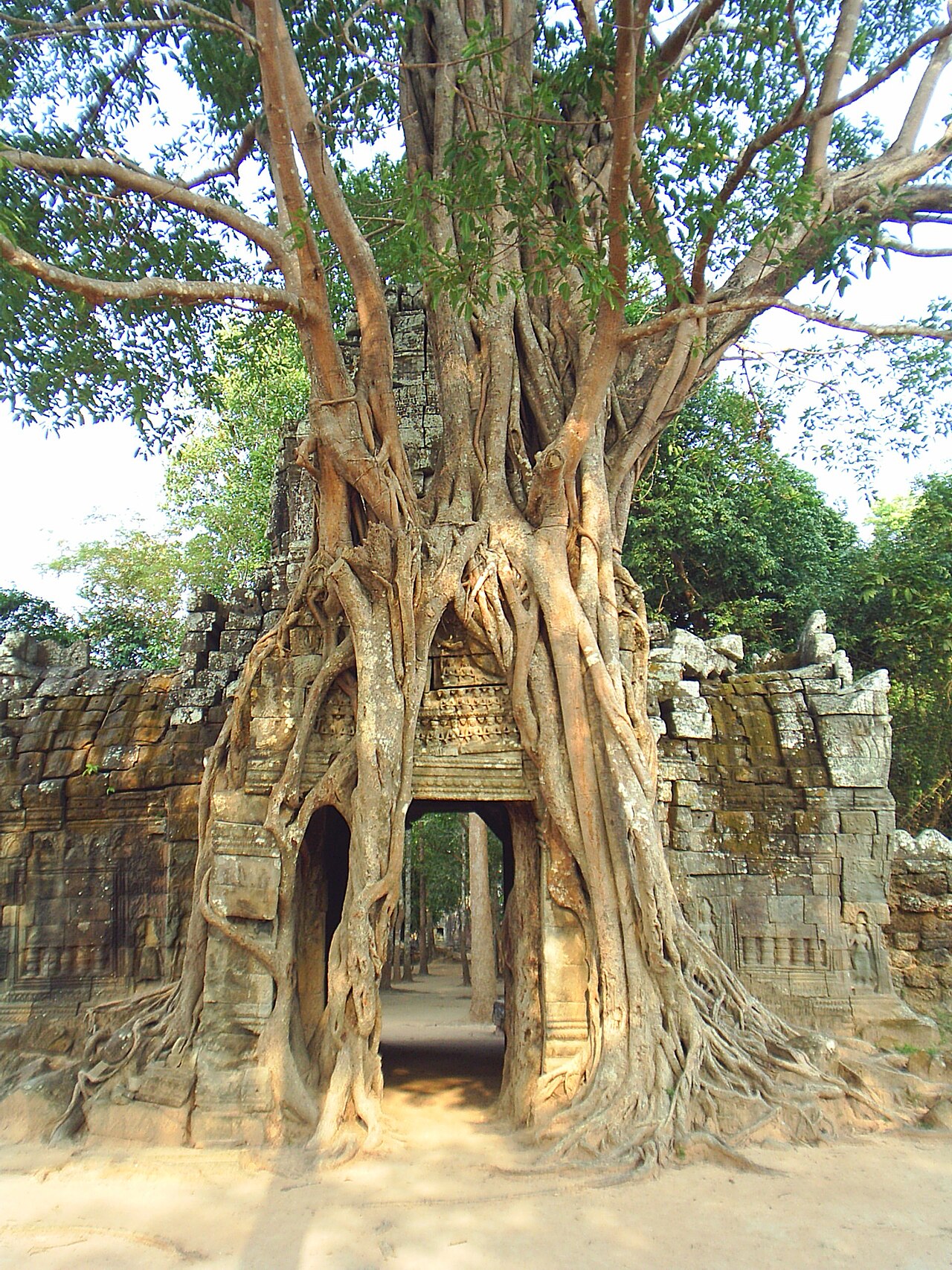
Ta Som is a small Buddhist temple built in the late 12th century during the reign of King Jayavarman VII. It sits within the Angkor Archaeological Park, a UNESCO World Heritage Site. The temple follows the Bayon architectural style characteristic of this period. Ta Som was dedicated to the king's father, mirroring the dedication pattern seen at other Jayavarman VII temples. The site has undergone conservation efforts, though it remains less restored than major temples like Angkor Wat. Its relatively modest scale and forested setting distinguish it from grander monuments nearby.
Checked 2026-08-26
The temple complex features a single shrine tower on a raised platform, enclosed by concentric laterite walls. Four gopuras, or entrance pavilions, mark the cardinal directions. The eastern gopura is particularly notable for its strangler fig tree, whose roots envelop the stone structure in a dramatic natural embrace. Carvings of devatas, or female divine figures, adorn interior walls. Bas-reliefs depicting Buddhist and Hindu iconography appear throughout. A moat once surrounded the outer enclosure. The central sanctuary contains doorways with ornate lintels, though some sculpture has been removed to museums for preservation.
Checked 2026-08-26

Visitors typically spend forty-five minutes to one hour exploring Ta Som. The compact layout permits efficient circulation without the extensive walking required at larger temple complexes. The atmospheric quality encourages a contemplative pace rather than hurried passage. Photography enthusiasts may allocate additional time to capture the interplay of stone and vegetation. The temple's position on the Grand Circuit route means it often appears in combination with Preah Khan, Neak Pean, and East Mebon in a half-day or full-day itinerary. Solo travelers and those with specialized interests in Khmer architecture may linger longer.
Checked 2026-08-26

The dry season from November to March generally offers more comfortable conditions for temple exploration throughout the Angkor region, with reduced rainfall and moderate temperatures. Morning visits may provide softer light for observation and photography. The wet season brings lush vegetation that enhances the temple's jungle atmosphere, though paths become muddy and afternoon thunderstorms occur frequently. Crowds diminish significantly during midday hours regardless of season. Visitors should consult current official sources for definitive opening schedules before planning their itinerary. Check the operator's own site for the travel date before relying on a schedule or fare.
Checked 2026-08-26
Admission to Ta Som requires the Angkor Archaeological Park pass, which covers all temples within the protected area. Passes are available for single-day, three-day, and seven-day durations. The ticket must be purchased at the official checkpoint and carried throughout visits. Separate temple-specific tickets do not exist. Prices and purchasing procedures change periodically. Visitors should verify current rates through the official Angkor Enterprise website or authorized tourism offices. International visitors pay standard foreign rates, which substantially exceed prices for Cambodian nationals. Check the operator's own site for the travel date before relying on a schedule or fare.
Checked 2026-08-26

Ta Som occupies the northeastern quadrant of the Angkor Archaeological Park, accessible via the Grand Circuit road. Tuk-tuk remains the predominant transport mode for independent visitors, with drivers familiar with the route sequence. Bicycle rental from Siem Reap town provides an active alternative for experienced cyclists, though distances exceed fifteen kilometers one way. Motorbike taxis offer faster transit. Organized tours include the temple in standard Grand Circuit packages. The road surface varies; dry season travel proves smoother. Signage within the park is limited, so confirming the destination with drivers before departure prevents confusion with similar temples.
Checked 2026-08-26

The strangler fig roots create uneven and potentially slippery surfaces, particularly after rainfall. Visitors should wear sturdy footwear with adequate grip. Low doorways and collapsed masonry present head-strike hazards in dim interior passages. The temple receives fewer visitors than major sites, meaning assistance may not be immediately available if needed. Wildlife including monkeys and insects inhabit the surrounding forest. No permanent vendors or facilities operate at the temple itself, so carrying water and basic supplies is prudent. The isolated setting requires awareness of personal belongings. Structural instability in unrestored sections demands respectful distance.
Checked 2026-08-26

The eastern gopura with its engulfing fig tree constitutes the iconic photographic subject, best captured in morning light when the sun illuminates the tower face. The narrow corridors and doorframes create natural framing opportunities for the central sanctuary. Tripod use may attract attention from security personnel; discretion is advisable. The dappled forest canopy produces variable exposure conditions requiring manual adjustment. Monochrome treatment emphasizes textural contrasts between ancient stone and organic growth. Wide-angle lenses accommodate the confined spaces. Patient waiting yields moments without other visitors, essential for uncluttered compositions of this increasingly recognized location.
Checked 2026-08-26
Yes, Ta Som is covered by the Angkor Archaeological Park admission pass. No separate ticket is required.
Ta Som is smaller and significantly less crowded than Ta Prohm, though both feature striking tree-root interactions with masonry.
Not recorded. The temple lacks permanent staffing, so arranging guides through Siem Reap operators beforehand is advisable.
The uneven surfaces, collapsed sections, and lack of modifications present substantial challenges for mobility-impaired visitors.
The temple was constructed as a Buddhist monument during the reign of the Mahayana Buddhist king Jayavarman VII.
Conservation work has occurred, though the temple remains less extensively restored than premier Angkor monuments.
Loading the interactive map…
The interactive map could not be loaded.


Last updated:
Source: OpenStreetMap contributors, Wikidata ·