Royal Mile
The Royal Mile is Edinburgh Old Town's historic spine, a Scots mile long and almost exactly a mile between Edinburgh Castle and the Palace of Holyroodhouse.
- Must see
- Historic monument
- Edinburgh
Language · 11 published
Country guide
The United Kingdom is 244,376 km² holding 69,281,437 people, and it is four countries rather than one: England, Scotland, Wales and Northern Ireland, with London, Edinburgh, Cardiff and Belfast as their capitals. Three of the four run parliaments of their own over devolved matters, and the law splits three ways — England and Wales, Scotland, Northern Ireland. A visitor meets that in small practical things rather than at a border. London alone holds about 9.1 million of the total, which is why so many trips never leave it, and why the ones that do feel like arriving somewhere else.
Reviewed by Elena Voss · SSMTour Travel Editor
Every city catalogued in this country so far, ranked by how much there is to see.
Photograph · Ilya Grigorik · CC BY-SA 3.0
Photograph · 瑞丽江的河水 · CC BY-SA 4.0
Photograph · Daniel Nisbet from Manchester, United Kingdom · CC BY 2.0
Ranked by importance — sitelinks, pageviews and heritage status, not editor preference.
430 places match
Category
Typical visit duration
Interests
The Royal Mile is Edinburgh Old Town's historic spine, a Scots mile long and almost exactly a mile between Edinburgh Castle and the Palace of Holyroodhouse.
Maritime Greenwich is a historic district in southeast London, recognised as a UNESCO World Heritage Site. It encompasses significant maritime heritage structures including the Royal Observatory, the Old Royal Naval College, the National Maritime Museum, and the preserved town centre.
The Clydeside Distillery is a whisky distillery and visitor attraction located on the River Clyde in Glasgow. It occupies the former site of the Queen's Dock pump house, a historic industrial building.
Buckingham Palace is the London residence and the administrative headquarters of the British monarch, standing at the western end of The Mall in the City of Westminster.
Westminster Abbey is a working Anglican church that has crowned every English and British monarch since 1066 — forty of them — and buried eighteen.
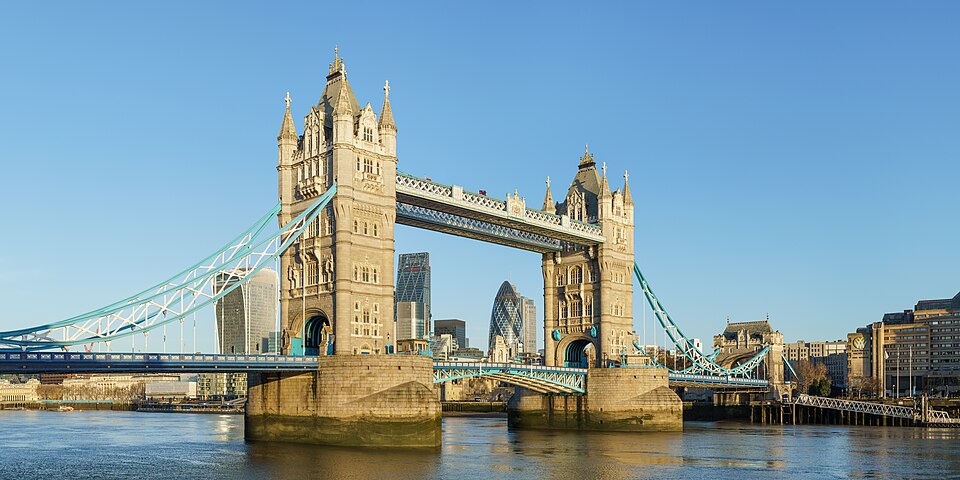
Tower Bridge is a working road crossing over the Thames beside the Tower of London and, separately, a paid attraction inside its own towers and engine rooms.
The Tower of London is a working fortress on the north bank of the Thames that has been a castle, a royal palace, an armoury, a mint, a menagerie, a prison and a place of execution, and is now the…
The British Museum in Bloomsbury holds the largest permanent museum collection in the world and charges nothing to see it.
The London Eye is a 135-metre observation wheel on the South Bank of the Thames in Lambeth, carrying 32 sealed passenger capsules through one slow revolution that takes about 30 minutes.
The British Library is the national library of the United Kingdom and, by collection size, one of the largest libraries in the world: more than 200 million items, including roughly 13.95 million books, 351,116 manuscripts, 8.27 million philatelic items and…
St Paul's Cathedral is the cathedral church of the Diocese of London and the great domed building on Ludgate Hill, designed by Sir Christopher Wren and built between 1675 and 1710 after the medieval cathedral on the site burned in…
Hyde Park is a 350-acre (140-hectare) royal park in the City of Westminster, the largest of the four central London parks and the one that runs west from Marble Arch and Hyde Park Corner to the Serpentine and the boundary…
Kensington Palace is a royal residence on the western edge of Kensington Gardens, half of it open as a historic house and half of it still lived in.
Royal Botanic Gardens, Kew
Kew Gardens is the London site of the Royal Botanic Gardens, Kew: a working scientific institution and a UNESCO World Heritage landscape rather than a single conservatory or historic house.
Elizabeth Tower
Big Ben is the bell, not the tower.
The Palace of Westminster is the seat of the two houses of the United Kingdom Parliament and, unlike the other great buildings on this stretch of the Thames, it is a workplace before it is a monument.
The Victoria and Albert Museum is the national museum of art, design and performance at Cromwell Road in South Kensington, and its permanent collection of more than 2.8 million objects makes it the world's largest museum of applied and decorative…
Wembley Stadium is England’s national football stadium in north-west London. The current building opened on the site of the original 1923 stadium after that structure was demolished in 2003.
Trafalgar Square is the ceremonial public square at the top of Whitehall in the City of Westminster, owned by the King in Right of the Crown and managed by the Greater London Authority.
Edinburgh Castle sits on a plug of volcanic rock at the head of the Royal Mile, and it is the reason the city grew where it did.
The Natural History Museum in South Kensington holds around 80 million specimens across botany, entomology, mineralogy, palaeontology and zoology, and it holds them in a building that is itself one of the exhibits.
Madame Tussauds is a wax museum in London displaying lifelike figures of celebrities, historical figures, and cultural icons. Founded by Marie Tussaud, it has become a major tourist attraction.
10 Downing Street is the official residence and working address of the Prime Minister of the United Kingdom, in Westminster beside Whitehall. Its black door and white number 10 have become instantly recognisable symbols of British government.
The Science Museum on Exhibition Road in South Kensington is Britain's national museum of science, technology, engineering and medicine, founded in 1857 and independent since 26 June 1909.
Royal Observatory Greenwich
The Royal Observatory stands on the hill in Greenwich Park where Charles II commissioned it in 1675 to fix longitude at sea, and it is the reason the world sets its clocks from a line drawn through south-east London.
The Shard is a glass-clad skyscraper on the south bank of the River Thames, in London’s London Bridge Quarter.
The National Gallery is Britain's national collection of European painting, standing on the north side of Trafalgar Square and free to enter.
The Royal Opera House is a major performing arts venue in London's Covent Garden district. It serves as the home of The Royal Opera, The Royal Ballet, and the Orchestra of the Royal Opera House.
Palace of Holyroodhouse
The Palace of Holyroodhouse is the King's official residence in Scotland and a public visit that combines royal rooms, the remains of Holyrood Abbey and palace gardens.
Piccadilly Circus is a road junction in the City of Westminster, not a building and not a site with a gate, and everything a visitor comes to see stands in or around the traffic.
Hampton Court Palace is a Tudor and Baroque royal palace on the Thames 12 miles (19 kilometres) southwest and upstream of central London, in the London Borough of Richmond upon Thames.
Royal Albert Hall is the circular concert hall on Kensington Gore in South Kensington, London. Queen Victoria opened it in 1871 and named it for Prince Albert.
Tate Modern holds the United Kingdom's national collection of international modern and contemporary art, meaning work created from or after 1900, and it holds it inside a decommissioned power station on the south bank of the Thames.
The Banqueting House is a historic building in Whitehall, London. It is the only surviving complete component of the Palace of Whitehall, which was largely destroyed by fire in 1698.
St. James's Park
St James's Park is a Royal Park in central London, located in the City of Westminster. It is the oldest of the capital's eight Royal Parks, with origins dating back to the Tudor period.
Wellington Arch is a triumphal arch at Hyde Park Corner in central London.
Kenwood House is a historic neoclassical villa situated on the northern edge of Hampstead Heath in London. The property is managed by English Heritage and is renowned for its exceptional art collection, including works by Rembrandt, Vermeer, and Gainsborough.
The National Portrait Gallery is an art museum in London dedicated to portraiture. It holds a collection of portraits of historically important and famous British people.
Abbey Road Studios is a world-famous recording studio in London, England. Established in 1931, it is most celebrated as the location where The Beatles recorded the majority of their albums, including the iconic "Abbey Road" album named after the street.
St Martin-in-the-Fields is an Anglican church located in the northeast corner of Trafalgar Square in central London. The building occupies a prominent position facing the National Gallery.
Kensington Gardens is one of the Royal Parks of London, situated immediately to the west of Hyde Park. The gardens were originally the private grounds of Kensington Palace, and were opened to the public in the nineteenth century.
Kelvingrove Art Gallery and Museum is Glasgow's civic art gallery and museum, not the neighbouring Kelvingrove Park or the whole Glasgow Museums collection.
Marble Arch is a white Carrara marble triumphal arch at the north-east corner of Hyde Park, beside the meeting point of Oxford Street, Park Lane and Edgware Road.
Apsley House is a Georgian townhouse at Hyde Park Corner, also known as Number One, London. It became the London home of Arthur Wellesley, the first Duke of Wellington, whose military career included victory over Napoleon at Waterloo.
HMS Belfast is a Town-class light cruiser preserved as a museum ship on the River Thames. Launched in 1938, she served during the Second World War and the Korean War before decommissioning in 1963.
Freud Museum London preserves the Hampstead home of Sigmund Freud, founder of psychoanalysis, and his daughter Anna Freud, a major figure in child psychoanalysis.
Somerset House is a large Neoclassical building situated on the south side of the Strand in central London, overlooking the River Thames. The structure serves as a major arts and cultural centre, housing various creative organisations, galleries, and public spaces.
The Regent's Park
The Regent's Park is a major public park in North West London. It was designed in 1811 by John Nash as part of a planned royal park, and named after the Prince Regent, later George IV.
The Royal Academy of Arts is an art institution based in Burlington House on Piccadilly in London. Founded in 1768, it operates as an independent, privately funded institution led by eminent artists and architects.
Sir John Soane's Museum is the former London home, studio and collection of the neo-classical architect John Soane. At 13 Lincoln's Inn Fields, Soane reshaped an ordinary Georgian house into an intensely personal setting for architecture, art and antiquities.
The Albert Memorial
The Albert Memorial is a Victorian commemorative monument in Kensington Gardens, London. Commissioned by Queen Victoria in memory of her husband Prince Albert, who died in 1861, it stands as one of the most elaborate memorials in the United Kingdom.
The London Dungeon
The London Dungeon is a theatrical attraction in central London built around darker episodes of British history. Actors, sets, sound, lighting and special effects turn stories of plague, fire, crime and notorious figures into an immersive performance.
Tate Britain is London’s national gallery of British art, with works dating from the sixteenth century to the present. The gallery stands beside the Thames on Millbank, in a building associated with the original Tate Gallery.
Imperial War Museum London is a major museum about conflict and its effects on military and civilian life. Founded in 1917 to record the First World War, it now covers conflicts from that period to the present.
Temple Church is a historic chapel between Fleet Street and the River Thames in central London.
Greenwich Park is a historic royal park in southeast London, covering extensive hillside grounds. It forms part of the Greenwich World Heritage Site and contains the Prime Meridian line.
Cutty Sark is a preserved nineteenth-century clipper ship in Greenwich. Launched in 1869, she was built for the fast tea trade between China and Britain and later carried wool from Australia.
Richmond Park is London’s largest Royal Park, covering a broad landscape of open grassland, woodland, hills, ponds and ancient trees in southwest London. It is also an important nature conservation site and a working landscape shaped by ongoing management.
The Monument to the Great Fire of London
The Monument to the Great Fire of London is a Doric column near Pudding Lane in the City of London. Sir Christopher Wren and Robert Hooke designed it to commemorate the Great Fire of 1666 and the rebuilding that followed.
National Gallery
The Scottish National Gallery, branded by National Galleries of Scotland simply as the National, is the principal gallery on the Mound above Princes Street Gardens.
Shakespeare's Globe is a reconstruction of the original Globe Theatre, an Elizabethan playhouse associated with William Shakespeare. The modern building stands near the site of the original theatre in Southwark, London.
Horniman Museum
Horniman Museum and Gardens is a museum, aquarium and landscaped garden complex in Forest Hill, south London.
The Barbican Centre is a major performing arts venue in the City of London. It occupies a distinctive brutalist complex that also includes residential apartments and the Museum of London, though the museum is a separate entity.
John Rylands Library opened in 1900 as Enriqueta Rylands’s gift to Manchester and was purpose-built to give public access to rare books, manuscripts and archives.
Hampstead Heath is a large semi-wild parkland of roughly 320 hectares in north London. Its landscape combines woodland, meadows, hills, scrub and ponds, preserving a rural feeling close to the city.
The Scott Monument is a Victorian Gothic memorial to Scottish author Sir Walter Scott, located in Edinburgh's Princes Street Gardens. Completed in 1844, it stands as one of the largest monuments to a writer anywhere in the world.
St Bartholomew-The Great
St Bartholomew-the-Great is a historic church in the City of London, founded in 1123 by Rahere, a courtier of Henry I. It is London's oldest surviving parish church, with substantial Norman fabric remaining despite later restorations.
Brick Lane is an East London street running between Bethnal Green Road and Whitechapel High Street. It is the centre of the neighbourhood historically associated with London’s Bangladeshi community.
Charles Dickens Museum occupies 48 Doughty Street, the only surviving London residence where Charles Dickens lived.
The Royal Botanic Garden Edinburgh, usually called the Botanics, is a living scientific collection and a public garden one mile north of the city centre.
Holyrood Abbey is a ruined abbey of the Canons Regular in Edinburgh, Scotland, situated at the foot of the Royal Mile adjacent to the Palace of Holyroodhouse.
Dulwich Picture Gallery is an art museum in south London housed in a purpose-built gallery designed by Sir John Soane. Opened in 1817, it is England's oldest purpose-built public art gallery.
The Old Royal Naval College is a historic riverside complex in Greenwich, London. Designed by Sir Christopher Wren and built between 1696 and 1712, it originally served as the Royal Hospital for Seamen.
Emirates Stadium is the home ground of Arsenal Football Club, located in Holloway, North London. Opened in 2006, it replaced the historic Highbury stadium. The venue hosts Premier League and European football matches, as well as occasional concerts and events.
Battersea Park is a large Victorian riverside park on the south bank of the Thames in the London Borough of Wandsworth. Covering about 200 acres, it was laid out between 1855 and 1858 on the former Battersea Fields.
Eltham Palace is a distinctive historic site in southeast London, where a medieval royal great hall stands beside a 1930s Art Deco mansion.
The Wallace Collection
The Wallace Collection is an art museum in central London, occupying Hertford House on Manchester Square. It was established through the bequests of the Marquesses of Hertford and Sir Richard Wallace, with the collection assembled primarily across the nineteenth century.
The All England Lawn Tennis and Croquet Club is a prestigious private members club in Wimbledon, southwest London. It is globally recognised as the venue for the Wimbledon Championships, the oldest tennis tournament in the world.
The Scottish Parliament
The Scottish Parliament is a working parliamentary building at Holyrood and a free public visit, not merely an architectural sight.
Primrose Hill is an open public park immediately north of Regent’s Park in Camden. Its grassy summit rises to 256 feet above sea level, creating one of London’s most memorable elevated views.
Chiswick House is an eighteenth-century Palladian villa in west London, created under the direction of Lord Burlington and inspired by Andrea Palladio and classical Roman architecture.
The Saatchi Gallery is a contemporary art gallery located in London. It was established by Charles Saatchi to exhibit contemporary art.
Holland Park is a varied green space in the Royal Borough of Kensington and Chelsea, occupying the former grounds of Holland House. The house was largely destroyed during the Second World War, leaving a dramatic surviving ruin within the park.
The Serpentine
The Serpentine is a recreational lake in Hyde Park, central London. It was created in 1730 at the direction of Queen Caroline, wife of George II, by damming the Westbourne River.
Manchester Art Gallery grew from the Royal Manchester Institution, whose fine-art holdings transferred to the new municipal gallery in 1882.
Glasgow Botanic Gardens is a working botanic garden run by Glasgow City Council in the West End, and the council asks visitors to hold that distinction: many people arrive thinking of it as a park, and the staff would rather…
The National Maritime Museum is a major maritime museum in Greenwich, London. It forms part of the Royal Museums Greenwich, which also includes the Royal Observatory, Cutty Sark, and the Queen's House.
Crookston Castle is a medieval stone ruin in south-west Glasgow, set on elevated ground above the surrounding landscape.
Portobello Road Market is a historic street market in Notting Hill, West London, stretching along Portobello Road. It is one of London's most famous markets, known internationally for its antiques trade.
The Design Museum is a museum in London dedicated to contemporary design in every form, from architecture and fashion to graphics, product and industrial design.
Royal Observatory, Edinburgh
Royal Observatory Edinburgh is a working astronomical research institution on Blackford Hill, south of the city centre. The present observatory site dates from 1896 and continues to support astronomical science rather than operating as a conventional museum.
The Scottish National Portrait Gallery is Edinburgh’s national museum of portraiture, housed in a red sandstone neo-Gothic building on Queen Street. Robert Rowand Anderson designed the building, which opened in 1889.
The Royal Mews
The Royal Mews is a working royal stable and carriage house serving the British monarch. Located at Buckingham Palace, it houses the royal collection of historic carriages and state vehicles used for coronations, weddings, and official ceremonies.
Arthur's Seat is the high point of Holyrood Park, the royal park that Historic Environment Scotland manages on the eastern edge of Edinburgh's Old Town and describes as roughly circular and about a mile in diameter.
The Churchill War Rooms constitute a museum housed within the original Cabinet War Rooms, the underground headquarters where Prime Minister Winston Churchill directed British military operations during the Second World War.
Craigmillar Castle is a substantial medieval castle ruin southeast of Edinburgh, with major surviving work from the fifteenth and sixteenth centuries. The castle is closely associated with Mary, Queen of Scots, who stayed here in 1566.
The National Museum of Scotland is the national museum on Chambers Street, combining collections that range across Scotland, the natural world, science, technology, art and design.
The Burrell Collection
The Burrell Collection is a civic museum in Pollok Country Park, three miles south of central Glasgow, built to hold the roughly 9,000 objects that Sir William Burrell spent seventy-five years buying.
Whitechapel Gallery is a public art gallery on Whitechapel High Street in East London. Founded in 1901, it occupies an Arts and Crafts building and presents modern and contemporary art.
AO Arena
Manchester Arena, currently known as AO Arena, is a major indoor arena in Manchester, England. It is one of the United Kingdom's largest indoor arenas with a capacity for concerts and sporting events.
Source: OpenStreetMap contributors, Wikidata ·
Ten to fourteen days can cover four or five days in London, two in Manchester, and two or three each in Edinburgh and Glasgow. The Highlands, Lake District, or Welsh national parks need dedicated nights and should not be squeezed into London day trips.
UK document rules depend on nationality and trip purpose, and many visitors now need an Electronic Travel Authorisation before boarding. Check the linked UK government visa service for both visa and ETA status shortly before travel.
Intercity rail is the practical spine between London, Manchester, Edinburgh, and Glasgow, with advance fares usually distinct from flexible tickets. Each city runs its own local fare system, so London's contactless cap is not a nationwide travel pass.
May to June and September are useful planning windows for this route, but conditions vary between southern England and Scotland. Festival dates in Edinburgh and rural transport in national parks can matter more than the national seasonal label.
The United Kingdom uses pound sterling (GBP). Contactless payment is widespread in major cities, but keep another payment method for rural services or terminals that do not share London's payment arrangements.
Use 999 or 112 for emergencies in the United Kingdom. Type G sockets supply 230 V, and mains tap water is recorded as safe; save rail disruption information as well when the itinerary depends on several city-to-city journeys.