

4 min walk
Bakong_BK18
- High
- Historic monument
Language · 11 published
Place of worship · Siem Reap

| Monday | 07:30 – 17:30 |
|---|---|
| Tuesday | 07:30 – 17:30 |
| Wednesday | 07:30 – 17:30 |
| Thursday | 07:30 – 17:30 |
| Friday | 07:30 – 17:30 |
| Saturday | 07:30 – 17:30 |
| Sunday | 07:30 – 17:30 |
Checked 2026-08-31 · Source
Read from the OpenStreetMap access tags; anything not listed has no tag recorded.
Set the group type to family in the planner and the day window contracts to about three quarters of a solo day.
Bakong is a Khmer temple mountain and the first temple mountain of sandstone constructed by rulers of the Khmer Empire. It stands as the central feature of the ancient city of Hariharalaya, which served briefly as the capital before the move to Angkor. The temple represents the sacred Mount Meru in Hindu cosmology. It forms part of the Roluos group of temples, located east of Siem Reap. The site holds UNESCO World Heritage status as part of the Angkor listing.
Checked 2026-08-26
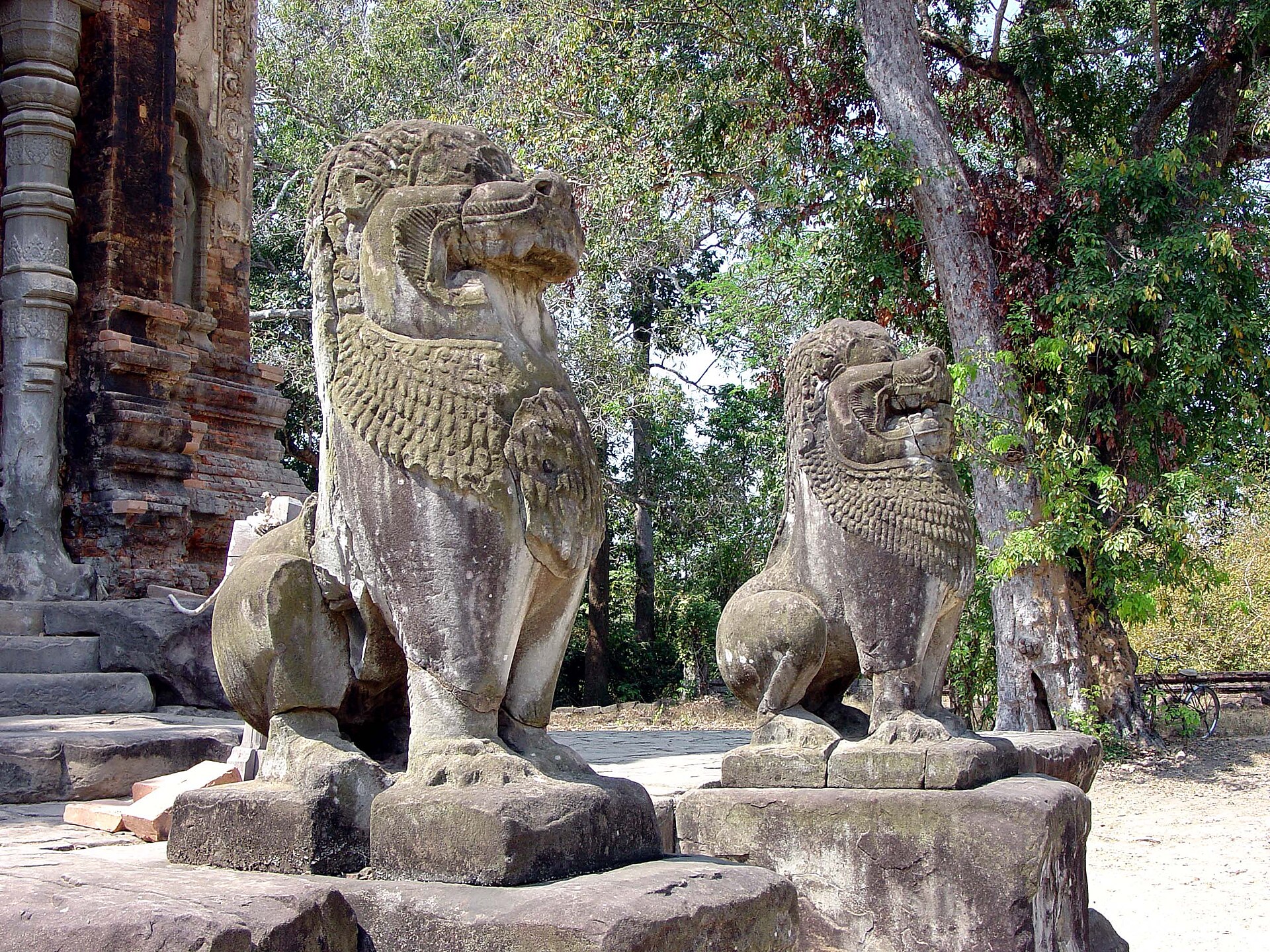
The temple complex features a stepped pyramid structure with five tiers rising to a central sanctuary. The base is surrounded by eight brick towers, some of which retain their original plasterwork. A laterite wall encloses the complex, with a gopura entrance on the east side. A moat lies beyond the enclosure. The central sanctuary once housed a lingam, though the original has been replaced. Modern Buddhist statues occupy some shrines. The architecture shows early Khmer temple mountain design with later additions and restorations.
Checked 2026-08-26
Visitors typically spend approximately one hour exploring the Bakong temple complex. The compact site allows for circumambulation of the base, ascent of the central pyramid, and examination of the surrounding towers and enclosure wall. Those with strong interest in early Khmer architecture or comparative study with later Angkor temples may extend their visit. The Roluos group, which includes nearby Preah Ko and Lolei, warrants a half-day excursion from Siem Reap for comprehensive exploration of this early capital period. Bakong also earns time in a siem reap itinerary because Independent traveler stop frozen before production reconciliation; exact local identity verified without a proxy. Its value becomes clearer when the stop is compared with the surrounding streets and the other ranked places nearby.
Checked 2026-08-26
Cambodia experiences distinct dry and wet seasons affecting visitor comfort. The dry season from November to March offers cooler temperatures and reduced rainfall, though crowds peak during this period. The wet season brings lush vegetation and fewer visitors, with afternoon showers common. Early morning visits provide cooler conditions and softer light. Visitors should verify current opening times with official sources before travel, as temple access schedules may change without widespread notification. A flexible visit lets travellers connect Bakong with the rest of the day without treating one room, viewpoint or photograph as the whole experience. The useful pace depends on personal interest and conditions on arrival. Check the operator's own site for the travel date before relying on a schedule or fare.
Checked 2026-08-26
Bakong forms part of the Angkor Archaeological Park admission system. Visitors require a valid Angkor pass for entry. Pass options have historically included single-day, three-day, and seven-day variants, with specific pricing tiers. The temple itself does not levy separate admission fees beyond the park pass. Visitors should purchase passes from official government outlets to avoid fraudulent vendors. Pass validity terms and conditions apply to all temple sites within the designated zone. Check the operator's own site for the travel date before relying on a schedule or fare.
Checked 2026-08-26
Bakong lies approximately thirteen kilometers east of Siem Reap in the Roluos district. The temple is accessible by motorbike, tuk-tuk, bicycle, or private vehicle via paved roads. Many visitors combine Bakong with Preah Ko and Lolei in a single excursion. Organized tours from Siem Reap frequently include the Roluos group. Self-directed travelers should confirm route conditions and negotiate transportation fares in advance. The site lacks formal public bus service. Return transportation should be arranged, as vehicle availability at the temple may be limited.
Checked 2026-08-26
The central pyramid features steep stairways without modern handrails, presenting fall risks particularly during descent. Stone surfaces become slippery after rain. Sun exposure is severe with minimal shade at the summit. The surrounding area contains uneven ground and scattered debris. Visitors should carry adequate water, as on-site vendors may be absent. Dress modestly with shoulders and knees covered, as active Buddhist shrines remain in use. Respect religious observances and avoid touching or climbing fragile structures. Wildlife including insects and snakes inhabits the vegetated areas around the complex.
Checked 2026-08-26
Bakong offers photographic subjects including the tiered pyramid silhouette, detailed stonework, and surrounding landscape with moat and vegetation. Morning light illuminates the east-facing entrance favorably. The central sanctuary provides elevated perspectives across the complex. Brick towers display textural interest in close examination. Visitors should refrain from flash photography near active worship spaces. Tripod use may attract security attention without clear policy guidance. Drone operation requires explicit permission and is generally prohibited at Cambodian heritage sites. Respect other visitors and worshippers when positioning for photographs.
Checked 2026-08-26
Bakong is not part of the Angkor Wat temple complex. It belongs to the earlier Roluos group, located east of the main Angkor area, though it falls within the broader Angkor Archaeological Park and UNESCO World Heritage site.
No. Bakong requires a valid Angkor Archaeological Park admission pass. The temple does not have separate ticketing, and entry is controlled as part of the unified park access system.
Bakong represents the earliest surviving temple mountain in sandstone, predating the more famous structures at Angkor. Its stepped pyramid form established architectural precedents that later rulers developed at Bakheng, Baphuon, and Angkor Wat itself.
On-site vendor presence is not reliably documented. Visitors should carry sufficient water and provisions, as facilities at this outlying temple remain minimal compared to major Angkor sites.
The steep original stairways present genuine fall hazards. Visitors must exercise caution, use appropriate footwear, and avoid ascent in wet conditions. Those with mobility limitations or vertigo should view from ground level.
Active Buddhist shrines within the complex receive contemporary worship. Visitors should behave respectfully, dress modestly, and avoid disrupting religious activities. The original Hindu function has been supplanted by Buddhist practice over centuries.
Loading the interactive map…
The interactive map could not be loaded.

Last updated:
Source: OpenStreetMap contributors, Wikidata ·