

.jpg)
.jpg)
.jpg)
.jpg)

3 min walk
Phimeanakas
- Must see
- Historic monument
Language · 11 published
Place of worship · Siem Reap
ប្រាសាទបាពួន
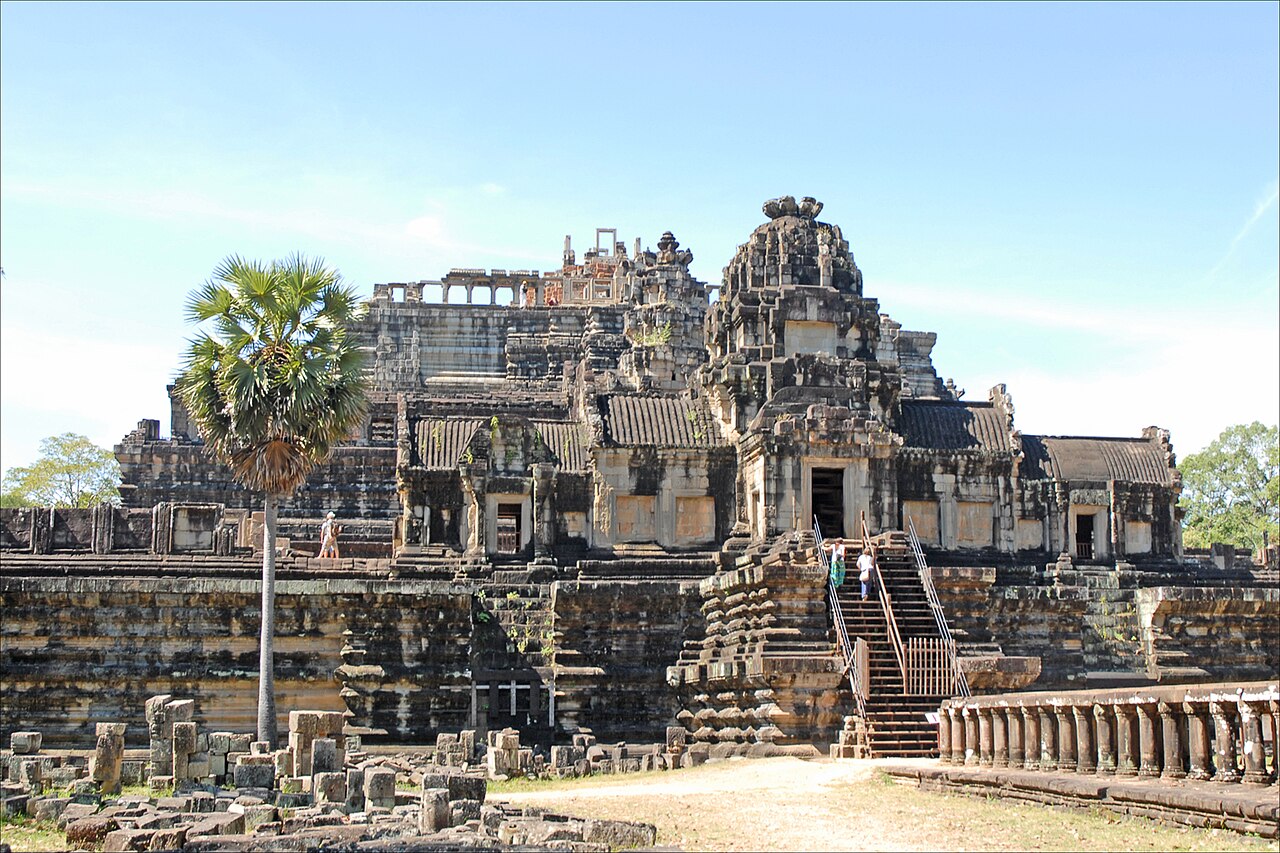
Baphuon is a 11th-century Hindu temple-mountain within Angkor Thom, northwest of Bayon. Constructed under Udayadityavarman II, it was dedicated to Shiva. The temple underwent a massive, decades-long anastylosis restoration by École française d'Extrême-Orient, completed in 2011. Its distinctive silhouette features a long elevated western causeway leading to a three-tiered pyramid structure. The temple represents Mount Meru in Hindu cosmology. Baphuon suffered significant deterioration and partial collapse over centuries, with many stones removed or displaced. The restoration project, one of history's most complex archaeological puzzles, reassembled approximately 300,000 sandstone blocks.
Checked 2026-08-26
The temple comprises a 200-meter western causeway elevated on pillars, leading to the main sanctuary. A reclining Buddha figure, added in the 16th century during Theravada Buddhist conversion, spans the temple's western second-tier wall. The three pyramid levels feature narrow, steep staircases. Gallery walls once bore elaborate bas-reliefs, though many are now fragmentary. The upper terrace offers views across Angkor Thom. Interior spaces include passageways and chambers at various levels. Decorative elements include floral motifs and figurative carvings. The structure demonstrates sophisticated Khmer hydraulic engineering with integrated drainage systems throughout the monument.
Checked 2026-08-26
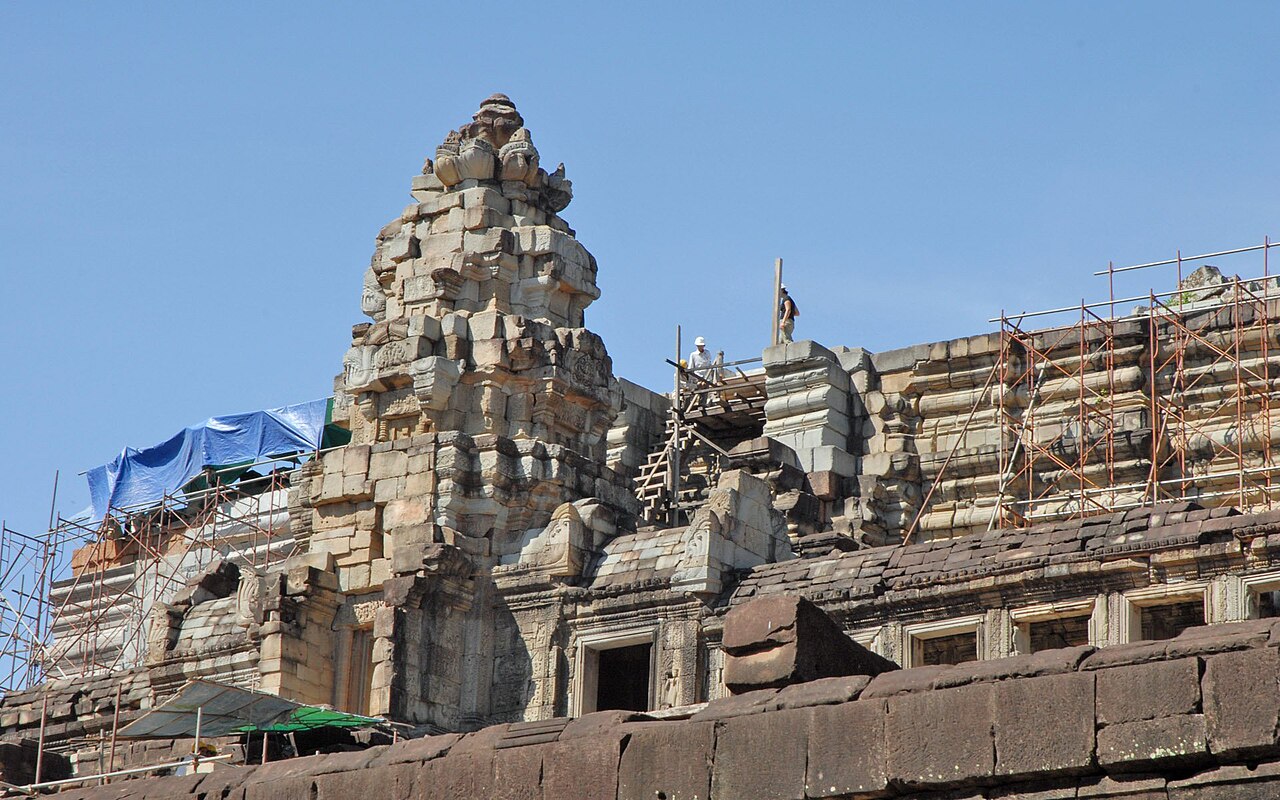
Visitors typically allocate 45 to 90 minutes for Baphuon, depending on climbing interest and physical capacity. The steep staircases to upper levels require careful ascent and descent, adding time for cautious movement. The causeway approach alone demands 10-15 minutes for appreciation. Those examining bas-relief fragments or seeking photography angles may extend their stay. Baphuon combines efficiently with nearby Bayon and Phimeanakas in a half-day Angkor Thom circuit. Morning visits allow cooler temperatures for climbing. The site's compact footprint relative to its vertical emphasis means horizontal exploration is limited compared to sprawling temple complexes elsewhere in Angkor.
Checked 2026-08-26

Dry season months from November to March offer most reliable conditions for climbing Baphuon's steep staircases, though afternoon temperatures remain intense. Wet season visits present slippery stone surfaces and reduced visibility, with increased risk during ascent and descent. Early morning hours provide softer light for photography and marginally cooler temperatures before midday heat accumulates. The temple lacks artificial lighting, restricting meaningful visits to daylight hours. Crowd patterns generally follow Angkor Thom as a whole, with peak concentration mid-morning when tour groups arrive from Angkor Wat sunrise viewings. Check the operator's own site for the travel date before relying on a schedule or fare.
Checked 2026-08-26
Baphuon is accessed through the Angkor Archaeological Park admission system. Tickets are purchased at official park entrances, not at individual monuments. Multi-day passes cover Angkor Thom complexes inclusive of Baphuon. Separate Cambodian national admission policies apply for citizens. No additional monument-specific fees apply at Baphuon itself. Ticket verification occurs at park checkpoints and occasionally at individual temple entrances. Visitors must retain passes for inspection throughout their validity period. Passes are non-transferable and incorporate photographic identification. Purchase locations and accepted payment methods should be verified through official APSARA Authority channels before visiting. Check the operator's own site for the travel date before relying on a schedule or fare.
Checked 2026-08-26

Baphuon sits within Angkor Thom's walled enclosure, accessible via the Victory Gate or other Thom entrances. Transportation from Siem Reap requires arranged tuk-tuk, taxi, bicycle, or motorbike rental covering the 7-10 kilometer journey. Most visitors reach Baphuon as part of structured Angkor Thom itineraries after entering the walled city. The temple's position northwest of Bayon makes it a logical sequential stop. No public transit serves the archaeological zone directly. Walking between Angkor Thom monuments is possible but exposes visitors to intense sun with minimal shade coverage. Road conditions within the park vary, with some segments unpaved and dust-prone during dry months.
Checked 2026-08-26

Steep, narrow staircases present significant fall risk, particularly during descent; handrails are partial and modern additions may not align with original step dimensions. Stone surfaces become extremely slippery when wet or moss-covered. The upper terrace lacks guardrails at edges. Heat exposure is severe with minimal shade at summit levels; water and sun protection are essential. Loose stones and uneven surfaces persist despite restoration. The reclining Buddha wall section has restricted access points. Visitor traffic bottlenecks on staircases during peak hours create congestion hazards. Appropriate footwear with grip is strongly advised. Those with vertigo, limited mobility, or cardiovascular conditions should evaluate climbing feasibility carefully.
Checked 2026-08-26

The elevated causeway offers symmetrical leading-line compositions toward the pyramid mass. Morning side-lighting emphasizes the tiered silhouette and carved textures. The reclining Buddha on the western wall requires wide-angle lenses given restricted positioning space. Upper terrace vantage points capture Bayon's towers in frame. Bas-relief fragments at lower levels reward macro examination. Tripod use may face practical constraints on narrow walkways and staircases. Shadow patterns across tiered walls shift dramatically through morning hours. The causeway pillars create rhythmic repetition opportunities. Overcast conditions flatten the monumental scale but reduce harsh contrast in detailed carving documentation. Drone operation is prohibited throughout Angkor Archaeological Park without explicit authorization.
Checked 2026-08-26
No. The monument features steep staircases, elevated causeways, and uneven stone surfaces throughout. Upper levels are unreachable without climbing.
Yes. Self-guided exploration is permitted. The site lacks extensive interpretive signage, so prior research or a guidebook enhances understanding.
Not recorded. Basic facilities exist at some Angkor Thom locations, but visitors should provision adequately before entering the walled enclosure.
Angkor Thom monuments generally follow park-wide access policies, but specific times should be verified through official sources.
No. The reclining Buddha was added in the 16th century when the temple was converted from Hindu to Buddhist use, centuries after original construction.
Baphuon emphasizes vertical pyramid form with steep ascent, while Bayon spreads horizontally with multiple face-tower peaks. Baphuon offers more strenuous climbing and fewer enclosed spaces.
Loading the interactive map…
The interactive map could not be loaded.


Last updated:
Source: OpenStreetMap contributors, Wikidata ·