War Remnants Museum
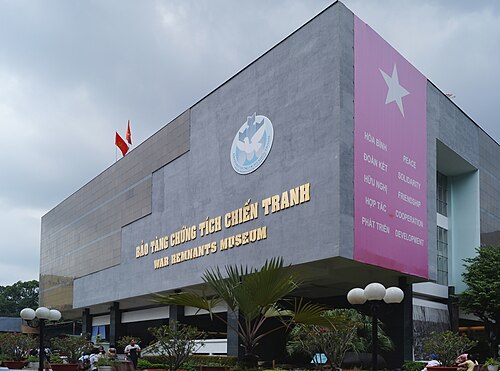
The War Remnants Museum, known locally as Bảo tàng Chứng tích Chiến tranh, stands as a significant institution in Ho Chi Minh City dedicated to documenting the Vietnam War and its enduring consequences.
- Must see
- Museum
Language · 11 published
City guide · Vietnam
Ho Chi Minh City spreads from the historic core around Ben Thanh and Nguyen Hue across the Saigon River and into a much larger urban region. District 1 holds many first-visit landmarks, District 3 adds museums and older residential streets, while Cho Lon in District 5 forms a separate heritage and market cluster that deserves its own half-day route.
Ranked by importance — sitelinks, pageviews and heritage status, not editor preference.
25 places match
Category
Typical visit duration
The War Remnants Museum, known locally as Bảo tàng Chứng tích Chiến tranh, stands as a significant institution in Ho Chi Minh City dedicated to documenting the Vietnam War and its enduring consequences.
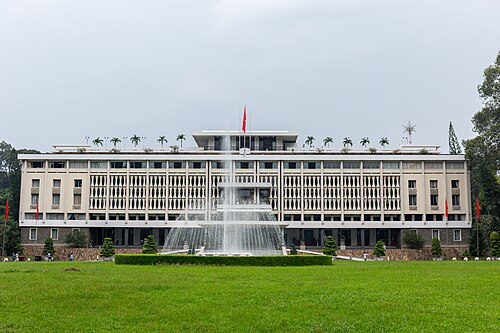
Independence Palace, known locally as Dinh Độc Lập, stands as one of Ho Chi Minh City's most historically significant landmarks. The structure served as the residence and workplace of the President of South Vietnam during the Vietnam War era.
Ben Thanh Market, known locally as Chợ Bến Thành, stands as one of Ho Chi Minh City's most recognised commercial landmarks. The market occupies a central position in District 1, with its distinctive clock tower visible from surrounding streets.
The Saigon Central Post Office is a prominent colonial-era landmark in Ho Chi Minh City, Vietnam.
The Notre-Dame Cathedral Basilica of Saigon is a prominent Catholic cathedral in Ho Chi Minh City, Vietnam. Constructed by French colonists in the late nineteenth century, it stands as one of the city's most recognizable architectural landmarks.
The Jade Emperor Pagoda, known locally as Chùa Ngọc Hoàng, is a Taoist temple in Ho Chi Minh City. Built in 1909 by the Chinese community, it honors the Jade Emperor, the supreme deity in Taoist cosmology.
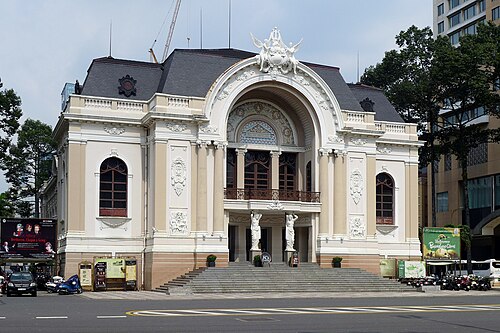
The Saigon Opera House, known locally as Nhà hát Thành phố Hồ Chí Minh, stands as a prominent performing arts venue in central Ho Chi Minh City.
The Cu Chi Tunnels comprise an extensive underground network located northwest of Ho Chi Minh City, formerly Saigon. Constructed during the mid-20th century conflict period, these passages served as hiding spots, supply routes, hospitals, and living quarters.
Nguyen Hue Walking Street is a broad pedestrian promenade in central Ho Chi Minh City, stretching from the People's Committee Building to the Saigon River.
Landmark 81 is a prominent skyscraper in Ho Chi Minh City, Vietnam. It stands within the Vinhomes Central Park development in Binh Thanh District.
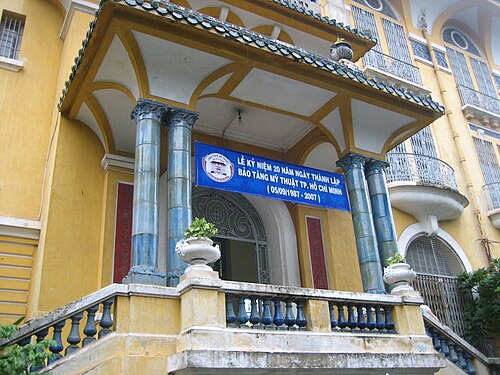
Ho Chi Minh City Museum of Fine Arts is a major cultural institution in Vietnam's largest city. Housed in a distinctive colonial-era building, the museum serves as a repository for Vietnamese artistic heritage spanning multiple periods.
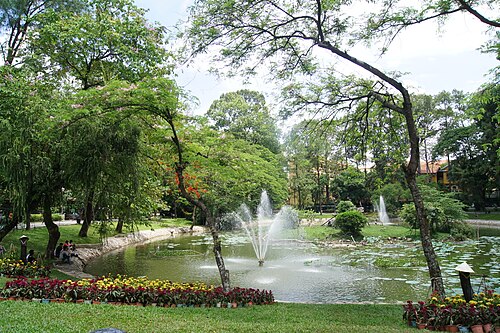
Saigon Zoo and Botanical Gardens is a historic green space in Ho Chi Minh City, combining zoological exhibits with botanical collections. Established during the French colonial period, it represents one of the oldest continuously operating zoos in the region.
Dong Khoi Street is a major thoroughfare in Ho Chi Minh City's District 1, historically significant as the central commercial and cultural artery of the city during French colonial rule.
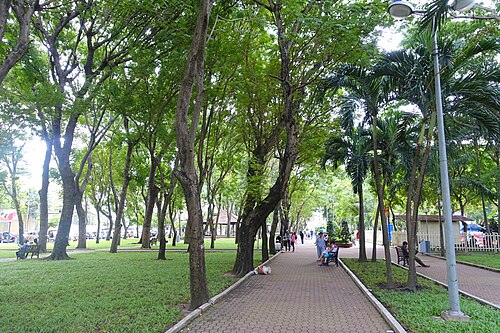
Tao Dan Park is a public green space in Ho Chi Minh City, Vietnam. The park occupies a notable parcel of land in the dense urban fabric of Vietnam's largest city.
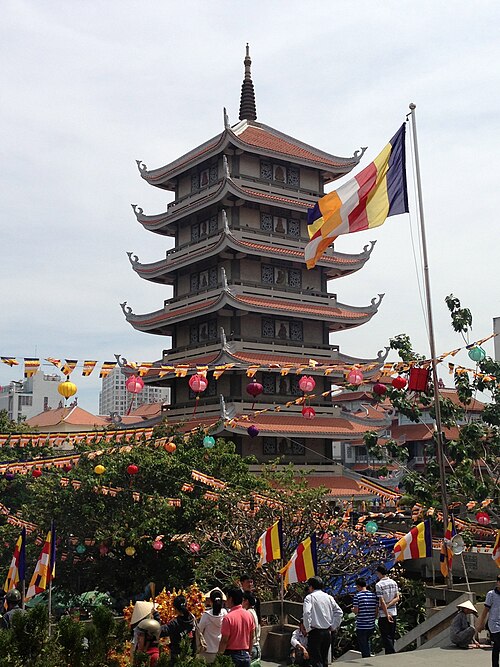
Vinh Nghiem Pagoda is a Buddhist temple in Ho Chi Minh City, Vietnam. It stands as a notable religious and architectural landmark within the urban landscape.
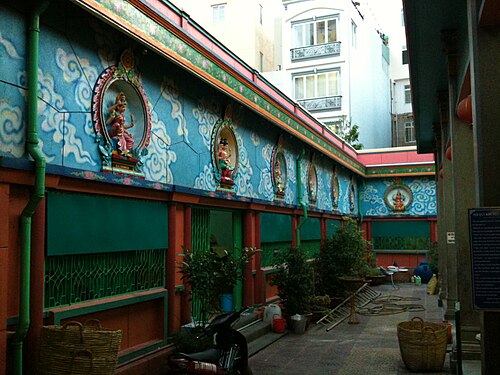
The Mariamman Hindu Temple is a Hindu place of worship in Ho Chi Minh City, Vietnam. It serves the city's small Hindu community, originally established by Tamil immigrants during the colonial period.
An Dong Market is a commercial marketplace located in Ho Chi Minh City, Vietnam. It operates as a retail and wholesale trading venue serving local residents and visitors seeking goods in a traditional market setting.
Le Van Tam Park is a public green space in Ho Chi Minh City, Vietnam. Named after a historical Vietnamese figure, it serves as one of the city's urban parks within the dense metropolitan fabric.
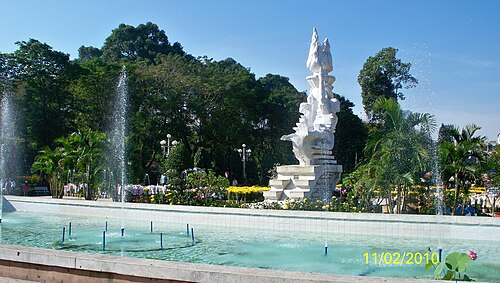
September 23 Park is a public green space in Ho Chi Minh City, Vietnam. The park occupies a central location in District 1, near the backpacker area of Pham Ngu Lao.
Dam Sen Cultural Park is a recreational complex in Ho Chi Minh City, Vietnam. The park combines cultural displays with amusement facilities, offering visitors a mix of entertainment and thematic experiences.
Mong Bridge is a historic bridge structure in Ho Chi Minh City, Vietnam. It spans across a waterway in the urban fabric of the city, representing part of the colonial-era infrastructure that remains within the modern metropolis.
Cu Chi Wildlife Rescue Station is a wildlife rescue facility located in the Cu Chi district near Ho Chi Minh City. The station serves as a rehabilitation centre for animals rescued from illegal wildlife trade, captivity, and habitat destruction.
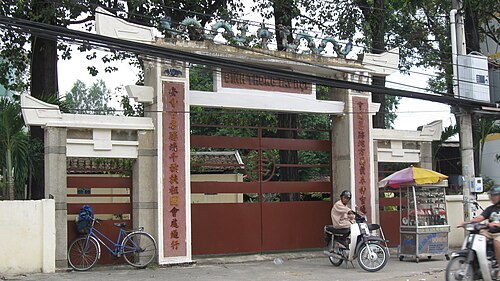
Thong Tay Hoi Communal House, known locally as Đình Thông Tây Hội, stands among Ho Chi Minh City's oldest surviving communal houses. The structure preserves southern Vietnamese timber architecture and maintains active village worship traditions.
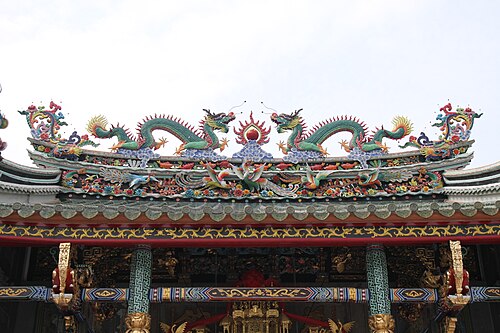
Nhi Phu Assembly Hall, locally called Hội quán Nhị Phủ, stands as one of Chợ Lớn's historic Fujian assembly halls.
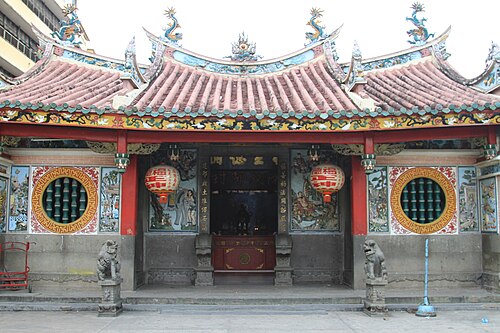
Nghia An Assembly Hall is a historic Teochew Chinese assembly hall and Guan Yu shrine located in Chợ Lớn, Ho Chi Minh City's Chinatown district.
Source: OpenStreetMap contributors, Wikidata ·
Treat District 1 as the central walking cluster, linking Ben Thanh Market, Nguyen Hue, the cathedral area and the riverfront. Pair District 3 with the War Remnants Museum, and plan Cho Lon separately around its markets and assembly halls. Cu Chi and other outer attractions require dedicated journeys rather than being added to a central-city walking day.
Checked 2026-08-26
Walk within compact central clusters, then use the city bus network, Metro Line 1 or a licensed taxi or ride-hailing service for longer transfers. The official city transport portal provides route and stop information. Cross-river and outer-district journeys can take substantially longer than their map distance suggests, so group sights on the same side of the city.
Checked 2026-08-26
A fixed stay length is not recorded. Build the visit around District 1, District 3 and Cho Lon, then add Cu Chi and outer districts only when the available time supports a separate journey.
Group places by district instead of crossing the city repeatedly. Start with District 1, District 3 and Cho Lon; treat Cu Chi and outer districts as separate routes with their own travel allowance.
Use Walking, metro, bus and licensed taxi. Walk within compact clusters and consult the linked official transport information before making longer transfers or relying on a particular route.
Only within individual neighbourhood clusters. The main visitor areas are separated by distances, waterways, major roads or regional approaches, so longer links normally need public transport or a licensed vehicle.
Plan Cu Chi and outer districts separately from District 1, District 3 and Cho Lon. Check the current route, return connection and any access requirements on the official source before departure.
Set your days, your pace and the hours you actually want to be out. The planner works around closing days and travel time, and leaves room to eat.