Diocletian's Palace
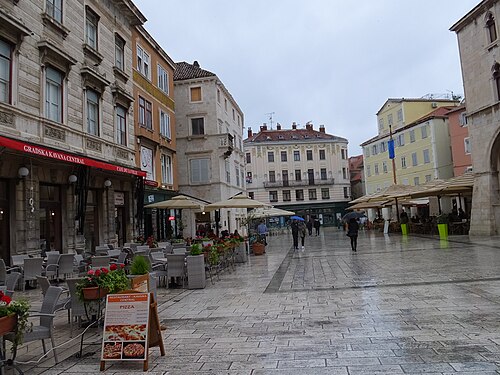
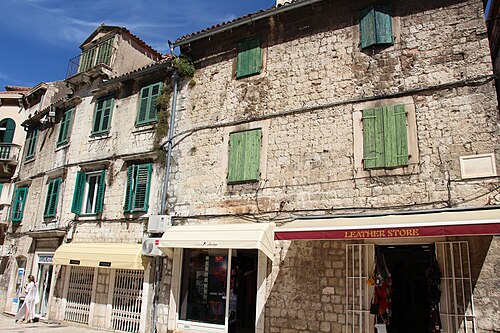
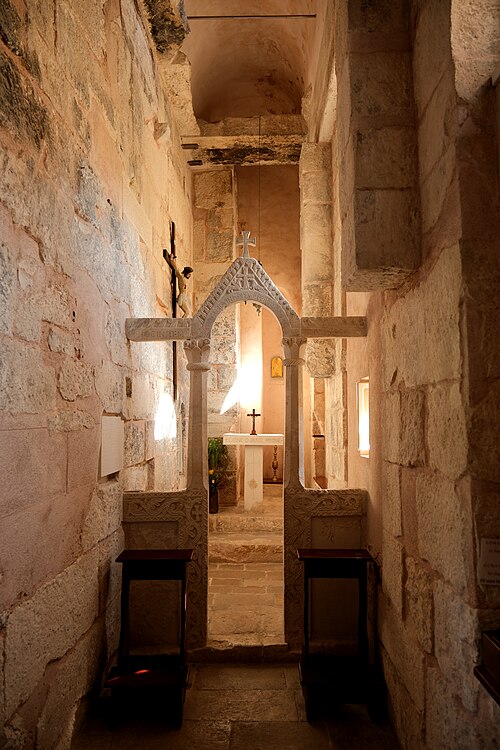
Diocletian's Palace is a Roman palace complex in Split, Croatia, built for Emperor Diocletian in the late third and early fourth centuries CE. The local name is Dioklecijanova palača.
- Must see
- Historic monument
Language · 11 published
City guide · Croatia
Split's historic core grows directly out of Diocletian's Palace and opens onto the Riva, creating a dense pedestrian centre between stone lanes and the harbour. Marjan rises west of that core, while city beaches spread along separate shores. Trogir and the islands are outward journeys rather than neighbourhoods of Split. The port places ferries, intercity buses and local movement in the same busy waterfront zone.
Set your days, your pace and the hours you actually want to be out. The planner works around closing days and travel time, and leaves room to eat.
Ranked by importance — sitelinks, pageviews and heritage status, not editor preference.
50 places match
Category
Typical visit duration
Diocletian's Palace is a Roman palace complex in Split, Croatia, built for Emperor Diocletian in the late third and early fourth centuries CE. The local name is Dioklecijanova palača.
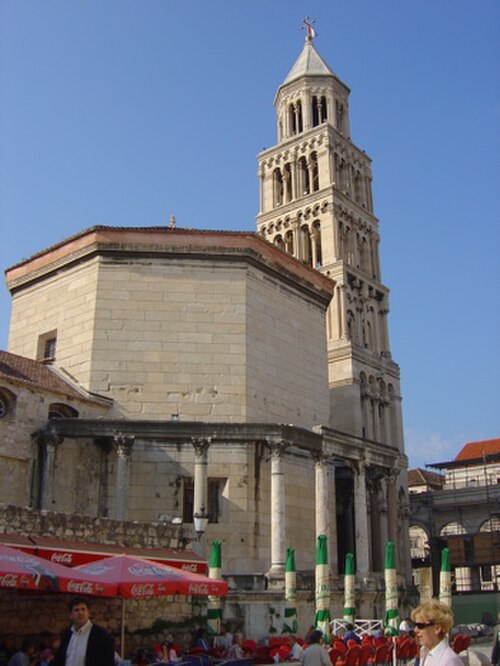
The Cathedral of Saint Domnius, known locally as Katedrala svetog Dujma, stands within Diocletian's Palace in Split's historic core.
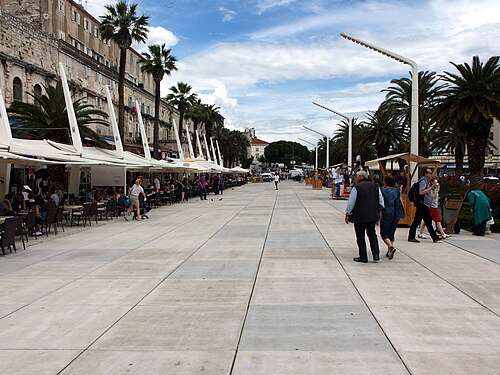
Splitska Riva is the central waterfront promenade of Split, Croatia, running along the edge of the historic core adjacent to Diocletian's Palace.

Peristyle Square, known locally as Peristil, is the central open space of Diocletian's Palace in Split, Croatia. This rectangular courtyard formed the ceremonial heart of the Roman emperor's retirement complex, built in the early fourth century CE.
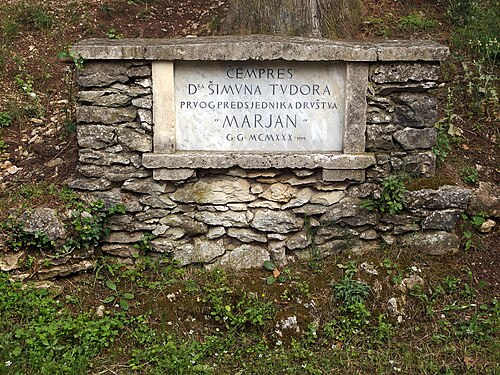
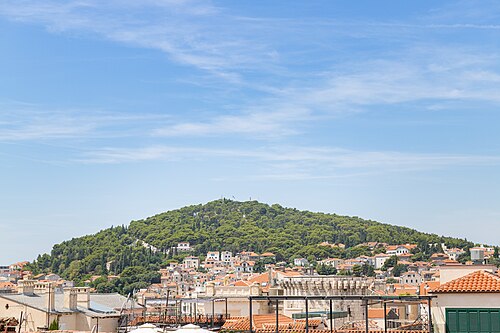
Marjan Forest Park is a protected nature area on the Marjan peninsula, rising west of Split's historic core. Known locally as Park-šuma Marjan, it functions as the city's primary green space and recreational zone.
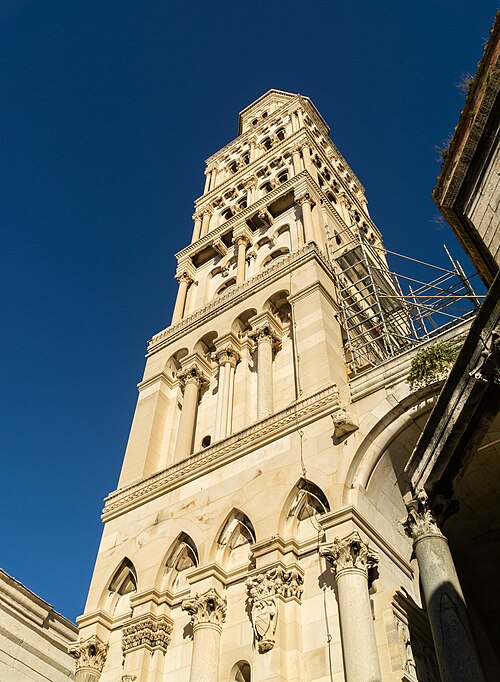
The Saint Domnius Bell Tower stands beside the Cathedral of Saint Domnius within Diocletian's Palace in Split's historic core. This medieval campanile rises above the Peristyle, the palace's central square.
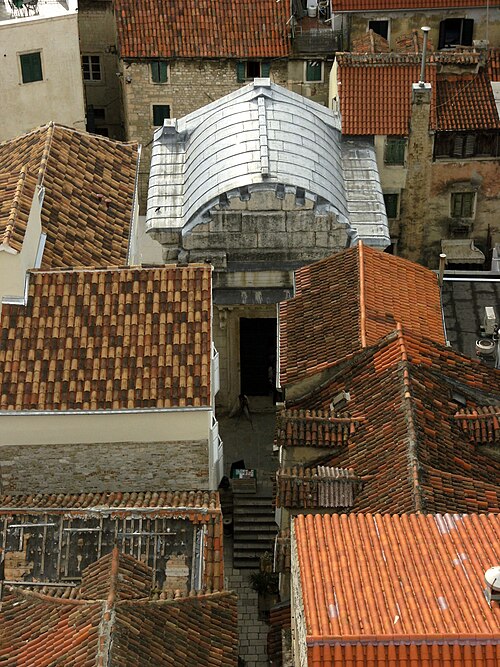
The Temple of Jupiter, locally known as Jupiterov hram, stands within Diocletian's Palace in Split's historic core. This ancient Roman temple ranks among the best-preserved structures of its kind from the imperial period.
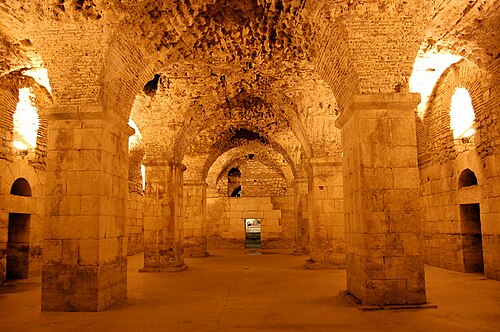
The Basements of Diocletian's Palace, known locally as Podrumi Dioklecijanove palače, constitute the subterranean level of the ancient Roman palace built for Emperor Diocletian in the fourth century CE.
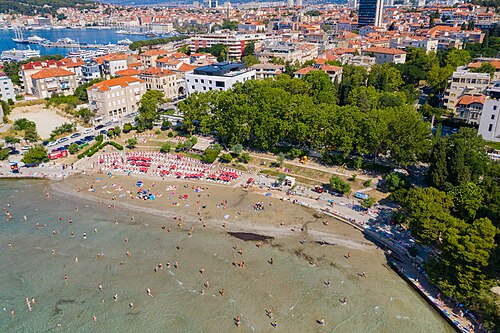
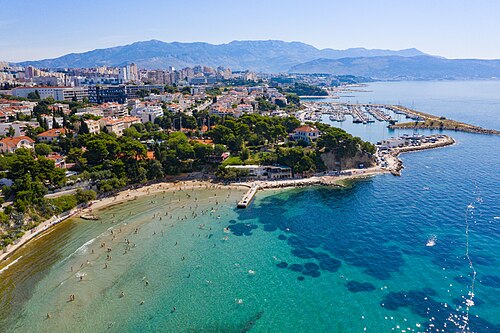
Bačvice Beach is a sandy beach located on the eastern edge of Split's city centre, within easy walking distance of the historic Diocletian's Palace.
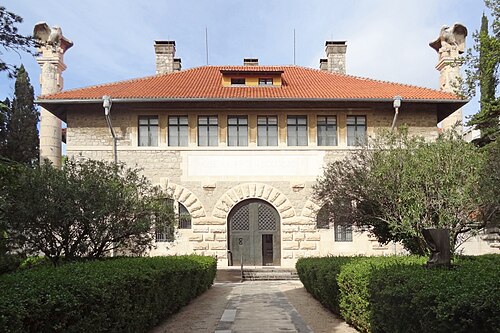
The Mestrovic Gallery is an art museum in Split dedicated to the work of Ivan Mestrovic, Croatia's most celebrated modern sculptor.
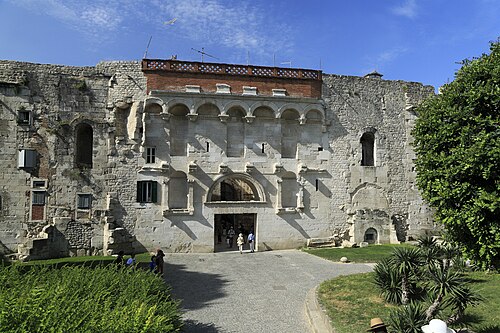
The Golden Gate, known locally as Zlatna vrata, stands as a historic landmark within Split's ancient urban fabric. This monumental entrance formed part of the defensive enclosure of Diocletian's Palace, the UNESCO-listed Roman complex that defines Split's historic core.
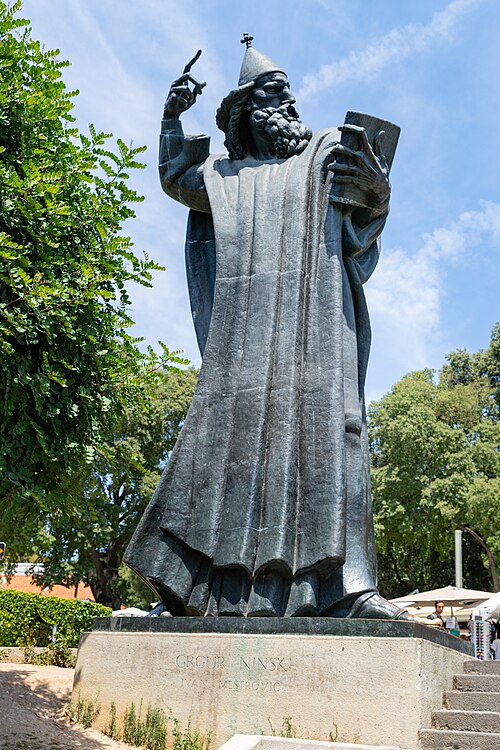
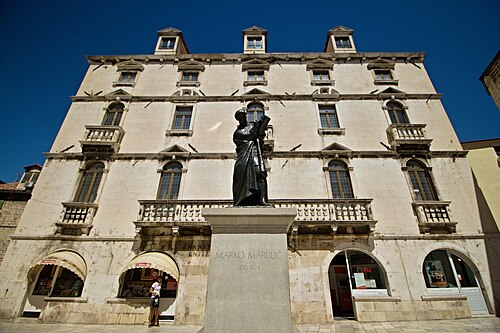
The Gregory of Nin Statue is a monumental bronze sculpture located in Split, Croatia. It depicts Gregory of Nin, a medieval bishop who championed the use of the Croatian language in religious services.
Pjaca People's Square, locally Narodni trg - Pjaca, stands as the main public square in Split's historic core. It occupies the space where the Roman camp's command area once lay, later becoming the medieval heart of civic life.
Fruit Square, known locally as Voćni trg, is a historic public square in Split, Croatia. The square takes its name from the fruit market that historically operated in this space.
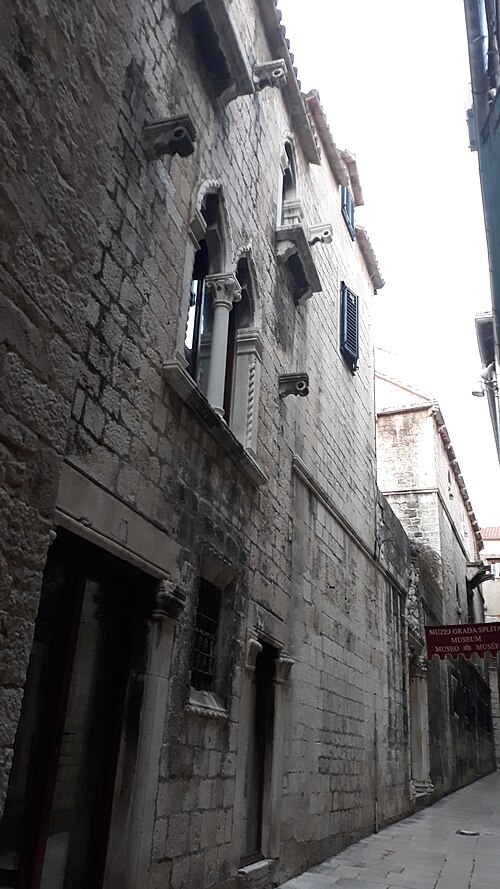
Split City Museum, locally Muzej grada Splita, is a municipal museum institution in Split, Croatia. It preserves and presents the urban history of Split from antiquity through the medieval period to modern times.
The Ethnographic Museum Split, locally named Etnografski muzej Split, is a museum in the historic core of Split, Croatia. It occupies a significant position within the ancient fabric of the city, which developed around the Palace of Roman Emperor Diocletian.
The Archaeological Museum in Split, known locally as Arheološki muzej u Splitu, stands as a significant cultural institution in Croatia's second-largest city. It preserves and presents archaeological finds from the Split region and broader Dalmatian area.
The Gallery of Fine Arts Split is an art museum in Split, Croatia. Its local name is Galerija umjetnina Split. The institution holds the Wikidata identifier Q5519009.
The Croatian Maritime Museum is a cultural institution in Split dedicated to the maritime heritage of the Adriatic coast.
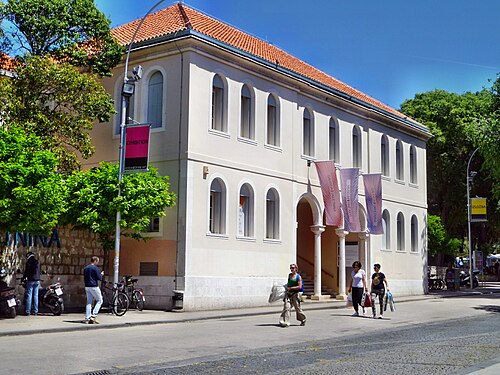
The Museum of Croatian Archaeological Monuments is a museum in Split dedicated to preserving and presenting Croatia's medieval archaeological heritage.
Ivan Meštrović's Kaštelet is a historic property in Split associated with the renowned Croatian sculptor Ivan Meštrović. The site forms part of the broader Meštrović legacy in the city, which includes multiple cultural institutions.
Sustipan is a coastal park and promontory on the Marjan peninsula, west of Split's historic core. The site occupies elevated ground above the Adriatic, offering views toward the harbour and islands.
The West Coast Promenade, known locally as Zapadna obala, is a waterfront walkway in Split, Croatia. It runs along the western edge of the city centre, offering views of the Adriatic Sea and the port area.
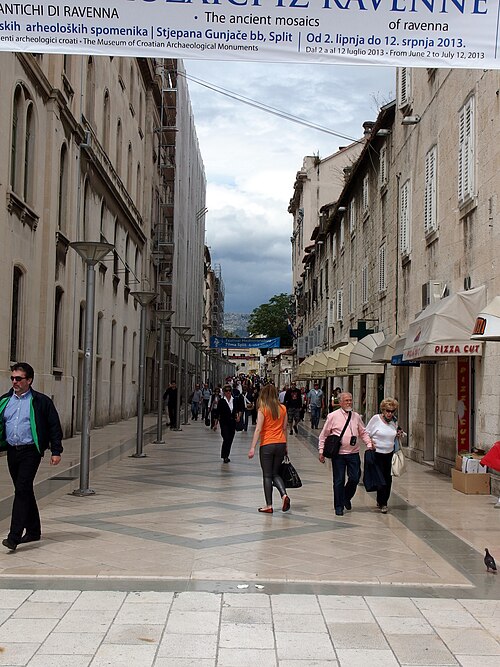
Marmont Street, known locally as Marmontova ulica, is a prominent pedestrian thoroughfare in Split, Croatia.
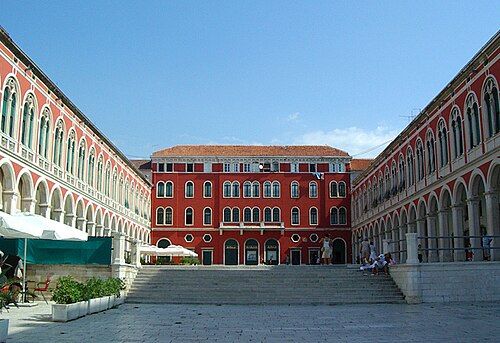
Prokurative Square, known locally as Prokurative, is a prominent public square in Split, Croatia. The square features distinctive neo-Renaissance architecture with red-orange facades reminiscent of Venetian design influences.
Green Market, known locally as Pazar, is Split's principal open-air market situated near the eastern edge of Diocletian's Palace. The market occupies a long rectangular space where vendors sell fresh produce, regional specialties, and everyday goods.
Peškarija is Split's historic fish market, a covered marketplace located near the waterfront of Croatia's second-largest city. The structure features distinctive Secessionist architecture with decorative ironwork and large windows that allow natural light to illuminate the trading floor.
Matejuška is a small historic fishing harbour in Split, Croatia, situated on the western edge of the Riva waterfront. This compact working port represents one of the last remnants of traditional maritime life in Croatia's second-largest city.
Varoš Quarter, locally known as Varoš, is one of the oldest residential neighbourhoods in Split, Croatia.
Radunica is a historic residential quarter in Split, Croatia, situated east of Diocletian's Palace. This working-class neighbourhood preserves traditional Dalmatian urban fabric with narrow stone streets and compact houses.
Split Synagogue, known locally as Splitska sinagoga, stands as a Jewish house of worship in the coastal Croatian city of Split.
The Church of Saint Martin, known locally as Crkva svetog Martina, stands within the Diocletian's Palace complex in Split, Croatia. This small early Christian church occupies a space that was originally part of the Roman emperor's military quarters.
Telegrin Peak, known locally as Vrh Telegrin, is a ranked visitor destination in the Split area of Croatia. The peak forms part of the elevated terrain overlooking the city and surrounding Adriatic coastline.
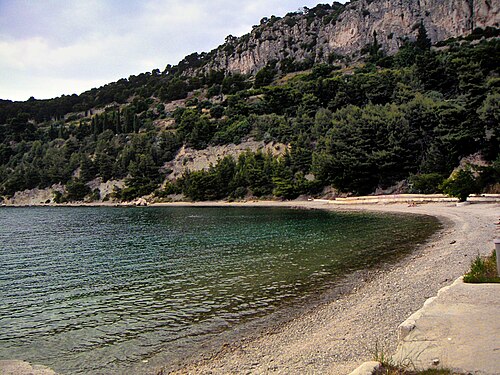
Kasjuni Beach is a pebble beach on the southern side of Marjan Hill, a forested peninsula west of Split's historic core. Locally known as Plaža Kašjuni, it sits within the protected Marjan Forest Park area.
Jezinac Beach, known locally as Plaža Ježinac, is a coastal bathing area in Split, Croatia. It lies along the Adriatic shoreline within the broader Split urban area.
Firule Beach, known locally as Plaža Firule, is a coastal beach area located in Split, Croatia. It sits along the eastern shoreline of the Split peninsula, positioned between the city center and the suburban district of Bacvice.
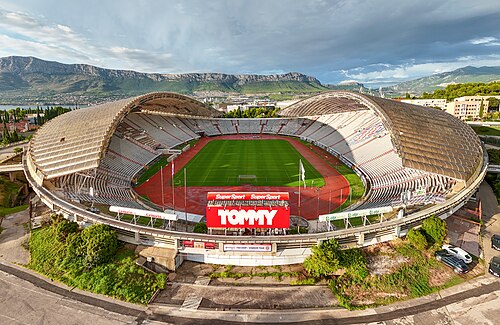
Poljud Stadium, known locally as Stadion Poljud, is a multi-purpose sports venue located in Split, Croatia. It serves as the home ground of HNK Hajduk Split, one of the country's most storied football clubs.
Spaladium Arena is a large indoor sports and entertainment venue located in Split, Croatia. The arena opened as a multi-purpose facility designed to host basketball, handball, concerts, and other major events.
The Split Science Museum and Zoo, known locally as Prirodoslovni muzej i zoološki vrt Split, is a ranked visitor place retained from the available fact pack.
Froggyland is a visitor attraction in Split, Croatia. It is a museum dedicated to taxidermied frogs arranged in human scenarios, a distinctive and unusual cultural exhibit.
The Game of Thrones Museum Split is a visitor attraction in Split, Croatia, dedicated to the HBO television series Game of Thrones. The museum commemorates the show's extensive filming in Croatia, particularly in the Dalmatian region.
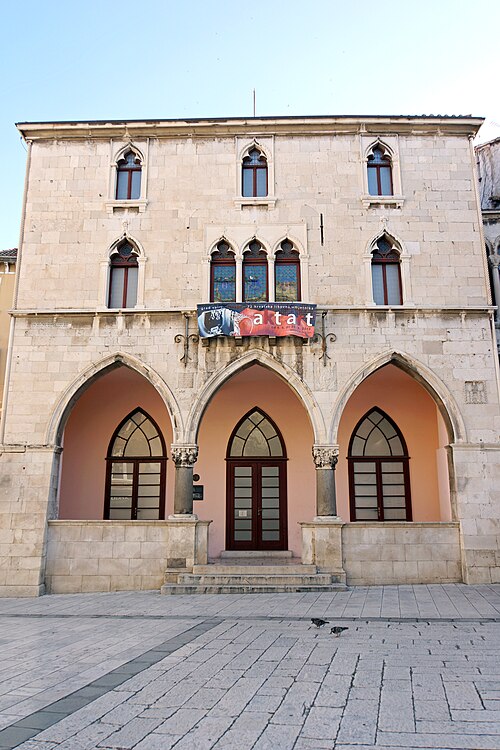
Old City Hall stands as a significant historical building in Split, Croatia, representing the civic heritage of this coastal city. The structure reflects architectural traditions that have shaped Dalmatian urban landscapes over centuries.
Palača Cindro is a historic palace in Split, Croatia, situated within the UNESCO-listed Diocletian's Palace complex.
Palača Milesi is a historic palace in Split, Croatia, situated within the UNESCO-listed Diocletian's Palace complex. The building represents the layered architectural heritage of the city, combining elements from different historical periods.
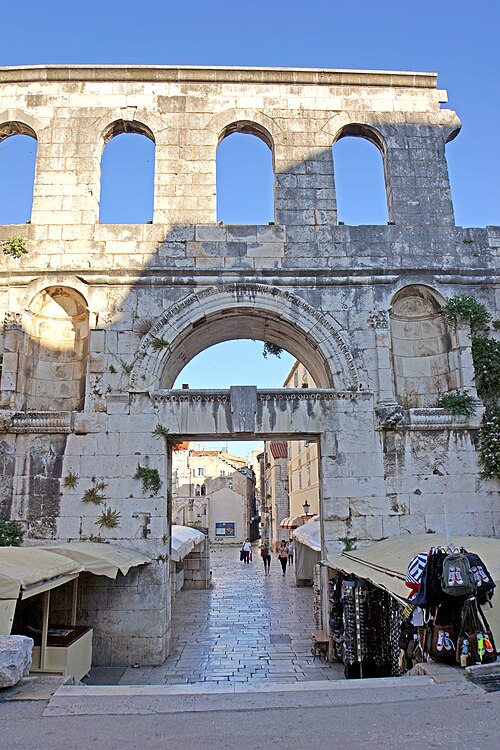
Srebrna vrata, or the Eastern Gate, stands among the four principal Roman gates of Diocletian's Palace in Split, Croatia.
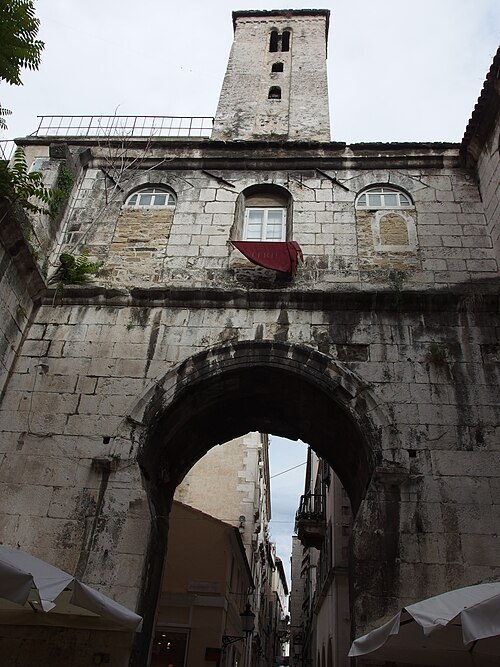
Iron Gate, locally Željezna vrata, stands among Split's retained visitor places within the historic core. This ancient passage forms part of the palace structure attributed to Roman emperor Diocletian, whose retirement complex fundamentally shaped the city's development.
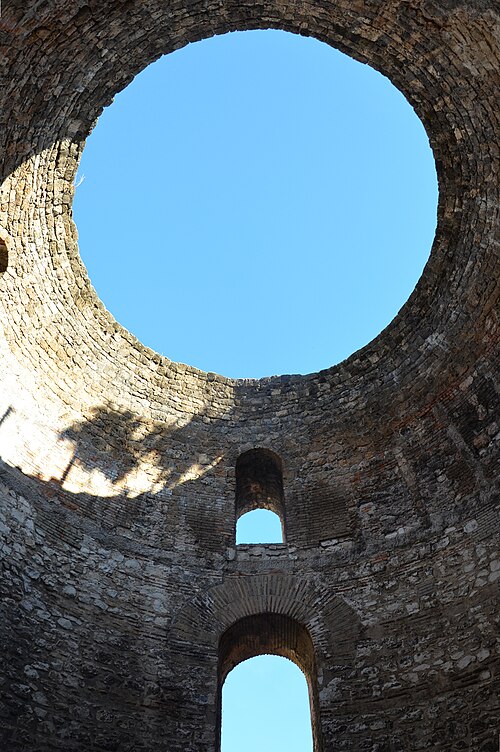
The Vestibule, or Vestibul, is a grand domed hall that once served as the formal entrance to the imperial residential quarters of Diocletian's Palace in Split, Croatia.
Let Me Pass Street, locally named Pusti me proć, is a narrow passageway in Split's historic core. The street's distinctive name reflects its extremely slim width, requiring pedestrians to squeeze through single-file.
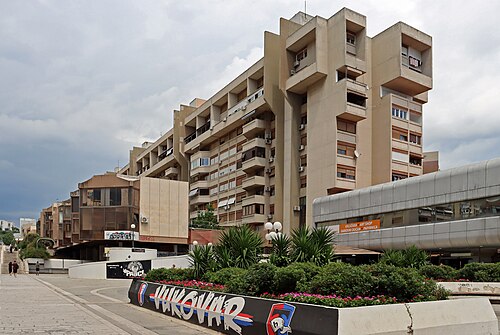
Split 3 is a large modernist residential district in the eastern part of Split, Croatia. Built primarily during the Yugoslav era, it represents one of the most significant examples of post-war urban planning in the region.
The Diocletianus Aqueduct is a Roman aqueduct built during the reign of Emperor Diocletian in the late 3rd or early 4th century CE to supply water to his palace at Split.
Source: OpenStreetMap contributors, Wikidata ·
Explore the palace substructures, Peristyle, old-town lanes and Riva in one pedestrian sequence. Use another block for Marjan, choosing its access point before climbing, and do not assume every beach lies on that route. Trogir needs a land connection; island visits depend on the sailing selected. Keep those excursions away from a day already committed to the historic core.
Checked 2026-08-26
Walking is the default inside Diocletian's Palace and the old town, where through-traffic is not a useful way to sightsee. City buses serve Marjan approaches, beaches and outer districts, while bicycles suit selected waterfront routes. Ferries and catamarans leave from the port on independent schedules. Use the Split Tourist Board's current transport directory and the named operator for the exact bus or sailing before departure.
Checked 2026-08-26
No official city-wide stay length is recorded. Begin with Diocletian's Palace, the old town and Riva, then add Marjan or a city beach. Trogir and island travel need extra itinerary space.
Keep the palace, old-town lanes and Riva in one walking route. Plan Marjan from a chosen access point and place each beach according to its own coast. Treat Trogir or an island as an excursion.
Walk in the palace and old town, use local buses for outer districts and consult the relevant operator for ferries or catamarans. The Tourist Board's transport page links the current options.
The palace, old town and Riva are naturally pedestrian. Marjan's approaches, beaches beyond the centre, Trogir and the port connections require a route choice beyond that compact walk.
Trogir uses a land connection, while each island depends on a specific sailing. Verify the return departure and seasonal operation before leaving Split, especially when accommodation remains in the city.