
4 min walk
Radunica Quarter
- Must see
- Activity
Language · 11 published
Museum · Split
| Monday | 09:00 – 19:00 |
|---|---|
| Tuesday | 09:00 – 19:00 |
| Wednesday | 09:00 – 19:00 |
| Thursday | 09:00 – 19:00 |
| Friday | 09:00 – 19:00 |
| Saturday | 09:00 – 17:00 |
| Sunday | 10:00 – 17:00 |
Checked 2026-08-31 · Source
Read from the OpenStreetMap access tags; anything not listed has no tag recorded.
Set the group type to family in the planner and the day window contracts to about three quarters of a solo day.
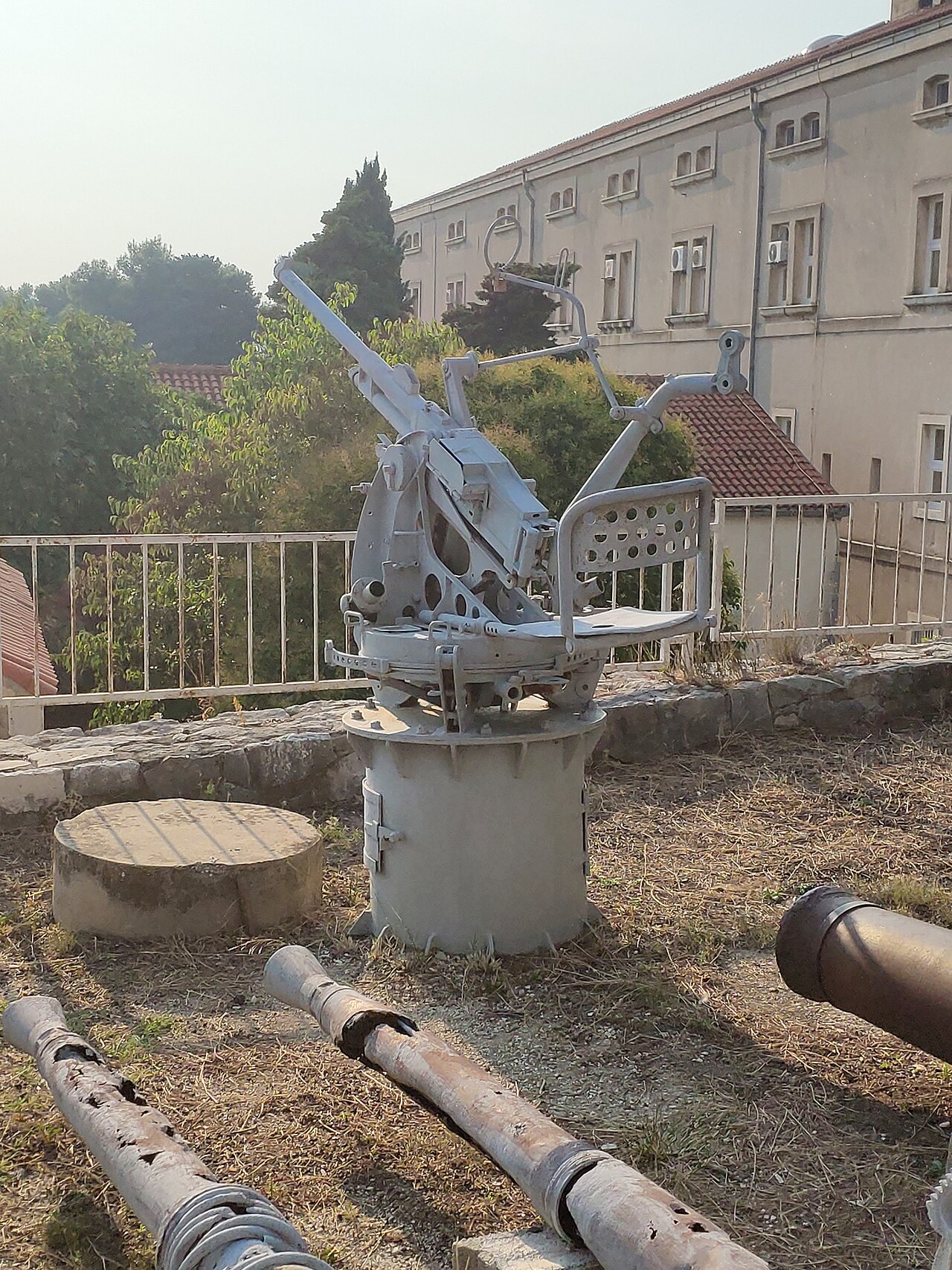
The Croatian Maritime Museum occupies Split’s Gripe Fortress and explores the Adriatic through the objects, technology and traditions of seafaring. The seventeenth-century military setting gives the visit an immediate sense of place: this is a museum about a coastal region housed in a structure built to defend it. The collection connects Split with shipbuilding, navigation, fishing, harbour activity and naval history, showing how the sea shaped work, movement and security along the Dalmatian coast. It is a useful stop for travellers who want to understand the maritime foundations beneath Split’s modern waterfront and historic identity.
Checked 2026-08-26 · Source
The displays include ship models, navigational instruments, maritime paintings and historical photographs. Together they trace the development of boat construction, harbour operations and coastal livelihoods around Dalmatia. Fishing traditions and local shipyards place technical objects within the working life of the region, while nautical equipment and weaponry show both commercial and military sides of Adriatic travel. The fortress itself strengthens the story: its walls and military architecture are not just a backdrop but part of the historical setting. Give attention to scale and craftsmanship in the models, then step back to see how maritime activity influenced Split’s economy and urban growth.
Checked 2026-08-26 · Source
Allow around sixty to ninety minutes for the permanent displays and the fortress setting. That is enough for a steady first visit through models, instruments, images and maritime artefacts, with time to notice the building as well as the collection. Travellers with a strong interest in ships, navigation or Dalmatian coastal history may want longer. The museum is compact enough to combine with a wider Split itinerary, especially a walk between the historic centre, the waterfront and eastern city sights. Keep the visit unhurried: the ship models and instruments reward close looking more than a quick pass through the rooms.
Checked 2026-08-26 · Source
A morning visit is a practical choice for travellers who want quieter galleries and time to study the models and instruments. In summer, the museum offers a cultural break from Split’s strong sun and busy waterfront, while the fortress provides a setting with some shelter from the open streets. Spring and autumn are comfortable for combining Gripe with a longer walk through the city. Winter can suit visitors building a quieter indoor itinerary. The museum works best when paired with nearby historic sights rather than squeezed between fixed activities, because the fortress architecture deserves a few minutes of attention on its own.
Checked 2026-08-26 · Source
Treat the Croatian Maritime Museum as a separate cultural attraction within Split’s urban area. Entry to the museum is distinct from walking around the city or visiting Diocletian’s Palace, and the visit is best planned as its own stop at Gripe Fortress. Keep identification with you if you use reduced admission categories during a museum-focused day, and allow enough time to experience both the collection and the historic building. The principal value is the concentration of maritime material: ship models, instruments, photographs, paintings and objects that connect the Adriatic to everyday work and regional history.
Checked 2026-08-26 · Source
Gripe Fortress lies east of Split’s historic centre. From the waterfront and Diocletian’s Palace, the museum can be incorporated into a walking route through the urban core and eastern neighbourhoods. Buses connect the wider city with the area, while taxis and ride services provide another option. The approach includes some elevation change, and parking close to a historic fortress may be limited. A practical day plan is to visit the museum after the old town, or begin at Gripe and walk back towards the palace and Riva. This keeps the city’s maritime and historic layers in one connected outing.
Checked 2026-08-26 · Source
Gripe Fortress retains the uneven surfaces, steps, narrow passages and low doorways of a historic military structure. Wear shoes with a secure sole and move carefully through changes in level. These features can make the museum harder to navigate for guests who need step-free access. Stone interiors can feel warm in summer, especially where air movement is limited, so carry water for the wider walk. English interpretation may vary across displays, and the fortress can feel more demanding than a modern gallery. On busy days, allow space around models and cases, and keep photography equipment compact in confined rooms.
Checked 2026-08-26 · Source
The fortress walls, doorways and military forms provide strong architectural subjects before you turn to the collection. Inside, ship models, navigation instruments, paintings and historic photographs offer detail-rich compositions, but compact equipment is easier in narrow rooms and around display cases. Use the light available and keep flash away from objects when museum directions require it. Outdoor fortress surfaces can provide broader angles and stronger contrast than the interiors. If you are combining the visit with a walk back towards the centre, the changing relationship between Gripe, the city and the coast gives the day a useful visual sequence.
Checked 2026-08-26 · Source
No. It is housed in Gripe Fortress, a separate seventeenth-century military site east of the palace and historic centre.
It covers Adriatic maritime heritage through shipbuilding, fishing, navigation, harbour activity and naval history, using models, instruments, paintings, photographs and related objects.
Allow about sixty to ninety minutes for the displays and Gripe Fortress. Ship enthusiasts and visitors focused on Dalmatian coastal history may want additional time.
Yes. Gripe Fortress lies east of the old town, so the museum can be linked with Diocletian’s Palace, the Riva and an eastward or westward city walk.
The seventeenth-century Gripe Fortress provides the physical setting for the maritime collection. Its military walls, steps and historic layout add context to Split’s long relationship with the Adriatic.
Wear comfortable shoes with a secure sole because the fortress has uneven surfaces, steps, narrow passages and low doorways. Water is useful when combining the museum with a longer walk through Split.
Loading the interactive map…
The interactive map could not be loaded.

Last updated:
Source: OpenStreetMap contributors ·