Smart Self-Managed Tours

City guide · Croatia

Split

A photograph of Split
Photograph · dronepicr · CC BY 2.0

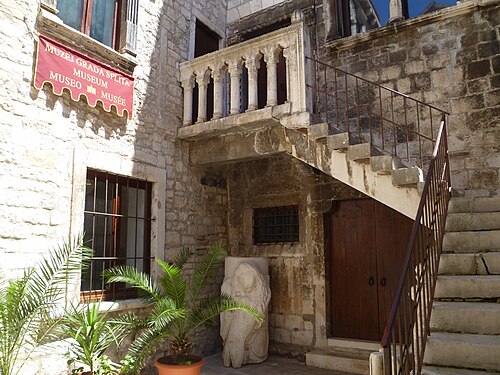
Split's historic core grows directly out of Diocletian's Palace and opens onto the Riva, creating a dense pedestrian centre between stone lanes and the harbour. Marjan rises west of that core, while city beaches spread along separate shores. Trogir and the islands are outward journeys rather than neighbourhoods of Split. The port places ferries, intercity buses and local movement in the same busy waterfront zone.

Practical information

Language spoken
Croatian
National practical orientation; regional and minority languages may also be used
Dialling code
+385
International calling code; local area and mobile prefixes still apply
Currency
Euro (EUR)
Use the official local currency; card acceptance varies by place
Emergency number
112
Use only for an emergency; tourist assistance may use a separate number
Plug type
Type C and F · 230 V
Check that chargers support the recorded voltage before using an adapter
Tap water
Safe from treated public supplies
Public drinking water is regulated; follow local notices on islands or after disruption

Turn this list into a plan

Set your days, your pace and the hours you actually want to be out. The planner works around closing days and travel time, and leaves room to eat.

Plan Split

Planning a visit

Suggested stay
Not recorded
Getting around
Walking, city bus, bicycle and ferry
  1. January: viable with meaningful trade-offs
  2. February: viable with meaningful trade-offs
  3. March: good time to visit
  4. April: good time to visit
  5. May: best time to visit
  6. June: best time to visit
  7. July: good time to visit
  8. August: good time to visit — current month
  9. September: best time to visit
  10. October: good time to visit
  11. November: viable with meaningful trade-offs
  12. December: viable with meaningful trade-offs
  • Best time
  • Good time
  • Viable with trade-offs
  • Difficult conditions

Sources

Top things to see

Ranked by importance — sitelinks, pageviews and heritage status, not editor preference.

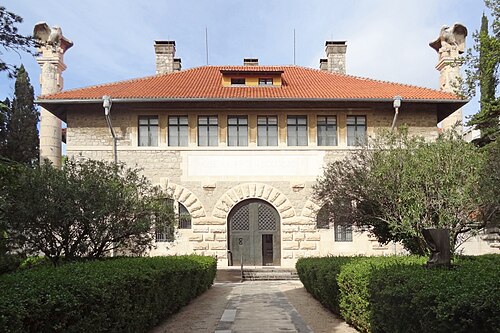
  1. Archaeological Museum Split Archaeological Museum Split
    02 1 hr 30 min

    Archaeological Museum Split

    The Archaeological Museum in Split, known locally as Arheološki muzej u Splitu, stands as a significant cultural institution in Croatia's second-largest city. It preserves and presents archaeological finds from the Split region and broader Dalmatian area.

    • Must see
    • Museum
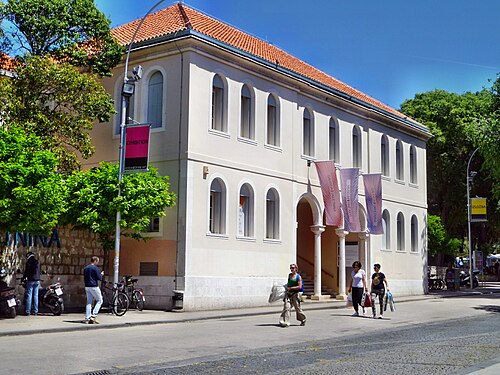
  2. Museum of Fine Arts Museum of Fine Arts
    03 1 hr 30 min

    Museum of Fine Arts

    The Gallery of Fine Arts Split is an art museum in Split, Croatia. Its local name is Galerija umjetnina Split. The institution holds the Wikidata identifier Q5519009.

    • Must see
    • Museum
  3. Hrvatski Pomorski muzej Hrvatski Pomorski muzej
    04 1 hr 30 min

    Hrvatski Pomorski muzej

    The Croatian Maritime Museum is a cultural institution in Split dedicated to the maritime heritage of the Adriatic coast.

    • Must see
    • Museum
  4. Meštrović's Crikvine-Kaštilac Meštrović's Crikvine-Kaštilac
    05 45 min

    Meštrović's Crikvine-Kaštilac

    Ivan Meštrović's Kaštelet is a historic property in Split associated with the renowned Croatian sculptor Ivan Meštrović. The site forms part of the broader Meštrović legacy in the city, which includes multiple cultural institutions.

    • Must see
    • Historic monument
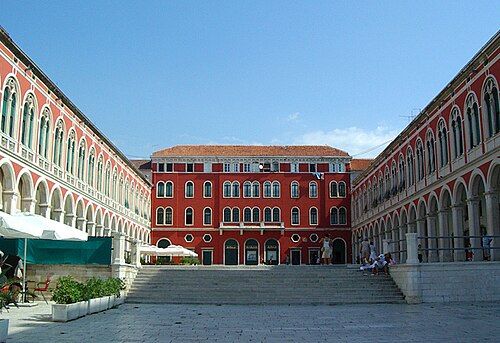
  5. Republic Square Republic Square
    06 45 min

    Republic Square

    Prokurative Square, known locally as Prokurative, is a prominent public square in Split, Croatia. The square features distinctive neo-Renaissance architecture with red-orange facades reminiscent of Venetian design influences.

    • Must see
    • Historic monument
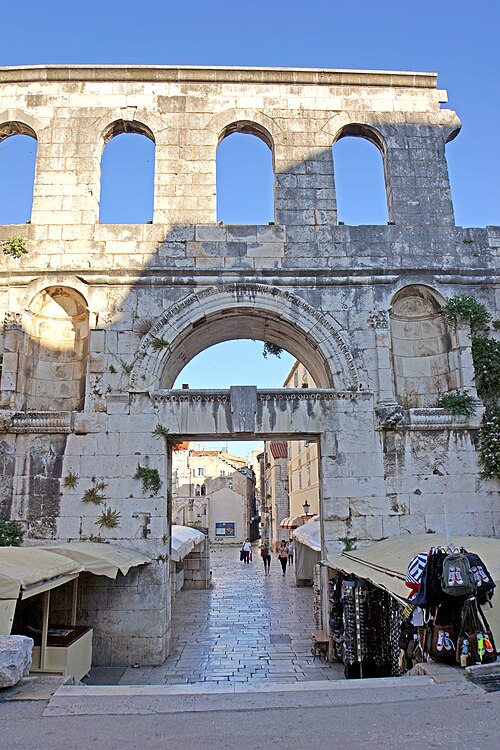
  6. Silver Gate Silver Gate
    07 45 min

    Silver Gate

    Srebrna vrata, or the Eastern Gate, stands among the four principal Roman gates of Diocletian's Palace in Split, Croatia.

    • Must see
    • Historic monument
  7. Diocletianus Aqueduct Diocletianus Aqueduct
    08 45 min

    Diocletianus Aqueduct

    The Diocletianus Aqueduct is a Roman aqueduct built during the reign of Emperor Diocletian in the late 3rd or early 4th century CE to supply water to his palace at Split.

    • Must see
    • Historic monument
  8. Galerija Emanuela Vidovića
    09 1 hr 30 min

    Galerija Emanuela Vidovića

    The Emanuel Vidović Gallery is a dedicated art gallery in Split, Croatia, bearing the local name Galerija Emanuela Vidovića. It honours the Croatian painter Emanuel Vidović, a significant figure in Croatian modern art.

    • Must see
    • Museum
  9. Labirint
    32 45 min

    Labirint

    • High
    • Historic monument

Source: OpenStreetMap contributors, Wikidata ·

How the city is laid out

Explore the palace substructures, Peristyle, old-town lanes and Riva in one pedestrian sequence. Use another block for Marjan, choosing its access point before climbing, and do not assume every beach lies on that route. Trogir needs a land connection; island visits depend on the sailing selected. Keep those excursions away from a day already committed to the historic core.

Checked 2026-08-26

Getting around

Walking is the default inside Diocletian's Palace and the old town, where through-traffic is not a useful way to sightsee. City buses serve Marjan approaches, beaches and outer districts, while bicycles suit selected waterfront routes. Ferries and catamarans leave from the port on independent schedules. Use the Split Tourist Board's current transport directory and the named operator for the exact bus or sailing before departure.

Checked 2026-08-26

Common questions

How many days should I spend in Split?

No official city-wide stay length is recorded. Begin with Diocletian's Palace, the old town and Riva, then add Marjan or a city beach. Trogir and island travel need extra itinerary space.

How should I organise sightseeing in Split?

Keep the palace, old-town lanes and Riva in one walking route. Plan Marjan from a chosen access point and place each beach according to its own coast. Treat Trogir or an island as an excursion.

How do I get around Split?

Walk in the palace and old town, use local buses for outer districts and consult the relevant operator for ferries or catamarans. The Tourist Board's transport page links the current options.

Can I explore Split mainly on foot?

The palace, old town and Riva are naturally pedestrian. Marjan's approaches, beaches beyond the centre, Trogir and the port connections require a route choice beyond that compact walk.

Which Split trips need separate planning?

Trogir uses a land connection, while each island depends on a specific sailing. Verify the return departure and seasonal operation before leaving Split, especially when accommodation remains in the city.