

.jpg)
.jpg)
.jpg)
.jpg)

1 min walk
Cindro Palace
- Must see · Heritage site
- Historic monument
Language · 11 published
Historic monument · Split
Jupiterov hram
| Monday | 08:00 – 19:00 |
|---|---|
| Tuesday | 08:00 – 19:00 |
| Wednesday | 08:00 – 19:00 |
| Thursday | 08:00 – 19:00 |
| Friday | 08:00 – 19:00 |
| Saturday | 08:00 – 19:00 |
| Sunday | 12:30 – 18:30 |
Parsed from OpenStreetMap opening hours on 2026-08-26.
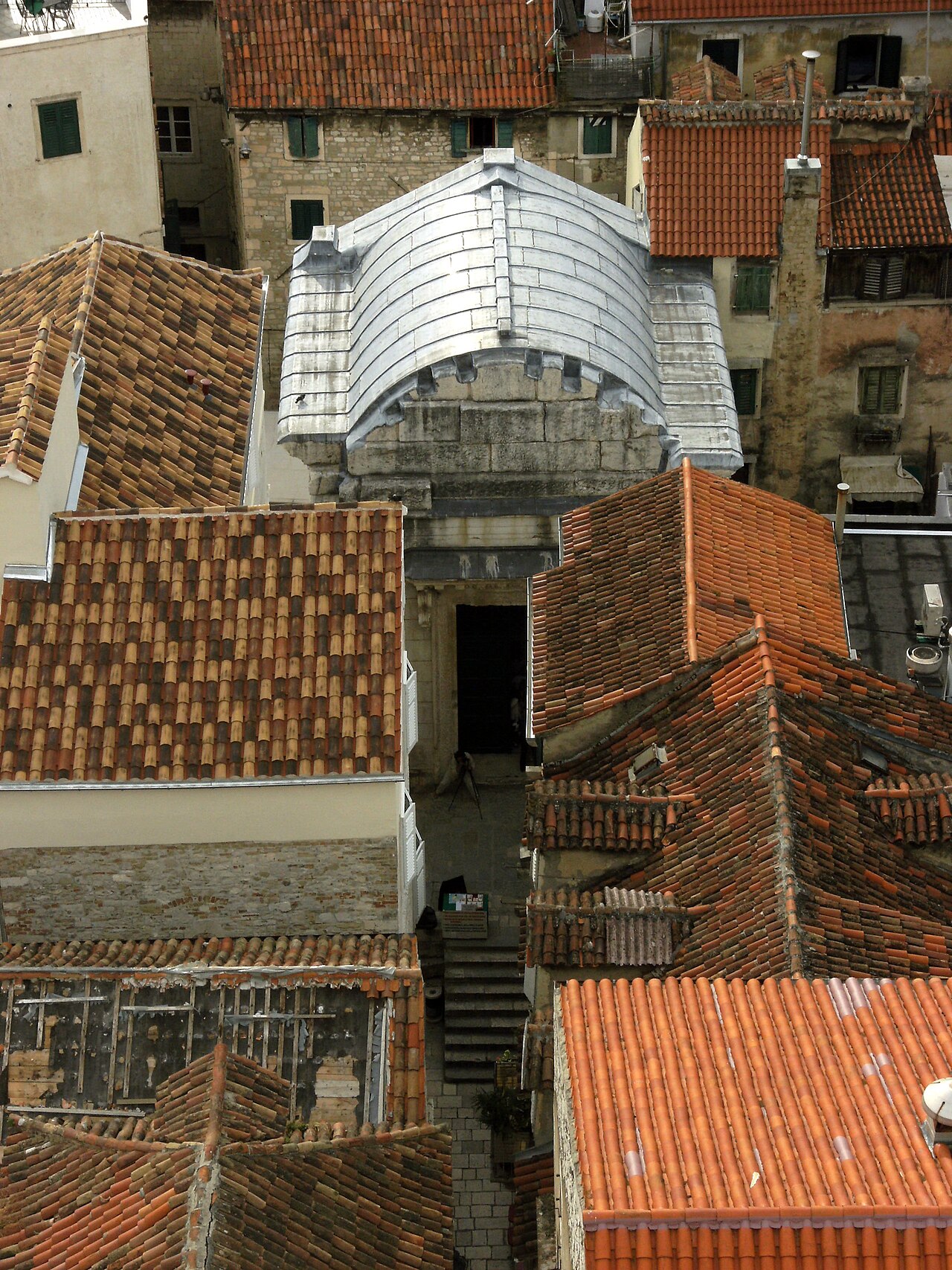
The Temple of Jupiter, locally known as Jupiterov hram, stands within Diocletian's Palace in Split's historic core. This ancient Roman temple ranks among the best-preserved structures of its kind from the imperial period. Constructed during the early 4th century CE, it originally served as a religious sanctuary dedicated to the king of the Roman gods. The temple later underwent conversion into a baptistery in the medieval period, reflecting the region's shifting spiritual landscape. Its compact rectangular footprint and surviving architectural elements offer visitors direct contact with late antique craftsmanship. The structure occupies a prominent position near the palace's central axis.
Checked 2026-08-26
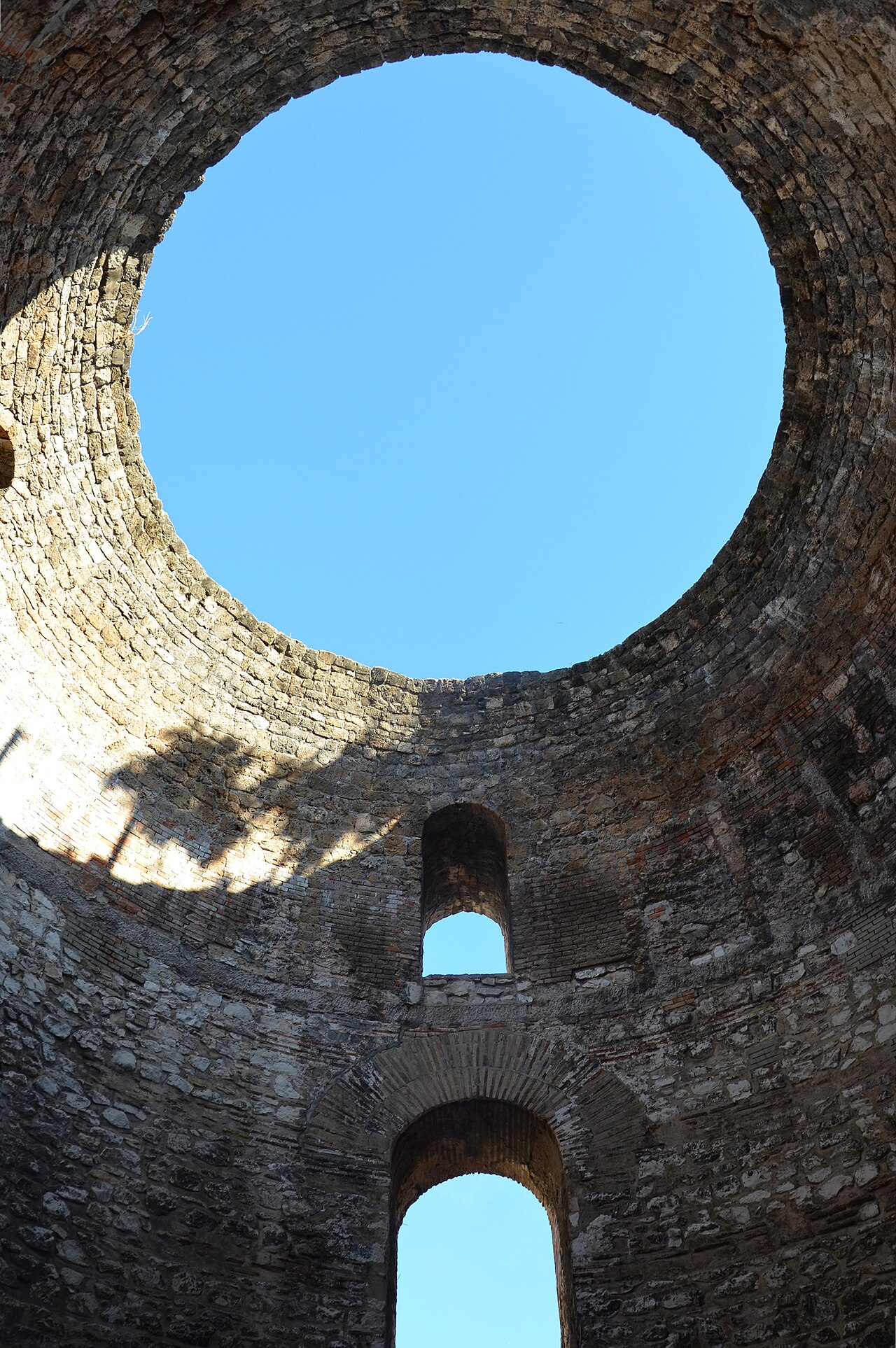
Visitors encounter substantial original fabric including the temple's barrel-vaulted ceiling, which remains remarkably intact. The decorative frieze displays a distinctive pattern of stylized egg-and-dart and floral motifs carved in high relief. One notable surviving feature is the headless granite sphinx positioned before the structure, imported from Egypt during antiquity and predating the temple itself by centuries. The interior space, though modest in scale, preserves atmospheric evidence of both its pagan and Christian phases. Interpretive presentation within the chamber appears minimal based on available documentation. The coffered ceiling demonstrates sophisticated Roman engineering techniques still visible to observers.
Checked 2026-08-26

A thorough examination of the Temple of Jupiter typically requires between fifteen and thirty minutes for most visitors. The compact dimensions of the interior chamber limit extended circulation, though architectural enthusiasts may linger longer studying decorative details. Those integrating this stop within a broader Diocletian's Palace itinerary should allocate proportionate time accordingly. The temple's central location facilitates efficient sequencing with adjacent palace monuments including the Peristyle and Cathedral of Saint Domnius. Visitors pursuing comprehensive understanding of the site's layered history may wish to consult supplementary interpretive materials before or after their physical visit. Photography and observation constitute the primary activities.
Checked 2026-08-26

Operator-confirmed hours are Not recorded pending review. Visitors should verify current accessibility independently before planning their approach, as seasonal variations and special circumstances may affect entry. The temple's location within the palace complex suggests it generally follows broader site conventions, though this cannot be assumed. Morning hours potentially offer reduced congestion within the surrounding Peristyle area, improving the overall experience. Midday periods during summer months likely coincide with peak tourist density throughout Diocletian's Palace. Evening illumination of the surrounding architectural ensemble creates atmospheric conditions for exterior appreciation even when interior access is unavailable.
Checked 2026-08-26
Operator-confirmed prices are Not recorded pending review. The temple's integration within Diocletian's Palace raises questions about whether independent admission applies or whether access is encompassed within composite ticketing arrangements for the broader complex. Visitors should establish current fee structures at official points of sale or authorized information services. Cash and card payment acceptance cannot be confirmed without direct inquiry. Group rates, concession categories, and combined entry options for multiple palace monuments require clarification on site. Budget-conscious travelers may wish to investigate whether any civic or cultural programs periodically permit complimentary access.
Checked 2026-08-26

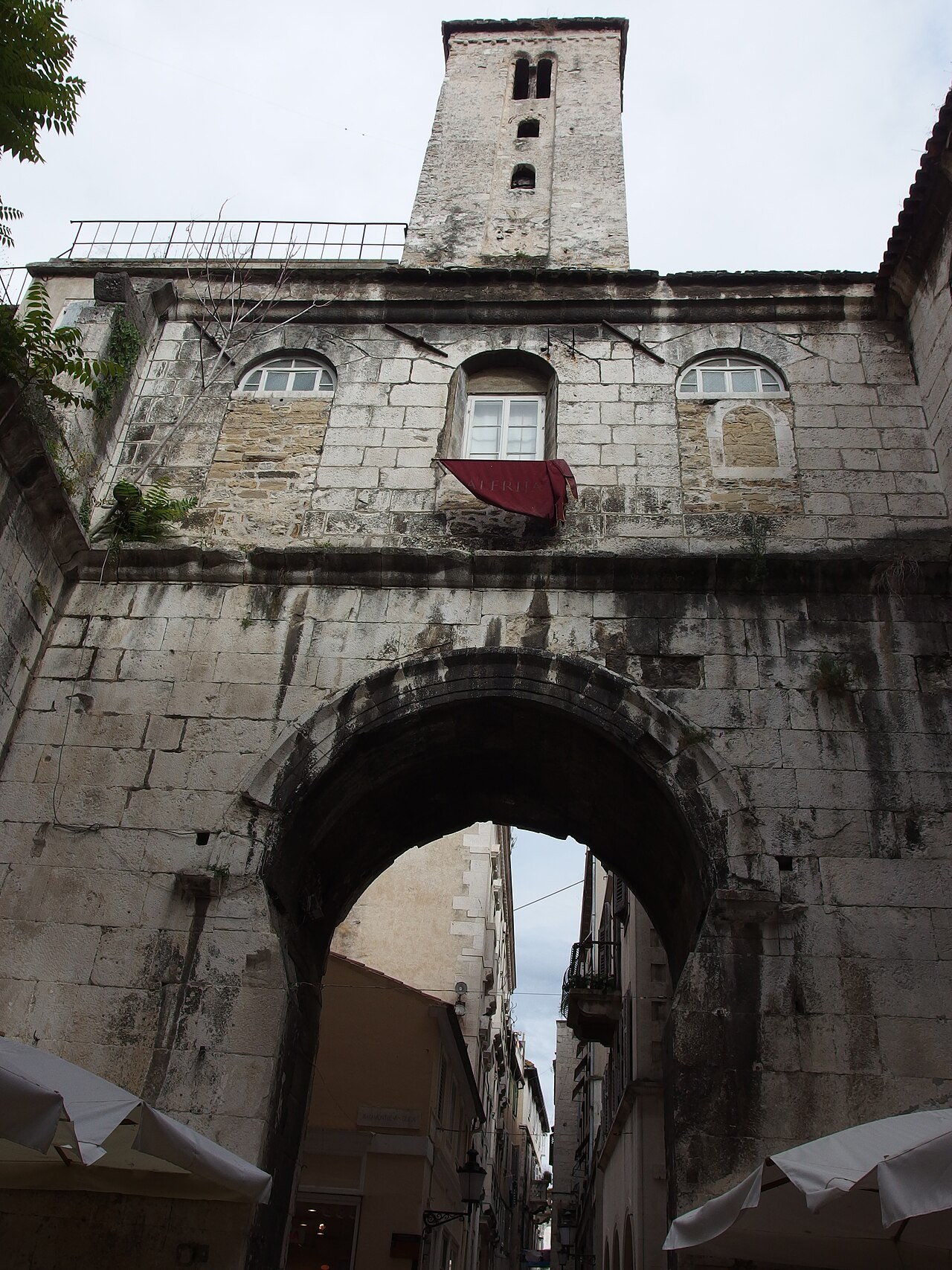
The Temple of Jupiter occupies the pedestrianized historic core of Split, rendering private vehicle access impractical for final approach. Visitors arriving by public transit should disembark at terminals serving the palace periphery, then proceed on foot through the Bronze Gate or alternative historic entrances. The structure sits proximate to the Peristyle, the palace's central ceremonial court, making it readily locatable once within the complex. Wayfinding signage and general palace orientation assist navigation. Those accommodated within the palace walls or immediate surrounding district reach the temple via short walks through characteristic narrow stone passages characteristic of this UNESCO-inscribed zone.
Checked 2026-08-26

The temple's confined interior demands awareness of fellow visitors during periods of congestion. Original architectural surfaces require respectful distance; physical contact with ancient fabric accelerates deterioration. The headless sphinx and other sculptural elements warrant careful observation without climbing or leaning. Flooring may prove uneven or slippery, particularly following precipitation when moisture penetrates the stone envelope. Lighting conditions inside the chamber appear variable based on available accounts, potentially affecting visibility and footing. Visitors should secure personal belongings in crowded conditions. The surrounding Peristyle area presents persistent tourist activity including guided groups that may obstruct movement and sightlines.
Checked 2026-08-26

Photography opportunities encompass both the temple's exterior facade and interior architectural details, though spatial constraints challenge wide-angle composition. The coffered ceiling and carved frieze reward patient camera positioning. Natural light entering through the doorway creates dramatic illumination effects at certain hours, though predictability depends on season and atmospheric conditions. Tripod use likely faces practical limitations given confined quarters and visitor circulation; specific policies remain unconfirmed. The Egyptian sphinx before the entrance offers compelling subject matter against the temple backdrop. Evening exterior shots benefit from artificial lighting schemes applied to the broader Peristyle setting, though interior illumination for night photography cannot be confirmed.
Checked 2026-08-26
Not recorded. The historic palace environment presents inherent challenges including uneven stone surfaces and level changes. Direct inquiry advisable.
Not recorded. The temple typically forms one component of broader Diocletian's Palace itineraries rather than standalone programming.
No. The structure ceased active religious use centuries ago, having transitioned from pagan temple to Christian baptistery and now serving heritage purposes.
The temple constitutes an integral element within the palace complex, positioned near the emperor's mausoleum in a zone of ceremonial significance.
Not recorded. Visitors should anticipate limited amenities within the immediate temple vicinity and plan accordingly.
Partial exterior appreciation is possible, though meaningful engagement with architectural details requires passing the threshold.
Loading the interactive map…
The interactive map could not be loaded.
Last updated:
Source: OpenStreetMap contributors, Wikidata ·