.jpg)
1 min walk
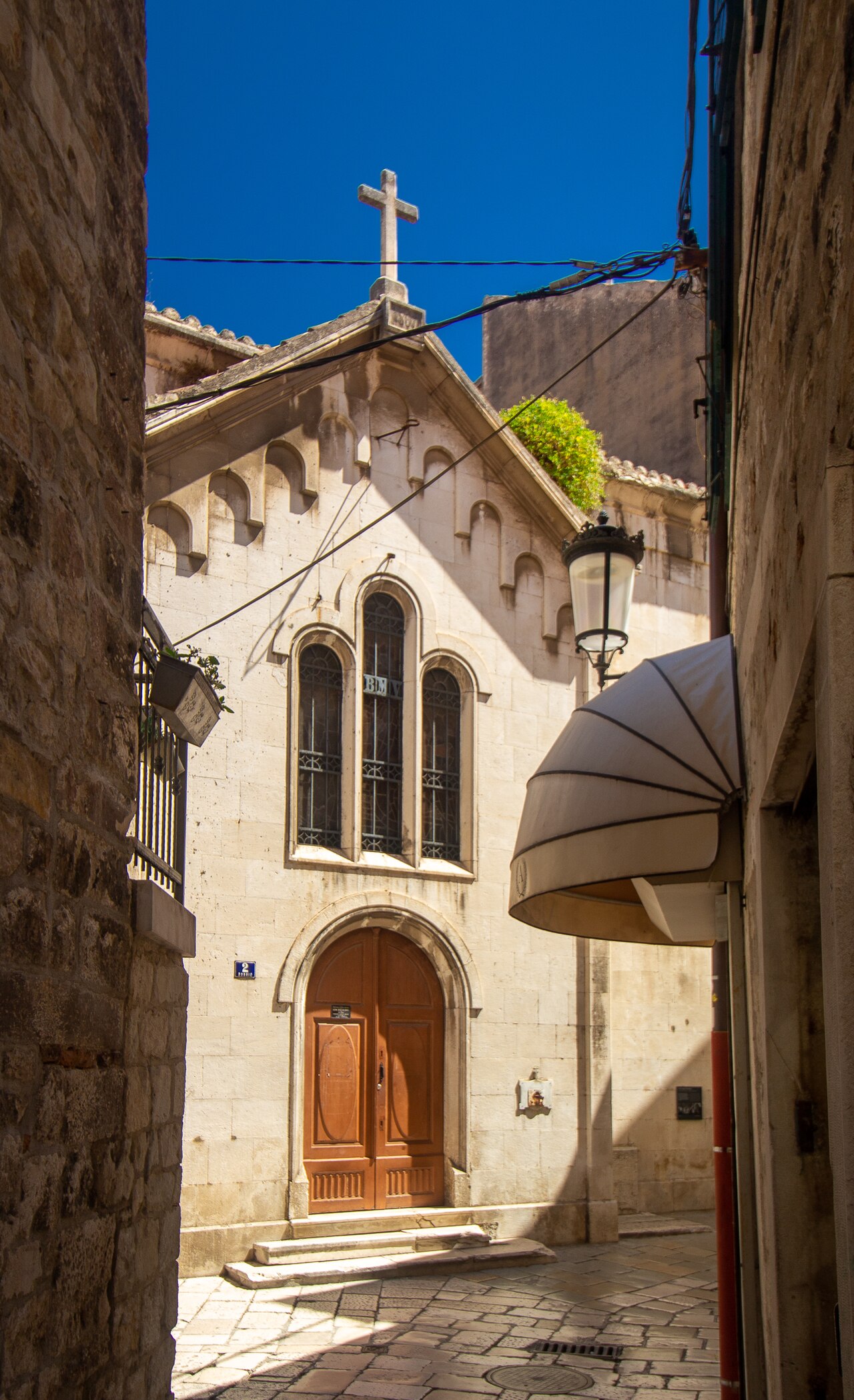
crkva Gospe od Dobrića
- High · Heritage site
- Place of worship
Language · 11 published
Nightlife venue · Split
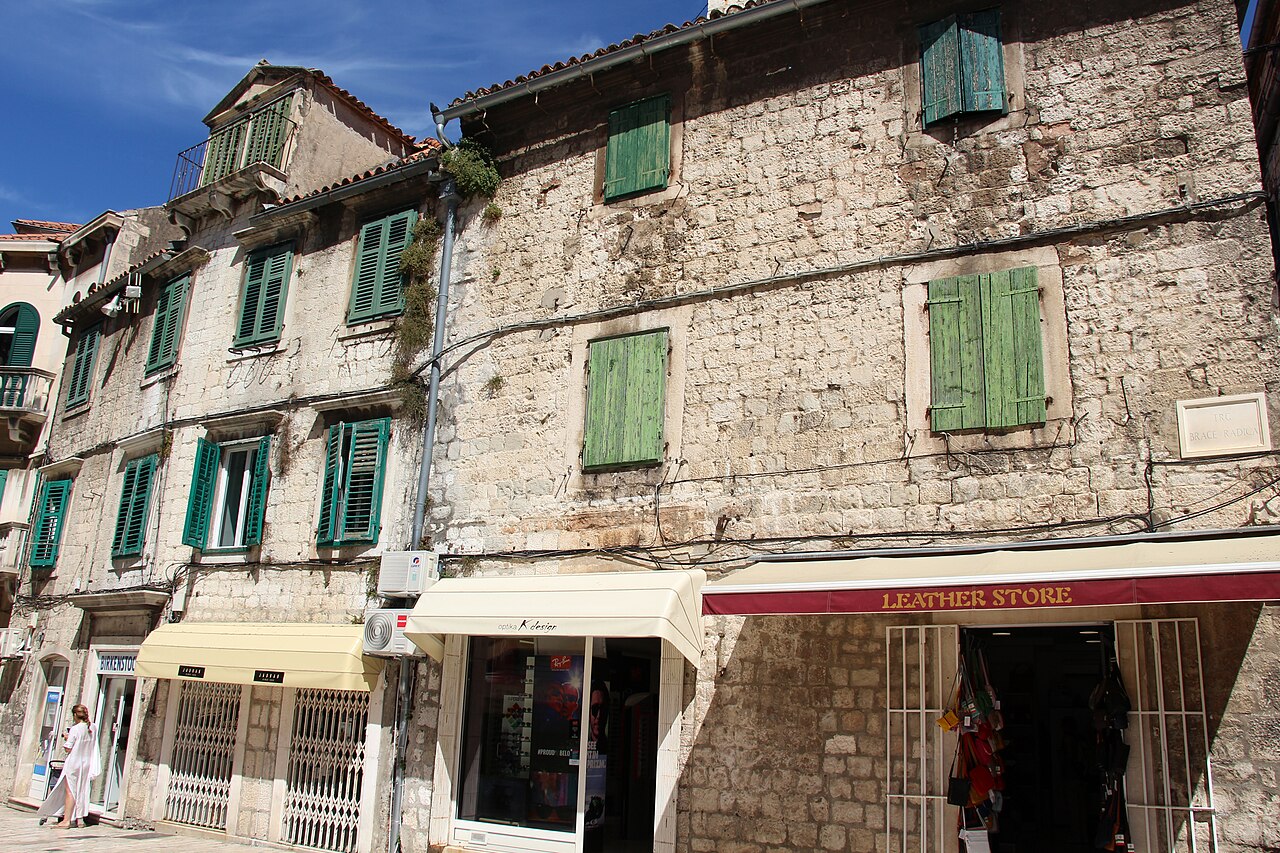
Fruit Square, known locally as Voćni trg, is a historic public square in Split, Croatia. The square takes its name from the fruit market that historically operated in this space. Located within the old city core near the Diocletian's Palace complex, it forms part of Split's network of medieval and early modern urban spaces. The square represents a layer of the city's commercial and social history, distinct from the Roman-era palace foundations nearby. Visitors encounter it as an atmospheric open space where historical architecture frames everyday urban life.
Checked 2026-08-26
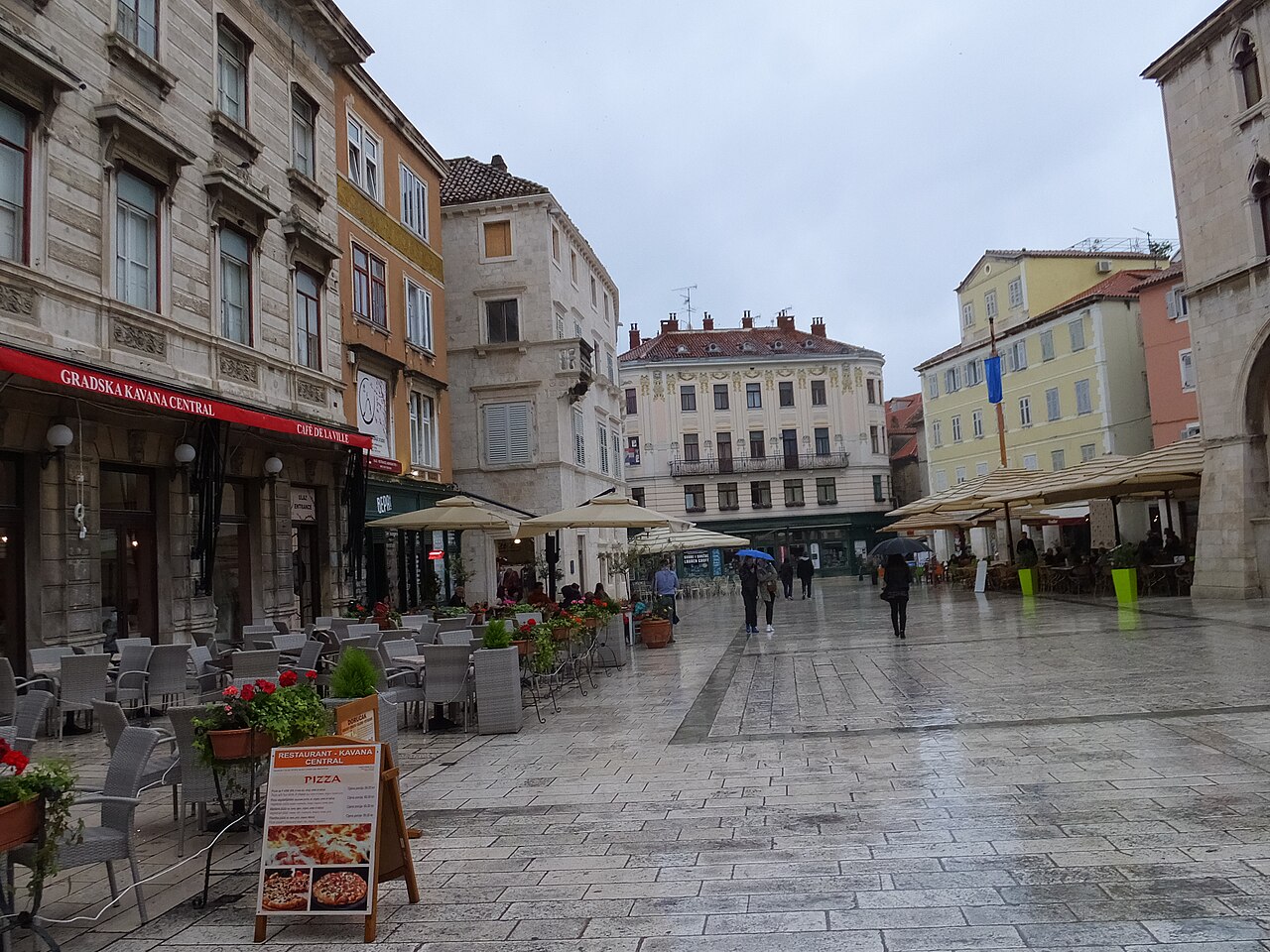
The square contains architectural elements from multiple periods. Notable features include the Venetian-era Milesi Palace with its distinctive facade. A statue of Marko Marulić, the Renaissance poet considered the father of Croatian literature, stands prominently in the square. The octagonal Venetian tower, part of the former Diocletian's Palace defensive system, rises nearby. Surrounding buildings display characteristics of Dalmatian urban architecture. The square's composition reflects accumulated historical layers rather than a single design vision. Trees and open paving define the spatial character. Commercial establishments occupy ground floors of historic structures.
Checked 2026-08-26
A visit to Fruit Square typically requires fifteen to thirty minutes for casual observation. The duration depends on visitor interest in architectural detail and historical context. Those examining the Marulić monument, palace facades, and tower structure may extend their stay. The square functions as a passage point between other attractions rather than a destination requiring extended engagement. Most visitors incorporate it into walking routes through Split's historic core. Photography, brief rest on available seating, or refreshment at adjacent establishments can lengthen the visit. Integration with nearby Diocletian's Palace exploration naturally extends time in the general area.
Checked 2026-08-26
Fruit Square operates as public open space accessible at all hours. Operator-confirmed hours or prices are Not recorded pending review. The square experiences highest visitor density during summer months when cruise passengers and tourists concentrate in Split's historic center. Morning hours offer relative calm before midday tour groups arrive. Evening brings local pedestrians and diners to surrounding establishments. Seasonal variations in daylight affect photography conditions and atmospheric quality. Weather considerations follow standard Mediterranean patterns: summer heat can be intense in exposed spaces, while winter brings milder temperatures but reduced tourist services. No scheduled events or seasonal closures are documented in available sources.
Checked 2026-08-26
Access to Fruit Square requires no admission fee as it is public urban space. Operator-confirmed hours or prices are Not recorded pending review. No ticketing infrastructure exists for the square itself. Individual establishments surrounding the square operate under separate commercial arrangements. Any guided tours incorporating the square into their routes set independent pricing. Visitors should verify costs for specific services, museums, or attractions in adjacent buildings directly with providers. The public character of the space means no advance booking or reservation system applies to general access. Standard urban visitor expenses for refreshments or purchases at surrounding businesses apply at market rates.
Checked 2026-08-26
Fruit Square sits within Split's pedestrianized historic core, inaccessible by private vehicle. The Riva waterfront promenade lies minutes away on foot. From Diocletian's Palace Peristyle, narrow passages lead toward the square. The main ferry port, bus station, and railway station cluster at the peninsula's eastern edge, approximately ten to fifteen minutes' walk through the old city. Local bus services terminate near these transport hubs. Visitors arriving by cruise ship disembark at the port and proceed on foot. Taxis and rideshare services can approach the periphery of the pedestrian zone but cannot enter the immediate square vicinity.
Checked 2026-08-26
The square's stone paving becomes slippery when wet, requiring footwear with adequate traction. Summer crowds concentrate in surrounding passages, creating congestion points. Outdoor seating from adjacent cafes sometimes encroaches on pedestrian flow. The open character provides minimal shade during midday heat; sun protection merits consideration. As with any busy tourist area, standard awareness of personal belongings applies. The historic fabric includes uneven surfaces and steps between levels. No permanent barriers restrict movement, meaning children require supervision near architectural edges. Evening illumination varies across the space. Emergency services access the historic core with difficulty due to narrow streets; visitors with mobility concerns should note this constraint.
Checked 2026-08-26
The Marulić monument and Milesi Palace facade offer primary photographic subjects. The octagonal tower provides vertical interest against sky backgrounds. Morning light illuminates the eastern palace facade favorably. The square's confined dimensions limit wide-angle composition options; photographers may need to work with partial views or seek elevated positions in surrounding structures. Night photography benefits from building illumination, though artificial lighting varies in intensity. The public space imposes no photography restrictions. Tripod use in crowded conditions requires courtesy to pedestrian traffic. The juxtaposition of historical architecture with contemporary activity permits documentary-style capture. Seasonal atmospheric conditions, including summer haze or winter clarity, affect distant visibility.
Checked 2026-08-26
The square lies adjacent to the palace complex and incorporates a Venetian-era tower from the palace's later defensive system, but it developed as a distinct urban space with its own historical identity.
The name derives from the fruit market that historically operated in this location, reflecting its commercial function in the city's economic life.
No, the historic core including Fruit Square is pedestrianized. Private vehicles cannot access the immediate area.
Limited permanent seating exists; visitors typically use adjacent cafe seating or rest on architectural edges with appropriate caution.
The historic environment presents challenges including uneven stone paving, steps, and narrow approaches. No accessibility modifications are documented.
The historical market function has ceased; the name persists as a historical designation for the public square.
Loading the interactive map…
The interactive map could not be loaded.
Last updated:
Source: OpenStreetMap contributors ·