
1 min walk
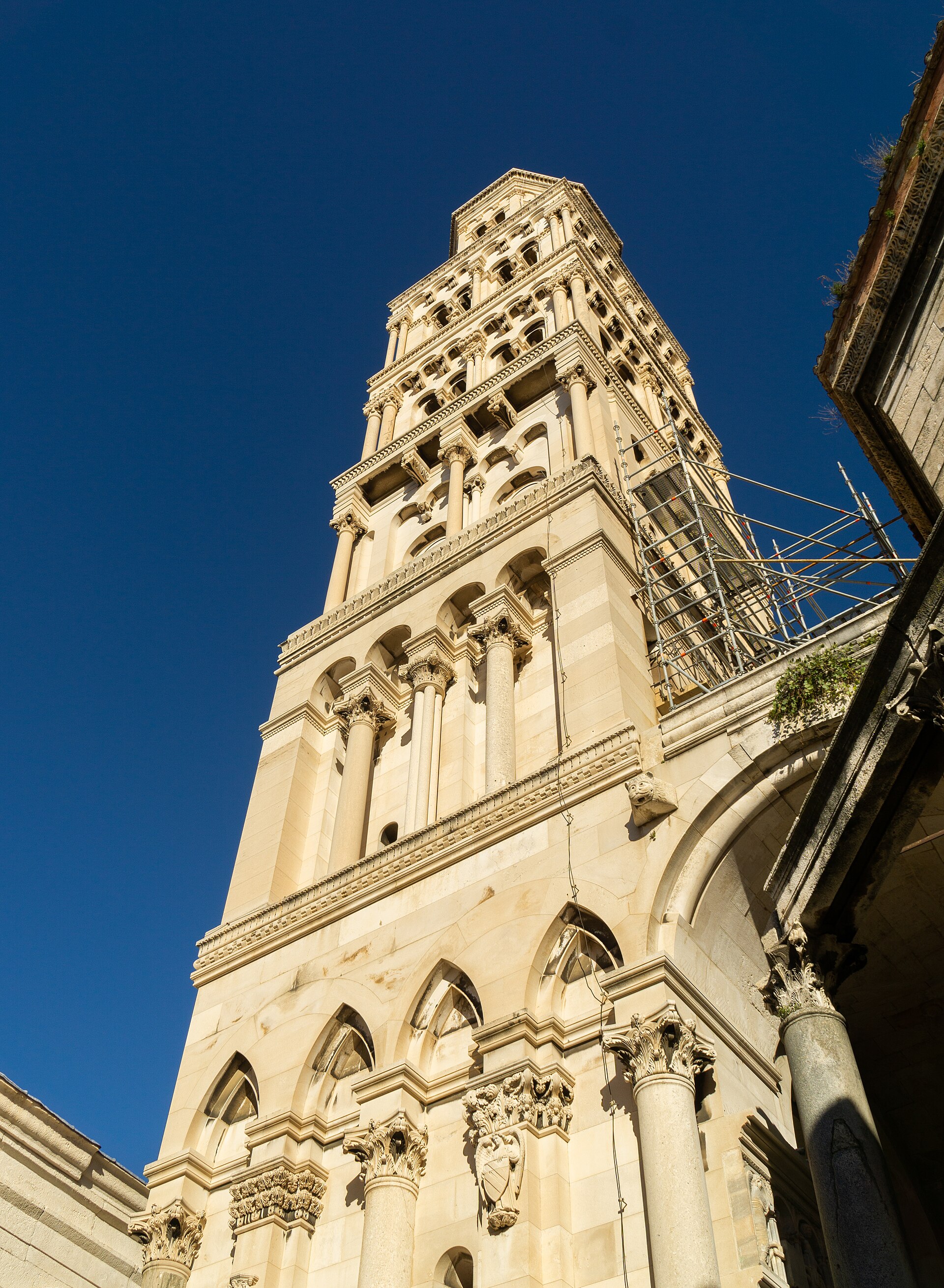
Zvonik svetog Dujma
- Must see
- Viewpoint
Language · 11 published
Place of worship · Split
katedrala svetog Duje
Read from the OpenStreetMap access tags; anything not listed has no tag recorded.
Set the group type to family in the planner and the day window contracts to about three quarters of a solo day.
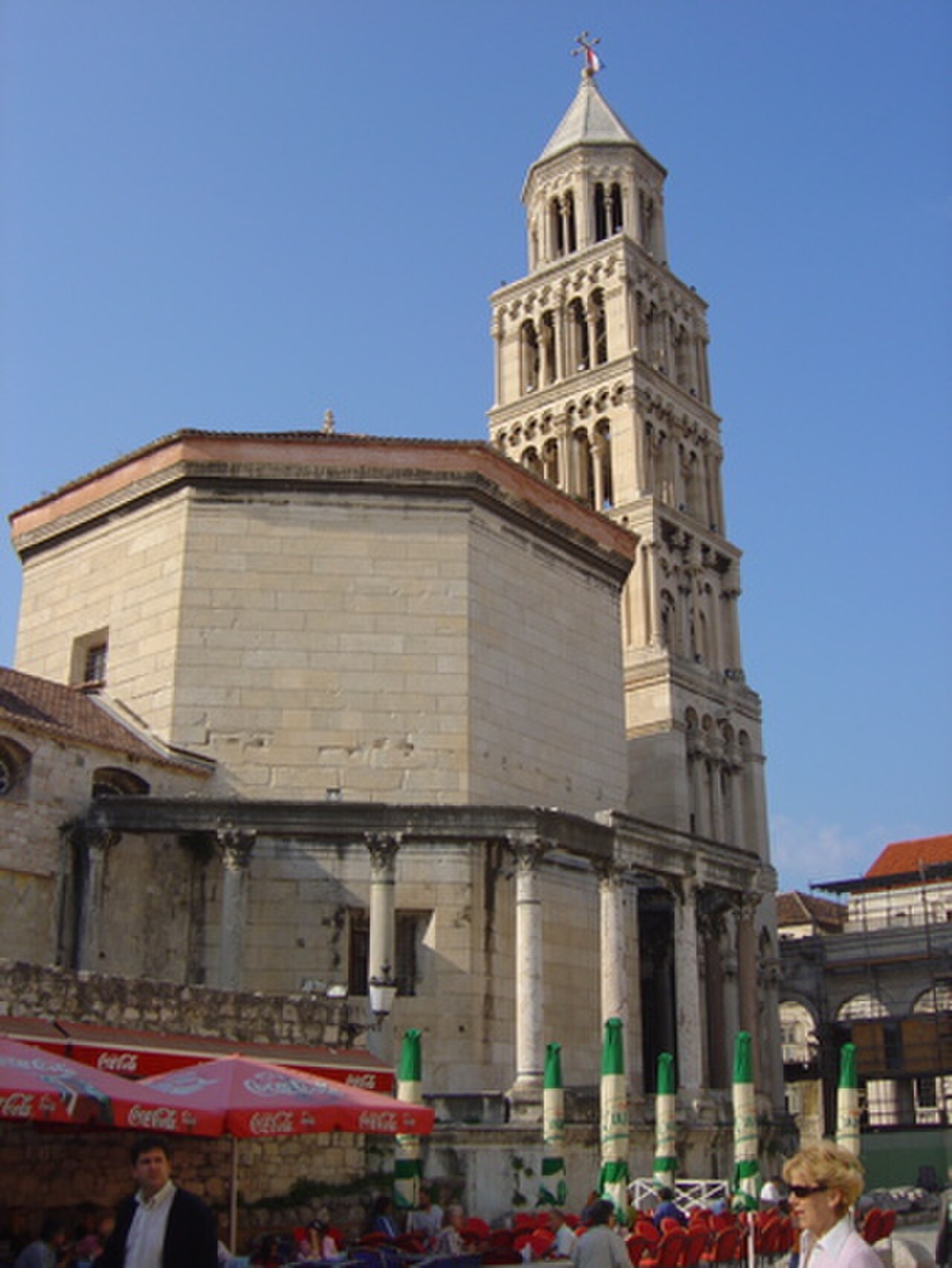
The Cathedral of Saint Domnius, or Katedrala svetog Dujma, stands at the heart of Diocletian’s Palace in Split. The building began as the mausoleum of Emperor Diocletian in the fourth century and was later transformed into a Christian cathedral. That change gives the site its distinctive Roman, medieval, and continuing religious character. The cathedral is one of Split’s essential historic stops because its setting makes the city’s layered past visible in one compact place. The Cathedral of Saint Domnius, known locally as Katedrala svetog Dujma, stands within Diocletian's Palace in Split's historic core. Originally built as the mausoleum of Roman Emperor Diocletian in the fourth century, the structure was later converted into a Christian cathedral. It represents one of the oldest cathedral buildings in the world still in use for its original purpose. The complex includes the main cathedral, a bell tower, and the Temple of Jupiter. Its location in the palace's peristyle makes it central to understanding Split's layered Roman and medieval heritage. Yes, it remains an active cathedral with regular worship functions, which may affect visitor access at certain times.
Checked 2026-08-26 · Source
Inside, the circular Roman structure is framed by granite columns brought from Egypt, while later centuries contributed altars, sarcophagi, furnishings, and religious decoration. The carved wooden doors present scenes from the life of Christ and are important Romanesque works. The wider complex includes the crypt, treasury, bell tower, and adjacent Temple of Jupiter. Together these spaces show how imperial architecture was reused and reshaped for Christian worship and medieval life. The interior preserves elements from multiple eras. Visitors encounter the original Roman structure with its characteristic circular design and granite columns imported from Egypt. The cathedral houses altars, sarcophagi, and religious furnishings accumulated across centuries.
Checked 2026-08-26 · Source
Allow forty-five minutes to ninety minutes for the cathedral and its associated spaces. The duration increases if you climb the bell tower, visit the crypt or treasury, and pause to examine the Roman and Romanesque details. Because the cathedral sits inside Diocletian’s Palace, most visitors combine it with several hours of walking through the palace streets, peristyle, gates, and waterfront edge. Treat the tower climb as a separate physical activity.
Checked 2026-08-26 · Source
Morning is a useful time for a quieter look at the interior and for easier movement through the palace’s narrow streets. Summer brings the greatest tourist pressure, with queues and dense circulation around the peristyle. The cathedral remains an active place of worship, so religious services influence visitor movement. Winter can feel more spacious, though seasonal arrangements may affect access to parts of the complex. Build some flexibility into your visit rather than planning every minute.
Checked 2026-08-26 · Source
The cathedral complex may divide access between the main cathedral, bell tower, crypt, treasury, and Temple of Jupiter, with combined options also possible. A worship visit and a broader sightseeing visit can therefore involve different arrangements. Tower access and additional rooms may carry their own charges. Keep some payment flexibility for the entry method offered on the day, and remember that access to the complex is distinct from simply walking through Diocletian’s Palace.
Checked 2026-08-26 · Source
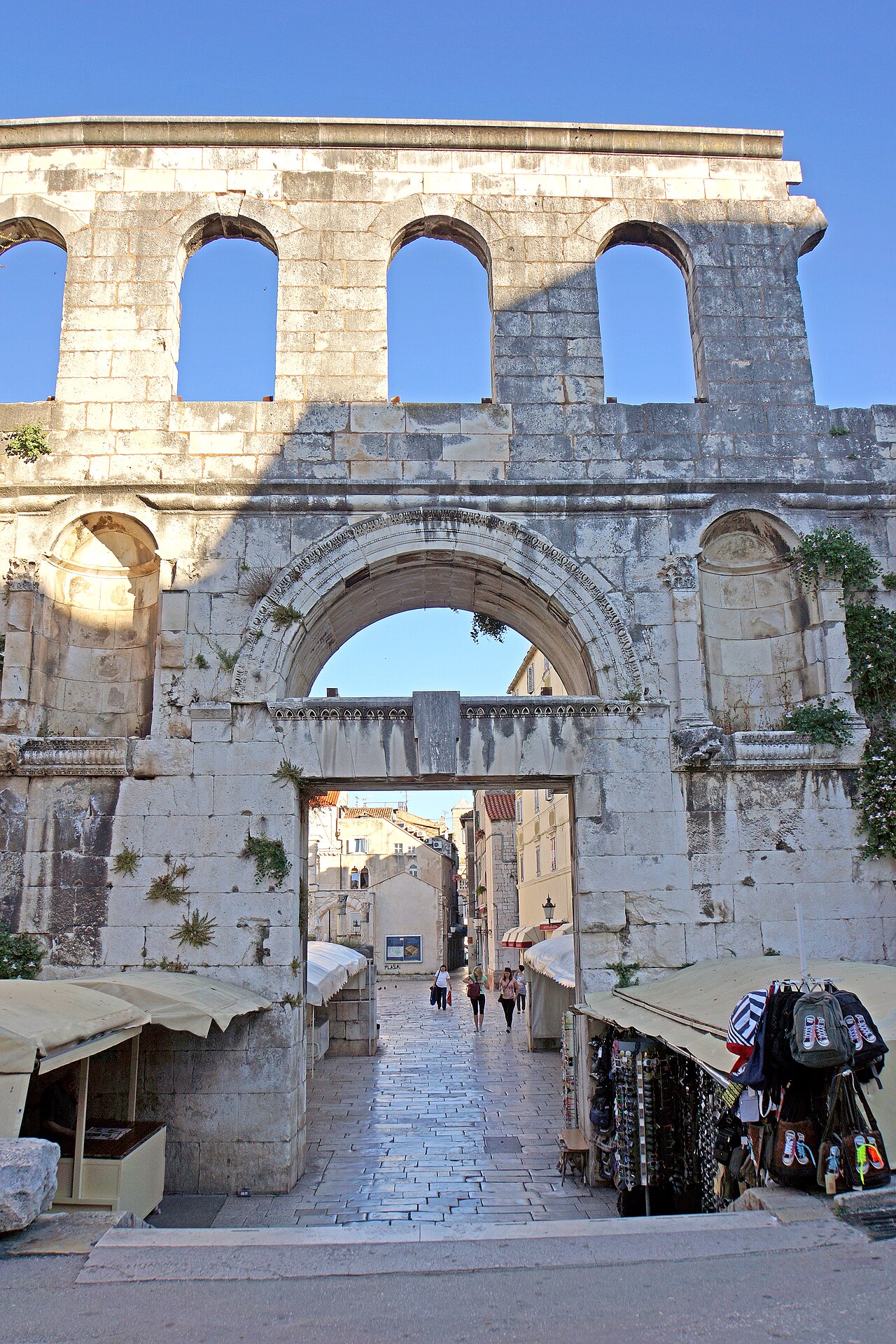
The cathedral is entirely walkable from within Split’s historic core. From the Riva promenade, enter Diocletian’s Palace through one of the southern gates and continue toward the central peristyle, where the cathedral stands. The ferry and main bus terminals are around ten to fifteen minutes away on foot. Vehicles do not enter the palace’s pedestrianised interior. Stone passages and the palace grid can feel confusing, so use the peristyle as your main landmark.
Checked 2026-08-26 · Source
The bell tower requires steep stone steps, narrow passages, and exposed upper platforms, making it demanding for anyone uncomfortable with heights or strenuous climbing. Wear secure footwear. Polished limestone can become slippery when wet, while summer stone surfaces intensify the heat. Cover shoulders and knees for the active cathedral. Crowds gather quickly around the compact complex and peristyle, so keep valuables close and allow extra time for queues and slow circulation.
Checked 2026-08-26 · Source
The peristyle and palace exterior provide strong photographic settings, with Roman stonework, columns, and the cathedral’s position creating a clear sense of place. Inside, follow the rules displayed at the entrance and avoid flash where it could disturb worship or affect historic furnishings. The bell tower offers the broadest view across the palace and Split’s coast. Visit in morning or late afternoon light for stronger texture on the stone surfaces.
Checked 2026-08-26 · Source
Yes. It remains an active cathedral, so services and religious activity can change how visitors enter or move through the complex.
The bell tower can be visited, but the ascent includes steep steps, narrow passages, and exposed upper areas. Consider the climb separately from the cathedral visit.
Dress respectfully with shoulders and knees covered, especially because the building remains an active place of worship. Wear secure shoes if you plan to climb the tower.
Yes. It occupies the former Roman mausoleum at the centre of the palace, beside the peristyle and near the Temple of Jupiter.
The wider visit can include the main cathedral, bell tower, crypt, treasury, and adjacent Temple of Jupiter. Access may be arranged separately or through combined entry options.
Walk east along the Riva for about ten to fifteen minutes, enter Diocletian’s Palace through a southern gate, and continue toward the central peristyle.
Loading the interactive map…
The interactive map could not be loaded.
Last updated:
Source: OpenStreetMap contributors, Wikidata ·