.jpg)


2 min walk
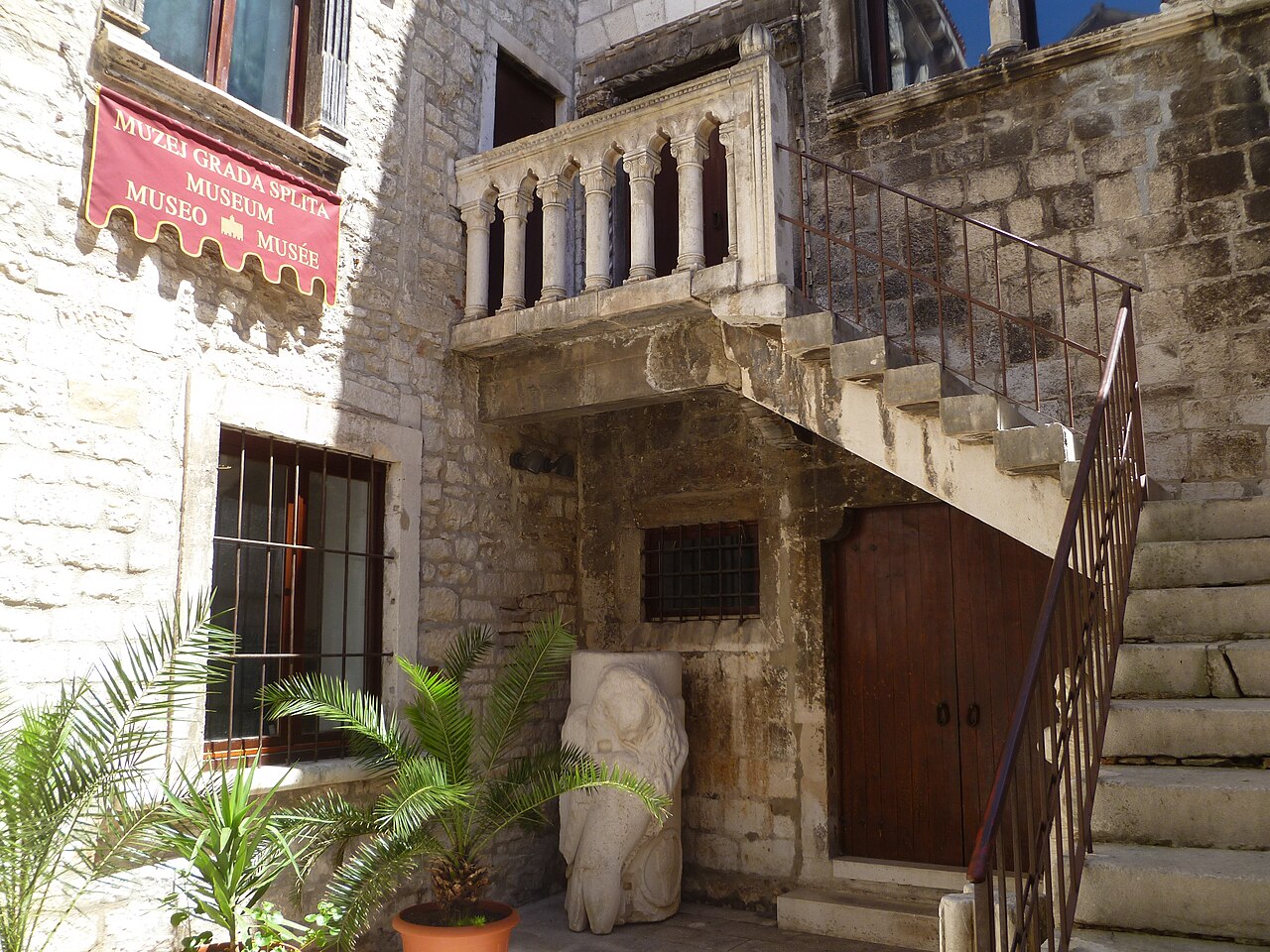
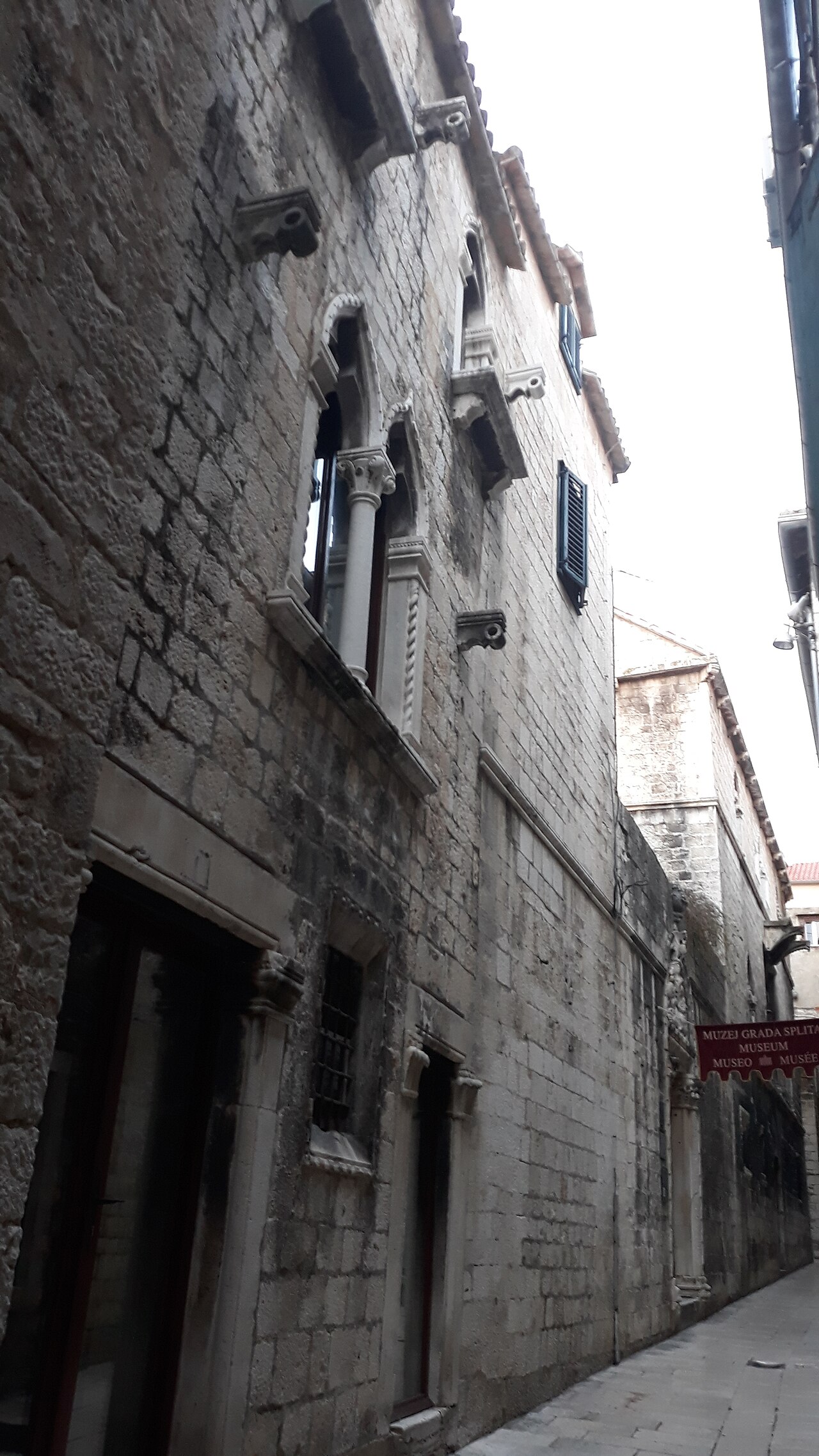
Grand Papalić Palace
- High · Heritage site
- Historic monument
Language · 11 published
Art and culture venue · Split
Grgur Ninski
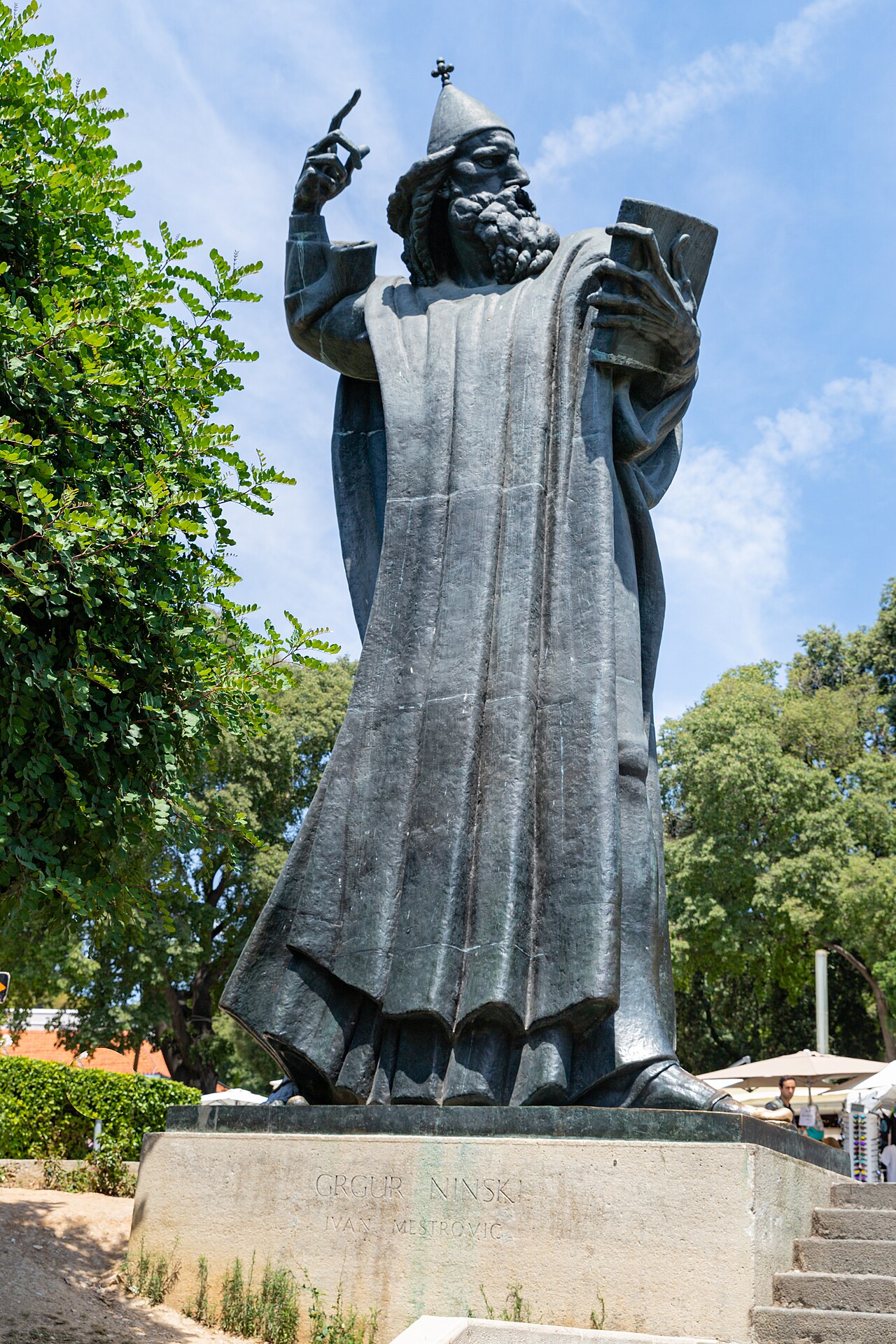
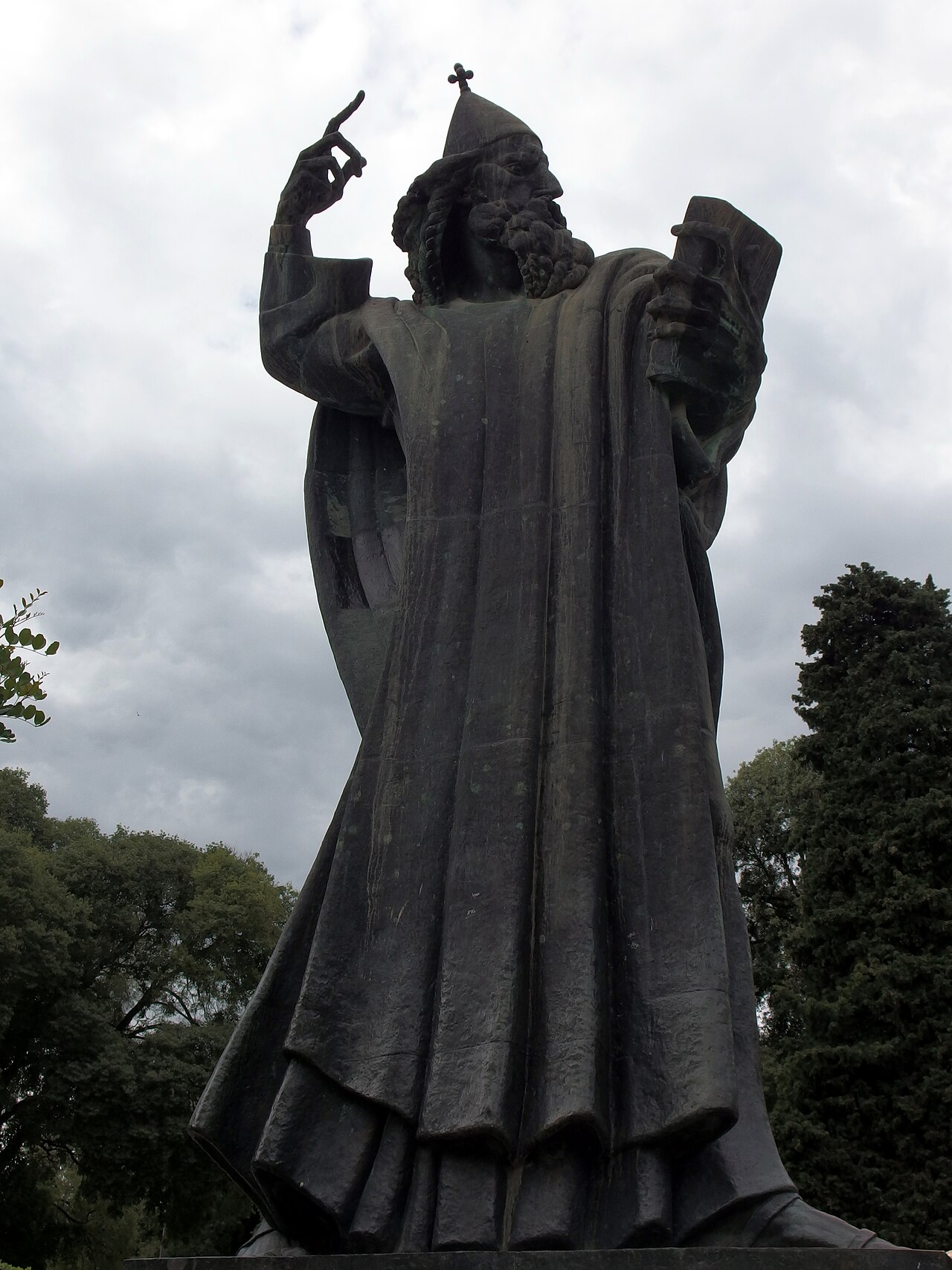
The Gregory of Nin Statue is a monumental bronze sculpture located in Split, Croatia. It depicts Gregory of Nin, a medieval bishop who championed the use of the Croatian language in religious services. The statue stands as a significant cultural monument within the historic core of Split, near the Golden Gate of Diocletian's Palace. Created by renowned Croatian sculptor Ivan Meštrović, the work commemorates a pivotal figure in Croatian national identity and linguistic heritage. Visitors encounter an imposing figure with distinctive elongated proportions characteristic of the artist's style.
Checked 2026-08-26
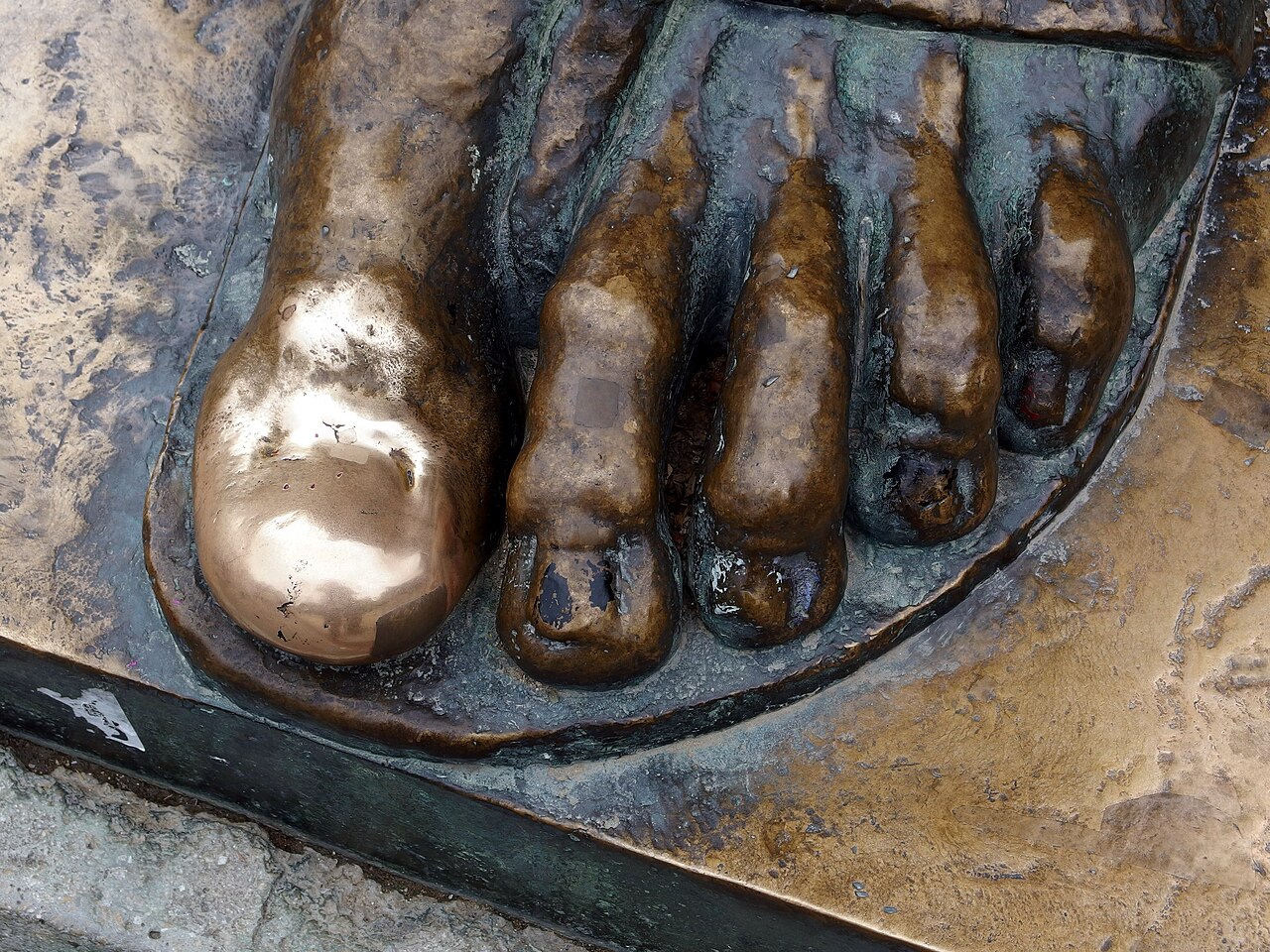
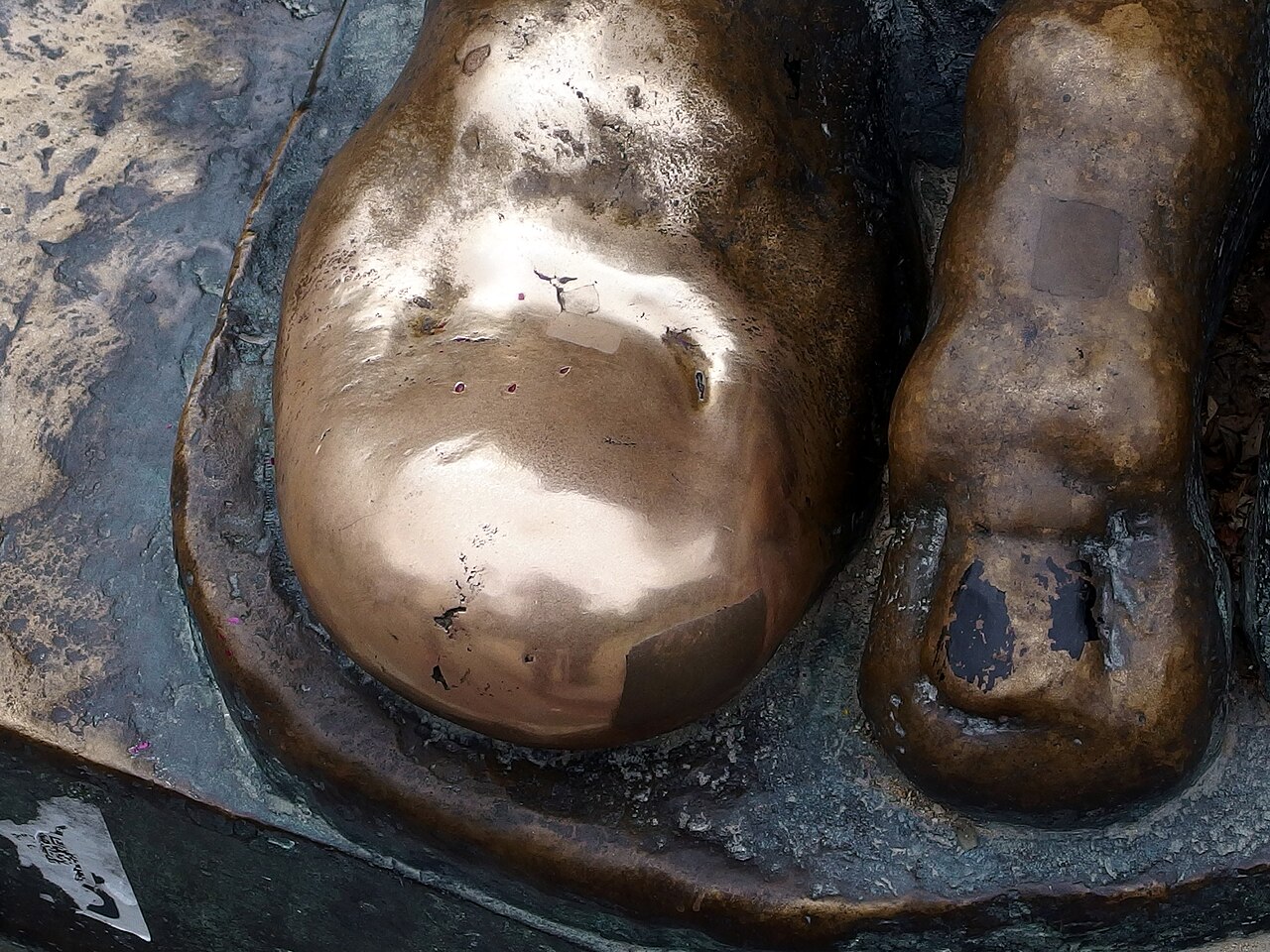
The statue itself is an outdoor bronze monument with no interior structure. The primary feature is the large sculpted figure of Gregory of Nin, notable for its exaggerated proportions and expressive form. A prominent element is the statue's toe, which has been polished to a golden shine by generations of visitors who touch it for perceived good luck. The surrounding area consists of paved pedestrian space at the northern edge of Diocletian's Palace complex. No museum, exhibition space, or enclosed facilities are associated with this monument.
Checked 2026-08-26
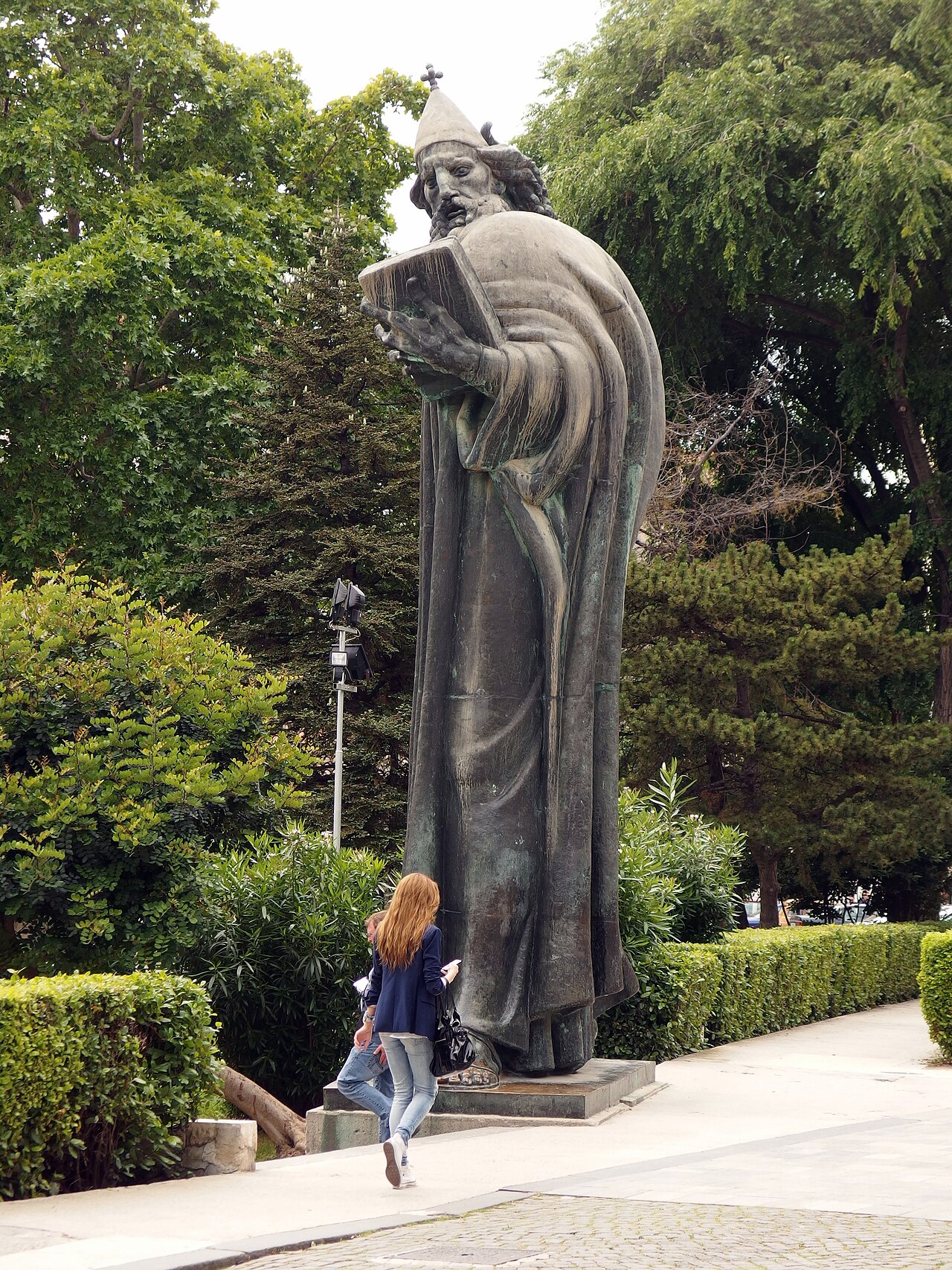
A visit to the Gregory of Nin Statue typically requires between five and fifteen minutes for most travelers. This duration allows for approaching the monument, observing its sculptural details, and potentially joining the tradition of rubbing the statue's toe. The brief engagement suits its function as a waypoint during broader exploration of Split's historic center. Visitors commonly incorporate the statue into longer walking tours of Diocletian's Palace and surrounding medieval quarters. No queues, guided tours, or structured programs extend the visit duration. Gregory of Nin Statue also earns time in a split itinerary because Independent traveler stop frozen before production reconciliation; exact local identity verified without a proxy. Its value becomes clearer when the stop is compared with the surrounding streets and the other ranked places nearby.
Checked 2026-08-26
The Gregory of Nin Statue is an outdoor monument accessible at all hours without restriction. Operator-confirmed hours are Not recorded pending review. The site experiences highest foot traffic during summer months when cruise passengers and tourists concentrate in Split's historic center. Early morning and evening hours offer reduced crowds and preferable lighting for observation. Weather considerations apply as the statue stands fully exposed; rain or intense midday heat may diminish visitor comfort. Seasonal variations in daylight hours affect photographic conditions but not physical access.
Checked 2026-08-26
No admission fee applies to viewing the Gregory of Nin Statue. The monument stands in public pedestrian space without controlled entry. Operator-confirmed prices are Not recorded pending review. No tickets, reservations, or advance arrangements are necessary. The statue functions as a free-access cultural landmark integrated into the urban fabric of Split. Visitors should remain alert to incidental costs only if combining the stop with paid attractions nearby, such as cathedral tower climbs or palace substructure entries. No donation mechanisms or voluntary contribution systems are evident at the site.
Checked 2026-08-26
The statue occupies a position immediately outside the northern Golden Gate of Diocletian's Palace in central Split. Pedestrian access prevails within the palace quarters; vehicles cannot penetrate the historic core. From the Riva waterfront promenade, visitors walk northward through the palace peristyle and emerge at the Golden Gate. From Split's main bus and railway station, the walk requires approximately fifteen minutes through urban streets. Local buses serve periphery stops with walking connections. The monument's visibility and established tourist circuit integration make independent navigation straightforward.
Checked 2026-08-26
The polished toe of the statue attracts continuous physical contact from visitors, creating a concentrated point of surface wear and potential hygiene considerations. Crowding intensifies when cruise ship excursion groups converge, temporarily obstructing comfortable approach and photography. The paved area around the base presents uneven surfaces requiring attention. No protective barriers separate visitors from the sculpture, enabling direct contact but also risking incidental damage to the artwork. Sun exposure is complete; no shade structures shelter the immediate vicinity. Vigilance against pickpockets in congested tourist zones remains prudent.
Checked 2026-08-26
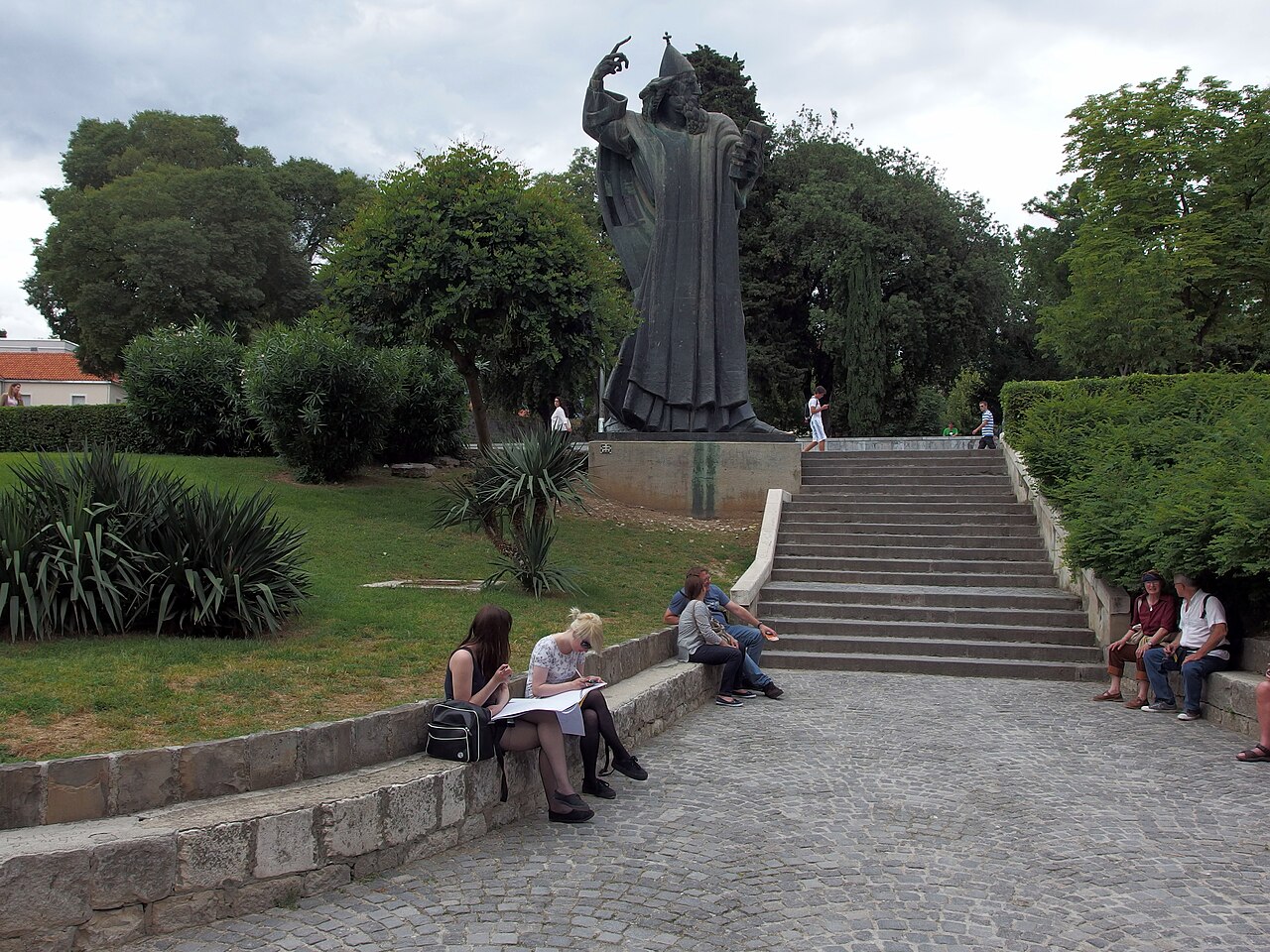
The Gregory of Nin Statue permits unrestricted photography without evident regulations or fees. The bronze surface responds dynamically to varying light conditions, with morning and late afternoon illumination emphasizing sculptural contours most effectively. Full monument capture requires wide-angle positioning due to the figure's substantial scale and proximity to adjacent palace walls. The polished toe offers a distinctive detail shot opportunity. Night photography benefits from nearby architectural lighting though dedicated monument illumination is not confirmed. Drone operation would require awareness of regulatory restrictions in historic urban centers.
Checked 2026-08-26
No. The statue stands in open public space without any admission charge or controlled access point.
Yes. Physical contact is possible and traditional, particularly with the toe which has been worn smooth by countless visitors.
The statue stands immediately outside the northern Golden Gate, at the perimeter rather than within the palace interior.
No dedicated tours are recorded. The statue typically features as one stop within broader walking tours of Split's historic center.
He was a medieval bishop who advocated for Croatian language use in religious services, becoming a symbol of Croatian cultural identity.
The visible monument is a bronze sculpture by Ivan Meštrović. The original placement history involves relocation, with the current positioning established in modern times.
Loading the interactive map…
The interactive map could not be loaded.
Last updated:
Source: OpenStreetMap contributors, Wikidata ·