Art Institute of Chicago
The Art Institute of Chicago
Art Institute of Chicago is an encyclopedic art museum beside Grant Park, with historic galleries and the Modern Wing.
- Must see
- Museum
Language · 11 published
City guide · United States
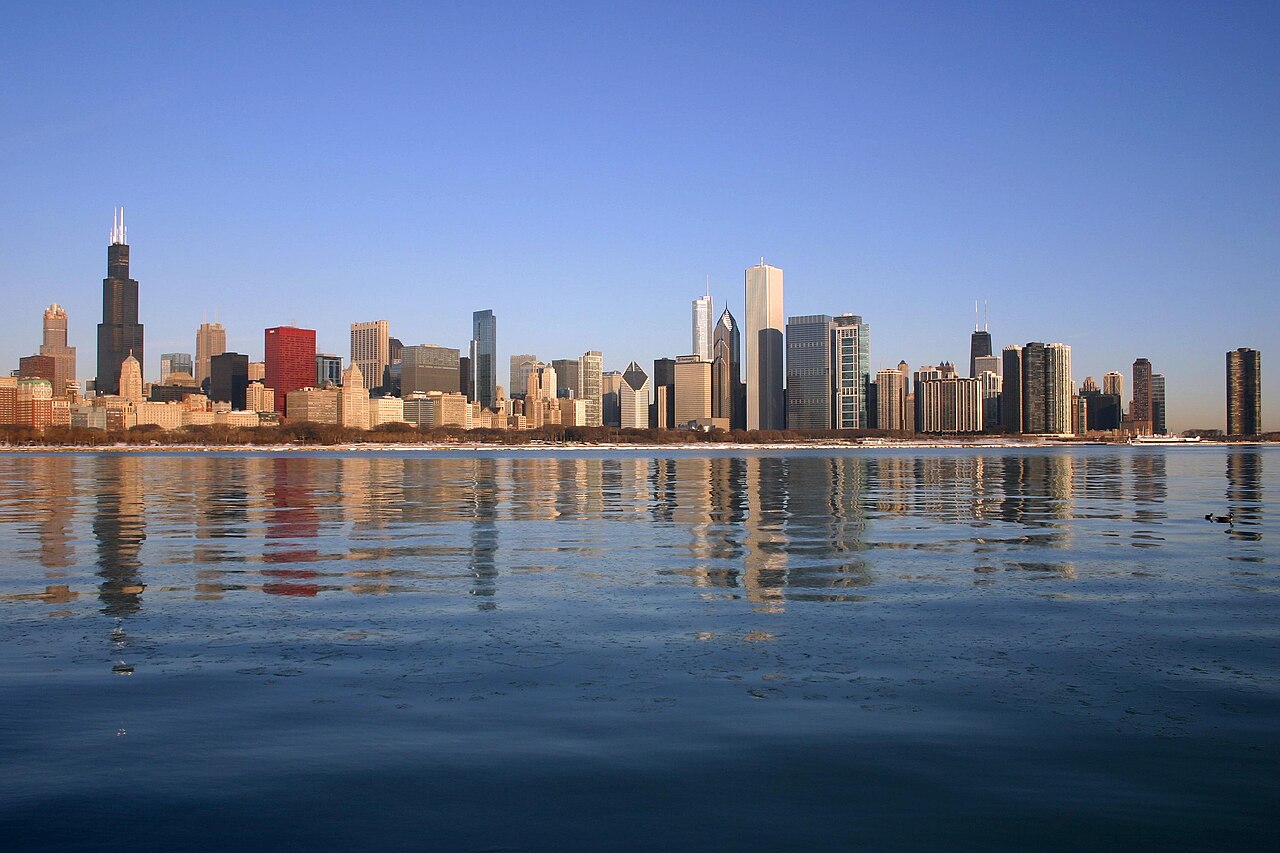
Chicago is organised around Lake Michigan, the Chicago River and a regular street grid. The Loop contains the central business district, major architecture and Millennium Park; museum campuses and lakefront parks extend south, while River North, Lincoln Park and neighbourhood centres continue north and west. A first visit works best when downtown sights are grouped together and separate time is reserved for one or two neighbourhoods beyond the Loop.
Reviewed by Elena Voss · SSMTour Travel Editor
Set your days, your pace and the hours you actually want to be out. The planner works around closing days and travel time, and leaves room to eat.
Ranked by importance — sitelinks, pageviews and heritage status, not editor preference.
98 places match
Category
Typical visit duration
Interests
The Art Institute of Chicago
Art Institute of Chicago is an encyclopedic art museum beside Grant Park, with historic galleries and the Modern Wing.
Millennium Park is a civic park built over rail infrastructure at the northwest corner of Grant Park. Its visitor experience is defined by Cloud Gate, Crown Fountain, Lurie Garden, Jay Pritzker Pavilion, Great Lawn, and BP Bridge.
Field Museum
Field Museum is Chicago's major natural-history museum, developed from World's Columbian Exposition collections. Its visitor experience is defined by Stanley Field Hall, Máximo, SUE, dinosaurs, evolving life, ancient Americas, Egypt, gems, and cultural collections.
Griffin Museum of Science and Industry
Griffin Museum of Science and Industry is a hands-on science museum in Hyde Park's former Palace of Fine Arts. Its visitor experience is defined by U-505, the coal mine, Science Storms, transport halls, genetics, farming, and the model railway.
Shedd Aquarium is a public aquarium on Museum Campus joining freshwater and marine conservation. Its visitor experience is defined by Caribbean Reef, Wild Reef, Polar Play Zone, Abbott Oceanarium, sharks, rays, otters, penguins, and Great Lakes ecology.
Chicago Architecture Center is an interpretation center devoted to Chicago's buildings, engineering, planning, and design. Its visitor experience is defined by the Chicago City Model Experience, skyscraper galleries, neighborhood design, exhibitions, and guided tours.
SkyDeck Chicago Willis Tower
Skydeck Chicago is the public observation experience high in Willis Tower, completed as Sears Tower in 1973. Its visitor experience is defined by Chicago interpretation, high-level views in four directions, elevators, and The Ledge glass boxes.
Wrigley Field is a Major League Baseball stadium on Chicago's North Side, serving as home to the Chicago Cubs since 1914. It holds designation as a National Historic Landmark, recognizing its century-long role in American sports architecture.
Navy Pier is a 1916 public pier extending from Streeterville into Lake Michigan. Its visitor experience is defined by promenades, Centennial Wheel, Chicago Children's Museum, theatre, gardens, cruises, restaurants, and seasonal events.
Lincoln Park Zoo is a free public zoo founded in 1868 within landscaped Lincoln Park. Its visitor experience is defined by large mammals, primates, African habitats, farm animals, birds, indoor houses, gardens, and Nature Boardwalk.
Museum of Contemporary Art
Museum of Contemporary Art Chicago is a contemporary-art museum founded in 1967 near Water Tower Place. Its visitor experience is defined by changing exhibitions, installations, painting, sculpture, media art, performances, commissions, talks, and public spaces.
The Adler Planetarium is a public museum dedicated to astronomy and astrophysics.
Garfield Park Conservatory is a large historic glasshouse complex on Chicago's West Side. Established in the early twentieth century, it ranks among the largest conservatories in the United States.
The Chicago Riverwalk is a central riverfront promenade in downtown Chicago. It extends along the south bank of the main stem of the Chicago River, connecting the Lake Michigan shoreline with the confluence of the river's branches.
360 Chicago
360 CHICAGO is an observation deck located in the former John Hancock Center, a prominent skyscraper in Chicago, Illinois. The deck occupies a high floor of this distinctive building, offering visitors elevated views across the city and Lake Michigan.
The Chicago Cultural Center is a landmark municipal building in downtown Chicago, Illinois. Opened in 1897 as the city's first central public library, it was converted to an arts and culture venue in 1977.
The Lincoln Park Conservatory is a historic glasshouse greenhouse located within Lincoln Park on the North Side of Chicago, Illinois.
Grant Park is a large urban park located in the central lakefront area of Chicago, Illinois. It serves as a major public green space connecting several significant cultural and recreational destinations along the shoreline of Lake Michigan.
Soldier Field is a historic stadium located on Chicago's lakefront. The venue opened in 1924 and serves as a memorial to American soldiers who have died in wars.
The Chicago Theatre is an iconic movie palace and live-performance landmark in Chicago's Loop district. Opened in 1921, it was originally a flagship venue for the Balaban and Katz theatre chain.
The Chicago History Museum is the principal museum dedicated to the social and civic history of Chicago. Located in the Lincoln Park neighborhood, it serves as the city's primary institution for preserving and interpreting its past.
DuSable Black History Museum and Education Center
The DuSable Black History Museum and Education Center is a museum in Chicago dedicated to the history, art, and culture of African Americans. Founded in 1961, it is the oldest independent institution of its kind in the United States.
The National Museum of Mexican Art is a nationally important cultural institution located in Chicago's Pilsen neighborhood.
Institute for the Study of Ancient Cultures Museum
The Institute for the Study of Ancient Cultures is a museum operated by the University of Chicago. It houses major archaeological collections from West Asia and North Africa.
Frederick C. Robie House
Robie House is a residential building designed by architect Frank Lloyd Wright in Chicago's Hyde Park neighborhood.
Cloud Gate is a public sculpture by British artist Anish Kapoor, installed in Millennium Park in Chicago.
Buckingham Fountain is a major Beaux-Arts fountain located in Grant Park, Chicago. It serves as one of the city's most recognizable landmarks and represents a significant example of early 20th-century American fountain design.
Humboldt (Alexander Von) Park
Humboldt Park is a 207-acre historic public park on Chicago's West Side and the centerpiece of the surrounding neighborhood. The park combines designed landscape, recreation, and Puerto Rican cultural importance.
Promontory Point is a man-made peninsula extending into Lake Michigan within Burnham Park on Chicago's South Side. Designed by Alfred Caldwell and completed in 1937, it was constructed with limestone blocks as part of the Works Progress Administration.
North Avenue Beach is Chicago's most prominent central beach and an active lakefront hub. Located along Lake Michigan, it serves as a major recreational destination for residents and visitors.
Montrose Beach
Montrose Beach is a public beach on the North Side of Chicago. It sits along Lake Michigan with adjacent natural areas that serve as bird habitat.
Oak Street Beach is a public beach on the Lake Michigan shoreline in Chicago's Near North Side. It sits directly below the Gold Coast neighborhood, one of the city's most affluent residential districts.
Margaret Burroughs Beach
31st Street Beach is a public beach on Lake Michigan in Chicago, Illinois. It sits on the city's South Side within the Burnham Park lakefront system.
Museum of Illusions Chicago is an interactive attraction located in the Loop district, positioned among the city's established museum row. The venue specializes in perceptual and sensory exhibits designed to challenge visitor understanding of visual reality.
The American Writers Museum is a Chicago museum devoted to American writers and literary history. Located on the second floor of a building on Michigan Avenue, it uses interactive exhibits to introduce authors, movements, and works that shaped American literature.
Richard H. Driehaus Museum
The Richard H. Driehaus Museum occupies the historic Samuel M. Nickerson House in Chicago's River North neighborhood. Built in 1883, this Gilded Age mansion exemplifies elaborate Victorian architecture and design.
Glessner House Museum
Glessner House is a historic house museum located on Prairie Avenue in Chicago. It exemplifies the Richardsonian Romanesque architectural style and holds significant importance in the history of this once-prominent residential district.
Jane Addams Hull-House Museum
The Jane Addams Hull-House Museum is a settlement-house museum located in Chicago, Illinois. It preserves and interprets the history of Hull House, founded in 1889 by Jane Addams and Ellen Gates Starr.
Clarke House Museum is Chicago's oldest surviving house and a historic house museum in the Prairie Avenue Historic District. Built for Henry B. Clarke, the Greek Revival home preserves an early chapter of Chicago residential architecture.
Chicago Maritime Museum is a Bridgeport museum devoted to the waterways that shaped Chicago. Its story joins the Chicago River, Lake Michigan, and the Illinois and Michigan Canal, showing how water supported commerce, transport, work, recreation, and naval activity.
The Chicago Children's Museum is Navy Pier's principal hands-on museum for children. Located on Chicago's lakefront at one of the city's most visited destinations, this institution serves young visitors through interactive exhibits designed for play-based learning.
The Peggy Notebaert Nature Museum
The Peggy Notebaert Nature Museum is a natural history museum in Chicago operated by the Chicago Academy of Sciences. It focuses on the nature and ecology of the Midwest region.
Pritzker Military Museum & Library is a Chicago museum and research library devoted to military history, the citizen soldier, and the relationship between military service and democratic society.
National Museum of Puerto Rican Arts & Culture
The National Museum of Puerto Rican Arts and Culture is a cultural institution located in Chicago's Humboldt Park neighborhood. It occupies the historic Humboldt Park stables and receptory, a building dating to 1895.
The Intuit Art Museum is a specialist museum in Chicago dedicated to intuitive and outsider art. It occupies a distinctive position in the city's cultural landscape by focusing on work created by self-taught artists operating outside the mainstream art world.
David and Alfred Smart Museum of Art
Smart Museum of Art is the University of Chicago’s art museum in Hyde Park. Opened in 1974, it was named for brothers David and Alfred Smart and developed as a teaching museum.
The Renaissance Society
The Renaissance Society is a long-running contemporary art centre at the University of Chicago. Founded in 1915, it is one of the oldest venues for contemporary art in the United States.
Hyde Park Art Center is an independent nonprofit contemporary-art space and community arts hub in Chicago's Hyde Park neighborhood. Founded in 1939, the center is one of the city's oldest alternative exhibition spaces.
McCormick Bridgehouse & Chicago River Museum
McCormick Bridgehouse & Chicago River Museum occupies the historic bridgehouse at the Michigan Avenue Bridge, now known as the DuSable Bridge, over the Chicago River.
Chicago Sports Museum is an interactive downtown attraction devoted to the sporting life of Chicago. It brings together stories from the city’s professional and amateur teams and presents them in a format that invites participation rather than quiet gallery viewing.
Newberry Library is an independent research library in Chicago, founded in 1887 and dedicated to rare books, manuscripts, maps, and other humanities materials.
The Harold Washington Library Center is the main branch of the Chicago Public Library system. Named after Chicago's first African American mayor, it opened in 1991 and serves as the central library for the city.
The Rookery
The Rookery Building is a historic commercial structure in Chicago's Loop district, designated a Chicago Landmark and listed on the National Register of Historic Places.
The Monadnock Building stands as a landmark commercial structure in Chicago's Loop district, recognized as an essential exemplar of the Chicago School architectural movement.
The Chicago Board of Trade Building is a landmark skyscraper in Chicago's Loop district. Completed in 1930, it stands as one of the city's most recognizable Art Deco structures.
Tribune Tower is a historic neo-Gothic skyscraper located on Michigan Avenue in Chicago, Illinois. It served as the headquarters for the Chicago Tribune newspaper from 1925 until 2018.
The Wrigley Building is a prominent office building and Chicago landmark located on the Near North Side, directly across Michigan Avenue from the Tribune Tower.
Marina City is a mixed-use residential complex in downtown Chicago, Illinois, notable for its distinctive corncob-shaped twin towers.
The Merchandise Mart is a massive Art Deco commercial landmark situated on the Chicago River. Completed in 1930, it was once the largest building in the world by floor area.
The Chicago Water Tower is a historic water tower on Michigan Avenue in Chicago, Illinois. Built in 1869, it is one of the few structures to survive the Great Chicago Fire of 1871.
Holy Name Cathedral is Chicago’s principal Roman Catholic cathedral and the seat of the Archdiocese of Chicago. It is an active place of worship as well as a significant Gothic Revival landmark in the city’s Near North Side.
Fourth Presbyterian Church
Fourth Presbyterian Church stands on North Michigan Avenue beside the Magnificent Mile, where Gothic Revival architecture meets one of Chicago’s busiest commercial corridors.
Old Saint Patrick's Church
Old St. Patrick's Church is a Roman Catholic parish in Chicago and one of the city's oldest surviving churches.
Second Presbyterian Church is a historic landmark church in Chicago, Illinois. It was built following the destruction of the congregation's previous building in the Great Chicago Fire of 1871.
Pilgrim Baptist Church is a historic church building in Chicago’s Bronzeville neighbourhood, on the city’s South Side. The building joins two important stories: the architecture of Louis Sullivan and Dankmar Adler, and the development of African American gospel music.
Chicago Union Station is a major intercity rail terminal in Chicago, Illinois. It serves as the primary hub for Amtrak long-distance and Midwest corridor trains, as well as Metra commuter rail services.
The Auditorium Theatre is a historic performance venue located within the Auditorium Building in Chicago, Illinois. It was designed by the renowned architectural firm Adler and Sullivan, with Louis Sullivan as the lead architect and Dankmar Adler handling the engineering.
The Chicago Picasso is an untitled monumental sculpture by Pablo Picasso, installed in 1967 in Daley Plaza.
Crown Fountain is an interactive public art installation located in Chicago's Millennium Park.
Jay Pritzker Pavilion is a Frank Gehry-designed outdoor concert venue located in Chicago's Millennium Park. It serves as the park's principal performing arts space and is recognized for its distinctive architectural character.
Lurie Garden is a public garden within Millennium Park in downtown Chicago. Named for philanthropist Ann Lurie, it occupies the park’s northwest section and creates a planted refuge among the city’s buildings, public art, and busy pedestrian routes.
BP Pedestrian Bridge is a sculptural pedestrian crossing in Chicago’s Millennium Park, designed by architect Frank Gehry. The bridge spans Columbus Drive and links Millennium Park with Daley Bicentennial Plaza.
Maggie Daley Park is a large downtown recreation park in Chicago, Illinois. It adjoins Millennium Park and is named in honour of Maggie Daley, the former first lady of Chicago.
Jackson Park is a large public park on Chicago's South Side lakefront. Its landscape is closely associated with the 1893 World's Columbian Exposition, whose planning and legacy shaped this part of the city.
Museum Campus is a 57-acre park in Chicago along Lake Michigan, created in 1998. It connects three major natural history and science museums: the Field Museum, the Shedd Aquarium, and the Adler Planetarium.
Northerly Island is a 91-acre peninsula and former airport site on Chicago's lakefront, converted into a public park and natural area. It extends into Lake Michigan south of the Museum Campus.
Ping Tom Memorial Park is a riverfront public park in Chicago's Chinatown. It brings open space, walking paths, lawns, trees, seating, and water views into a dense urban neighborhood.
The 606 is an elevated linear park and trail system on Chicago's Northwest Side. Built on a former railway embankment, it runs through several neighborhoods.
The Chicago Lakefront Trail is an extensive multi-use path running along the western shore of Lake Michigan. It stretches through Chicago's lakefront park system, connecting numerous neighborhoods and recreational areas.
The Alfred Caldwell Lily Pool is a restored Prairie-style pond and landscape located in Chicago's Lincoln Park. Designed by landscape architect Alfred Caldwell in the 1930s, this hidden gem exemplifies the organic architectural philosophy of the Prairie School movement.
Oz Park is a neighbourhood park in Chicago’s Lincoln Park area, known for its public art inspired by L. Frank Baum’s The Wonderful Wizard of Oz.
The Garden of the Phoenix is a Japanese garden on Wooded Island in Chicago’s Jackson Park. It occupies the site of the Japanese Pavilion associated with the 1893 World’s Columbian Exposition and stands near the Museum of Science and Industry.
Graceland Cemetery is a historic landscape cemetery in Chicago. Established in 1860, it represents a significant example of the rural cemetery movement in American landscape design.
Rosehill Cemetery is a historic burial ground located on the North Side of Chicago, Illinois. Established in 1859, it is the largest cemetery in the city of Chicago.
Pullman National Historical Park preserves the historic Pullman district on Chicago's South Side. Established as a planned industrial community in 1880 by George Pullman for his railroad car manufacturing company, it represents a significant chapter in American industrial history.
Union Stock Yards Gate
The Union Stock Yard Gate stands as the surviving monumental entrance to Chicago's historic stockyards, once the center of the American meatpacking industry.
Chess Studio
Chess Records was a landmark American record company and recording studio on Chicago's South Side. Founded by brothers Leonard and Phil Chess, it became one of the most important labels in blues and early rock and roll history.
South Side Community Art Center (SSCAC)
The South Side Community Art Center is a historic Black arts institution located in Chicago's Bronzeville neighborhood. Founded in 1940, it is one of the only surviving centers established by the Works Progress Administration's Federal Art Project.
The National Hellenic Museum is a cultural institution located in Chicago's Greektown neighborhood. It is dedicated to preserving and interpreting the history, culture, and contributions of Greek people, with particular emphasis on the Greek diaspora experience in America.
The Ukrainian National Museum is a cultural institution located in Chicago's Ukrainian Village neighborhood. It preserves and presents Ukrainian-American history and material culture for public education.
The First United Methodist Church of Chicago occupies the historic Chicago Temple Building, a distinctive skyscraper in downtown Chicago. Founded in 1831, it is the oldest church in the city.
St. James Episcopal Cathedral
St. James Cathedral is an historic Episcopal cathedral on Huron Street in Chicago. It is the cathedral church of the Episcopal Diocese of Chicago, serving as both an active parish church and the seat of the diocesan bishop.
Saint Michael Roman Catholic Church
St. Michael's Church is a Roman Catholic parish church in Chicago's Old Town. Its strongest historical distinction is survival through the Great Chicago Fire of 1871, which destroyed much of the city.
Kinzie Street Bridge is a Chicago River crossing in the downtown area, carrying road traffic and pedestrians across the North Branch.
Chicago Harbor Lighthouse is a historic harbour light on a detached breakwater east of Navy Pier. Dating to 1893 and associated with the World's Columbian Exposition, it remains an active aid to navigation on Lake Michigan.
Chicago Magic Lounge is an Andersonville performance venue devoted to close-up magic. Instead of presenting conjuring from a distant stage, its format brings sleight-of-hand and interactive illusions close to the audience.
Green Mill Cocktail Lounge is a historic jazz club in Chicago’s Uptown neighborhood. Its story reaches back to the early twentieth century, and the venue is closely connected with Chicago’s Prohibition-era nightlife.
The Old Town School of Folk Music is an influential folk-music school in Chicago. Founded in 1957, it has become one of the most significant institutions dedicated to folk music education in the United States.
Source: OpenStreetMap contributors, Wikidata ·
State Street and Madison Street form the reference point for Chicago's address grid. The Loop sits beside the river and lake, with the Magnificent Mile and River North immediately north. Museum Campus, Hyde Park and Bronzeville lie south; West Loop, Pilsen and Wicker Park extend west and northwest. The lakefront is a continuous orientation line, but neighbourhood distances are substantial, so a map that appears compact can still represent several miles of travel.
Checked 2026-08-26
Walk within the Loop and along the central riverfront, then use CTA trains and buses for neighbourhoods and the airports. The colour-coded rail network connects downtown with the North, West and South Sides; the Blue Line serves O'Hare and the Orange Line serves Midway. Metra is useful for farther suburban trips rather than most central sightseeing. Check the official service map and alerts before travel because planned work can alter routes.
Checked 2026-08-26
A fixed stay length is not recorded. Plan one block for the Loop and river, one for the lakefront museums, and additional time for the neighbourhoods that match your interests.
The Loop is the practical centre, bounded by elevated rail tracks and set beside the river and Lake Michigan. River North and the Magnificent Mile begin immediately north.
Yes. Walk downtown and use CTA trains and buses for the lakefront, neighbourhoods and airports. Metra is mainly useful for destinations farther beyond the central city.
The CTA Blue Line connects O'Hare International Airport with downtown. Consult CTA service alerts before departure because construction or maintenance can affect the normal route.
Not always. The grid makes orientation simple, but the city extends a long way along the lake. Group nearby districts and use transit between the North, West and South Sides.