Museo del Prado
The Prado is Spain's national painting museum, and the building it occupies was never meant to hold pictures. Juan de Villanueva designed it in 1785 for a Natural History Cabinet, on the orders of Charles III.
- Must see
- Museum
Language · 11 published
City guide · Spain
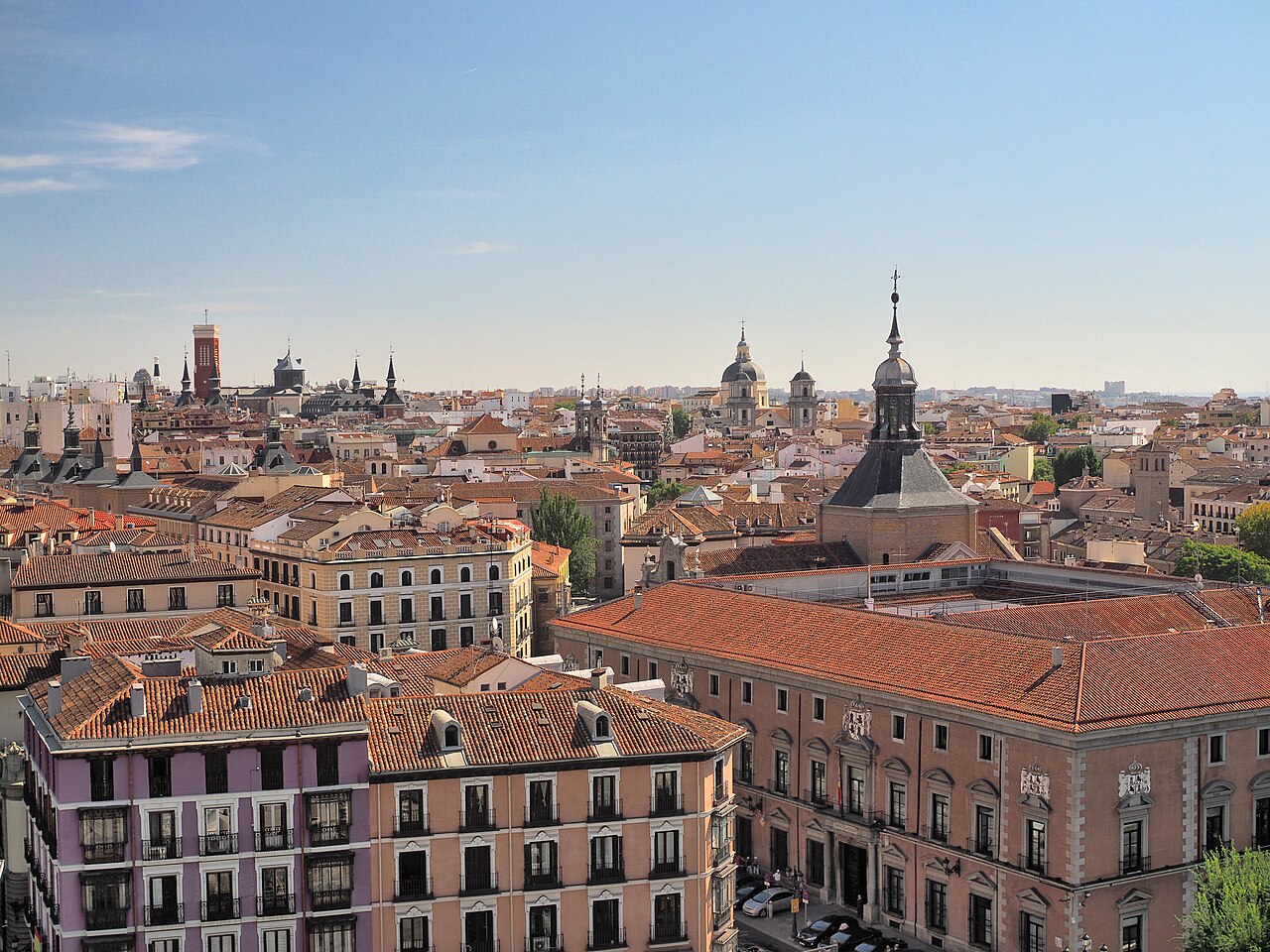
Madrid is Spain's capital, set on the central plateau and organised around a dense historic and cultural core rather than a major riverfront. The oldest royal quarter, known as Madrid de los Austrias, runs between the Royal Palace and Plaza Mayor. East of Puerta del Sol, Gran Vía, the Literary Quarter and the Paseo del Arte carry the principal commercial streets and art museums. Neighbourhoods such as La Latina, Lavapiés, Malasaña, Chueca, Chamberí and Salamanca then form distinct dining, nightlife and residential clusters around that centre.
Reviewed by Elena Voss · SSMTour Travel Editor
Set your days, your pace and the hours you actually want to be out. The planner works around closing days and travel time, and leaves room to eat.
Ranked by importance — sitelinks, pageviews and heritage status, not editor preference.
76 places match
Category
Typical visit duration
Interests
The Prado is Spain's national painting museum, and the building it occupies was never meant to hold pictures. Juan de Villanueva designed it in 1785 for a Natural History Cabinet, on the orders of Charles III.
Palacio Real de Madrid
The Royal Palace of Madrid stands on the ridge above the Manzanares where the medieval Alcazar stood until fire destroyed it on Christmas Eve 1734.
The Reina Sofia is Spain's national museum of modern and contemporary art, and the building most visitors enter is a former hospital.
Parque del Retiro
El Retiro is the historic municipal garden that fills the ground east of the Paseo del Prado, and it is the only part of central Madrid large enough to lose an afternoon in.
Museo Thyssen-Bornemisza
The Thyssen-Bornemisza is the private-collection third of Madrid's Paseo del Arte, standing on Paseo del Prado at number 8 in the Villahermosa palace, a few minutes' walk from the Prado and the Reina Sofia.
Plaza Mayor
Plaza Mayor is the enclosed rectangular square at the centre of Hapsburg Madrid, the oldest quarter of the city, and it is a piece of deliberate town planning rather than a space that grew by accident.
Puerta del Sol is a semi-circular public square in the exact centre of Madrid, and it is a junction before it is a monument.
Estadio Santiago Bernabéu is the principal stadium of Real Madrid Club de Fútbol, located on Paseo de la Castellana in the Chamartín district of northern Madrid.
Gran Vía is a major thoroughfare and prominent street in central Madrid, Spain. It stretches from Calle de Alcalá near Plaza de Cibeles to Plaza de España.
Templo de Debod is an ancient Egyptian temple standing in Madrid’s Parque del Oeste, where pharaonic stone architecture occupies an elevated position inside a modern Spanish park.
Catedral de la Almudena
Almudena Cathedral is Madrid’s principal Roman Catholic cathedral, facing the Royal Palace across Plaza de la Armería. Construction began in the late nineteenth century and Pope John Paul II consecrated the cathedral in 1993.
Palacio de Cibeles is Madrid’s former communications palace and a present civic and cultural building on Plaza de Cibeles.
Puerta de Alcalá
Puerta de Alcalá is a neoclassical monument standing at Plaza de la Independencia in Madrid. This five-arched gate was one of several historic entrances to the city.
Real Jardín Botánico de Madrid
The Real Jardín Botánico is a working research institute of the CSIC, Spain's national research council, that happens to be open to the public.
Museo Arqueológico Nacional
The Museo Arqueológico Nacional is Spain's principal institution dedicated to archaeological collections. Located in Madrid, it houses extensive holdings spanning prehistoric times through the medieval period.
Mercado de San Miguel
The Mercado de San Miguel is a historic market building located near Madrid's Plaza Mayor. Originally constructed in the early twentieth century, the iron and glass structure represents a significant example of cast-iron architecture in Spain.
Plaza de España is a prominent public square in central Madrid, Spain. The open space features a large monument dedicated to Miguel de Cervantes, the celebrated Spanish writer.
Museo Sorolla
The Sorolla Museum is a museum in Madrid dedicated to the work of Joaquín Sorolla, a prominent Spanish painter known for his luminous beach scenes and portraits.
Teatro Real is the principal opera house of Madrid, Spain. Located at Plaza de Isabel II in the city centre, it stands opposite the Royal Palace.
Real Basílica de San Francisco el Grande
Basílica de San Francisco el Grande is a prominent Roman Catholic basilica in Madrid, Spain. The local name matches its formal identity.
Museo Cerralbo
The Cerralbo Museum, or Museo Cerralbo, is a historic house museum in Madrid. It preserves the former residence of the 17th Marquis of Cerralbo, Enrique de Aguilera y Gamboa, a prominent aristocrat and collector.
Museo Lázaro Galdiano
The Lázaro Galdiano Museum, known locally as Museo Lázaro Galdiano, is a museum in Madrid. It houses the art collection assembled by José Lázaro Galdiano, a Spanish financier, publisher and collector.
Museo Nacional de Ciencias Naturales
The National Museum of Natural Sciences, known locally as Museo Nacional de Ciencias Naturales, is a prominent institution in Madrid. It operates under the Spanish Ministry of Science and Innovation.
Museo Naval de Madrid
Museo Naval is a maritime museum in Madrid, Spain. It is dedicated to Spanish naval history and heritage. The institution preserves and exhibits collections related to Spain's seafaring traditions, naval warfare, and exploration.
CaixaForum Madrid is a cultural and social centre operated by the La Caixa Foundation. It occupies a distinctive building in central Madrid, notable for its brick industrial architecture with a prominent vertical garden on one exterior wall.
Círculo de Bellas Artes is a prominent cultural institution in Madrid, Spain. Founded in 1880, it operates as a private not-for-profit cultural organisation. The building stands as a significant architectural landmark in the city centre.
The Fuente de Cibeles is a prominent neoclassical fountain situated at the intersection of Calle de Alcalá and Paseo del Prado in central Madrid. It depicts the Greek goddess Cybele seated on a chariot drawn by two lions.
Fuente de Neptuno
The Fountain of Neptune, or Fuente de Neptuno, is a neoclassical monument in central Madrid. Its sculptural group presents Neptune, the Roman god of the sea, on a shell-shaped chariot drawn by two hippocampi.
Jardines de Sabatini
Sabatini Gardens, or Jardines de Sabatini, is a formal green space beside Madrid’s Royal Palace. Its geometric layout, clipped hedges, fountains, statues, and palace setting make it a compact sightseeing stop in the city centre.
Jardines del Campo del Moro
Campo del Moro is a historic garden complex located in Madrid, Spain, situated at the western foot of the Royal Palace. Its local name, Jardines del Campo del Moro, reflects its long-standing identity within the city.
Madrid Río is a long urban park and green corridor beside the Manzanares River in Madrid. It occupies the riverbanks reshaped after the M-30 ring road was placed underground, creating a broad public landscape for walking, cycling, recreation, and rest.
Parque del Oeste is one of Madrid’s major western green spaces, offering a broad change of pace from the city’s museums, avenues, and busy central squares.
Ermita de San Antonio de la Florida
The Royal Chapel of St. Anthony of La Florida, also called Ermita de San Antonio de la Florida, is a historic chapel in Madrid. Its importance comes from the combination of religious character, royal association, and exceptional artistic decoration.
Real Monasterio de la Encarnación
The Royal Convent of La Encarnación is a royal monastery in Madrid, Spain. Its local name is Real Monasterio de la Encarnación. It holds the status of a royal site and is associated with the Spanish monarchy.
Monasterio de las Descalzas Reales
The Convent of Las Descalzas Reales is a royal monastery in central Madrid, founded in 1559 by Joanna of Austria, sister of Philip II.
Palacio de Liria
Liria Palace, known locally as Palacio de Liria, stands as a historic palace in Madrid. It serves as the principal residence of the House of Alba, one of Spain's most prominent noble families.
Museo de América
The Museum of the Americas is a Madrid museum devoted to the art, archaeology, and ethnography of the American continents. In Ciudad Universitaria, near Moncloa, it brings together objects connected with societies from North, Central, and South America.
Museo del Ferrocarril de Madrid
The Railway Museum of Madrid, known locally as Museo del Ferrocarril de Madrid, is a museum dedicated to the history of rail transport in Spain.
Museo del Romanticismo
The Museum of Romanticism, or Museo del Romanticismo, explores the artistic and social world of nineteenth-century Spain. It occupies a historic palace in central Madrid, where paintings, furniture, decorative arts and personal belongings create a close view of Romantic-era life.
Museo de Historia de Madrid
Madrid History Museum, also known as Museo de Historia de Madrid, is Madrid’s municipal museum devoted to the capital itself.
Museo Nacional de Artes Decorativas
The National Museum of Decorative Arts, or Museo Nacional de Artes Decorativas, is a Madrid museum devoted to applied and decorative arts. It occupies a historic building and belongs to Spain’s national museum network.
Museo Nacional de Antropología
The Museo Nacional de Antropología in Madrid is Spain's national museum dedicated to anthropology. It houses collections related to human cultures, societies, and physical anthropology.
Museo del Traje is Madrid’s museum of clothing, fashion and textile heritage. It belongs to Spain’s state museum network and follows the development of dress through historical periods and contemporary design.
The Royal Academy of Fine Arts of San Fernando is a working academy on Calle de Alcalá that happens to keep one of the best picture collections in Spain on its upper floors.
La Casa Encendida is a multidisciplinary cultural and social centre in Madrid. Its programme connects contemporary art, education, performances, music, film, workshops, and community activity.
Conde Duque is a cultural centre located in Madrid, Spain. The building occupies a prominent position within the urban fabric of the city and serves as a venue for various cultural activities.
Palacio de Cristal
Crystal Palace, or Palacio de Cristal, is a glass-and-metal pavilion beside a small artificial lake in Madrid’s Buen Retiro Park.
Real Observatorio de Madrid
The Royal Observatory of Madrid, or Real Observatorio de Madrid, is an astronomical observatory with an important place in Spain’s scientific history. Founded by King Charles III, it reflects the Enlightenment interest in observation, measurement, and organized scientific work.
Basílica de Jesús de Medinaceli
The Basilica of Jesus de Medinaceli is an active Roman Catholic church in central Madrid dedicated to the venerated image of Jesús de Medinaceli. It is a place of worship, prayer and pilgrimage rather than a conventional museum.
Plaza de Oriente is a historic square in central Madrid, located between the Royal Palace and the Teatro Real opera house. Its formal gardens and geometric layout create a distinguished public space in the Spanish capital.
Plaza de la Paja is a historic square in Madrid's La Latina neighbourhood, within the city's oldest medieval district. Its name derives from the Spanish word for straw, referencing its past association with hay and fodder markets.
Plaza de Chueca
Plaza de Chueca is a public square in the Chueca neighbourhood of central Madrid, Spain. The area is widely recognised as the heart of Madrid's LGBTQ+ community and a centre of social life, dining, and nightlife.
Plaza de Olavide
Plaza de Olavide is a public square in Madrid, Spain. It functions as an urban open space within the city fabric, serving local residents and visitors as a gathering place.
El Rastro is a sprawling open-air flea market in Madrid, widely regarded as the largest and most famous of its kind in Spain.
Mercado de San Antón is a market hall in Madrid, Spain. It operates as a commercial space for food vendors and dining. The structure serves the Chueca neighborhood, an area known for its cultural activity.
Mercado de la Cebada is a historic public market in Madrid, Spain. Located in the La Latina neighbourhood, it has served as a commercial hub for local residents since the nineteenth century.
Mercado de Antón Martín is a traditional municipal market located in the Antón Martín neighbourhood of Madrid's Centro district.
Teatro Español is a historic theatre in central Madrid and an important institution in the city’s performing-arts tradition. It is a working venue for dramatic productions rather than a general museum with casual visiting hours.
Teatro de la Zarzuela is a historic theatre in Madrid dedicated to zarzuela, a Spanish musical theatre genre combining spoken dialogue, song, and dance.
Teatro María Guerrero is a theatre in Madrid, Spain. It serves as a significant cultural venue within the city. The theatre is named after the distinguished Spanish actress María Guerrero, reflecting its connection to Spanish theatrical heritage.
Teatro Valle-Inclán is a professional theatre in Madrid named after Ramón del Valle-Inclán, one of Spain’s important literary figures.
Quinta de los Molinos is a historic estate and public park in Madrid, Spain. The property was originally developed as a private residence with extensive grounds in the early twentieth century.
Parque Juan Carlos I
Parque Juan Carlos I is a major public park in Madrid, Spain. Named after King Juan Carlos I, it forms part of the city's northeastern green corridor near Barajas Airport.
Parque de Berlín
Berlin Park, or Parque de Berlín, is a public green space in Madrid named for the German capital. It forms part of the city’s network of neighbourhood parks, giving residents an open place for strolling and everyday outdoor time.
Jardines de Cecilio Rodríguez is a landscaped garden in Madrid named after Cecilio Rodríguez, a notable figure in Spanish garden design. It offers an urban green setting for walking, quiet observation and time away from the city’s busier streets.
Real Fábrica de Tapices
The Royal Tapestry Factory, or Real Fábrica de Tapices, is a historic Madrid manufactory with centuries of royal connections. Its distinctive appeal is the survival of hand-woven tapestry production as a living craft.
Museo de Cera
Madrid Wax Museum, or Museo de Cera, is a walk-through attraction devoted to lifelike wax figures. It gives visitors an alternative to Madrid’s art museums by presenting historical figures, public personalities, cultural icons, and fictional characters in staged scenes.
Museo ABC is a museum located in Madrid, Spain. It is dedicated to the collection, preservation, and exhibition of works related to drawing and illustration.
Museo de San Isidro is a Madrid museum in the La Latina district, a historic part of the city associated with San Isidro Labrador. The museum focuses on Madrid’s history and heritage, with particular attention to the city’s patron saint.
Museo de Arte Contemporáneo is a contemporary art museum in Madrid. Its role is to present and preserve modern and contemporary artistic work, placing it within the capital’s broad cultural landscape.
Museo Tiflológico
The Museo Tiflológico is a museum in Madrid dedicated to the experience of blindness and visual impairment. Its name derives from typhlology, the study of blindness.
The Museo de Bomberos de Madrid is a museum dedicated to the history of firefighting in Spain's capital city. Located within Madrid's municipal boundaries, it preserves and displays equipment, vehicles, and memorabilia associated with the city's fire service.
Planetario de Madrid
Madrid Planetarium is a science and cultural venue devoted to astronomical education and public outreach. Its central experience is the presentation of celestial phenomena through projected displays and educational programming.
Zoo Aquarium de Madrid is a combined zoo and aquarium located in Madrid, Spain. The facility houses diverse animal species across terrestrial and aquatic environments.
Faunia is a nature and wildlife park in Madrid that combines zoo-style animal encounters, botanical settings, and environmental education. Instead of arranging every exhibit only by animal family, it presents wildlife through themed ecosystems and climatic environments.
Parque de Atracciones de Madrid is a major amusement park set inside Casa de Campo, Madrid’s large western public park. Its setting combines a wooded urban landscape with rides and attractions for different age groups.
Source: OpenStreetMap contributors, Wikidata ·
Puerta del Sol is the practical centre for orientation. Westward lie Plaza Mayor, the Austrias quarter and the Royal Palace; eastward, Gran Vía leads toward Cibeles while the Paseo del Arte runs south past the major museums and Retiro. La Latina and Lavapiés sit south of the old core, with Malasaña and Chueca to the north. Salamanca lies east of Retiro, and the Castellana axis continues north toward the business district and the Bernabéu. Casa de Campo and Madrid Río are separate green corridors west of the centre.
Checked 2026-08-26
Walk between the Austrias quarter, Sol, Gran Vía and the Paseo del Arte, then use public transport for longer links. Madrid's official tourism service lists metro, city buses and Cercanías suburban trains among the ways to move around the capital. Cercanías also connects Madrid with towns in the region, including El Escorial and Aranjuez. Consult the current official maps and service information before travel because routes, works and ticket conditions can change.
Checked 2026-08-26
A fixed stay length is not recorded. Plan the Austrias and Sol core, the Paseo del Arte and Retiro, then add neighbourhood time or a regional excursion according to your priorities.
Use Puerta del Sol as the central reference. Plaza Mayor, the Austrias quarter and the Royal Palace extend west, while Gran Vía and the museum axis extend east.
Walk within the central neighbourhoods and use the metro for longer connections. The official network reaches the major museums, shopping streets, traditional quarters and northern visitor areas.
They cluster along the Paseo del Arte east of the historic core and close to Retiro. Treat this as one walking district rather than crossing the city between individual museum visits.
No. It lies north along the Castellana axis in a separate modern district. Metro is the practical connection from Sol, Gran Vía or the museum area.