


4 min walk
Cafe bar Elephant
- Notable
- Nightlife venue
Language · 11 published
Museum · Split
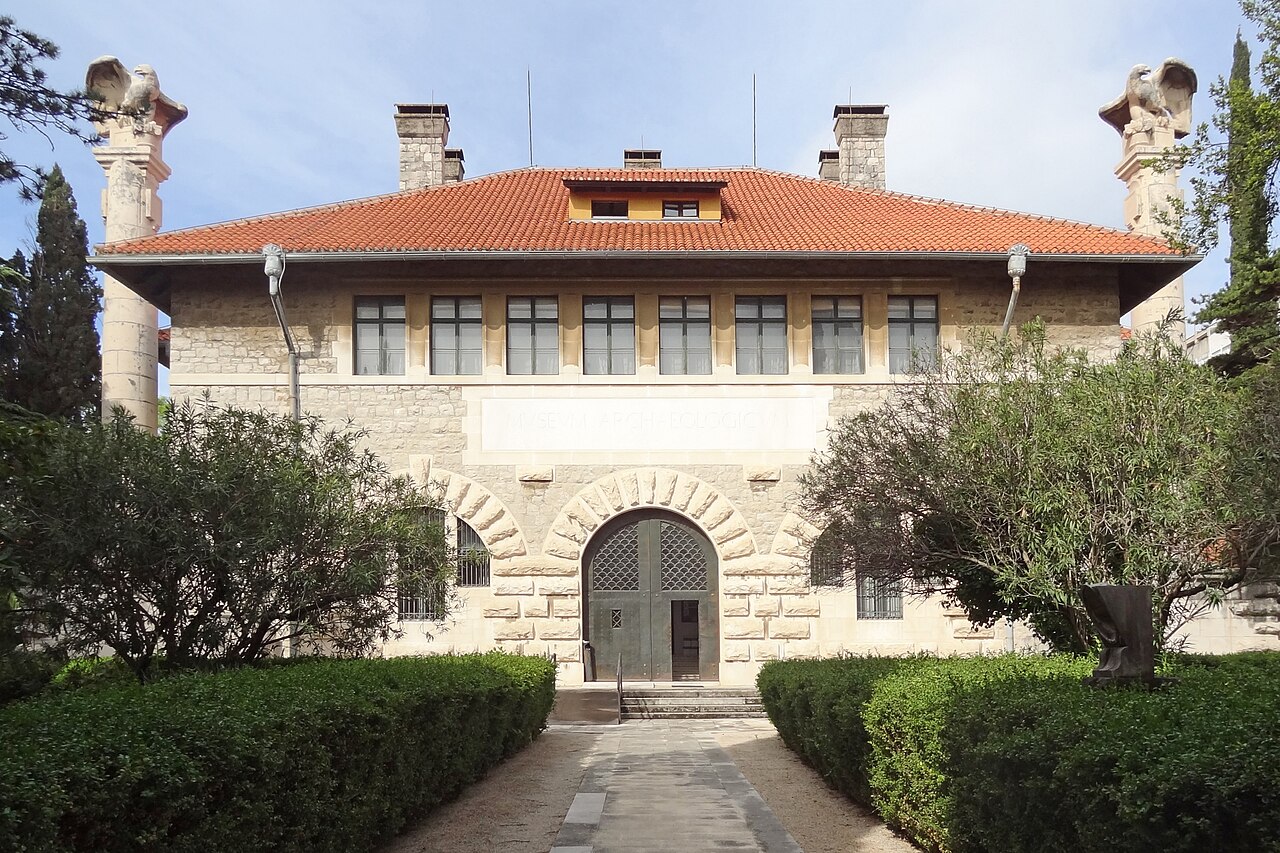
Arheološki muzej
| Monday | 09:00 – 20:00 |
|---|---|
| Tuesday | 09:00 – 20:00 |
| Wednesday | 09:00 – 20:00 |
| Thursday | 09:00 – 20:00 |
| Friday | 09:00 – 20:00 |
| Saturday | 09:00 – 14:00 |
| Sunday | Closed |
Closed to visitors between 14:00 – 15:00
Parsed from OpenStreetMap opening hours on 2026-08-26.
The Archaeological Museum in Split, known locally as Arheološki muzej u Splitu, stands as a significant cultural institution in Croatia's second-largest city. It preserves and presents archaeological finds from the Split region and broader Dalmatian area. The museum holds collections spanning prehistoric times through the medieval period, reflecting the area's complex history under Roman, Byzantine, Venetian, and other rulers. Its establishment connects to Split's deep historical layers, including the palace of Emperor Diocletian that forms the city's ancient core.
Checked 2026-08-26
The museum's collections encompass artifacts from Salona, the ancient Roman capital of Dalmatia located near modern Solin. Visitors encounter Roman inscriptions, sculpture, pottery, glassware, and everyday objects recovered from regional excavations. Prehistoric materials include Illyrian items. The medieval collection contains early Christian and Croatian medieval archaeological finds. Numismatic holdings present ancient coins. Stone monuments and architectural fragments, particularly from Salona's Christian basilicas and burial sites, constitute notable components. The displays aim to document continuous settlement and cultural development in central Dalmatia across millennia.
Checked 2026-08-26

A thorough visit to the Archaeological Museum in Split typically requires between ninety minutes and two hours for visitors genuinely engaged with the collections. Those with specialized interest in Roman provincial archaeology or Croatian medieval history may extend their stay. Casual visitors passing through might complete a meaningful circuit in approximately sixty minutes. The duration depends considerably on individual reading pace, as explanatory texts accompany displays. Photography and note-taking extend visits. Combined with nearby Split attractions, the museum fits within a full-day historical exploration of the city center and its immediate surroundings.
Checked 2026-08-26
Operator-confirmed hours are Not recorded pending review. Visitors should verify current opening schedules directly with the museum before planning their arrival. Seasonal variation affects Croatian museum operations, with reduced winter hours common. Summer brings peak tourist traffic to Split, potentially creating crowded conditions at popular attractions. Morning visits generally offer quieter experiences in Mediterranean cities. Rainy days increase indoor attraction attendance. The museum's location within Split's urban fabric allows flexible integration with other sightseeing. Advance confirmation prevents disappointment, particularly for travelers with tight itineraries or specific accessibility requirements.
Checked 2026-08-26

Operator-confirmed prices are Not recorded pending review. Admission policies for Croatian state museums typically distinguish between adults, students, seniors, and children, with EU citizens sometimes receiving differential rates. Some Croatian museums offer free entry on select national holidays or participate in European museum initiatives. Group rates may apply for organized tours. Visitors should consult the museum directly or official Croatian cultural ministry resources for current fee structures. Budget-conscious travelers might inquire about combined tickets with other Split heritage sites. Cash and card acceptance varies; preparation with multiple payment methods is prudent.
Checked 2026-08-26

The Archaeological Museum in Split occupies a location accessible within the city's compact historic center. Split's central train and bus stations lie near the harbor and Diocletian's Palace, placing most attractions within walking distance for able visitors. The city's ferry port connects to Dalmatian islands and Italian coastal cities. Local buses serve outer districts. Taxis and ride services operate throughout Split. The museum's specific street address requires verification from current sources. Pedestrian navigation through Split's old town involves stone surfaces and occasional steps, presenting moderate challenges for mobility-impaired visitors or those with heavy luggage.
Checked 2026-08-26
Split's summer heat demands hydration and sun protection even when moving between indoor attractions. The museum's stone building may maintain cooler interior temperatures. Crowded conditions during July and August peak season affect comfort and viewing quality. Some archaeological descriptions appear in Croatian with varying English translation completeness. Display lighting on ancient artifacts sometimes proves dim for detailed examination. Security protocols prohibit touching exhibits. Bag size restrictions may apply. Nearby parking remains extremely limited in Split's historic core; drivers should use peripheral lots. Coastal city humidity affects paper materials visitors carry.
Checked 2026-08-26

Photography policies at Croatian archaeological museums vary by institution and specific collection sensitivity. Flash photography typically damages light-sensitive organic materials and may be universally prohibited. Some museums permit non-flash personal photography while restricting commercial or publication use. Tripods and selfie sticks often interfere with visitor flow and security monitoring. Visitors should observe posted signage or inquire at admission regarding current regulations. Respect for other viewers dictates quiet camera operation and avoidance of blocking display cases. Certain special exhibitions or loaned objects may carry additional restrictions. Digital sharing on social media usually falls within personal use parameters.
Checked 2026-08-26
The museum is located within Split's broader historic center, not directly inside the palace structure itself. Its precise relationship to the palace boundaries requires on-site verification.
Major Croatian museums typically provide some English documentation, though completeness varies by section. Visitors should expect primary labels in Croatian with selective translation.
Guided tour availability is Not recorded. Visitors should contact the museum directly to inquire about scheduled tours, audio guides, or group arrangements.
Archaeological museums accommodate children, though display cases and textual content primarily serve adult comprehension. Family suitability depends on individual children's interests and attention spans.
Accessibility features are Not recorded. Historic buildings in Split's center often present architectural barriers. Direct inquiry to the museum is advised for specific accessibility requirements.
The museum preserves and displays artifacts excavated from Salona and surrounding sites, functioning as the primary repository for that major Roman archaeological zone's movable finds.
Loading the interactive map…
The interactive map could not be loaded.


Last updated:
Source: OpenStreetMap contributors, Wikidata ·