

3 min walk
Thommanon
- Must see
- Historic monument
Language · 11 published
Place of worship · Siem Reap
ប្រាសាទចៅសាយទេវតា

Chau Say Tevoda is a Hindu temple in the Angkor Archaeological Park near Siem Reap. The compact sandstone monument stands east of Angkor Thom's Victory Gate, directly across the modern road from Thommanon. Built during the early twelfth century under King Suryavarman II, Chau Say Tevoda shares the refined proportions and carved devatas associated with classical Khmer architecture. Its roadside position makes it an easy companion stop on a route between Angkor Wat and Angkor Thom. Chau Say Tevoda is a Hindu temple in the Angkor Archaeological Park near Siem Reap, Cambodia. It stands east of Angkor Thom's Victory Gate, across the modern road from Thommanon. The temple was built during the early 12th century under King Suryavarman II, who also commissioned Angkor Wat. UNESCO lists the temple within World Heritage Site 668. Chau Say Tevoda shares architectural similarities with Thommanon, suggesting contemporary construction or restoration periods. The temple represents classical Khmer design with sandstone construction and ornate devata carvings. Yes, Chau Say Tevoda lies within Angkor Archaeological Park and requires the standard park pass for entry. No separate ticket is needed at the temple itself.
Checked 2026-08-26 · Source
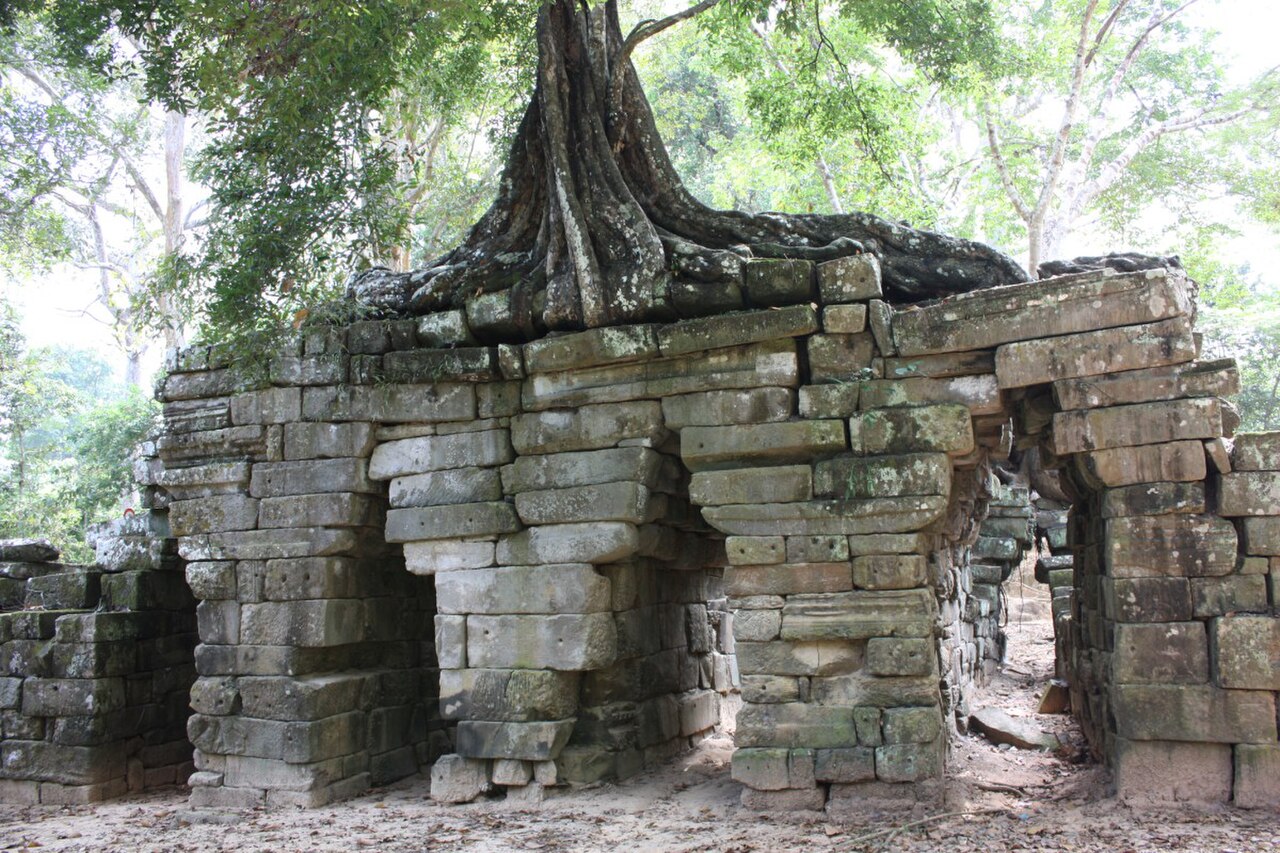
The complex centres on a sanctuary tower with four smaller towers arranged around it. A laterite enclosure and gopura entrances define the temple, while the eastern approach includes a cruciform terrace and naga balustrades. Sandstone devatas provide the finest close-up details. A major conservation project completed in 2009 reassembled fallen blocks and stabilised the central tower. The restored areas sit beside partially ruined sections, allowing visitors to see both the temple's architectural design and the challenges of preserving it.
Checked 2026-08-26 · Source
Allow thirty to sixty minutes for Chau Say Tevoda. The compact footprint makes it possible to walk around the enclosure, inspect the devata carvings and study the restored central tower without the distances required at Angkor Wat or Bayon. Pair Chau Say Tevoda with Thommanon across the road for a combined stop of about ninety minutes. Travellers interested in Khmer sculpture, temple layouts or conservation can extend the visit while comparing restored and weathered sections.
Checked 2026-08-26 · Source
Early morning and late afternoon provide softer light and less intense heat at Chau Say Tevoda. November to March generally brings drier conditions for the temple paths, while monsoon-season rain can affect footing and photography. Morning light favours the eastern approach and afternoon light reaches western faces. The temple is a practical short stop during a route between Angkor Wat and Angkor Thom, with the nearby Thommanon creating a natural paired visit for travellers studying similar Khmer designs.
Checked 2026-08-26 · Source
Chau Say Tevoda is entered with a valid Angkor Archaeological Park pass. The temple has no separate entrance fee beyond the park admission. One-day, three-day and seven-day pass formats cover visits across the archaeological zone, so Chau Say Tevoda can be added to a wider temple circuit. Carry the pass during the visit because checkpoints enforce park admission. The ticket centre outside the main archaeological area is where visitors arrange the park pass before reaching this roadside monument.
Checked 2026-08-26 · Source
Chau Say Tevoda sits beside the main road between Angkor Wat and Angkor Thom, roughly one kilometre east of the Victory Gate and about six kilometres north of Siem Reap. Tuk-tuks, bicycles, motorbikes, private cars and organised tours reach the temple. Thommanon stands directly across the road, with both monuments accessible from the same general parking area. Travellers navigating independently should look for the modest temple among roadside vegetation and take care when crossing or walking beside traffic.
Checked 2026-08-26 · Source
Chau Say Tevoda combines restored blocks, weathered surfaces, terraces and stairs, so wear shoes with good grip and take care after rain. The roadside setting brings traffic noise, dust and passing vehicles, unlike the more secluded temple ruins. Shade is limited, and visitors should carry water and sun protection. Vendors may approach near the parking area. Wear clothing covering shoulders and knees, respect the conservation boundaries and never touch, climb or sit on fragile carved elements.
Checked 2026-08-26 · Source
Chau Say Tevoda rewards close photography of the devata figures, naga balustrades, gopuras and restored sandstone blocks. Morning light illuminates the eastern face, while afternoon light favours western surfaces. The central tower creates a strong vertical subject against the sky, and overcast conditions soften contrast in shaded reliefs. Road traffic and vegetation can enter wide compositions, so move carefully within permitted areas. Thommanon across the road offers a useful comparative frame for the two similar temple designs.
Checked 2026-08-26 · Source
Yes. Chau Say Tevoda is inside the Angkor Archaeological Park and uses the standard park pass. The temple has no separate entrance fee.
Thommanon stands directly across the road, making the two temples a natural paired stop. Chau Say Tevoda also lies on the route between Angkor Wat and Angkor Thom.
Allow thirty to sixty minutes for the temple. Visiting Thommanon across the road creates a combined stop of about ninety minutes.
The temple is beside the main road between Angkor Wat and Angkor Thom, about one kilometre east of Angkor Thom's Victory Gate and six kilometres north of Siem Reap.
Wear clothing covering the shoulders and knees, together with sturdy footwear for restored terraces, weathered stone and stairs.
The devata carvings, naga balustrades, gopuras, restored sandstone blocks and central sanctuary tower are the temple's strongest photographic subjects.
Loading the interactive map…
The interactive map could not be loaded.
Last updated:
Source: OpenStreetMap contributors, Wikidata ·