.jpg)
.jpg)
.jpg)
13 min walk
Preah Koh
- Must see
- Historic monument
Language · 11 published
Historic monument · Siem Reap

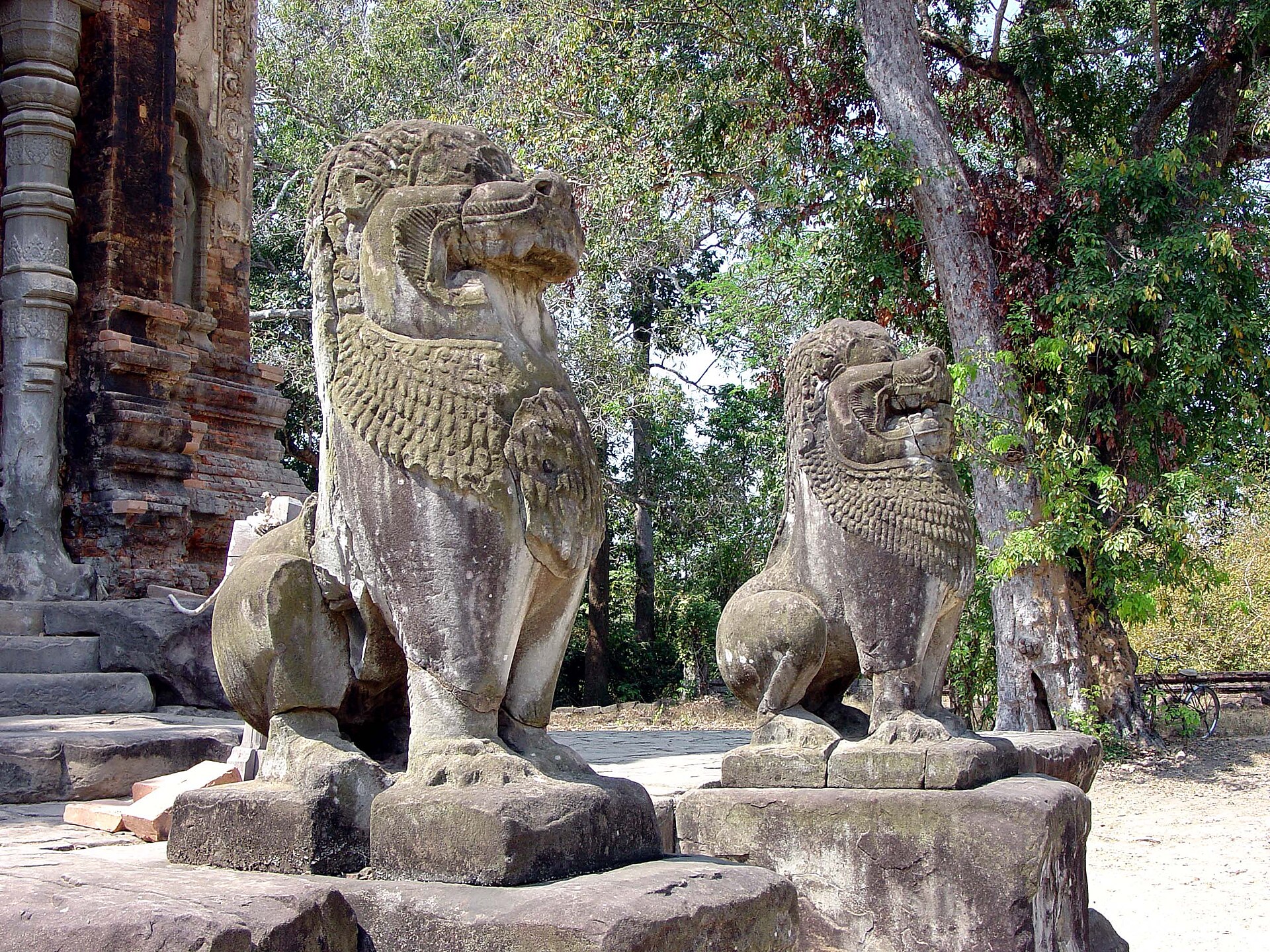
Lolei is a Hindu temple located in the Roluos group northeast of Siem Reap, Cambodia. Built in the late ninth century during the reign of King Indravarman I, it represents one of the earliest Khmer temple sites in the region. The temple originally stood on an island in the middle of the Indratataka baray, a reservoir constructed by the same king. Lolei belongs to the UNESCO World Heritage Tentative List site encompassing the Angkor archaeological area, recognized for outstanding universal cultural value. Lolei also earns time in a siem reap itinerary because A meaningful siem-reap visitor landmark retained in the breadth-first top 100; production has no city POI pool for an exact match. Its value becomes clearer when the stop is compared with the surrounding streets and the other ranked places nearby.
Checked 2026-08-26
The temple comprises four brick towers arranged on a single platform, dedicated to the king's ancestors and the Hindu deity Shiva. Decorative elements include false doors and carved lintels bearing inscriptions in ancient Khmer script. Much of the original structure has suffered deterioration over centuries, with some restoration work undertaken. The site retains archaeological significance despite its ruined state. Visitors encounter foundational remains, partial tower structures, and scattered architectural fragments that illustrate early Angkorian construction techniques and religious devotion practices of the period.
Checked 2026-08-26
A visit to Lolei typically requires between thirty minutes and one hour for adequate exploration. The compact site permits efficient observation of all remaining structural elements without extensive walking. Many travelers combine Lolei with other Roluos group temples including Preah Ko and Bakong, constituting a half-day itinerary. Independent visitors should allocate sufficient time for careful examination of the carved details and inscriptions. The unhurried pace allows appreciation of this early temple's historical position preceding the more famous monuments of the Angkor period.
Checked 2026-08-26

Cambodia experiences distinct wet and dry seasons affecting visitor comfort. The dry season from November to March generally offers more favorable conditions with reduced rainfall and moderate temperatures. Morning visits may provide cooler conditions and softer light for observation. The temple receives fewer visitors than major Angkor sites, permitting more contemplative experience regardless of timing. Travelers should verify current accessibility and any seasonal restrictions through official channels before finalizing arrangements, as conditions may change without widespread notification. Check the operator's own site for the travel date before relying on a schedule or fare.
Checked 2026-08-26
The Angkor Archaeological Park operates a unified ticketing system covering multiple temple complexes, though specific inclusion of Roluos group temples requires verification. Visitors should consult official tourism authorities or authorized ticket vendors for current fee structures and validity periods. Some multi-day passes may provide access to outlying sites. Budget-conscious travelers should confirm whether separate admission applies to Lolei specifically. Currency preparation in appropriate denominations facilitates transactions at remote locations where electronic payment options may remain unavailable. Check the operator's own site for the travel date before relying on a schedule or fare.
Checked 2026-08-26
Lolei sits approximately thirteen kilometers east of Siem Reap in the Prasat Bakong district. Transportation options include hired motorbike, tuk-tuk, private vehicle, or organized tour covering the Roluos group. The journey requires roughly thirty minutes from central Siem Reap depending on road conditions and traffic. Rural roads leading to the temple may vary in surface quality, particularly during wet season months. Self-directed travelers should obtain clear directions or reliable mapping resources, as signage remains limited compared to primary Angkor monuments. Advance arrangement with established drivers provides predictable service.
Checked 2026-08-26

The deteriorated state of Lolei presents physical hazards including uneven surfaces, unstable masonry, and partially collapsed structures. Visitors should exercise caution when approaching or entering remaining towers. Limited visitor infrastructure means minimal shade, water availability, or emergency services. Appropriate footwear with sturdy soles proves essential for navigating rubble-strewn areas. Sun protection and adequate hydration require advance preparation given the exposed setting. Respectful conduct preserves this fragile heritage site; climbing on vulnerable structures accelerates deterioration and may violate protective regulations. Wildlife encounters remain possible in the surrounding rural environment.
Checked 2026-08-26
Lolei offers photographic subjects emphasizing atmospheric decay and early architectural forms rather than monumental scale. The brick towers against sky and vegetation create textured compositions. Morning and late afternoon light enhances the warm tones of exposed brickwork. Wide-angle lenses accommodate the clustered tower arrangement in confined space. Details of carved lintels and inscriptions reward macro or close-focus attention. The relatively quiet setting permits unhurried composition without competing visitors. Tripod use should respect site preservation needs and not obstruct narrow pathways. Overcast conditions may reduce harsh shadows and reveal subtle surface textures effectively.
Checked 2026-08-26
Lolei belongs to the earlier Roluos group located separately northeast of Siem Reap, predating the principal Angkor monuments by approximately two centuries.
Lolei was constructed as a Hindu temple dedicated to Shiva and honoring royal ancestors.
Partially collapsed and deteriorated structures present safety concerns; visitors should exercise extreme caution and respect protective barriers.
On-site guide services are not reliably present; visitors typically arrange guides through Siem Reap agencies or visit independently.
Essential items include sun protection, drinking water, sturdy footwear, and insect repellent given limited on-site facilities.
Lolei represents the latest construction in the Roluos group, displaying evolved brick tower design preceding subsequent sandstone monuments.
Loading the interactive map…
The interactive map could not be loaded.


Last updated:
Source: OpenStreetMap contributors ·