

10 min walk
Bakong_BK18
- High
- Historic monument
Language · 11 published
Historic monument · Siem Reap
| Monday | 07:30 – 17:30 |
|---|---|
| Tuesday | 07:30 – 17:30 |
| Wednesday | 07:30 – 17:30 |
| Thursday | 07:30 – 17:30 |
| Friday | 07:30 – 17:30 |
| Saturday | 07:30 – 17:30 |
| Sunday | 07:30 – 17:30 |
Checked 2026-08-31 · Source
Read from the OpenStreetMap access tags; anything not listed has no tag recorded.
Set the group type to family in the planner and the day window contracts to about three quarters of a solo day.
Preah Ko is a Hindu temple in the Roluos group, located east of Siem Reap in Cambodia. Built in the late ninth century during the reign of King Indravarman I, it represents one of the earliest Khmer temple mountains. The temple is dedicated to Shiva and honors the king's ancestors. Its name translates to Sacred Bull, referring to the Nandi statues facing the temple towers. Preah Ko stands as a foundational monument of the Khmer Empire's architectural tradition, predating the more famous Angkor complexes.
Checked 2026-08-26
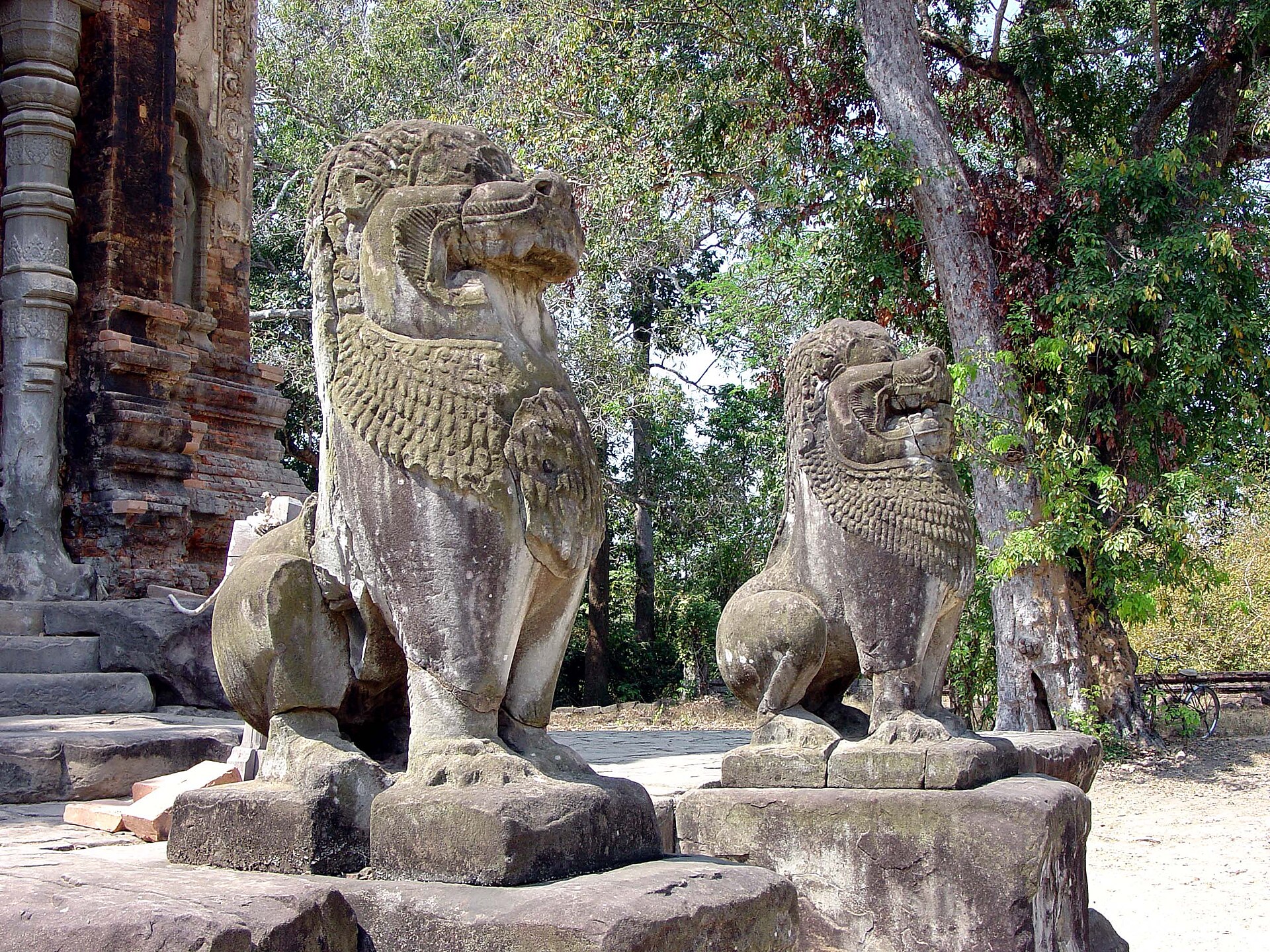
The temple complex features six brick towers arranged on a platform in two rows of three. The front row honors male ancestors of King Indravarman I, while the back row honors female ancestors. Intricate stucco carvings, now largely deteriorated, once adorned the brick structures. Sandstone doorframes and lintels remain, displaying early Khmer decorative motifs. Three stone bull statues sit before the central towers. The surrounding area includes laterite walls and moat remnants, though these are significantly weathered from centuries of exposure to tropical conditions.
Checked 2026-08-26
Visitors typically spend approximately forty-five minutes to one hour exploring Preah Ko. The compact size of the temple complex allows for thorough examination without extensive walking. The site lacks the sprawling scale of Angkor Wat or Bayon, making it manageable for travelers with limited time. Those with strong interest in early Khmer architecture may extend their visit by examining the remaining stucco details and comparing construction techniques with later temples. Most visitors combine Preah Ko with nearby Bakong and Lolei temples in a single half-day excursion.
Checked 2026-08-26
Cambodia's dry season from November to March offers more comfortable conditions for temple exploration with reduced rainfall and moderate temperatures. Morning visits provide softer light for observation and generally cooler conditions. The wet season brings lush vegetation but also muddy access paths and increased humidity. Travelers should verify current opening times with official sources before visiting, as temple complex schedules may change without widespread notification. Sunrise and sunset visits require advance confirmation of site accessibility. Preah Ko also earns time in a siem reap itinerary because Independent traveler stop frozen before production reconciliation; exact local identity verified without a proxy. Its value becomes clearer when the stop is compared with the surrounding streets and the other ranked places nearby. Check the operator's own site for the travel date before relying on a schedule or fare.
Checked 2026-08-26
Preah Ko is included within the Angkor Archaeological Park admission system. Visitors must possess valid park entry credentials to access the temple. Specific pricing tiers for single-day, multi-day, and extended passes apply to the broader park complex. Travelers should consult official ticket vendors or authorized tourism offices for current fee structures. Reduced rates for Cambodian nationals typically apply. No separate ticket purchase exists specifically for the Roluos group temples, though this arrangement could be subject to administrative modification. Check the operator's own site for the travel date before relying on a schedule or fare.
Checked 2026-08-26
Preah Ko lies approximately thirteen kilometers east of Siem Reap along National Road 6. Tuk-tuk represents the most common transport method for independent travelers, with negotiated round-trip arrangements advisable. Bicycle rental offers an alternative for physically capable visitors comfortable with Cambodian road conditions. The temple sits slightly north of the main highway, requiring navigation through local roads. Motorbike taxi services are available in Siem Reap. Organized tours frequently include Preah Ko within broader Roluos group itineraries. Self-driving requires valid Cambodian license or international permit compliance.
Checked 2026-08-26
The temple platform and surrounding terrain feature uneven surfaces with significant trip hazards. Exposed laterite and deteriorated brickwork create unstable footing, particularly during wet conditions. No guardrails protect elevated areas. Limited shade coverage intensifies sun exposure risks during midday visits. Adequate water supply and sun protection are essential. Remote location means limited immediate medical assistance. Basic sanitation facilities may be unavailable on site. Wildlife including insects and snakes inhabits the surrounding vegetation. Visitors should remain on established paths to preserve fragile archaeological fabric and ensure personal safety.
Checked 2026-08-26
The symmetrical tower arrangement offers strong compositional possibilities for architectural photography. Morning side-lighting enhances the texture of weathered brick and remaining stucco surfaces. The Nandi bull statues provide distinctive foreground elements against tower backdrops. Wide-angle lenses accommodate the confined space between structures. Tripod use may attract official attention and should be discreet or pre-cleared. Overcast conditions reduce harsh contrast but diminish dimensional quality of carvings. The reddish brick tones respond well to golden hour warmth. Visitors should respect any posted restrictions and avoid touching structures for camera positioning.
Checked 2026-08-26
Preah Ko belongs to the earlier Roluos group, located separately east of Siem Reap. It predates the main Angkor complexes by over a century and requires distinct travel arrangements, though it falls under the same administrative park system.
Preah Ko represents one of the earliest major temple constructions of the Khmer Empire, establishing architectural and religious precedents that influenced subsequent monument building for centuries across the Angkor period.
The original stucco carvings have largely deteriorated due to tropical climate exposure over eleven centuries. Sandstone architectural elements survive in better condition, though with significant weathering.
Independent visitation is possible with valid park admission and arranged transport. The compact site requires minimal navigation assistance, though interpretive signage may be limited.
Preah Ko, Bakong, and Lolei comprise the Roluos group, with Preah Ko being the oldest. Each temple demonstrates evolving Khmer construction techniques from brick to laterite and sandstone combinations.
On-site commercial services are minimal or absent given the temple's secondary visitor status. Travelers should provision adequately in Siem Reap before departure.
Loading the interactive map…
The interactive map could not be loaded.

Last updated:
Source: OpenStreetMap contributors ·