City guide
Things to Do in Belgrade: 12 Essential Stops

Plan what to see in Belgrade, from the fortress and Saint Sava to Tesla, Yugoslav museums, Zemun viewpoints, river scenery and historic parks.
This guide is part of our Belgrade destination coverage. Belgrade
1. Belgrade Fortress
Belgrade’s visitor geography follows two rivers and several sharply different urban eras. The fortress holds the confluence ridge; nineteenth-century institutions cluster around Republic Square; Vračar carries major Orthodox landmarks; socialist and modernist collections sit beyond the older core. The Belgrade destination page places these districts on one map, an essential check before crossing to New Belgrade or old Zemun.
A balanced selection should cross those historical and physical divisions. Combine the fortress with Saint Sava, one focused collection and either Zemun or New Belgrade, then use Jevremovac or Topčider to break up interior visits. The twelve entries below earn their place through different evidence: defensive ground, sacred art, scientific experiment, state memory, designed parkland or the rivers themselves.
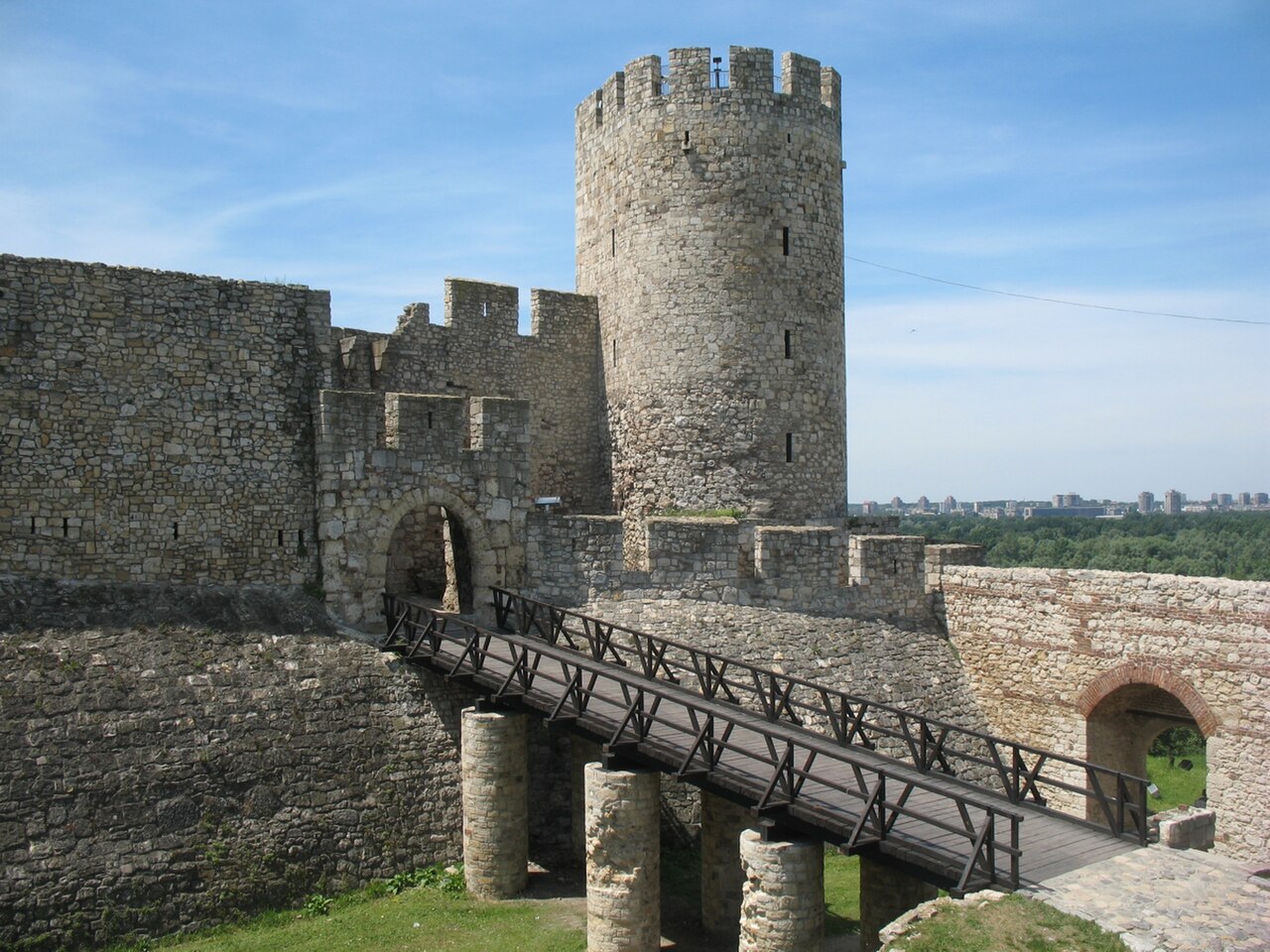
Belgrade Fortress is the city’s clearest starting point because the Upper and Lower Town occupy the limestone ridge that controlled both rivers. The operator traces settlement here from the Neolithic period through Celtic Singidunum and the Roman camp of Legio IV Flavia Felix. Medieval walls and eighteenth-century Baroque works remain legible in the same complex, so the site explains Belgrade as a repeatedly rebuilt frontier city rather than a single-period monument.
Walk the gates and Upper Town before deciding whether to descend. Despot’s Gate and its tower preserve the medieval approach, while the Lower Town contains Ružica Church, Saint Petka Chapel and Nebojša Tower. The confluence view near Pobednik gives the geography its visual conclusion. This is more useful than rushing between isolated monuments: walls, river position and surviving structures make sense as one defensive landscape.
Checked 2026-09-05 · Official site · www.beogradskatvrdjava.co.rs
Checked 2026-09-05 · Official site · www.beogradskatvrdjava.co.rs
2. Church of Saint Sava
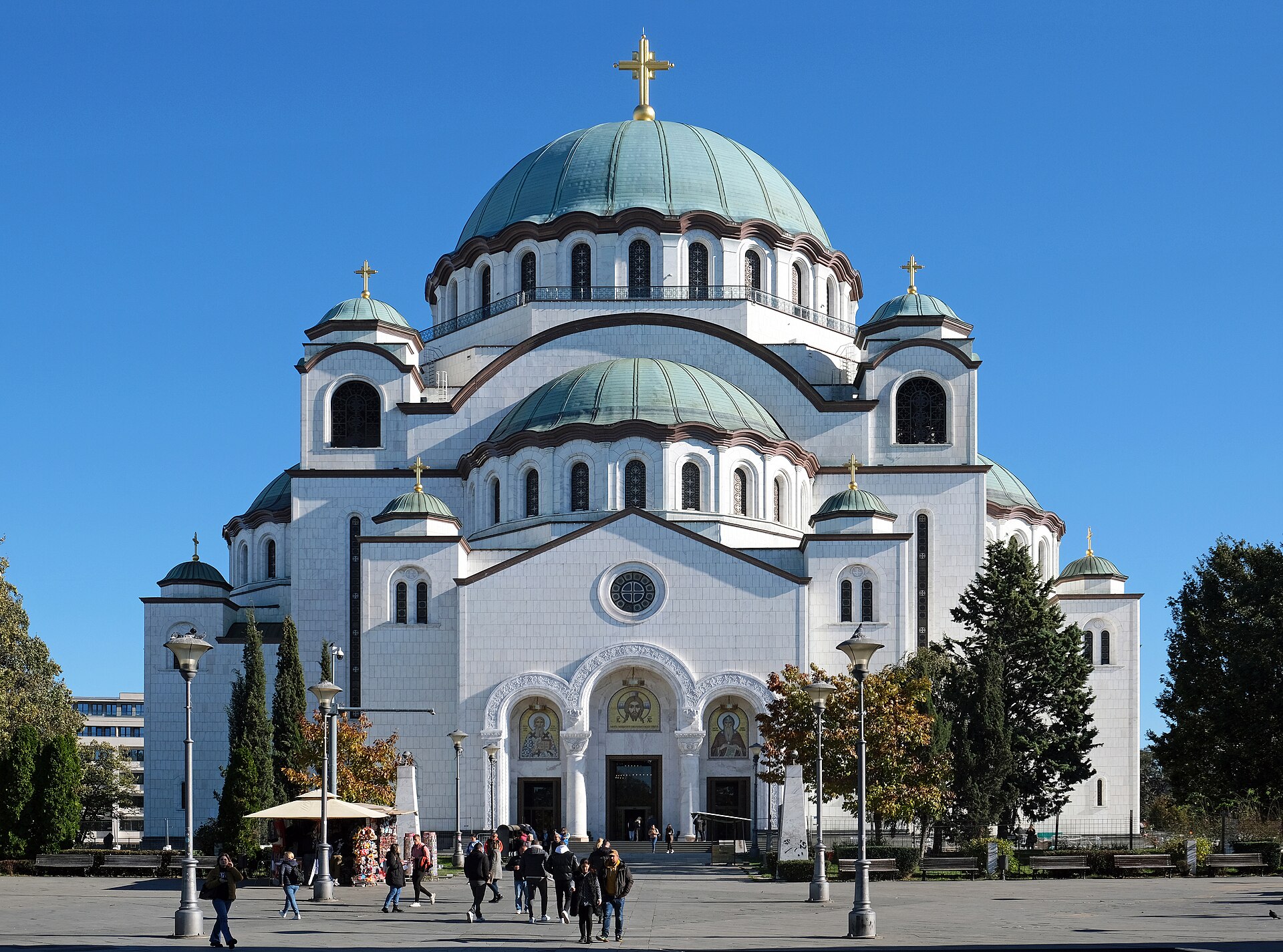

Church of Saint Sava dominates Vračar with a vast white dome, but the interior is the reason to enter. The project commemorates Saint Sava on the hill traditionally associated with the 1595 burning of his relics. Construction stretched across generations, which makes the finished building a modern statement of Serbian Orthodox identity rather than a surviving medieval church. Its cross-topped dome rises above the Vračar plateau as a deliberate citywide marker.
Inside, gold-ground mosaics cover the dome, vaults and walls on a scale that changes as you cross the nave. Look upward for Christ in the central dome, then descend to the richly decorated crypt so the visit is not reduced to one monumental room. The iconographic programme extends across thousands of square metres, with saints, biblical scenes and ornamental fields filling surfaces that initially read only as gold. Saint Sava is still an active place of worship; move quietly, respect services and treat the iconography as a living religious setting rather than a decorative backdrop.
Checked 2026-09-05 · Official site · hramsvetogsave.rs
Checked 2026-09-05 · Official site · hramsvetogsave.rs
3. Nikola Tesla Museum


Nikola Tesla Museum turns a globally familiar name into a compact, personal encounter. Tesla’s legacy reached Belgrade in 1951 and moved to Genčić Villa the following year; the villa is now the museum. Its holdings include more than 160,000 original documents, over 2,000 books and periodicals, and more than 1,200 historical and technical exhibits. Tesla’s urn joined the permanent display in 1957, giving the scientific collection a memorial dimension.
Working models make electromagnetic principles visible. The Egg of Columbus uses an egg-shaped rotor to demonstrate Tesla’s induction motor and rotating magnetic field; visitors may activate that model with its control button. A separate Tesla coil produces high-voltage, high-frequency currents and represents the oscillator Tesla developed in 1891. These precisely documented devices give the compact exhibition its value: experiments, archival material and personal legacy remain close enough to read as one account of the inventor.
Checked 2026-09-05 · Official site · tesla-museum.org
Checked 2026-09-05 · Official site · tesla-museum.org
Checked 2026-09-05 · Official site · tesla-museum.org
4. National Museum of Serbia
.jpg)
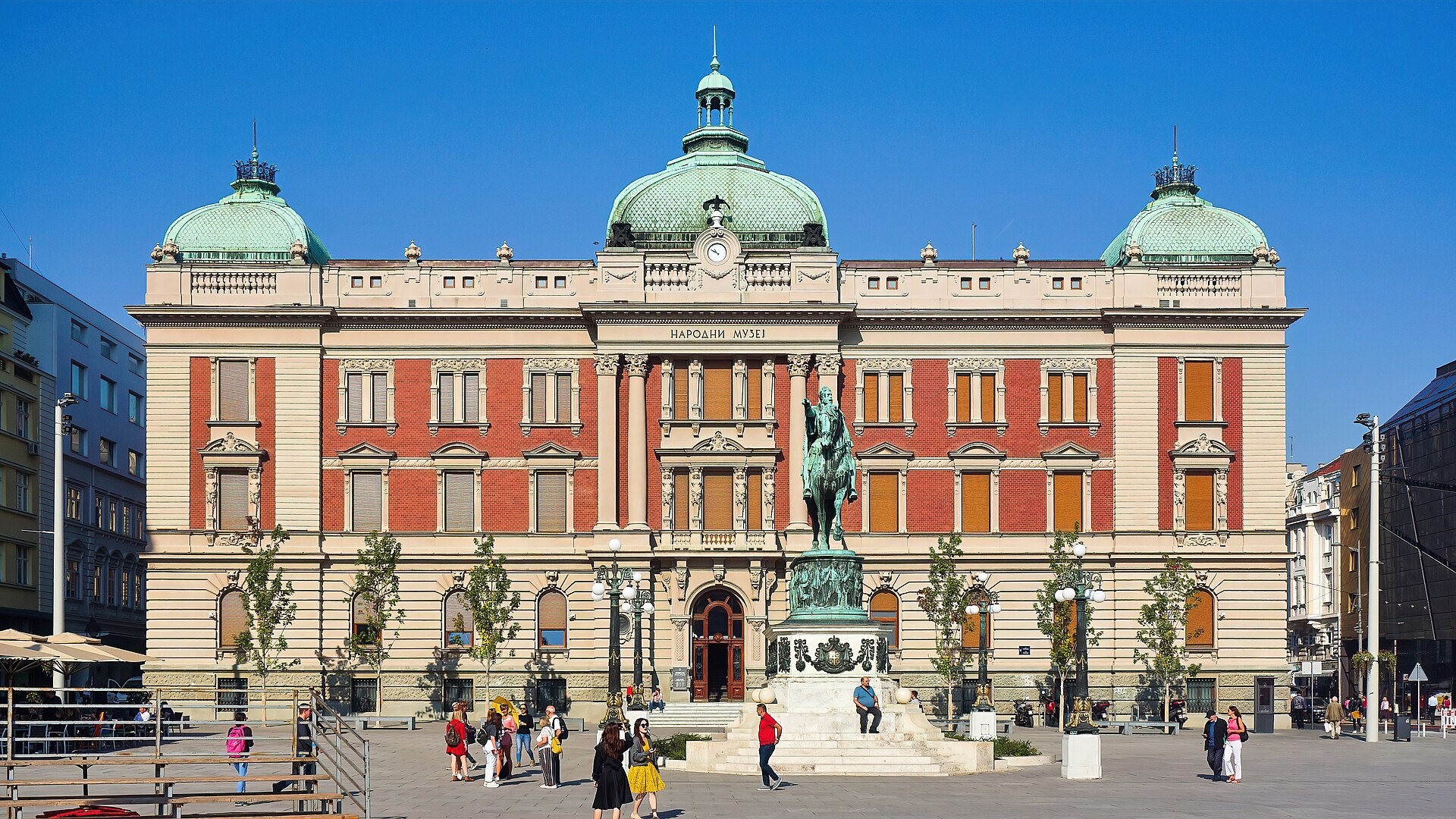
National Museum of Serbia spans a chronology no surviving Belgrade structure can match. Founded in 1844, the institution occupies Andra Stevanović and Nikola Nestorović’s former bank on Republic Square. Archaeology, medieval manuscripts, coinage and painting share the building, allowing the central Balkans to appear as a continuous material record rather than disconnected dynasties.
Start with the trapezoidal dwellings and sculpture of Lepenski Vir and the clay figures of Vinča culture. They precede Roman Singidunum by millennia. The twelfth-century Miroslav Gospel, inscribed on UNESCO’s Memory of the World Register, then shifts attention to illuminated Cyrillic manuscript culture. Numismatic cases and Serbian painting extend the sequence, while European works broaden it. Select one chronological thread and follow it closely; the archaeological floors alone justify the stop.
Checked 2026-09-05 · Official site · www.narodnimuzej.rs
Checked 2026-09-05 · Official site · www.unesco.org
5. Museum of Yugoslav History
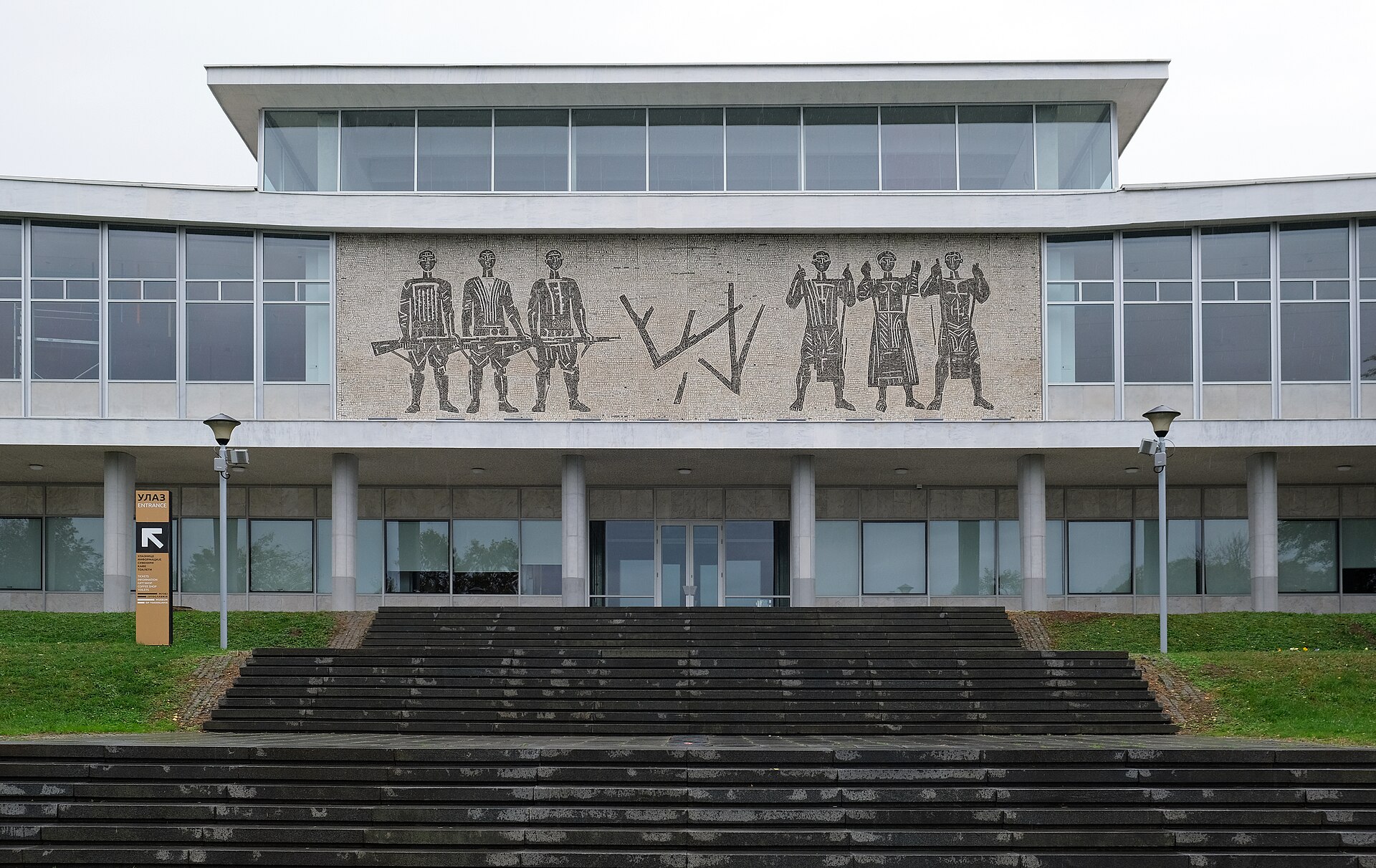

Museum of Yugoslav History is an older name for the complex now officially called the Museum of Yugoslavia. Its Dedinje campus combines the May 25 Museum, Old Museum and House of Flowers. The May 25 building was presented to Tito for his seventieth birthday in 1962; the House of Flowers began as a winter garden in 1975 and later became his burial place. That sequence places political history, state ceremony and public memory within the landscape where Yugoslavia’s president lived.
Do not visit only to photograph the tomb. Relay batons, gifts, documents and changing displays show how institutions represented Tito and how citizens encountered Yugoslav public culture. Batons arrived from schools, factories, military units and civic groups, turning a ceremonial object into evidence about mass participation and official ritual. The purpose-built May 25 Museum and the House of Flowers also make architecture part of the evidence. This is the strongest stop for examining socialist Yugoslavia through its own material record, though visitors seeking a complete history of every republic will find the focus deliberately narrower.
Checked 2026-09-05 · Official site · muzej-jugoslavije.org
Checked 2026-09-05 · Official site · muzej-jugoslavije.org
6. Boat to the meeting of the Sava and the Danube


Boat to the meeting of the Sava and the Danube puts the confluence at eye level. The Sava arrives beside New Belgrade, the Danube sweeps past Zemun, and the limestone fortress ridge rises above their junction. That moving alignment explains the defensive site more efficiently than a map: water, escarpment and opposing banks become one composition.
From the channel, Nebojša Tower appears at the Lower Town’s foot and Pobednik stands above the ramparts, facing outward across the plain. The vessel then trades the enclosed Sava corridor for the Danube’s wider horizon. Confirm the departure directly with the operator before arranging the rest of the day around the boat. Zemun quay remains the sensible land-based alternative when a suitable sailing is unavailable.
Checked 2026-09-05 · Official site · cruise-belgrade.com
Checked 2026-09-05 · Official site · www.beogradskatvrdjava.co.rs
7. Gardoš Tower
_-_Kula_Sibinjanin_Janka.jpg)
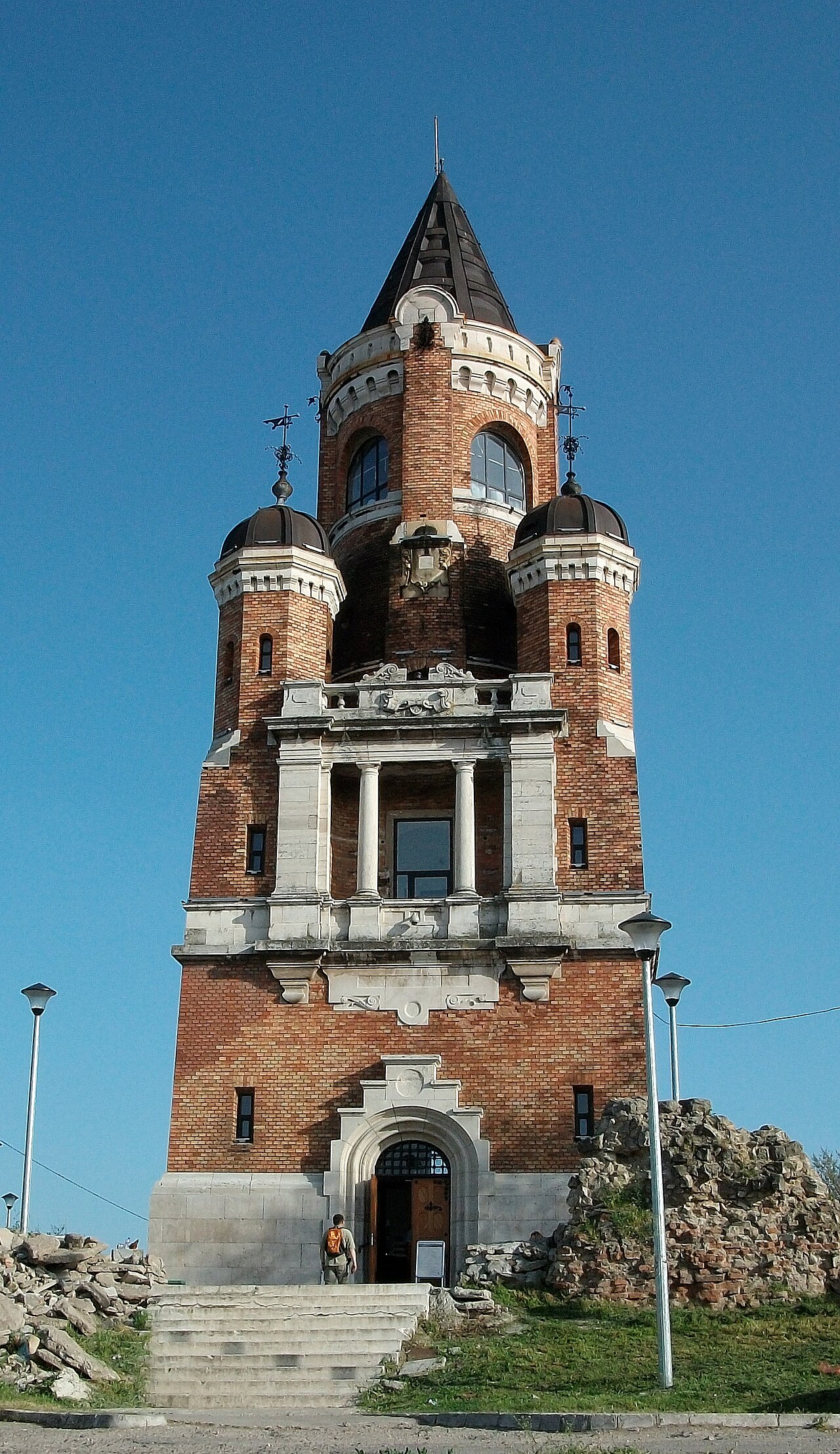
Gardoš Tower gives Zemun a landmark distinct from central Belgrade. Also known as the Millennium Tower, it was built in 1896 on Gardoš Hill, within the remains of a medieval fortress. The later monument, older walls and position above the Danube compress several political geographies into one small site, reflecting Zemun’s long development on the opposite bank from Ottoman Belgrade.
The balcony panorama is the reward, but the approach supplies much of the character. Climb through narrow old-Zemun streets, examine the surviving round corner towers and then look across tiled roofs toward the river and modern city. Descend toward the quay rather than returning by the same route. Gardoš works best as the high point of a Zemun walk; as a tower-only detour, it loses the neighbourhood contrast that makes it valuable.
Checked 2026-09-05 · Official site · www.tob.rs
8. Museum of Contemporary Art
_(crop).jpg)
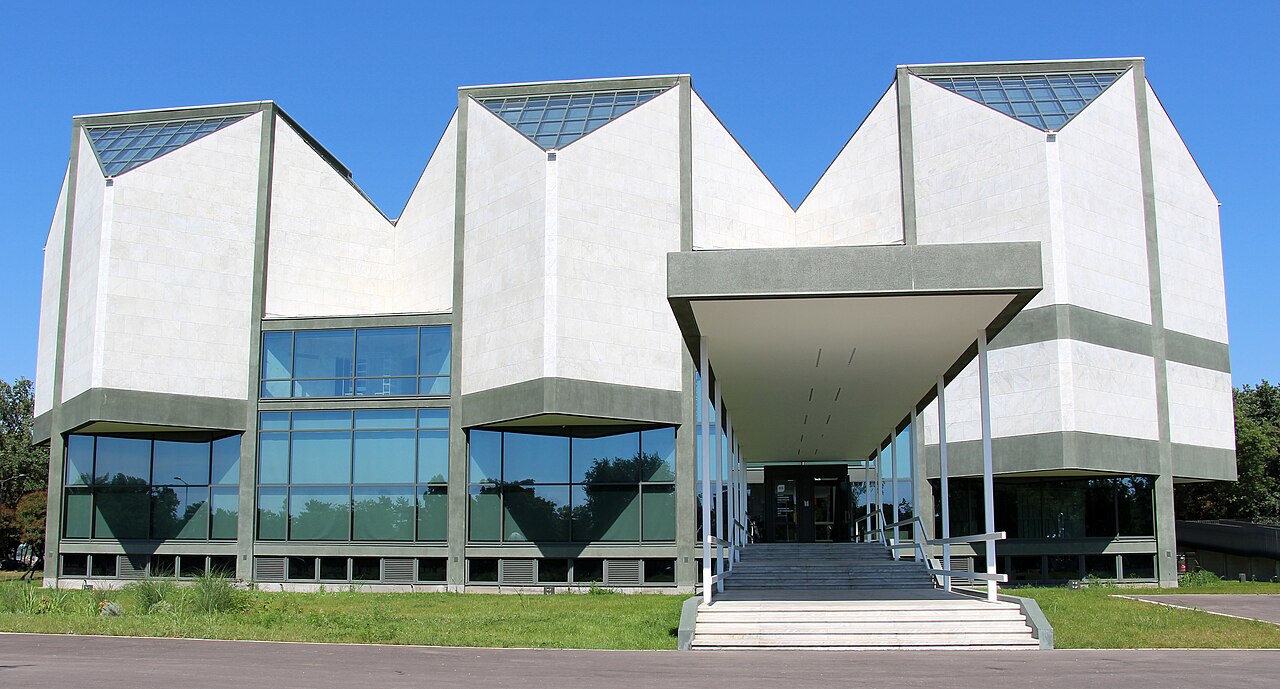
Museum of Contemporary Art pairs Yugoslav and Serbian modern art with one of Belgrade’s strongest postwar buildings. Architects Ivan Antić and Ivanka Raspopović composed the Ušće museum as six angular volumes clad in marble and glass. Its crystalline roofline changes with the approach through the park, while the fortress remains visible across the Sava. New Belgrade’s planned openness is therefore part of the encounter before any work is seen.
Inside, five connected exhibition levels replace a conventional corridor sequence, allowing views between spaces of different heights. Stairs, an elevator and hydraulic platforms link galleries without vertical partitions, making the architecture continuously visible. The collection follows regional art across the twentieth century and into contemporary practice, while temporary exhibitions determine what dominates on a particular visit. Continue into the sculpture park and look back across the Sava. Choose this museum when regional modernism and architecture matter more than a universal survey of famous international names.
Checked 2026-09-05 · Official site · msub.org.rs
Checked 2026-09-05 · Official site · msub.org.rs
9. St. Mark's Church
.jpg)
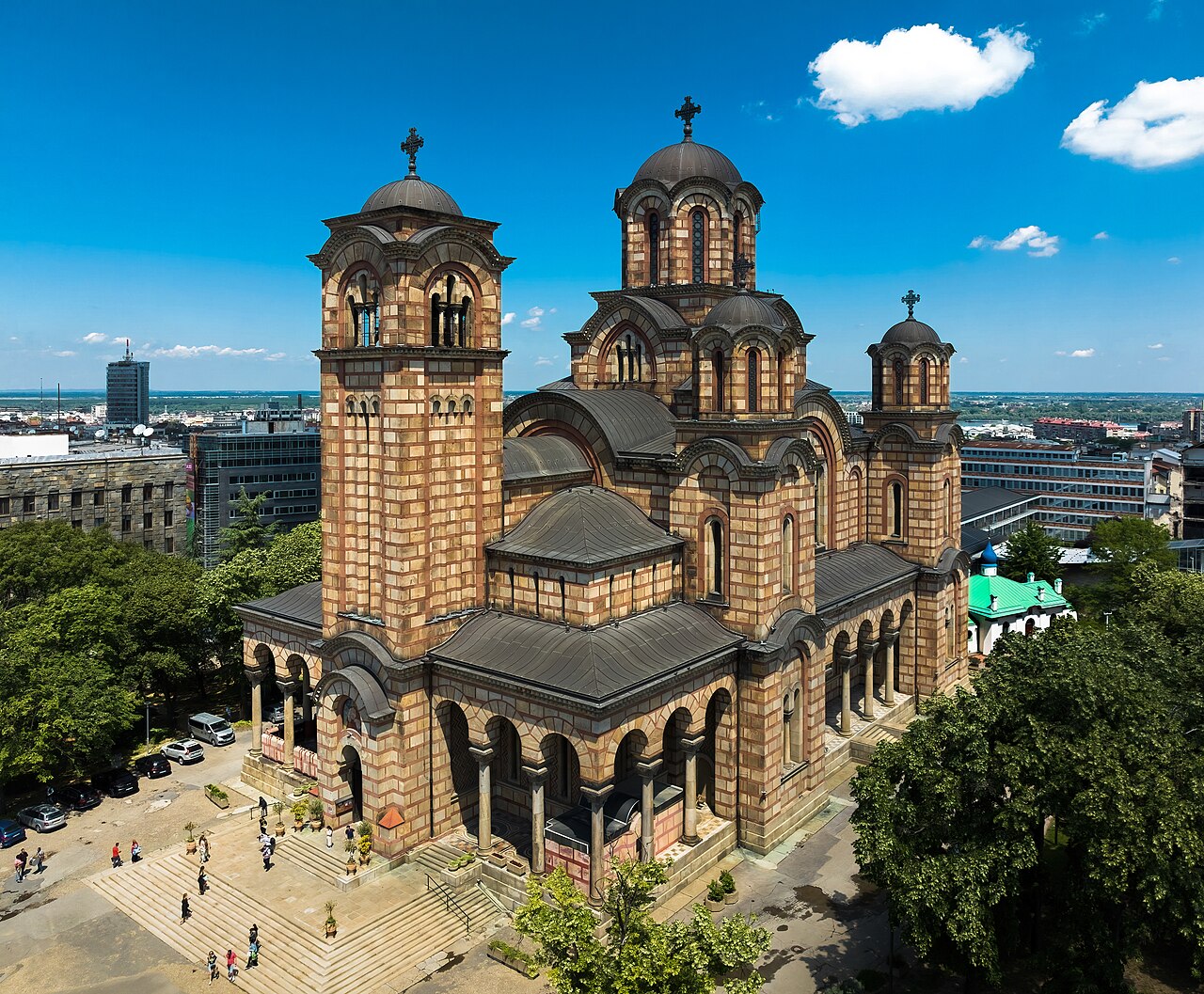
St. Mark's Church is an interwar landmark beside Tašmajdan Park. Petar and Branko Krstić designed the present building, constructed from 1931 to 1940 near the site of an older church dating from 1835. Its scale and twentieth-century fabric make a useful counterpoint to Belgrade’s smaller nineteenth-century religious buildings without assigning it an unsupported medieval model.
Zoran Petrović designed the marble iconostasis in 1991–1992, and Đuro Radlović created its mosaic icons between 1996 and 1998. The treasury includes Serbian icons and the marble tomb of Emperor Stefan Dušan; the crypt contains the graves of King Alexander Obrenović and Draga Mašin. These objects join medieval rulership, the Obrenović dynasty and modern church art in one interior. Liturgies take precedence over sightseeing, so move quietly when worship is under way.
Checked 2026-09-05 · Official site · www.crkvasvetogmarka.rs
Checked 2026-09-05 · Official site · www.crkvasvetogmarka.rs
Checked 2026-09-05 · Official site · www.crkvasvetogmarka.rs
Checked 2026-09-05 · Official site · www.crkvasvetogmarka.rs
10. Jevremovac botanic garden
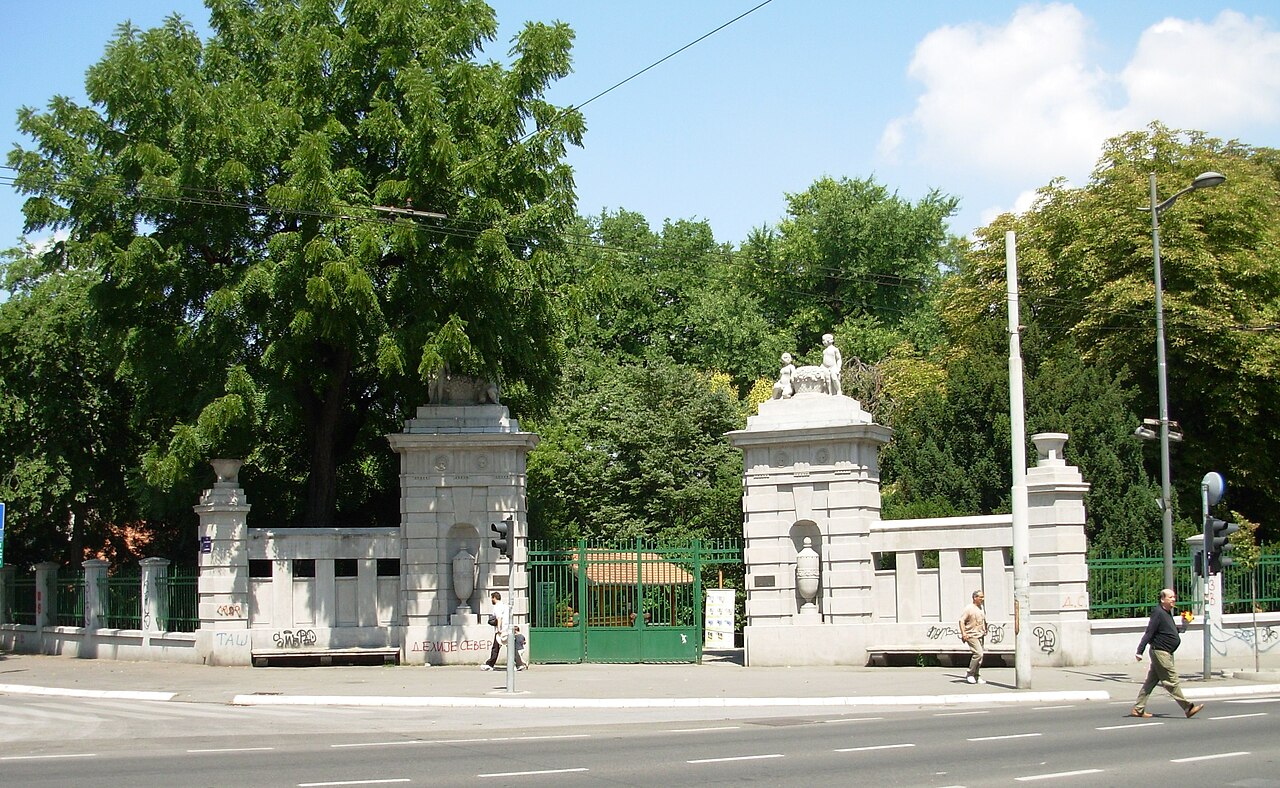

Jevremovac botanic garden grew from Josif Pančić’s 1874 botanical project and King Milan Obrenović’s later gift of an inland estate. The donation solved the flooding that ruined the original Danube-side ground. Its name honours Jevrem Obrenović; its present custodian is the University of Belgrade Faculty of Biology, preserving the link between living specimens, taxonomy and teaching.
Dresden’s Mozentin workshop built the sixty-metre greenhouse in 1892. A domed pavilion and two wings maintain distinct conditions for rainforest flora, tall tropical and subtropical plants, Mediterranean species, cacti and other xerophytes. More than a thousand taxa grow under its restored Secession ironwork. Outside, the arboretum includes a protected Quercus trojana and mature conifers, while the Japanese garden supplies a deliberately composed counterpoint. Jevremovac is scientific horticulture in a historic structure, not untamed parkland.
Checked 2026-09-05 · Official site · jevremovac.bio.bg.ac.rs
Checked 2026-09-05 · Official site · jevremovac.bio.bg.ac.rs
11. Topčider
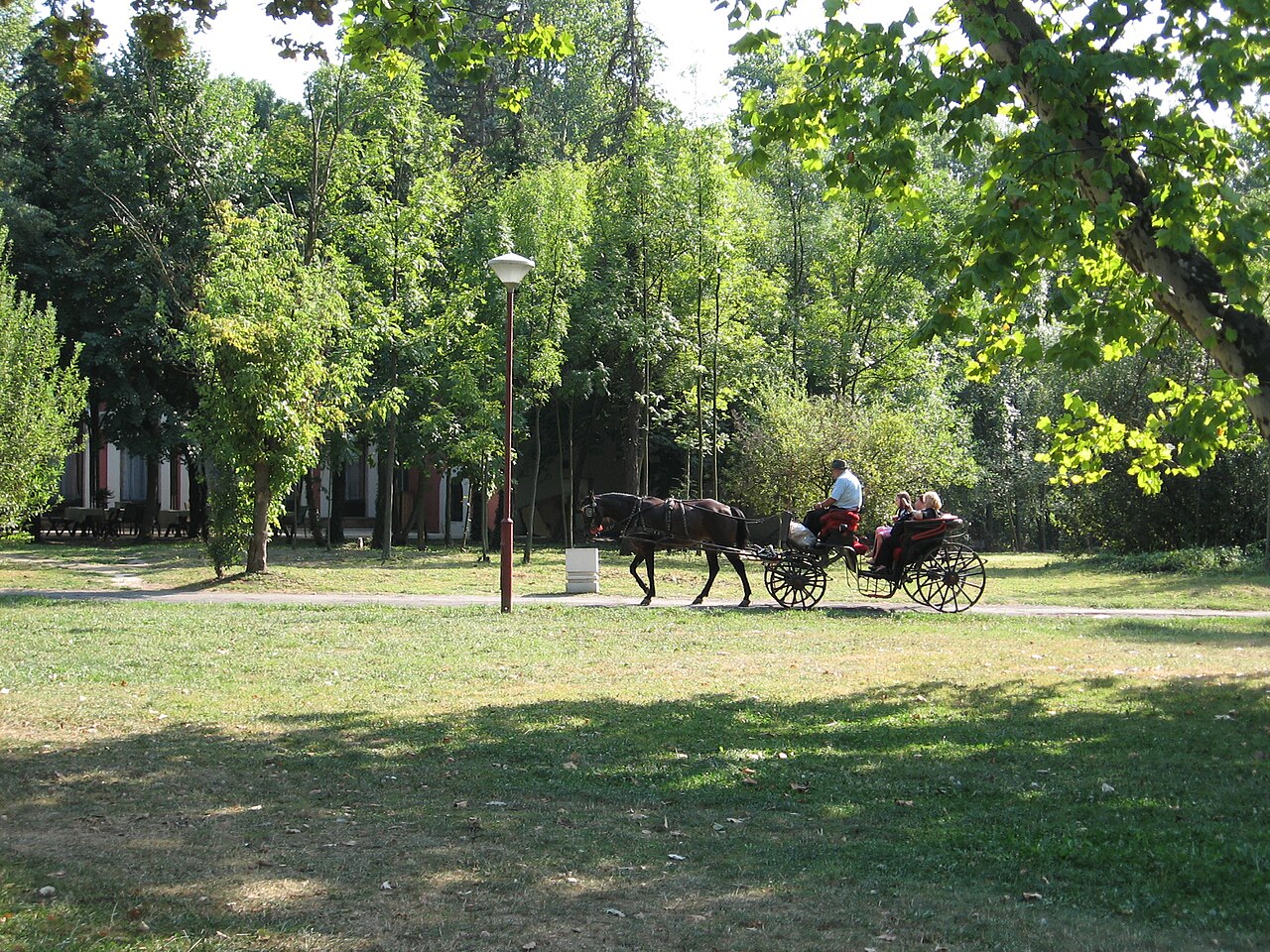

Topčider is Belgrade’s first deliberately landscaped park, formed around Prince Miloš Obrenović’s country residence in the early 1830s. Its Persian-derived name means gunpowder valley, recalling the Ottoman artillery activity that preceded the royal retreat. Atanasije Nikolić designed winding paths, water features and abundant planting in the English landscape style. Plane trees planted beside the residence between 1831 and 1833 survive, giving the park a physical continuity that newer urban lawns cannot reproduce.
Use the park as a historical landscape rather than only a picnic ground. The residence, Topčider Church, church house, obelisk, Žetelica sculpture and Archibald Reiss monument form a group of six protected cultural monuments within the Obrenović residential ensemble. Streams, small lakes, fountains and sculpture were components of the designed landscape, not incidental decoration. The mature canopy offers relief from dense central streets, while the buildings explain how the restored Serbian state represented authority beyond the old fortress. Topčider suits travellers who prefer architecture embedded in greenery.
Checked 2026-09-05 · Official site · beogradskipark.rs
12. Great War Island


Great War Island protects a fluvial habitat directly between the fortress and Zemun’s old stronghold. Its manager describes an island still reshaped by deposited sediment and river currents. The unembanked Danube floodplain supports gallery forests dominated by willow and poplar, while surveys record 219 bird species on and around the protected area. Fortress stone and New Belgrade towers remain visible beyond this unusually rich urban wetland.
Treat access as conditional, not guaranteed. Protection is divided into nature, recreation and tourism zones, so Lido Beach access does not make the wider island unrestricted recreation ground. The pedestrian connection has been seasonal rather than permanent, with a temporary military pontoon used for the summer beach crossing. Check the Municipality of Zemun’s current notice before setting out and remain on permitted routes. Birdwatchers gain the most here; Topčider or Jevremovac is more dependable when the crossing is absent.
Checked 2026-09-05 · Official site · www.zelenilo.rs
Checked 2026-09-05 · Official site · zemun.rs
Choose Belgrade sights by interest
History has four useful scales here. Belgrade Fortress reads the contested river ridge; the National Museum of Serbia reaches into Balkan prehistory; Gardoš Tower introduces Zemun’s separate Habsburg setting; Topčider moves into the Obrenović court landscape. Together they build a chronology instead of assembling unrelated memorials.
Belgrade’s collections answer separate questions. Nikola Tesla Museum joins biography to working experiments. Museum of Yugoslav History examines Tito, ceremony and contested state memory. Museum of Contemporary Art frames regional modernism inside a postwar architectural landmark. The National Museum supplies the general survey. Two sharply different subjects make a stronger museum day than four compressed interiors.
River and garden choices also have distinct roles. The boat to the meeting of the Sava and the Danube reveals the fortress from below; Jevremovac botanic garden offers a curated living collection; Great War Island protects a floodplain habitat. Sacred-art study belongs at Church of Saint Sava and St. Mark's Church. Saint Sava provides vast gold mosaics and a crypt, whereas St. Mark’s offers a quieter Serbo-Byzantine revival comparison beside Tašmajdan.
- Belgrade Fortress
- Church of Saint Sava
- Nikola Tesla Museum
- National Museum of Serbia
- Museum of Yugoslav History
- Boat to the meeting of the Sava and the Danube
- Gardoš Tower
- Museum of Contemporary Art
- St. Mark's Church
- Jevremovac botanic garden
- Topčider
- Great War Island
Checked 2026-09-05 · Official site · www.beogradskatvrdjava.co.rs
Checked 2026-09-05 · Official site · tesla-museum.org
Checked 2026-09-05 · Official site · msub.org.rs
Checked 2026-09-05 · Official site · beogradskipark.rs
Checked 2026-09-05 · Official site · www.tob.rs
What to skip when time is short
Count Kalemegdan’s Upper Town, Lower Town and park as one continuous fortress landscape. Splitting its gates, Pobednik and riverside ramparts into separate headline stops exaggerates what one walk delivers. Saint Sava’s dome mosaics and crypt can replace St. Mark’s when a single Orthodox interior is enough. The National Museum’s Lepenski Vir, Vinča and Miroslav Gospel sequence also removes any obligation to add another collection without a specific interest in Tesla, Yugoslavia or regional modernism.
Two river experiences remain contingent. Great War Island depends on a current Zemun crossing notice; the boat depends on a confirmed departure. Drop either at the first uncertainty. Topčider supplies an inland landscape, while Gardoš and the fortress preserve confluence panoramas without boarding. A Zemun detour earns its transit only when Gardoš, the old lanes and Danube quay stay together. Open the Belgrade itinerary planner with the destination preselected, then enter the travel dates, trip length, interests, tempo, group type and daily start and end times. The planner selects and schedules suitable stops within those inputs.
- Belgrade Fortress
- Church of Saint Sava
- National Museum of Serbia
- Gardoš Tower
- St. Mark's Church
- Topčider
- Great War Island
- Boat to the meeting of the Sava and the Danube
Checked 2026-09-05 · Official site · www.beogradskatvrdjava.co.rs
Checked 2026-09-05 · Official site · zemun.rs
Checked 2026-09-05 · Official site · cruise-belgrade.com
Turn this list into a plan
Set your days, your pace and the hours you actually want to be out. The planner works around closing days and travel time, and leaves room to eat.