The National Museum is the oldest and largest museum in Serbia, and it was shut for fifteen years.
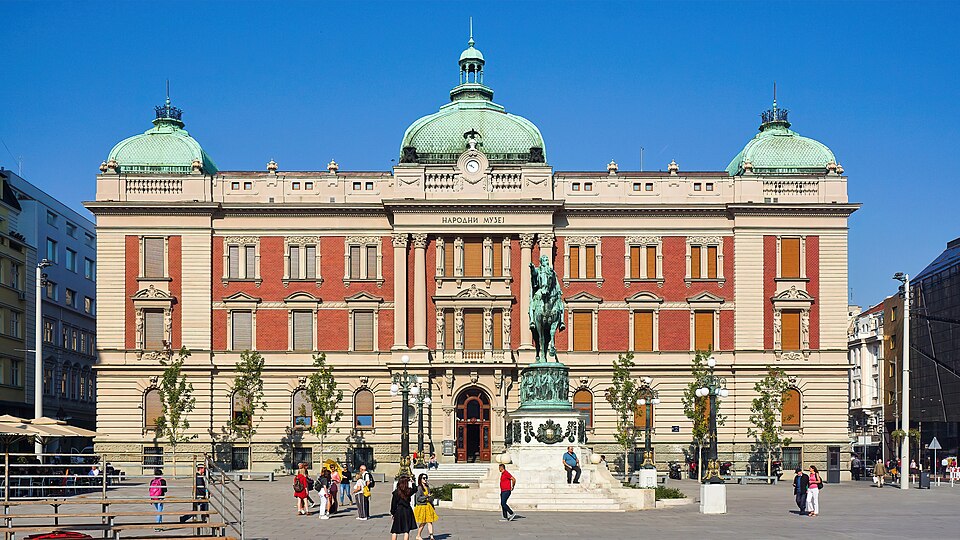
It was founded on 10 May 1844. It moved to Republic Square in 1950 and opened there on 23 May 1952, in a building put up between 1902 and 1903 as the headquarters of a financial institution, by Andra Stevanović and Nikola Nestorović — neo-Renaissance with neo-Baroque trimmings.
It closed in 2003 for reconstruction and did not reopen until 28 June 2018. A generation of Belgraders grew up with the city's main museum boarded up on its main square.
It holds more than 400,000 objects in 34 collections.
Neolithic figures, a twelfth-century gospel book, and a floor of European painting.
The Vinča culture sculptures date from the sixth and fifth millennia BC and the Lepenski Vir material from the seventh — this is the deepest prehistory on display anywhere in the region, and it is what the museum is internationally important for.
The Miroslav Gospel of 1186 is on UNESCO's Memory of the World Register.
The numismatic collection runs past 300,000 items. There are some 16,000 paintings, prints, drawings and icons and more than 900 sculptures.
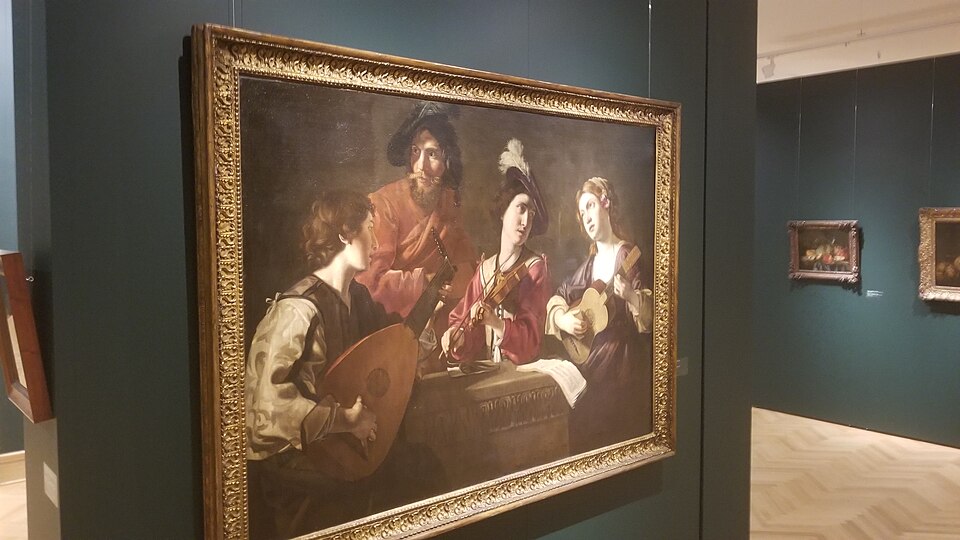
The European holdings include Rubens, Renoir, Monet, Degas, Van Gogh and Picasso, which few visitors expect in Belgrade.
The archaeology is on the lower floors and the painting above it, and the building is read from the bottom.
The Vinča and Lepenski Vir rooms take forty minutes and are the part that cannot be seen elsewhere. The European painting takes an hour.
The museum stands on Republic Square with the National Theatre beside it and Knez Mihailova running off it, so it is in the middle of everything and needs no journey.
Anyone with a single hour should take the prehistory and leave the paintings; the European canvases are good and they are not why this collection matters.
Afternoon on a weekday. The museum closes one day a week and has run a free day, which is correspondingly busy.
The galleries are artificially lit and the season makes no difference to what is visible.
Republic Square outside is the city's main meeting point — the phrase is kod konja, at the horse, meaning the Prince Mihailo monument — and is busy at every hour.
This is the obvious wet-weather afternoon in Belgrade, and the building is heated, which not every museum in the city reliably is in January.
The museum is ticketed and has run a free admission day each week. Current rates and the current arrangement are not published on the sources this page uses and are not reproduced here.
Temporary exhibitions are sometimes ticketed separately from the permanent collection.
The Miroslav Gospel is an extremely fragile manuscript and what is normally shown is a facsimile; the original is displayed rarely.
Republic Square, Stari Grad, at the head of Knez Mihailova.
Every tram and bus route through the centre passes within a few minutes of the square, and the walk from the fortress along Knez Mihailova takes ten minutes.
There is no metro in Belgrade; trams, buses and trolleybuses run instead, and the old town is walkable end to end.
The Vinča figures are small, dark and behind glass, and they need a longer lens and an angle off the reflections; they are the objects worth the effort.
The staircase and the neo-Renaissance halls of the 1903 building are the architectural photographs, and they are better than anything on the walls of the upper floors.
The European paintings are evenly lit and easy to photograph, which is not the same as being worth photographing.
From outside, the façade on Republic Square takes afternoon light and always has the Prince Mihailo monument in front of it.
Checked 2026-08-23
Common questions
When did the National Museum reopen?
28 June 2018, after being closed since 2003 for reconstruction. It was founded on 10 May 1844 and is the oldest and largest museum in Serbia.
How big is the collection?
More than 400,000 objects in 34 collections, including a numismatic collection of over 300,000 items and some 16,000 paintings, prints, drawings and icons.
What is the Miroslav Gospel?
A manuscript of 1186 on UNESCO's Memory of the World Register. It is extremely fragile and what is normally displayed is a facsimile.
What is the prehistoric material?
Vinča culture sculpture from the sixth and fifth millennia BC and Lepenski Vir material from the seventh — the deepest prehistory on display anywhere in the region.
Are there famous European paintings?
Yes — Rubens, Renoir, Monet, Degas, Van Gogh and Picasso among them, which few visitors expect to find in Belgrade.
Is there a free day?
The museum has run one free admission day each week. It is correspondingly busy, and the arrangement is worth checking before relying on it.
Nothing non-essential is set before you choose, in regions where consent is required. If you decline, ads still appear but they are non-personalised, and analytics is switched off entirely.
.jpg)
