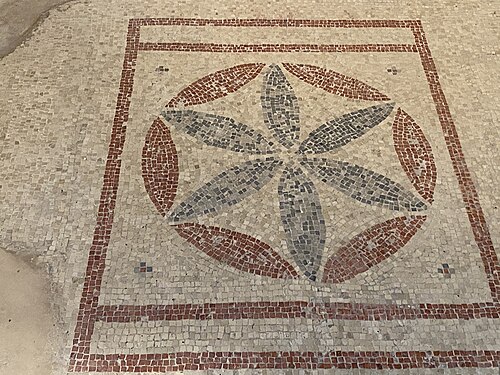
Neve Tzedek
Neve Tzedek is Tel Aviv-Yafo's first Jewish neighborhood, established in 1887 outside the walls of Jaffa, predating the founding of Tel Aviv itself. Its name means Oasis of Justice in Hebrew.
- Must see
- Activity
- Tel Aviv
Language · 11 published
Country guide
Israel occupies the Southern Levant, bordered by Lebanon, Syria, Jordan and Egypt, with the Mediterranean along its western coast, the Red Sea at its southern tip and Earth's lowest point, near the Dead Sea, to the east. Two cities carry most of what a visitor comes for and they are nothing alike. Jerusalem is the government seat and proclaimed capital, holding the sites the three Abrahamic religions hold in common; Tel Aviv is the largest urban area and the economic centre, a twentieth-century city on a beach. The Israeli-Palestinian conflict persists, and it governs where a visitor can go and when as firmly as any opening time does.
Every city catalogued in this country so far, ranked by how much there is to see.
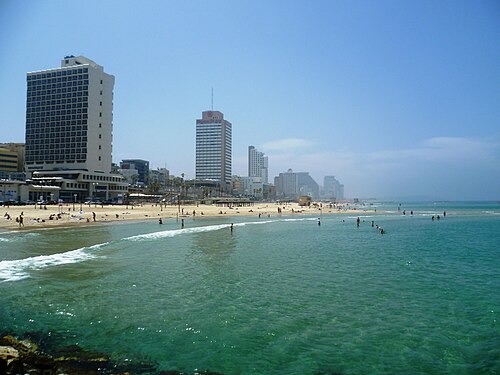
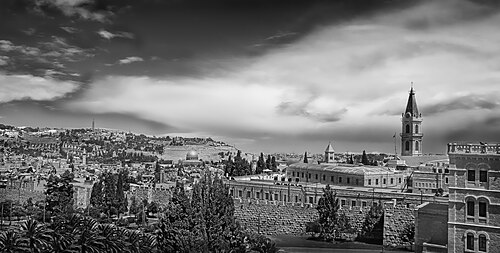
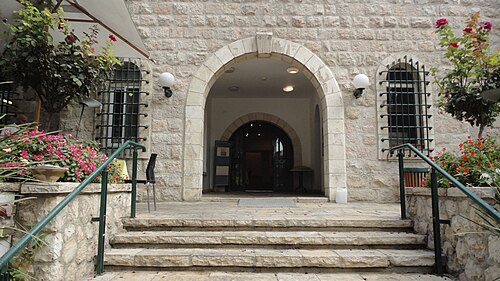
Photograph · askii · CC BY-SA 2.0
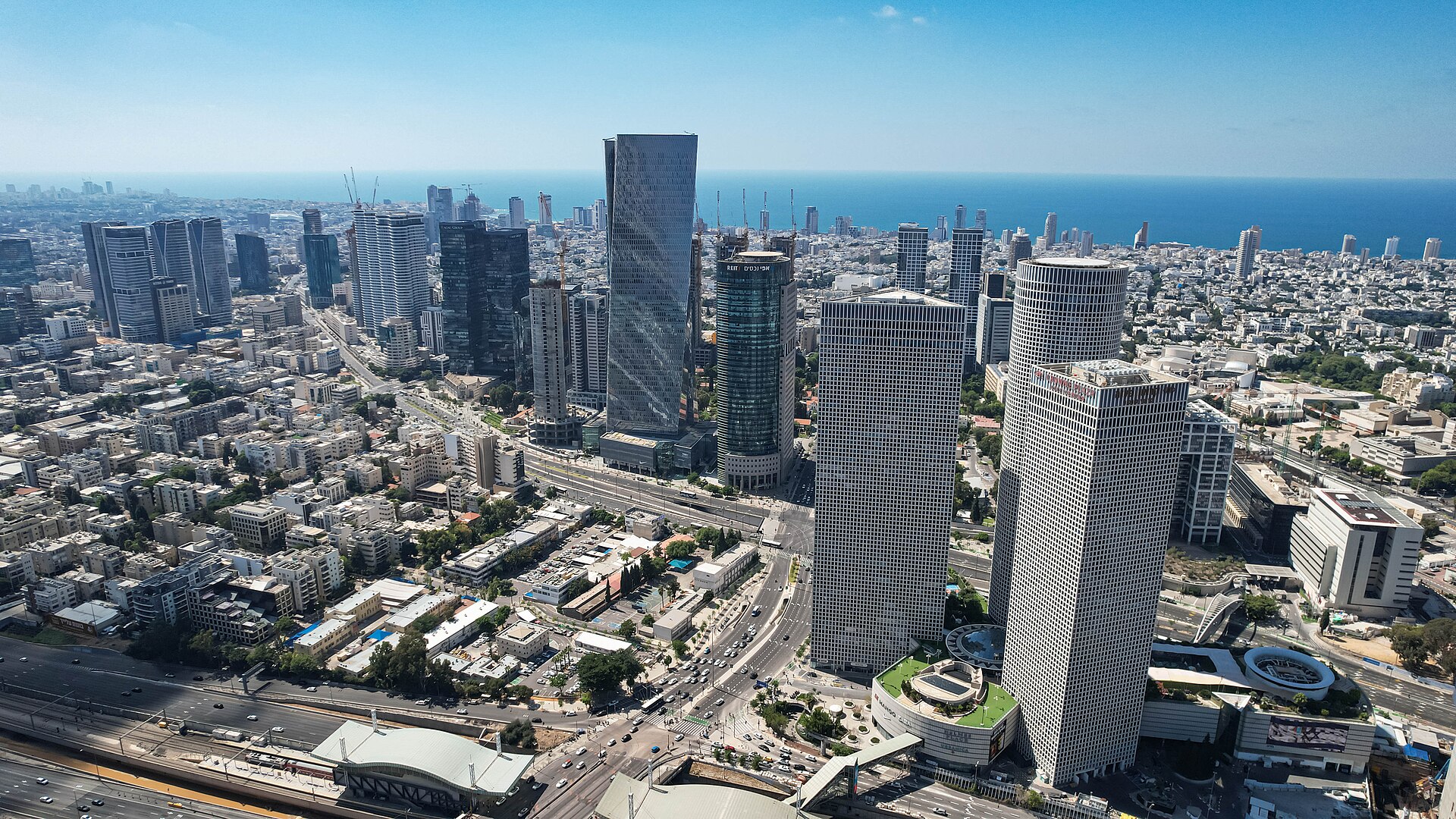
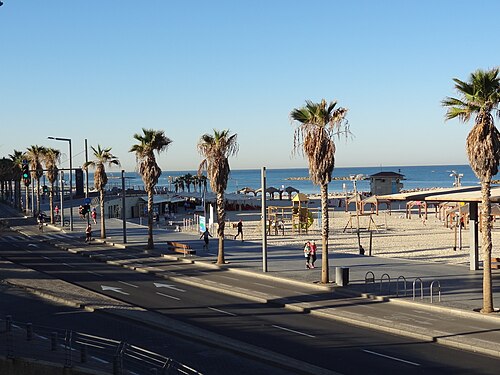
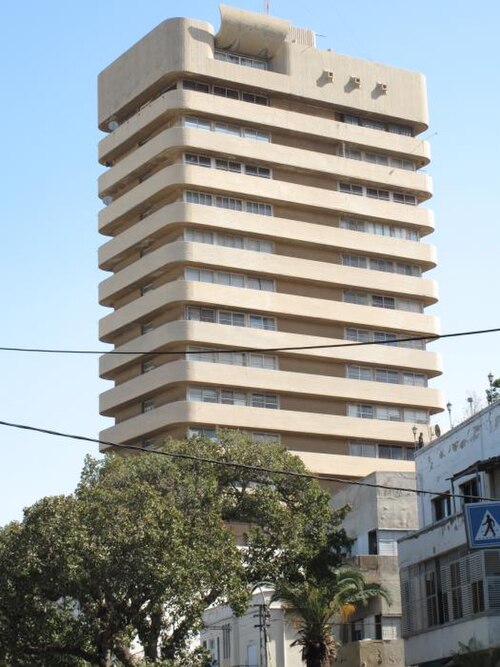
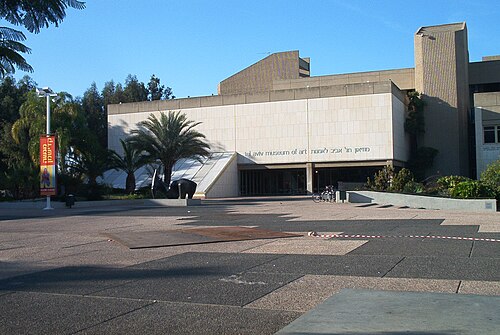
Photograph · Ynhockey · CC BY-SA 4.0
Ranked by importance — sitelinks, pageviews and heritage status, not editor preference.
100 places match
Category
Typical visit duration
Neve Tzedek is Tel Aviv-Yafo's first Jewish neighborhood, established in 1887 outside the walls of Jaffa, predating the founding of Tel Aviv itself. Its name means Oasis of Justice in Hebrew.
The White City of Tel Aviv is a UNESCO-listed urban ensemble, not one building or a gated attraction. UNESCO inscribed it in 2003 as an outstanding concentration of Modern Movement architecture adapted to Tel Aviv's cultural and climatic setting.
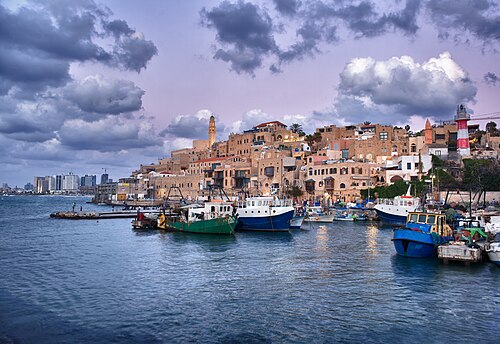
Jaffa Port is an ancient harbor at the southern edge of Tel Aviv-Yafo, among the oldest active ports in the world. The site anchors the historical Jaffa district, with maritime use dating back millennia.
The Via Dolorosa is a processional route in the Old City of Jerusalem, traditionally held to be the path Jesus walked carrying his cross to crucifixion.
Gordon Beach is a public Mediterranean swimming beach in Tel Aviv, Israel. It occupies a central position along the city's coastline and functions as a distinct recreation stop separate from the contiguous Tel Aviv Promenade.
The Tel Aviv Promenade is a continuous seafront walkway and cycling route running along the Mediterranean coastline of Tel Aviv, Israel.
Rothschild Boulevard is a principal tree-lined avenue in central Tel Aviv, Israel. It forms the core public-space spine of the UNESCO-inscribed White City, recognized for its outstanding collection of Bauhaus and International Style architecture.
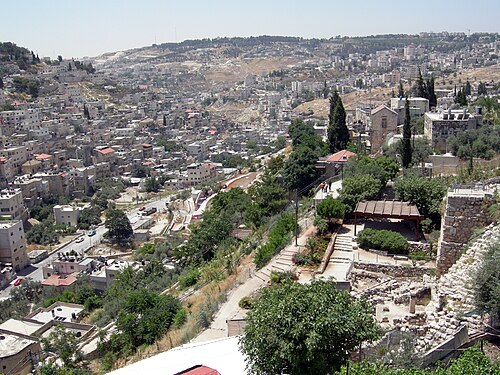
The City of David Archaeological Park is an independent ticketed archaeological park situated south of Jerusalem's Old City walls. It encompasses excavated remains associated with the ancient core of Jerusalem, identified with the biblical City of David.
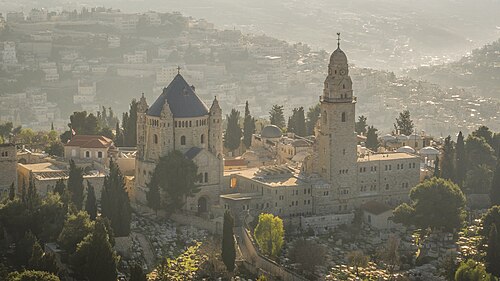
Mount Zion is a hill in Jerusalem with deep historical and religious significance across multiple faiths.
Sarona is a restored historical site in central Tel Aviv-Yafo, Israel, centred on a former Templar colony established by German Protestant settlers in the nineteenth century.
Tel Aviv Port is a major waterfront promenade and leisure district on the Mediterranean coastline of Tel Aviv-Yafo.
Habima National Theatre is Israel's national theatre, located in Tel Aviv at Habima Square. Established in 1917 in Moscow and relocated to Mandatory Palestine in 1928, it holds significant cultural and historical importance.
The Suzanne Dellal Centre for Dance and Theatre is Tel Aviv-Yafo's principal dance campus and a major cultural landmark in the Neve Tzedek neighbourhood.
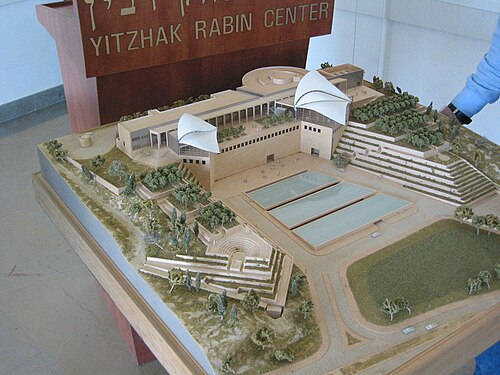
The Yitzhak Rabin Center is a museum and research institution in Tel Aviv-Yafo dedicated to the life and legacy of Yitzhak Rabin, the fifth Prime Minister of Israel.
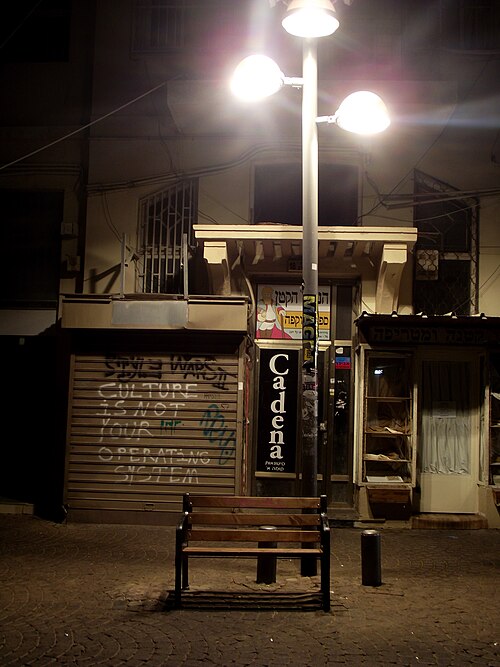
Nahalat Binyamin Pedestrian Mall is a pedestrianised street in central Tel Aviv, Israel. It functions as a dedicated crafts market with scheduled market operations, operating distinctly from the neighbouring Carmel Market.
Kidron Valley is a deep ravine on the eastern side of the Old City of Jerusalem, running between the Temple Mount and the Mount of Olives.
The Jewish Quarter is one of four traditional quarters in the walled Old City of Jerusalem. It occupies the southeastern sector of the historic enclosure, with boundaries roughly corresponding to ancient divisions.
HaTachana is a heritage and visitor precinct in Tel Aviv-Yafo that reuses the historic Jaffa railway station. The original station was part of the Jaffa-Jerusalem railway, one of the earliest rail lines in the region.
Azor Museum is a local heritage museum located in Azor, within the Tel Aviv-Yafo metropolitan area. The institution preserves and presents historical materials related to the settlement and development of this community.
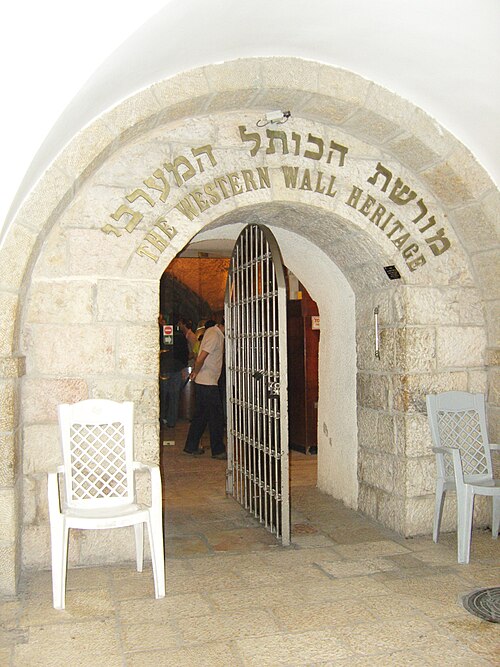
The Western Wall Tunnels constitute an underground archaeological complex running along the northern extension of the Western Wall, the retaining wall of the Temple Mount platform in Jerusalem's Old City.
Bat Yam Museum of Art is a contemporary art museum located in Bat Yam, a city on Israel's central Mediterranean coast immediately south of Tel Aviv-Yafo.
The Muslim Quarter is one of the four traditional quarters of the Old City of Jerusalem. It occupies the northeastern portion of the walled city and is the largest and most populous of the four quarters.
Beit Abba is a museum in Tel Aviv-Yafo, Israel, listed in the municipal visitor inventory.
The Christian Quarter is one of the four traditional quarters of the Old City of Jerusalem. It occupies the northwestern quadrant of the walled city and contains numerous sites of profound significance to Christianity.
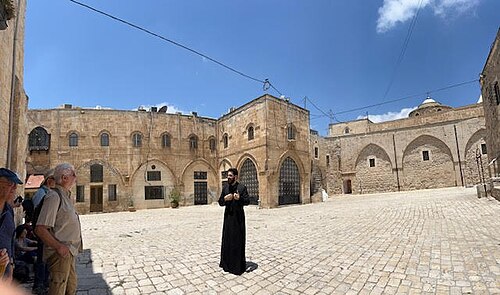
The Armenian Quarter is one of the four traditional quarters of the Old City of Jerusalem. It occupies the southwestern corner of the walled city and represents the smallest of the four quarters by population.
Bet Eliyahu, locally known as מוזיאון ההגנה, is a documented museum in the Tel Aviv-Yafo visitor inventory. The institution commemorates the history of the Haganah, the pre-state Jewish defense organization that operated during the British Mandate period.
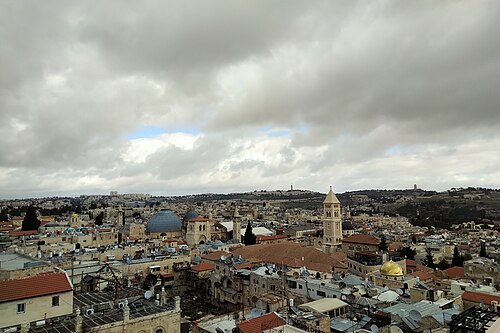
The Old City of Jerusalem is a walled area within the modern city of Jerusalem, recognized as a UNESCO World Heritage Site since 1981. It holds profound significance for Judaism, Christianity, and Islam.
The Herta and Paul Amir Building is a museum structure in Tel Aviv-Yafo. It carries the local name הבניין ע״ש שמואל והרטה עמיר. The building appears in the city's visitor inventory as a documented cultural site.
Herzlilinblum Museum is a documented museum in the Tel Aviv-Yafo visitor inventory. The institution is referenced in Wikidata under identifier Q7037613. It operates as a cultural establishment within Israel's largest metropolitan area.
Hussamssa, known locally as חוסמסה, is a documented museum in the Tel Aviv-Yafo visitor inventory. The institution appears in municipal tourism records as a recognized cultural site.
The Jabotinsky Institute in Israel is a documented museum in the Tel Aviv-Yafo visitor inventory. It is dedicated to the legacy of Ze'ev Jabotinsky, a prominent Zionist leader, writer, and founder of the Revisionist Zionist movement.
The Jabotinsky Museum is a museum in Tel Aviv-Yafo dedicated to the life and legacy of Ze'ev Jabotinsky, a prominent Zionist leader, writer, and founder of the Revisionist Zionist movement.
The Herzl Museum is a Jerusalem visitor landmark dedicated to Theodor Herzl, the founder of modern political Zionism.
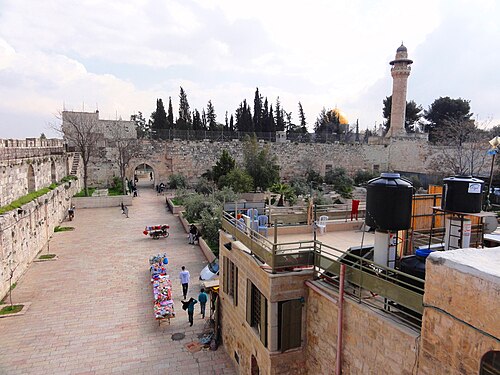
The Western Wall is an ancient limestone retaining wall in the Old City of Jerusalem. It forms part of the western flank of the Temple Mount, a site sacred to Judaism, Christianity, and Islam.
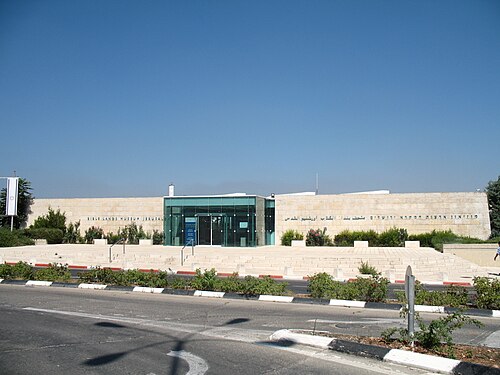
The Bible Lands Museum is a cultural institution in Jerusalem dedicated to the history and archaeology of biblical lands. Its Hebrew name, ארצות המקרא, reflects its focus on regions and peoples mentioned in biblical texts.
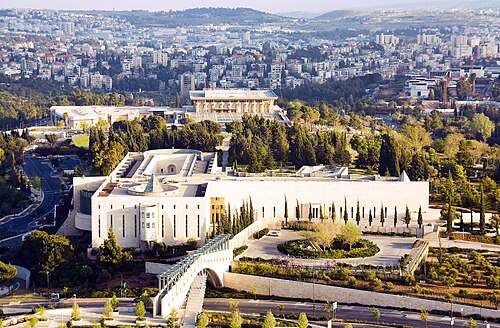
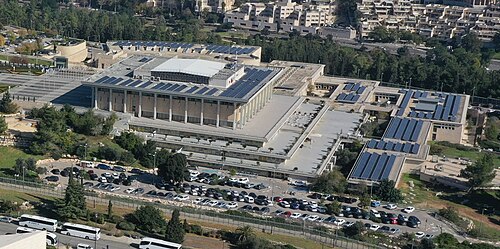
The Knesset is the unicameral national legislature of Israel, located in Jerusalem's Givat Ram neighborhood. Established in 1949 following Israel's independence, it serves as the seat of parliamentary democracy for the state.
Maine Friendship House is a documented museum in the Tel Aviv-Yafo visitor inventory, known locally as בית ידידות מיין. The institution commemorates the historic connection between the U.S.
The Supreme Court of Israel is the highest judicial authority in the State of Israel, located in Jerusalem. It serves as both the final court of appeals and the High Court of Justice for administrative matters.
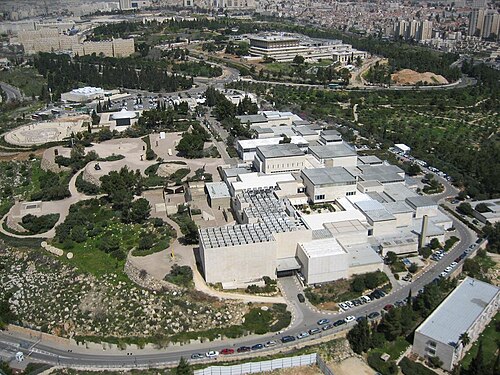
The Israel Museum is Jerusalem's preeminent cultural institution and one of the world's leading encyclopaedic museums. Established in 1965, it houses extensive collections spanning archaeology, fine art, Jewish ethnography, and material culture.
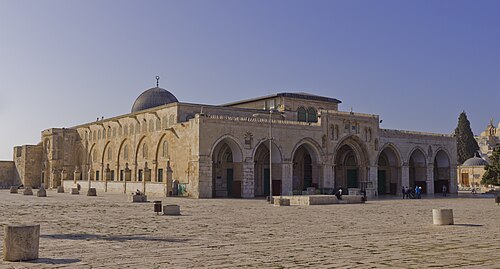
Al-Aqsa Mosque stands as one of Islam's holiest sites, occupying the southern portion of the Haram al-Sharif, or Temple Mount, in Jerusalem's Old City. The silver-domed mosque serves as a place of worship and pilgrimage for Muslims worldwide.
The National Library of Israel serves as the country's central research library and pre-eminent cultural institution dedicated to preserving the intellectual heritage of Israel and the Jewish people.
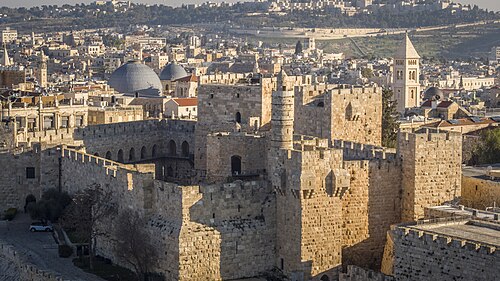
The Tower of David is an ancient citadel located near the Jaffa Gate entrance to the Old City of Jerusalem. Despite its name, the fortress has no direct connection to King David.
The Mount of Olives is a mountain ridge east of Jerusalem's Old City, with religious significance to Judaism, Christianity, and Islam.
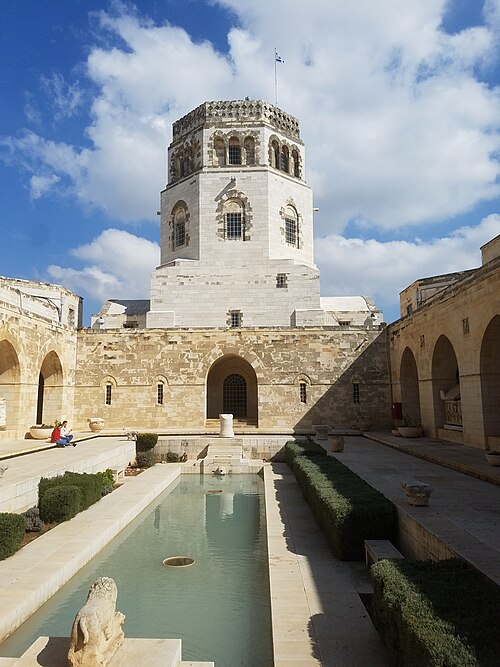
The Rockefeller Archaeological Museum is an archaeological museum in Jerusalem. It houses a significant collection of artifacts recovered from excavations conducted in the region during the British Mandate period and earlier.
Dormition Abbey is a Benedictine monastery located on Mount Zion in Jerusalem, near the traditional site of the Last Supper.
Lifta is a depopulated Palestinian village on Jerusalem's western edge, nestled in a steep valley near the entrance to the city. The site contains stone houses, a spring, and agricultural terraces that remain from its former habitation.
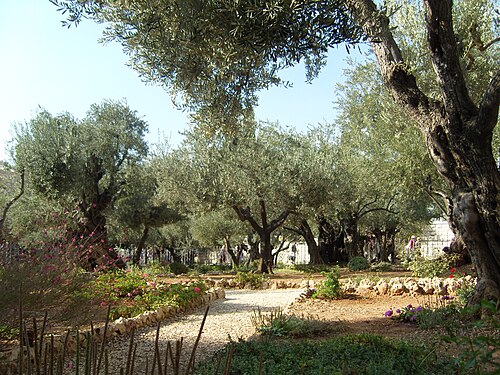
The Garden of Gethsemane is a garden at the foot of the Mount of Olives in East Jerusalem. It holds profound significance in Christian tradition as the site where Jesus is said to have prayed before his crucifixion.
Yad Vashem is Israel's official memorial to the victims of the Holocaust. Located on the western slope of Mount Herzl in Jerusalem, it serves as a centre for documentation, research, education and commemoration.
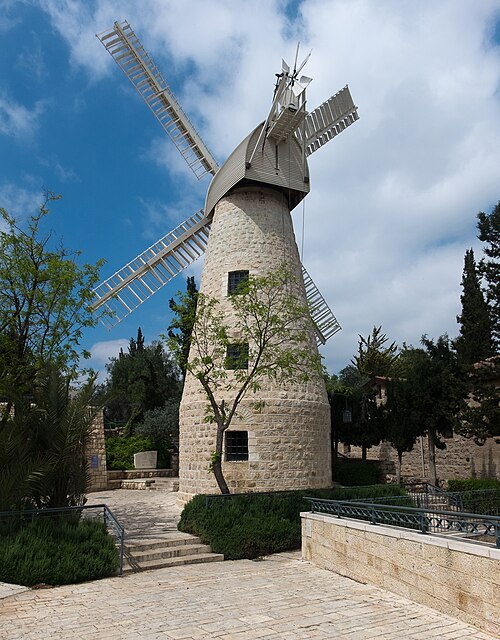
Montefiore Windmill stands as a historic landmark in Jerusalem, built in the 19th century with funding from British Jewish philanthropist Moses Montefiore.
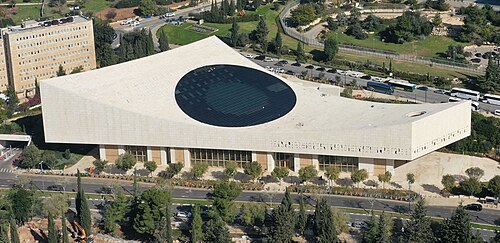
ANU – Museum of the Jewish People is a museum in Tel Aviv-Yafo dedicated to the narrative and culture of Jewish communities worldwide. Formerly known as Beit HaTfutsot, it underwent significant rebranding and renovation.
Eretz Israel Museum is a multidisciplinary museum complex in Tel Aviv-Yafo. Its Hebrew name is מוזיאון ארץ ישראל. The institution presents the history and culture of the Land of Israel through archaeology, ethnography, folklore, and crafts.
Ticho House is a historic residence and cultural venue in Jerusalem, situated in the downtown area near Zion Square. The property belonged to Anna Ticho, a celebrated artist, and her husband Dr.
The Tel Aviv Museum of Art is a major art museum in Tel Aviv-Yafo, Israel. Its local name is מוזיאון תל אביב לאמנות.
Temple Mount is the religious compound in Jerusalem's Old City known in Islamic tradition as al-Haram al-Sharif.
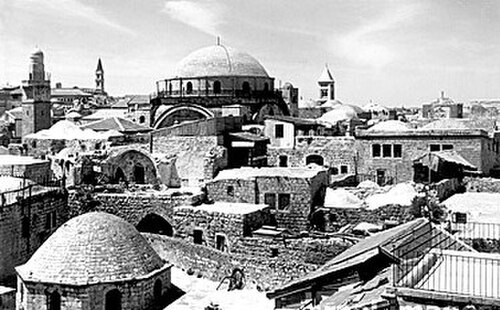
The Hurva Synagogue is a prominent Jewish house of worship in the Old City of Jerusalem, situated in the Jewish Quarter.
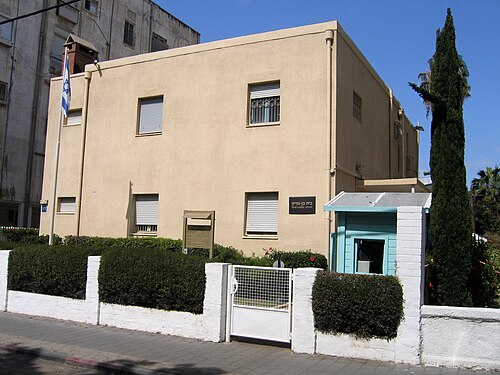
Ben-Gurion House in Tel Aviv is a museum dedicated to David Ben-Gurion, Israel's first Prime Minister. The house served as his residence in Tel Aviv alongside his desert home in Sde Boker.
The Herodian Quarter is an archaeological site in Jerusalem's Old City revealing remains of wealthy residential structures from the late Second Temple period. Excavations uncovered substantial dwellings with mosaic floors, ritual baths, and domestic furnishings suggesting affluent inhabitants.
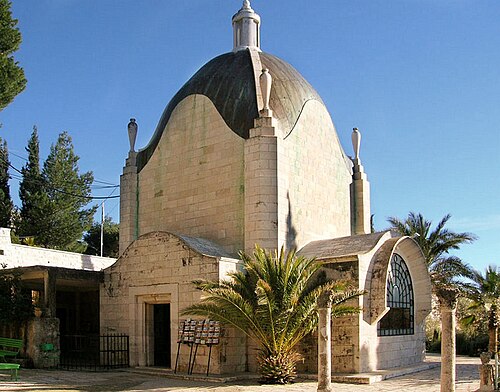
Dominus Flevit Church is a Roman Catholic church on the Mount of Olives in Jerusalem. Its name means "The Lord Wept" in Latin, referencing the Gospel account of Jesus weeping over the city.
Source: OpenStreetMap contributors, Wikidata ·
Seven to ten days can divide time between Jerusalem and Tel Aviv with one carefully chosen extension to Haifa, the Galilee, Dead Sea or Negev. Religious calendars and changing security conditions can alter access, so keep the route flexible rather than booking every transfer tightly.
Use Israel’s Population and Immigration Authority for the current entry rule, including whether electronic travel authorisation is required. Eligibility depends on nationality and travel circumstances; recheck immediately before departure because border procedures may change faster than ordinary guide content.
Ben Gurion Airport links into the intercity rail and bus networks, and major cities have their own local transit products. Many public services reduce substantially from Friday evening to Saturday evening, so build a separate plan for that period and confirm current operations.
Spring and autumn can balance coastal heat with walking in Jerusalem, but holidays may sharply affect hours, transport and demand. Desert excursions need separate heat planning, and any official security restriction takes priority over the seasonal itinerary.
The Israeli new shekel is the working currency. Cards are widely accepted in cities, while markets and small operators may make cash useful; inspect the ILS amount and any service convention before payment instead of applying habits from another destination.
Emergency services use 100 for police, 101 for ambulance and 102 for fire; electricity is Type C and H at 230 V. Tap-water guidance is Not recorded in this dataset, and current civil-defence instructions should be checked through official channels.