Neve Tzedek
Neve Tzedek is Tel Aviv-Yafo's first Jewish neighborhood, established in 1887 outside the walls of Jaffa, predating the founding of Tel Aviv itself. Its name means Oasis of Justice in Hebrew.
- Must see
- Activity
- Tel Aviv
Language · 11 published
Country guide
Israel occupies the Southern Levant, bordered by Lebanon, Syria, Jordan and Egypt, with the Mediterranean along its western coast, the Red Sea at its southern tip and Earth's lowest point, near the Dead Sea, to the east. Two cities carry most of what a visitor comes for and they are nothing alike. Jerusalem is the government seat and proclaimed capital, holding the sites the three Abrahamic religions hold in common; Tel Aviv is the largest urban area and the economic centre, a twentieth-century city on a beach. The Israeli-Palestinian conflict persists, and it governs where a visitor can go and when as firmly as any opening time does.
Every city catalogued in this country so far, ranked by how much there is to see.
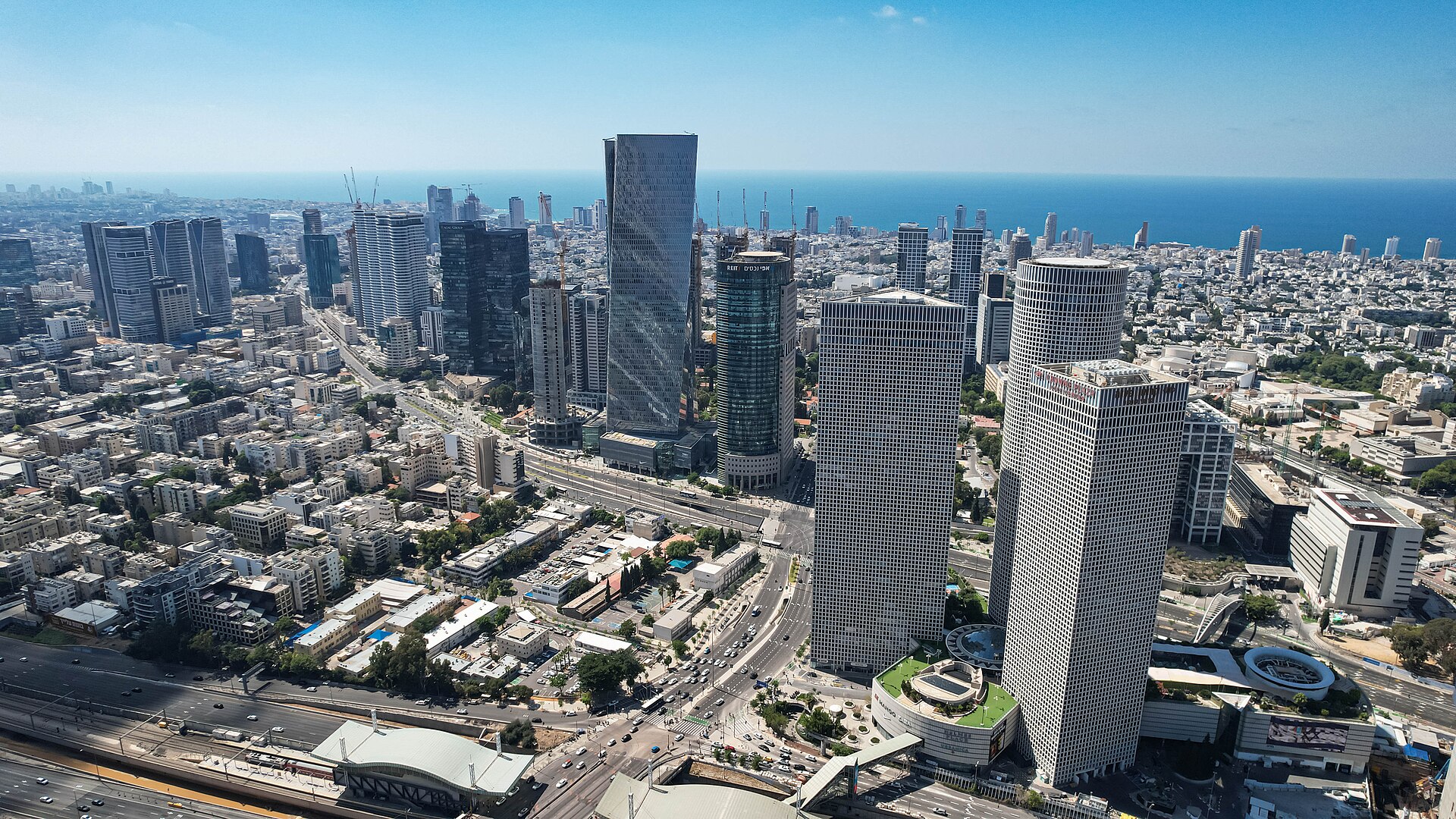
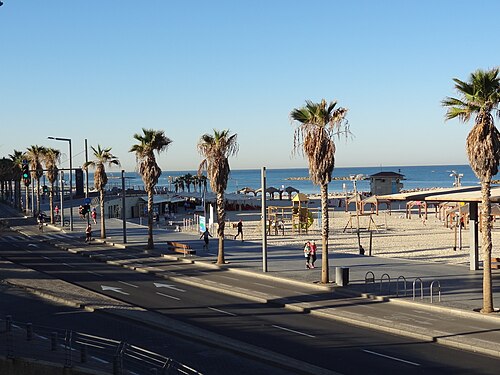
Photograph · askii · CC BY-SA 2.0
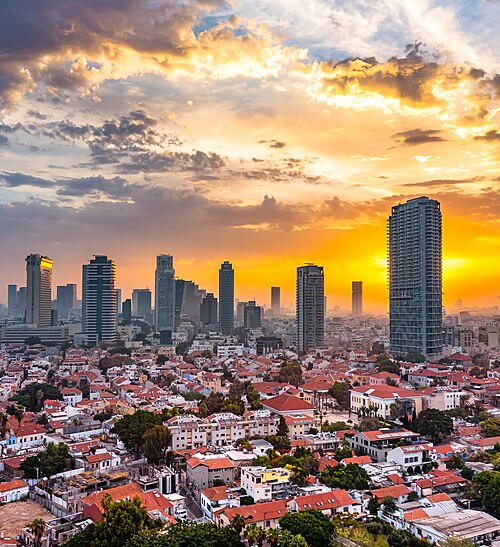
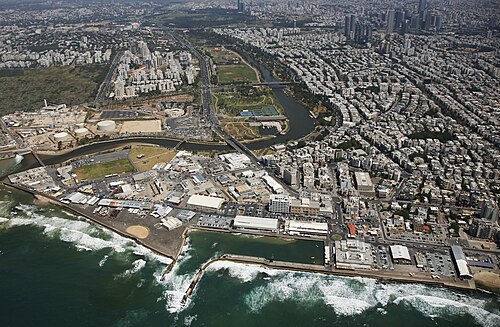
Photograph · Ynhockey · CC BY-SA 4.0
Ranked by importance — sitelinks, pageviews and heritage status, not editor preference.
21 places match
Category
Typical visit duration
Interests
Neve Tzedek is Tel Aviv-Yafo's first Jewish neighborhood, established in 1887 outside the walls of Jaffa, predating the founding of Tel Aviv itself. Its name means Oasis of Justice in Hebrew.
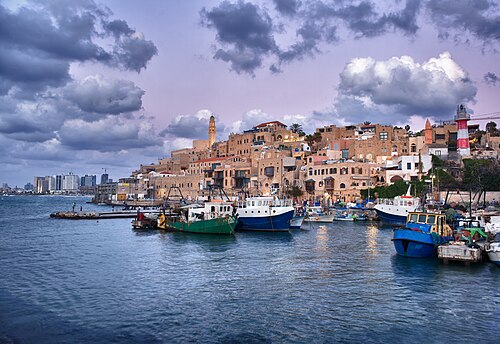
Jaffa Port is an ancient harbor at the southern edge of Tel Aviv-Yafo, among the oldest active ports in the world. The site anchors the historical Jaffa district, with maritime use dating back millennia.
The Via Dolorosa is a processional route in the Old City of Jerusalem, traditionally held to be the path Jesus walked carrying his cross to crucifixion.
The Tel Aviv Promenade is a continuous seafront walkway and cycling route running along the Mediterranean coastline of Tel Aviv, Israel.
Sarona is a restored historical site in central Tel Aviv-Yafo, Israel, centred on a former Templar colony established by German Protestant settlers in the nineteenth century.
Tel Aviv Port is a major waterfront promenade and leisure district on the Mediterranean coastline of Tel Aviv-Yafo.
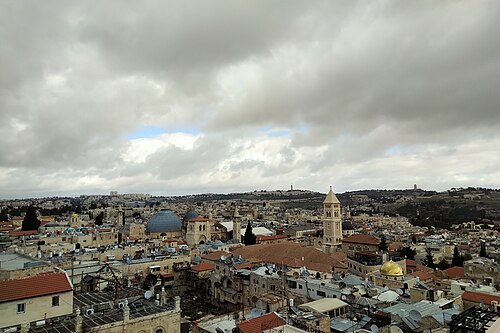
The Jewish Quarter is one of four traditional quarters in the walled Old City of Jerusalem. It occupies the southeastern sector of the historic enclosure, with boundaries roughly corresponding to ancient divisions.
HaTachana is a heritage and visitor precinct in Tel Aviv-Yafo that reuses the historic Jaffa railway station. The original station was part of the Jaffa-Jerusalem railway, one of the earliest rail lines in the region.
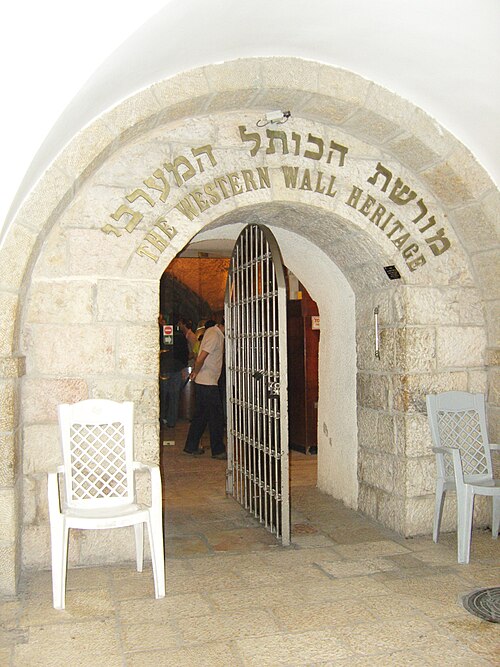
The Western Wall Tunnels constitute an underground archaeological complex running along the northern extension of the Western Wall, the retaining wall of the Temple Mount platform in Jerusalem's Old City.
The Muslim Quarter is one of the four traditional quarters of the Old City of Jerusalem. It occupies the northeastern portion of the walled city and is the largest and most populous of the four quarters.
Beit Abba is a museum in Tel Aviv-Yafo, Israel, listed in the municipal visitor inventory.
The Christian Quarter is one of the four traditional quarters of the Old City of Jerusalem. It occupies the northwestern quadrant of the walled city and contains numerous sites of profound significance to Christianity.
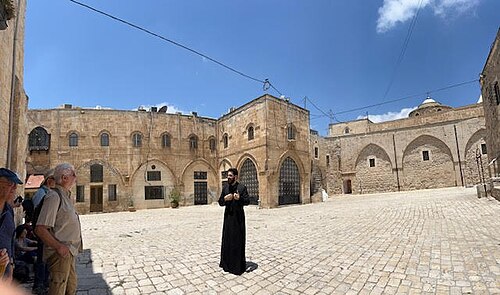
The Armenian Quarter is one of the four traditional quarters of the Old City of Jerusalem. It occupies the southwestern corner of the walled city and represents the smallest of the four quarters by population.
Bet Eliyahu, locally known as מוזיאון ההגנה, is a documented museum in the Tel Aviv-Yafo visitor inventory. The institution commemorates the history of the Haganah, the pre-state Jewish defense organization that operated during the British Mandate period.
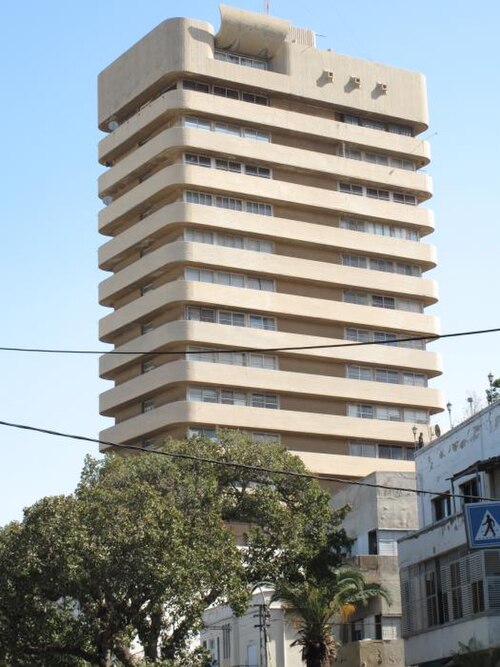
The Herta and Paul Amir Building is a museum structure in Tel Aviv-Yafo. It carries the local name הבניין ע״ש שמואל והרטה עמיר. The building appears in the city's visitor inventory as a documented cultural site.
Hussamssa, known locally as חוסמסה, is a documented museum in the Tel Aviv-Yafo visitor inventory. The institution appears in municipal tourism records as a recognized cultural site.
The Jabotinsky Institute in Israel is a documented museum in the Tel Aviv-Yafo visitor inventory. It is dedicated to the legacy of Ze'ev Jabotinsky, a prominent Zionist leader, writer, and founder of the Revisionist Zionist movement.
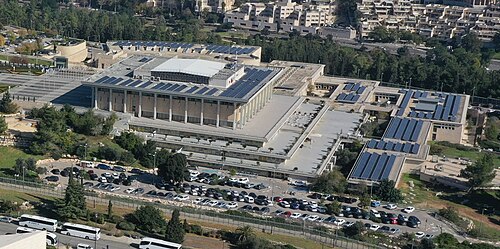
The Knesset is the unicameral national legislature of Israel, located in Jerusalem's Givat Ram neighborhood. Established in 1949 following Israel's independence, it serves as the seat of parliamentary democracy for the state.
Maine Friendship House is a documented museum in the Tel Aviv-Yafo visitor inventory, known locally as בית ידידות מיין. The institution commemorates the historic connection between the U.S.
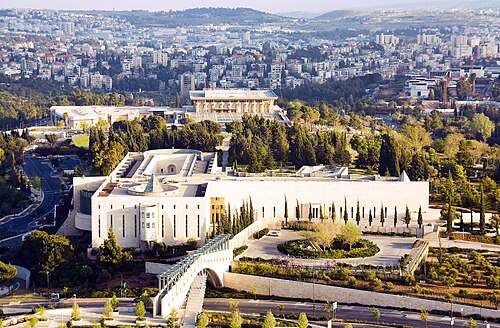
The Supreme Court of Israel is the highest judicial authority in the State of Israel, located in Jerusalem. It serves as both the final court of appeals and the High Court of Justice for administrative matters.
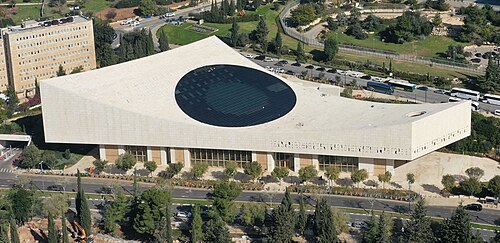
The National Library of Israel serves as the country's central research library and pre-eminent cultural institution dedicated to preserving the intellectual heritage of Israel and the Jewish people.
Source: OpenStreetMap contributors, Wikidata ·
Seven to ten days can divide time between Jerusalem and Tel Aviv with one carefully chosen extension to Haifa, the Galilee, Dead Sea or Negev. Religious calendars and changing security conditions can alter access, so keep the route flexible rather than booking every transfer tightly.
Use Israel’s Population and Immigration Authority for the current entry rule, including whether electronic travel authorisation is required. Eligibility depends on nationality and travel circumstances; recheck immediately before departure because border procedures may change faster than ordinary guide content.
Ben Gurion Airport links into the intercity rail and bus networks, and major cities have their own local transit products. Many public services reduce substantially from Friday evening to Saturday evening, so build a separate plan for that period and confirm current operations.
Spring and autumn can balance coastal heat with walking in Jerusalem, but holidays may sharply affect hours, transport and demand. Desert excursions need separate heat planning, and any official security restriction takes priority over the seasonal itinerary.
The Israeli new shekel is the working currency. Cards are widely accepted in cities, while markets and small operators may make cash useful; inspect the ILS amount and any service convention before payment instead of applying habits from another destination.
Emergency services use 100 for police, 101 for ambulance and 102 for fire; electricity is Type C and H at 230 V. Tap-water guidance is Not recorded in this dataset, and current civil-defence instructions should be checked through official channels.