

2 min walk
Mastaba of Kagemni
- Must see
- Historic monument
Language · 11 published
Historic monument · Cairo
هرم تتى
| Monday | 08:00 – 16:00 |
|---|---|
| Tuesday | 08:00 – 16:00 |
| Wednesday | 08:00 – 16:00 |
| Thursday | 08:00 – 16:00 |
| Friday | 08:00 – 16:00 |
| Saturday | 08:00 – 16:00 |
| Sunday | 08:00 – 16:00 |
Checked 2026-08-31 · Source
Read from the OpenStreetMap access tags; anything not listed has no tag recorded.
Set the group type to family in the planner and the day window contracts to about three quarters of a solo day.
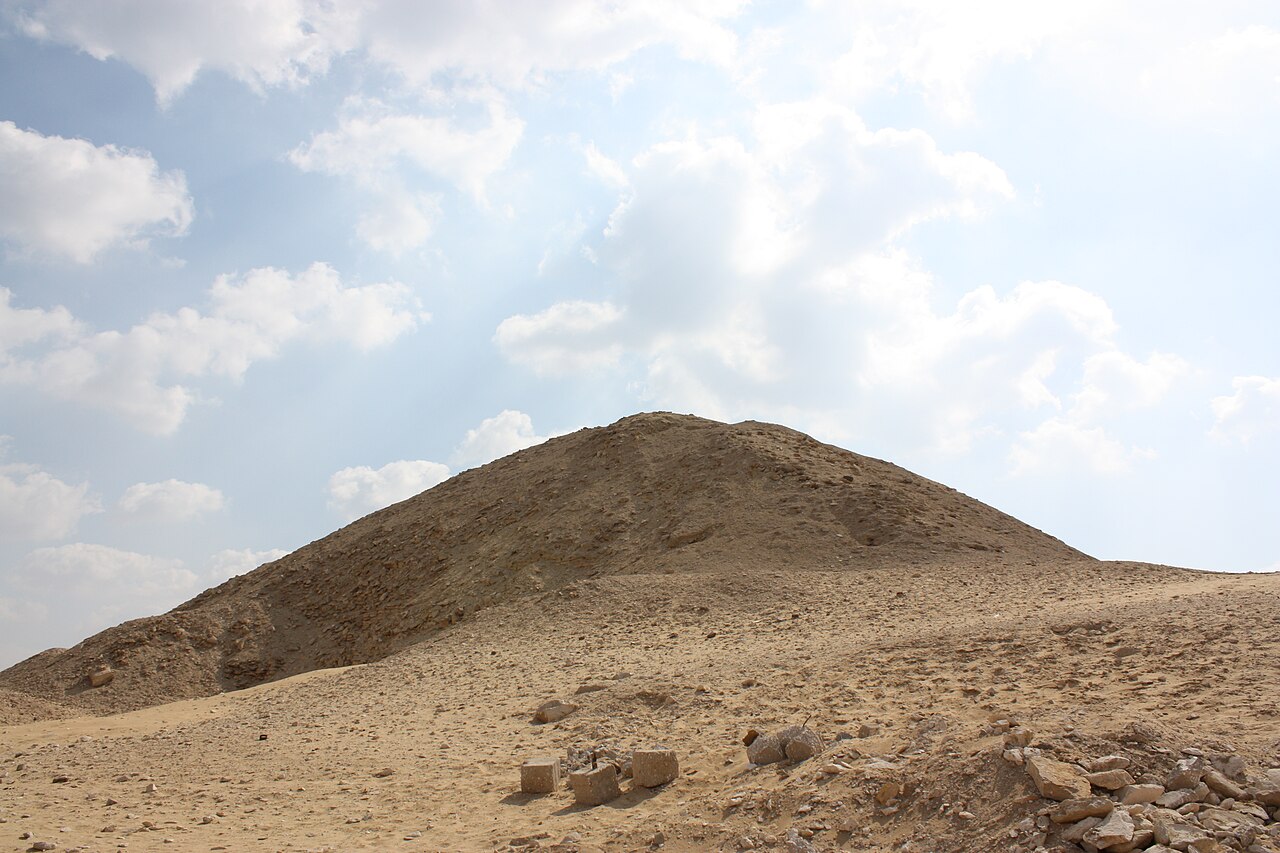
The Pyramid of Teti is a Sixth Dynasty royal pyramid at Saqqara, Egypt. It belongs to Pharaoh Teti, first ruler of that dynasty, who reigned during the Old Kingdom period. The monument forms part of the Saqqara necropolis UNESCO World Heritage site, inscribed in 1979. The pyramid complex includes a mortuary temple, causeway, and valley temple elements typical of Old Kingdom royal funerary architecture. It extends the Saqqara funerary circuit beyond the more famous Step Pyramid of Djoser. Daily 08:00–16:00.
Checked 2026-08-31 · Source
The pyramid contains internal passages and chambers cut from the bedrock beneath the structure. A descending passage leads to an antechamber and the burial chamber, which retains a basalt sarcophagus. The walls bear Pyramid Texts, among the earliest known religious writings in ancient Egypt, carved for the king's afterlife protection. These inscriptions represent a significant development in Egyptian funerary practice. The substructure demonstrates architectural continuity with earlier pyramids while showing evolutionary changes in corridor layout and chamber arrangement.
Checked 2026-08-31 · Source
Visitors typically combine the Pyramid of Teti with broader Saqqara site exploration rather than dedicating exclusive time. A thorough examination of the exterior and interior passages requires approximately thirty to sixty minutes, depending on crowd conditions and individual interest in architectural and textual details. Those studying the Pyramid Texts or photographing inscriptions may require additional time. The visit duration extends substantially when integrated with nearby monuments including the Step Pyramid complex, mastaba tombs, and Imhotep Museum. The Saqqara area ticket includes the Pyramid of Teti. Base adult admission is EGP 600 for foreign visitors or EGP 30 for Egyptian visitors.
Checked 2026-08-31 · Source
Saqqara as an archaeological zone generally operates during daylight hours, though specific seasonal variations and official opening times require verification from the Ministry of Tourism and Antiquities or on-site authorities before travel planning. Morning visits typically offer cooler temperatures and softer light for examination of exterior surfaces. The site lacks substantial shade structures. Daily 08:00–16:00. Saqqara is approximately 40 km southwest of Cairo. Cairo Metro Line 2 terminates at El-Mounib; from El-Mounib, continue by taxi or private vehicle to the Saqqara archaeological-area entrance. The site admits cars and taxis and charges a separate EGP 25 vehicle ticket.
Checked 2026-08-31 · Source
Admission to Saqqara archaeological zone involves ticketing controlled by Egyptian antiquities authorities, with potential separate fees for specific monument access including pyramid interiors. Pricing structures may differentiate between foreign visitors, Egyptian nationals, and students with valid identification. Camera permissions sometimes incur supplementary charges. Currency and payment methods require on-site verification. Budget flexibility accommodates possible price adjustments. The Saqqara area ticket includes the Pyramid of Teti. Base adult admission is EGP 600 for foreign visitors or EGP 30 for Egyptian visitors. The pyramid chambers are reached through a descending passageway followed by a horizontal corridor, so the interior route is not step-free.
Checked 2026-08-31 · Source
The Pyramid of Teti lies within the Saqqara necropolis approximately thirty kilometers south of central Cairo. Access requires road transportation through Giza and the village of Saqqara. Organized tours, private vehicles, and taxis constitute primary visitor options. Road conditions and journey duration vary substantially with Cairo traffic patterns. Saqqara is approximately 40 km southwest of Cairo. Cairo Metro Line 2 terminates at El-Mounib; from El-Mounib, continue by taxi or private vehicle to the Saqqara archaeological-area entrance. The site admits cars and taxis and charges a separate EGP 25 vehicle ticket.
Checked 2026-08-31 · Source
Interior passages present physical constraints including low ceilings, steep descents, and uneven surfaces unsuitable for those with mobility limitations or claustrophobia. Natural lighting is absent; personal illumination proves essential. Air quality in sealed underground chambers may challenge sensitive individuals. The surrounding desert environment carries heat exposure, dehydration, and sunburn risks without adequate preparation. Loose stone and deteriorated surfaces require careful foot placement. The pyramid chambers are reached through a descending passageway followed by a horizontal corridor, so the interior route is not step-free. The accessible-route project also includes improved internal roads, rest seats and shaded points across Saqqara.
Checked 2026-08-31 · Source
Photography policies within Egyptian archaeological sites change periodically and require current verification. Interior pyramid spaces typically prohibit flash equipment to protect sensitive surfaces and texts. Natural light proves insufficient for interior documentation without extended exposure capabilities. Tripod use generally faces restriction in confined passages. The ruined superstructure and desert setting offer exterior photographic opportunities in varying light conditions. Morning and late afternoon provide optimal exterior illumination. Teti, the first ruler of Egypt’s Sixth Dynasty, built the complex around 2345–2323 BC. The completed pyramid stood 52.5 metres high. Its fine-limestone casing was removed in antiquity, leaving a rubble-filled core that slumped and lost its original form.
Checked 2026-08-31 · Source
Teti, the first ruler of Egypt’s Sixth Dynasty, built the complex around 2345–2323 BC.
The completed pyramid stood 52.5 metres high.
Its fine-limestone casing was removed in antiquity, leaving a rubble-filled core that slumped and lost its original form.
A descending passage leads through a horizontal corridor to an antechamber, three burial-equipment magazines and the burial chamber.
Pyramid Texts cover the corridor’s end, antechamber and burial chamber; the burial-chamber ceiling has gold stars against a dark-blue background.
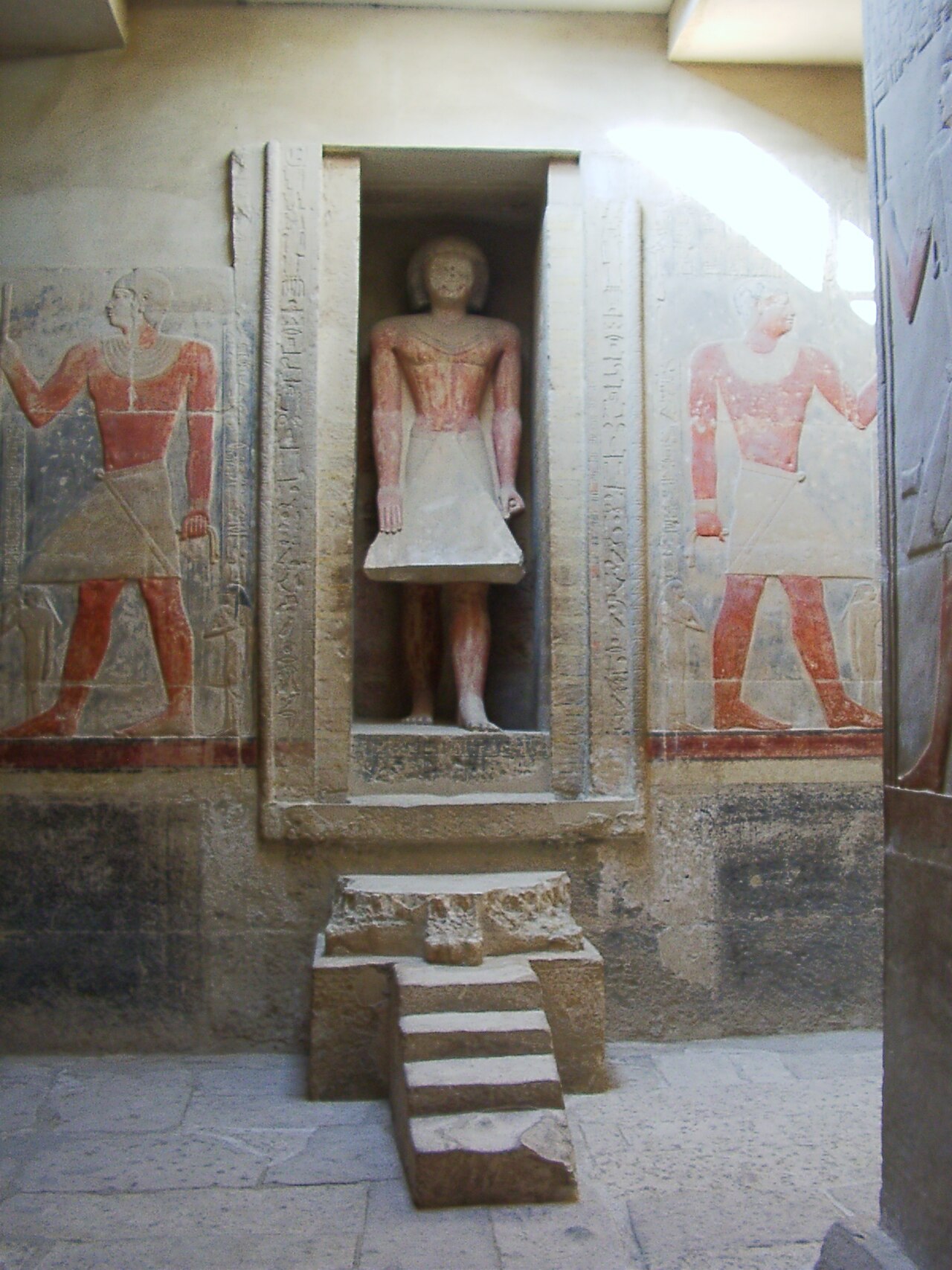
Fragments of the mortuary temple survive, the valley temple has not been located, and the cemetery in front includes the mastabas of the viziers Mereruka and Kagemni.
Loading the interactive map…
The interactive map could not be loaded.

Last updated:
Source: OpenStreetMap contributors, Wikidata ·