
2 min walk
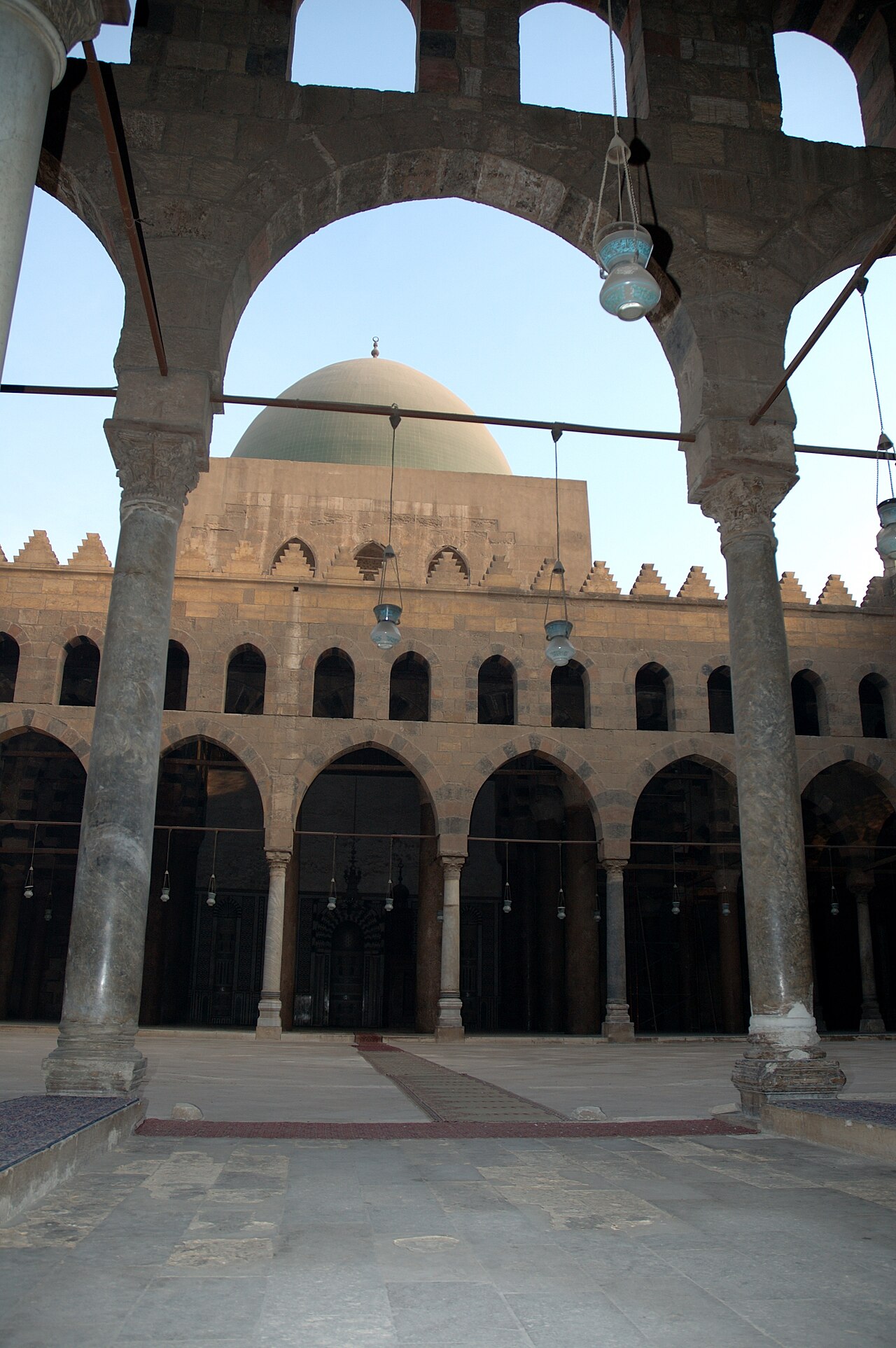
Al-Nasir Muhammad Mosque
- Must see
- Historic monument
Language · 11 published
Historic monument · Cairo
مسجد محمد علي
| Monday | 08:00 – 16:00 |
|---|---|
| Tuesday | 08:00 – 16:00 |
| Wednesday | 08:00 – 16:00 |
| Thursday | 08:00 – 16:00 |
| Friday | 08:00 – 16:00 |
| Saturday | 08:00 – 16:00 |
| Sunday | 08:00 – 16:00 |
Checked 2026-08-31 · Source
Read from the OpenStreetMap access tags; anything not listed has no tag recorded.
Set the group type to family in the planner and the day window contracts to about three quarters of a solo day.
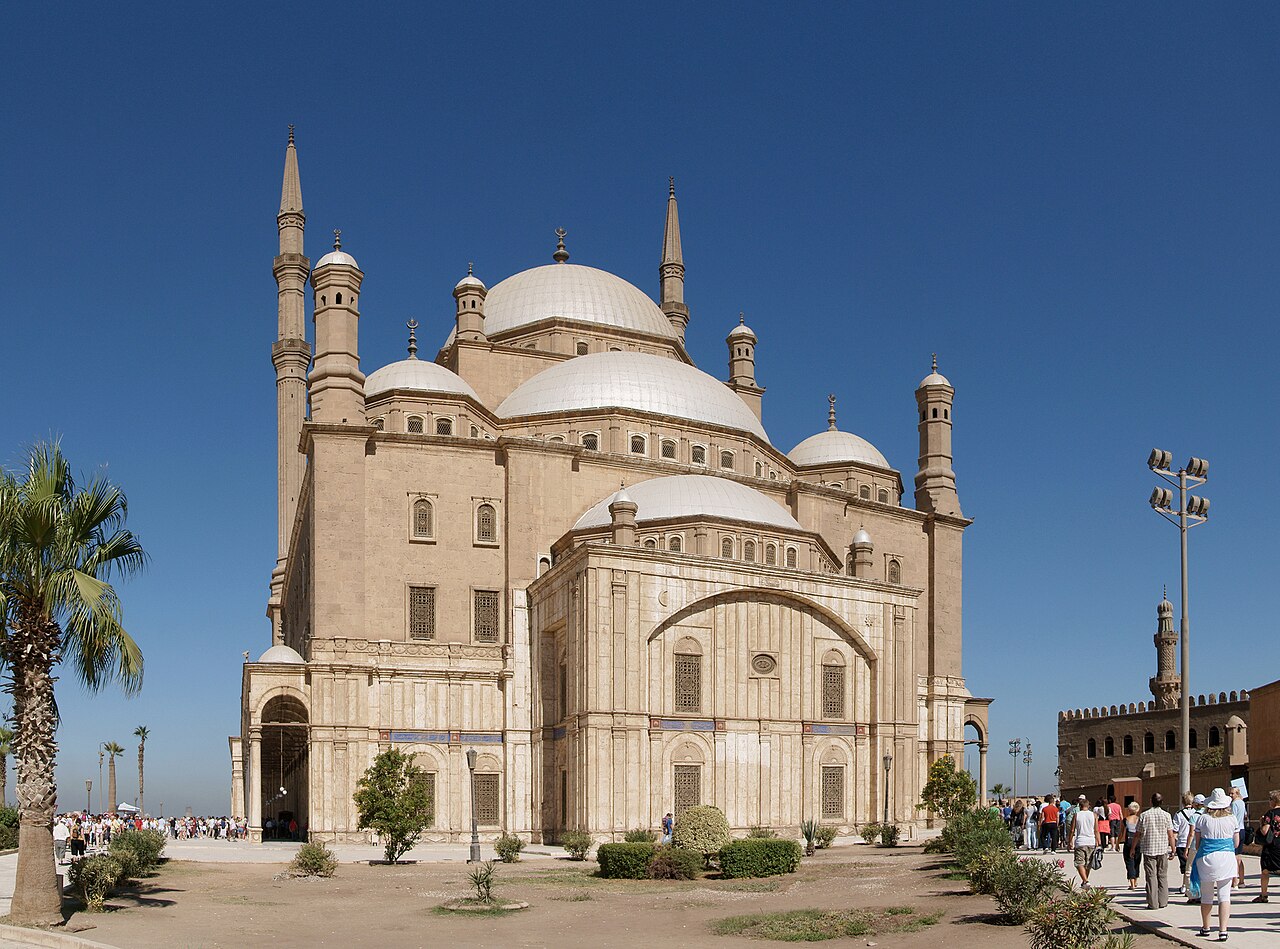
The Mosque of Muhammad Ali is a nineteenth-century Ottoman mosque situated within the Cairo Citadel complex in Egypt. Commissioned by Muhammad Ali Pasha, it is constructed largely of alabaster, earning it the popular name the Alabaster Mosque. Its prominent domes and slender minarets dominate Cairo's eastern skyline, making it one of the most visually distinctive landmarks in the city. The structure represents a significant period of Egyptian history and remains a major destination on the visitor circuit. Daily 08:00–16:00.
Checked 2026-08-31 · Source
The mosque features a large central dome surrounded by four semi-domes, with two minarets rising from the courtyard corners. The interior contains ornate chandeliers, clock gifts from French royalty, and elaborate decorations. The courtyard is paved with alabaster and enclosed by a colonnade. A mausoleum houses the tomb of Muhammad Ali Pasha. The prayer hall displays Ottoman architectural influences. The overall design reflects imperial ambitions and religious devotion characteristic of its era. The Ministry lists the mosque as open on all seven days, with no regular weekly closure day. Cairo Citadel remains open until 17:00, but the mosque’s own published closing time is 16:00.
Checked 2026-08-31 · Source
Visitors typically allocate between one and two hours for exploring the mosque and its immediate surroundings within the Citadel complex. This duration allows for circumambulating the courtyard, entering the prayer hall, observing the interior decorations, and visiting the tomb chamber. Those with particular interest in Ottoman architecture or Islamic art may wish to extend their stay. The Citadel itself contains additional historical structures that could extend a visit substantially beyond the mosque alone. Admission to the mosque is included in the Cairo Citadel area ticket. Adult admission is EGP 550 for foreign visitors and EGP 60 for Egyptian visitors.
Checked 2026-08-31 · Source
The mosque functions as an active religious site, which may affect accessibility during prayer times. Friday observations and religious holidays could influence visitor experience. Morning visits may offer cooler temperatures and softer light for observation. The structure's elevated position provides atmospheric conditions worth considering. Daily 08:00–16:00. The mosque is inside Cairo Citadel and is reached through the Citadel visitor entrance. Cairo Metro identifies El Malek El-Saleh station as serving the Sayyida Aisha and Citadel entrance area. The Ministry reports paved paths across the Citadel archaeological area for visitors with disabilities.
Checked 2026-08-31 · Source
The mosque sits within the Cairo Citadel complex, which may operate under a unified admission system or separate fee structures. Visitors should verify current arrangements through official channels. Potential costs may include entry to the broader Citadel area and any supplementary charges for specific sections. International visitors, students, and other categories may face different fee structures. Admission to the mosque is included in the Cairo Citadel area ticket. Adult admission is EGP 550 for foreign visitors and EGP 60 for Egyptian visitors. The Ministry reports paved paths across the Citadel archaeological area for visitors with disabilities.
Checked 2026-08-31 · Source
The mosque occupies the Cairo Citadel on Mokattam Hill in eastern Cairo. Multiple transportation options serve this elevated location. Taxis and ride-hailing services provide direct access, though traffic congestion in surrounding areas is common. Public buses operate in the vicinity, requiring walking to reach the entrance. The mosque is inside Cairo Citadel and is reached through the Citadel visitor entrance. Cairo Metro identifies El Malek El-Saleh station as serving the Sayyida Aisha and Citadel entrance area. Electric carts operate within the Citadel; the current adult cart fare is EGP 10 for foreign visitors and EGP 5 for Egyptian and Arab visitors.
Checked 2026-08-31 · Source
The mosque remains an active place of worship requiring respectful conduct. Appropriate dress covering shoulders and knees is essential; removal of footwear before entering prayer areas is mandatory. The alabaster surfaces become slippery when worn smooth by foot traffic. The elevated Citadel location exposes visitors to sun and wind without shade in transitional areas. Crowding peaks during tourist hours and religious observances. The Ministry reports paved paths across the Citadel archaeological area for visitors with disabilities. The published accessibility measures cover the Citadel complex rather than a continuous step-free route through every part of the mosque.
Checked 2026-08-31 · Source
Visitors should observe posted regulations or seek guidance from on-site personnel. Flash photography may be restricted to preserve interior surfaces and respect worshippers. Tripods and professional equipment might require special permission. The courtyard and exterior offer prominent compositional opportunities against sky and cityscape. Interior lighting conditions vary, affecting technical considerations. Respect for individuals engaged in prayer must govern all photographic activity. Drone operation would require appropriate authorization given the site's military and governmental historical associations. Yes. The Mosque of Muhammad Ali stands inside the Citadel of Salah al-Din al-Ayyubi in Cairo.
Checked 2026-08-31 · Source
Yes. The Mosque of Muhammad Ali stands inside the Citadel of Salah al-Din al-Ayyubi in Cairo.
The name refers to the marble paneling covering its interior and exterior walls.
Muhammad Ali Pasha commissioned it, and the Ministry dates its construction to 1265 AH/1848 AD on the site of former Mamluk palaces.
Each of the two minarets is 84 metres high.
Yes. His marble tomb is in the southwestern corner of the mosque, to the right when entering.
The copper clock tower was a gift from King Louis Philippe of France to Muhammad Ali Pasha in 1845.
Loading the interactive map…
The interactive map could not be loaded.

Last updated:
Source: OpenStreetMap contributors, Wikidata ·