
1 min walk
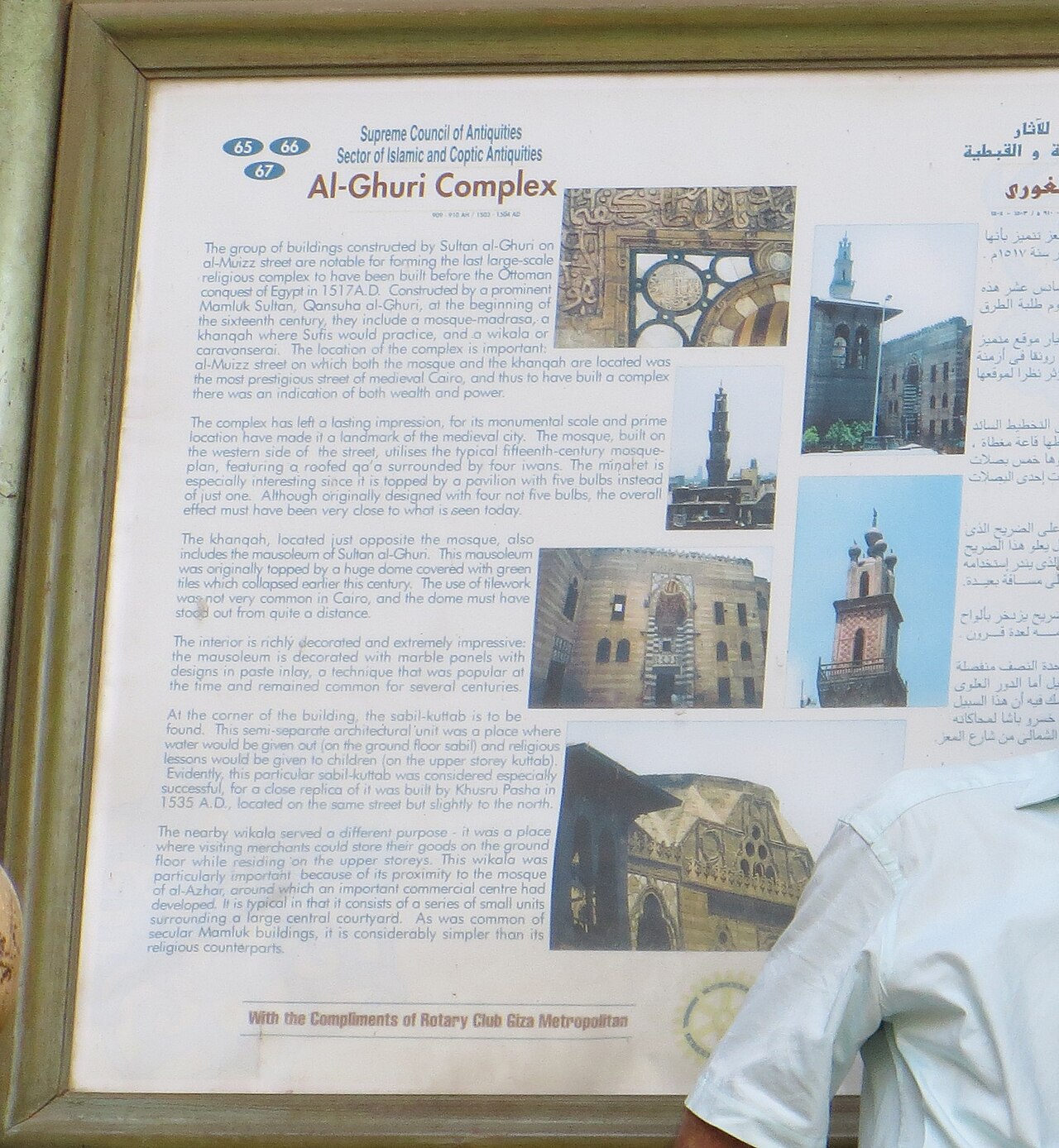
مجموعة السلطان الغوري
- Must see
- Historic monument
Language · 11 published
Historic monument · Cairo
خان الخليلي

Khan el-Khalili is a historic bazaar in Islamic Cairo, one of the oldest commercial centres in the Middle East. Established during the Mamluk period, it occupies a dense network of narrow lanes and alleyways near the Mosque of al-Hussein. The district forms part of the Historic Cairo UNESCO World Heritage Site, recognised for its outstanding medieval Islamic architecture and urban fabric. The bazaar remains a functioning marketplace rather than a preserved museum, with vendors selling goods to both local residents and visitors. Its atmosphere derives from the layered accumulation of centuries of commercial activity.
Checked 2026-08-26
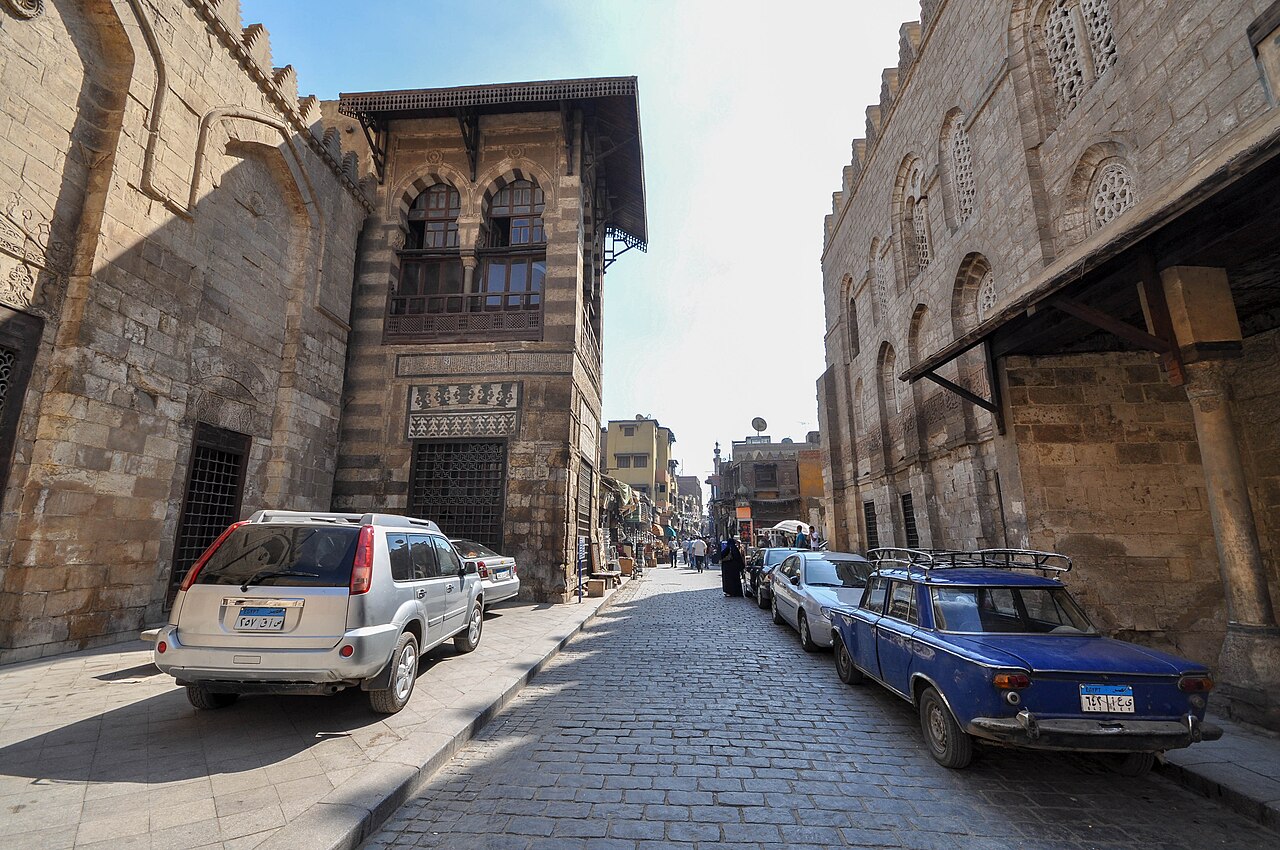
The bazaar contains numerous small shops and workshops arranged along winding pedestrian streets. Merchandise includes traditional crafts, metalwork, textiles, spices, perfumes, and souvenirs. Several historic structures are embedded within the commercial fabric, including the Mosque of al-Hussein and various caravanserais. Coffeehouses occupy upper floors of some buildings. The area around al-Azhar Street and Muizz Street contains significant monuments. The density of commercial activity varies throughout the district, with some lanes specialising in particular trades. The architectural character combines medieval foundations with later modifications and renovations.
Checked 2026-08-26
The duration of a visit depends entirely on individual purpose and interest. Casual exploration of the main commercial streets may occupy one to two hours. Those seeking to examine architectural details, visit multiple coffeehouses, or engage in extended browsing and negotiation could spend half a day. The bazaar rewards repeated visits at different times, as the character shifts with daily rhythms and weekly patterns. No formal itinerary or prescribed route exists. Visitors should allow additional time for becoming disoriented in the labyrinthine street pattern, which is a common and generally harmless experience.
Checked 2026-08-26
The bazaar operates as a functioning commercial district rather than a regulated tourist attraction with fixed hours. Individual shops maintain their own schedules, generally opening during daylight and evening hours. Friday prayer times may affect opening patterns. Seasonal variations in temperature and crowding should be considered. Ramadan alters daily rhythms significantly. Early mornings tend to be quieter. Evenings bring increased activity and different atmospheric qualities. Visitors should consult current local information before planning a specific visit, as conditions change. Check the operator's own site for the travel date before relying on a schedule or fare.
Checked 2026-08-26
Khan el-Khalili is a public commercial district with no entrance fee or admission charge. Individual purchases are negotiated directly with vendors. Prices are not fixed or displayed in most establishments; bargaining is customary and expected. No standard pricing framework exists across the bazaar. Visitors should establish prices before accepting goods or services, including at coffeehouses. The financial transaction is entirely between visitor and vendor. No central authority regulates commercial practices. Quality and authenticity of merchandise varies considerably and requires individual assessment. Check the operator's own site for the travel date before relying on a schedule or fare.
Checked 2026-08-26
The bazaar occupies central Cairo, accessible by various means depending on origin point. The Cairo Metro serves nearby stations, though final access requires walking through dense urban fabric. Taxis and ride-hailing services can approach peripheral streets but cannot penetrate the pedestrian core. Al-Azhar Street and Hussein Square provide approximate orientation points. The surrounding street network is extremely congested. Walking from nearby monuments in Historic Cairo is feasible. Signage is limited and often deteriorated. Visitors should obtain a detailed map or reliable digital navigation, though GPS accuracy varies in narrow covered lanes. Local guidance may be offered and should be evaluated cautiously.
Checked 2026-08-26
The bazaar presents typical conditions of a dense, high-traffic commercial environment. Narrow lanes create bottlenecks and collision risks. Motorcycles and occasional vehicles penetrate pedestrian areas unexpectedly. Persistent solicitation from vendors is common; polite but firm refusal is generally effective. Aggressive sales tactics occur in some establishments. Visitors should secure valuables against opportunistic theft in crowds. Quality claims for merchandise require independent verification. Unsolicited guiding services may be offered with expectation of payment. The physical environment includes uneven surfaces, steps, low passages, and poor lighting in some areas. Hydration is essential in warm conditions. Women's experiences may differ from men's.
Checked 2026-08-26
Photographic opportunities are abundant but require sensitivity. Many vendors object to direct photography of themselves or their merchandise; permission should always be requested. Some establishments prohibit photography entirely. The architectural fabric and general street scenes are generally acceptable subjects. Tripods may attract unwanted attention or security concerns. Interior spaces, mosques, and private areas have specific restrictions. Lighting conditions vary dramatically between open lanes and covered passages, requiring technical adaptation. Early morning and late afternoon provide favourable natural illumination. Respect for individuals' preferences is essential. Commercial photography or organised shoots likely require advance arrangements with relevant authorities or property owners.
Checked 2026-08-26
No. It is a dispersed historic commercial district comprising numerous streets, shops, workshops, and embedded monuments. No single production POI identity exists.
No. As a functioning commercial district, individual establishments set their own hours.
Yes. Prices are generally not fixed and negotiation is customary. Visitors should establish prices before accepting goods or services.
No. The core is pedestrian-only. Vehicles can approach peripheral streets only.
No. The district is freely accessible public space.
Yes. It lies within the Historic Cairo UNESCO World Heritage Site.
Loading the interactive map…
The interactive map could not be loaded.

Last updated:
Source: OpenStreetMap contributors ·