.jpg)


27 min walk
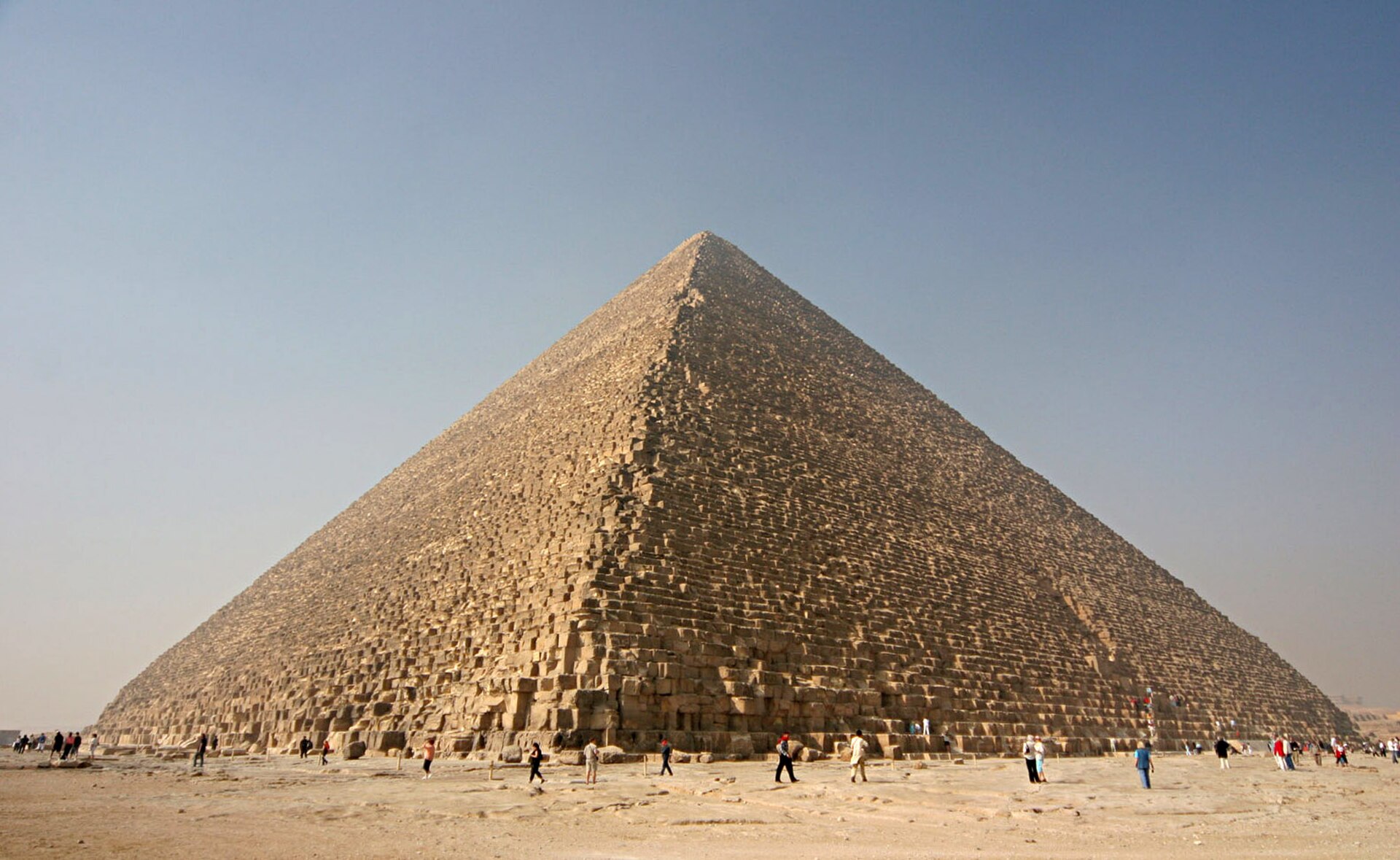
Great Pyramid of Giza
- Must see
- Historic monument
Language · 11 published
Museum · Cairo
المتحف المصري الكبير
| Monday | 09:00 – 18:00 |
|---|---|
| Tuesday | 09:00 – 18:00 |
| Wednesday | 09:00 – 21:00 |
| Thursday | 09:00 – 18:00 |
| Friday | 09:00 – 18:00 |
| Saturday | 09:00 – 21:00 |
| Sunday | 09:00 – 18:00 |
Checked 2026-08-31 · Source
Read from the OpenStreetMap access tags; anything not listed has no tag recorded.
Set the group type to family in the planner and the day window contracts to about three quarters of a solo day.
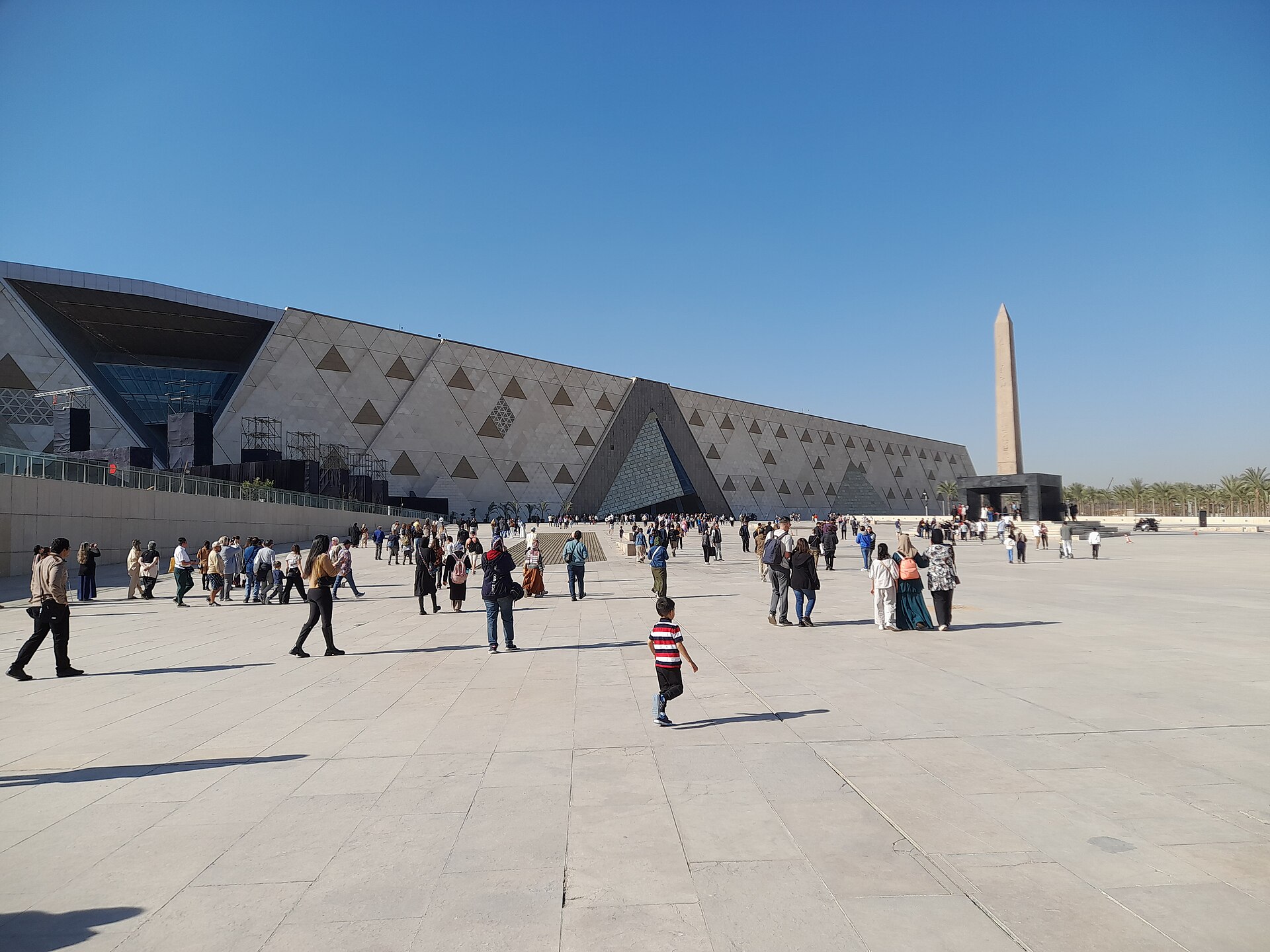
The Grand Egyptian Museum is a purpose-built national museum located near the Giza Pyramids plateau. It serves as Egypt's principal institution for housing and displaying the material culture of ancient Egypt. The project was conceived to replace and expand upon the capacity of the historic Egyptian Museum in Tahrir Square. Its position beside the Giza necropolis creates a direct spatial relationship between the collection and the monumental context of pharaonic civilization. The building represents a major state investment in cultural infrastructure. Sunday, Monday, Tuesday, Thursday and Friday: GEM Complex 08:30–19:00; galleries 09:00–18:00; last entry 17:00. Wednesday and Saturday: GEM Complex 08:30–22:00; galleries 09:00–21:00; last entry 20:00.
Checked 2026-08-31 · Source
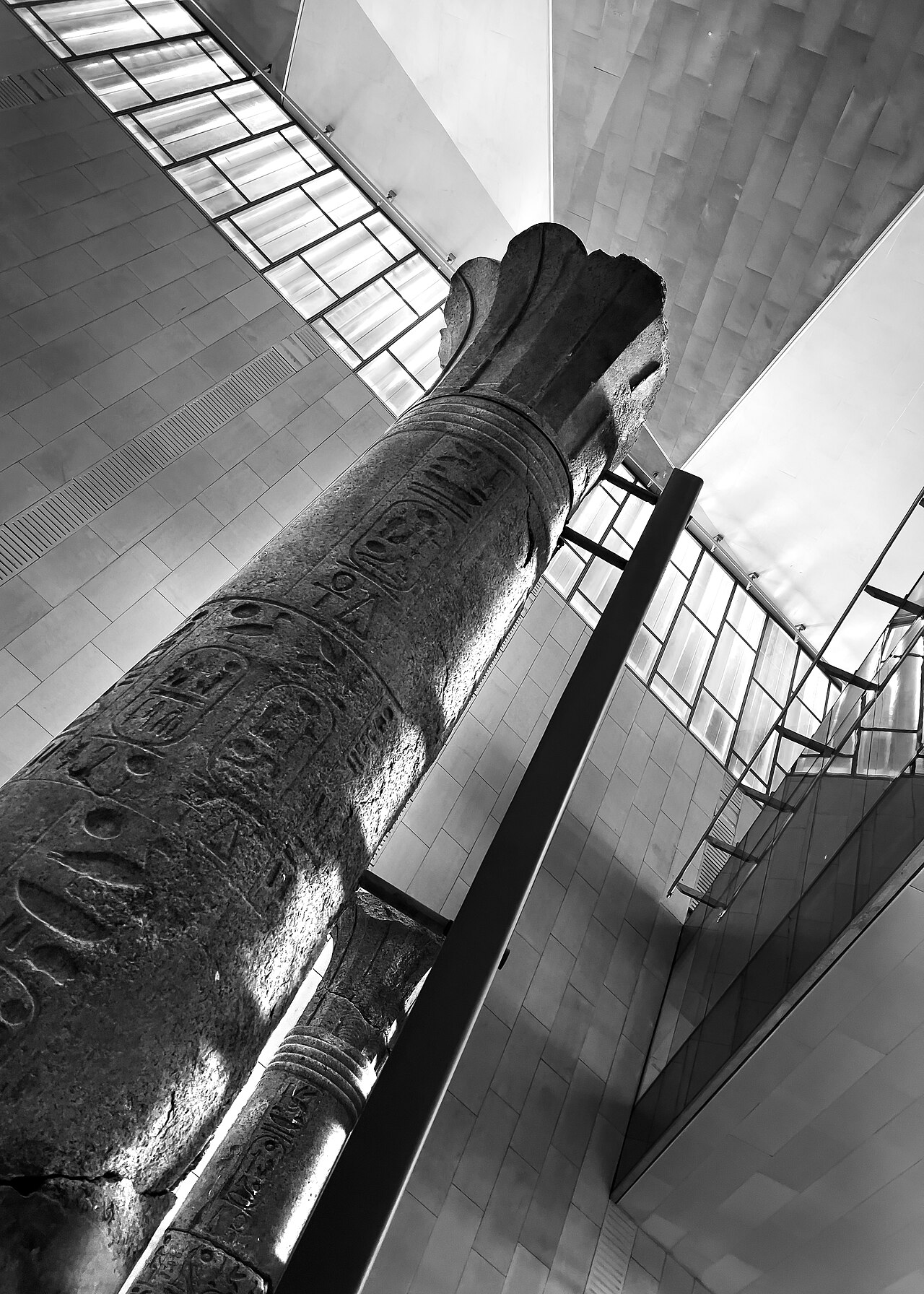
The museum is designed to hold the complete Tutankhamun collection, transferred from the Egyptian Museum in Tahrir Square, alongside vast holdings of pharaonic artifacts spanning multiple dynasties. Galleries are organized chronologically and thematically. The collection includes statuary, sarcophagi, papyri, jewelry, and everyday objects. The architectural design incorporates a grand atrium and exhibition halls scaled to accommodate large-scale monuments. Open daily; the operator lists no regular closure day. Ramps, lifts and wide pathways provide wheelchair access. Wheelchairs and golf carts are available to assist movement. Accessible restrooms and seating are provided throughout the museum.
Checked 2026-08-31 · Source
Visitors should allocate a substantial portion of a day for meaningful engagement with the collections. The scale of the building and the breadth of material culture on display reward extended exploration. Those with focused interests in specific periods or the Tutankhamun collection may adjust duration accordingly. The proximity to the Giza Pyramids allows for combined itinerary planning, though attempting both in a single day demands rigorous pacing. Fatigue from scale and sensory density is a common visitor experience in major encyclopedic museums.
Checked 2026-08-31 · Source

Cairo experiences extreme summer temperatures that affect both outdoor transit and potentially building climate conditions. The winter months generally offer more temperate conditions for travel to the Giza area. Morning arrival is prudent for any major attraction to allow unhurried progression. Fridays and public holidays may affect local traffic patterns and visitor density. Sunday, Monday, Tuesday, Thursday and Friday: GEM Complex 08:30–19:00; galleries 09:00–18:00; last entry 17:00. Wednesday and Saturday: GEM Complex 08:30–22:00; galleries 09:00–21:00; last entry 20:00.
Checked 2026-08-31 · Source
Ticketing categories typically distinguish between Egyptian nationals and international visitors at state-run cultural institutions in Egypt. Photography permits, if applicable, may constitute a separate fee structure. Online advance booking through the official website is advisable for high-demand institutions. Payment methods and currency accepted should be verified directly. Group arrangements and guided tour packages may affect individual pricing. Adult admission costs EGP 1,590 for Arabs and other nationalities, EGP 800 for expatriates and EGP 200 for Egyptians. The standard ticket covers the Tutankhamun Galleries, Main Galleries, Grand Hall, Grand Stairs, Khufu’s Boats Museum, commercial area and exterior gardens. Children under six, visitors with disabilities, Egyptian guides accompanying a group and ICOM members receive free admission all week with valid identification; guided-tour charges remain separate.
Checked 2026-08-31 · Source

The museum is situated in Giza, west of central Cairo across the Nile. Road access connects to the Pyramids area, creating significant traffic congestion during peak periods. Taxis and ride-hailing services operate on this corridor but journey times are unpredictable. No metro station serves this immediate area directly. The museum is at El Remayah Square on the Cairo–Alexandria Desert Road. Cairo Metro Line 4’s planned Grand Egyptian Museum station remains under construction, so it is not a current arrival option. The existing Giza station on Metro Line 2 is the public-body-listed interchange for buses heading toward the Pyramids. For car or taxi arrival, approach El Remayah Square from the Cairo–Alexandria Desert Road and use Gate 2.
Checked 2026-08-31 · Source

Construction and phased opening status may affect which galleries are accessible. The Giza road corridor experiences severe traffic delays. Summer heat exposure during transit requires hydration and sun protection. Haze and air quality vary seasonally, potentially affecting views of the Pyramids from museum approaches. Crowd management at major institutions demands vigilance over personal belongings. Ramps, lifts and wide pathways provide wheelchair access. Accessible restrooms and seating are provided throughout the museum. Selected lifts have audible information. A tactile replica with Braille is available. Visitors who need assistance can approach the Information Desk.
Checked 2026-08-31 · Source

Photography policies at Egyptian state museums have historically been restrictive and subject to change. Flash photography is typically prohibited due to conservation concerns for organic materials and pigments. Tripods and professional equipment may require special permits or be prohibited entirely. Mobile photography is generally more tolerated than dedicated camera use. Visitors should observe posted signage and staff instructions without assumption of permissiveness. Respect for fellow visitors and the contemplative function of galleries should guide behavior regardless of explicit rules. Selected lifts have audible information. A tactile replica with Braille is available.
Checked 2026-08-31 · Source
Yes. The museum requires online advance booking for a selected entry time slot.
No. Each ticket permits one entry, and re-entry is not allowed after leaving the museum.
Tickets are non-refundable after purchase except when the museum determines that force majeure applies, and they are non-transferable.
Bags, backpacks, luggage or parcels larger than 40 × 40 cm must be left in the designated storage area.
Personal, non-commercial photography and video are allowed; only mobile photography is permitted in the Tutankhamun Galleries. Flash, tripods, monopods, selfie sticks, drones, external lighting and live-streaming equipment are prohibited.
Yes. Self-paced audio guides are offered in Arabic, English and Japanese, cover more than 100 stops, include headphones and do not require internet access.
Loading the interactive map…
The interactive map could not be loaded.
Last updated:
Source: OpenStreetMap contributors, Wikidata ·