

3 min walk
Princess Salme Museum
- Must see
- Museum
Language · 11 published
Historic monument · Zanzibar City
Read from the OpenStreetMap access tags; anything not listed has no tag recorded.
Set the group type to family in the planner and the day window contracts to about three quarters of a solo day.
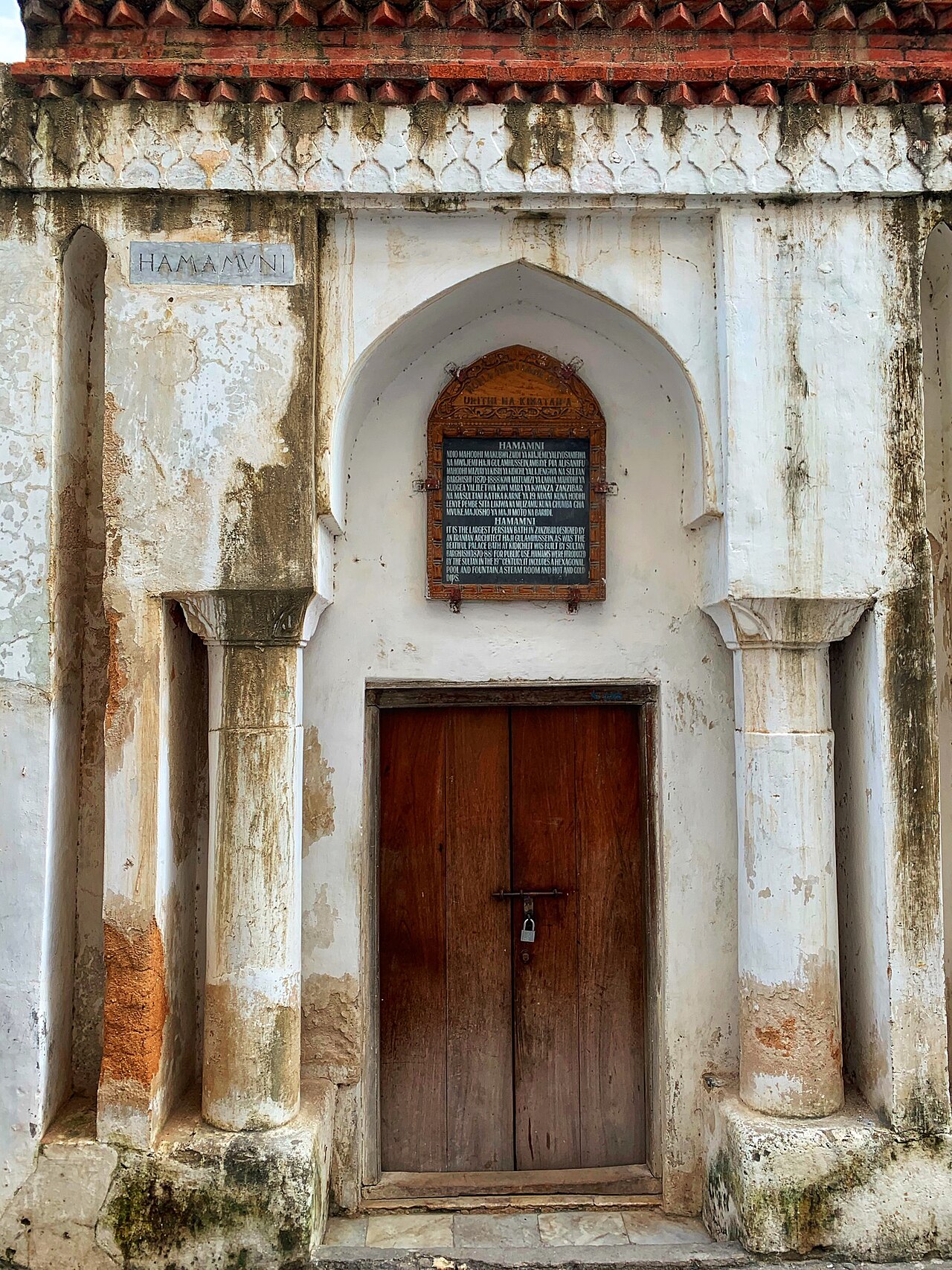
Hamamni Persian Baths are a preserved nineteenth-century bath complex in Stone Town. The building reflects Persian and Omani influence on Zanzibar’s architecture and social life, and it lies within the Stone Town UNESCO World Heritage site. These baths were created for communal bathing rather than private luxury, making them a useful place to understand the infrastructure of daily life. The surviving rooms reveal how water, heat, movement, and social custom were brought together. Hamamni Persian Baths stand as the best-preserved public bath complex in Stone Town, Zanzibar City. Built during the nineteenth century, these baths reveal the Persian and Omani layer of the city's social history. The complex represents an important cultural landmark within the UNESCO World Heritage-listed Stone Town. Visitors can observe how public bathing facilities served the community during this period of significant Arab and Persian influence on the Swahili coast. The architecture and layout demonstrate the sophisticated infrastructure that supported daily life and social customs in historical Zanzibar. The baths are preserved as a historical monument and are no longer functional for their original purpose. Yes, the baths lie within the boundaries of the Stone Town UNESCO World Heritage site.
Checked 2026-08-26 · Source
The complex contains chambers associated with different stages of a traditional hammam: changing areas, hot rooms, and bathing pools. Coral stone, carved plasterwork, and wooden fittings show how local materials carried Persian and Omani design influences. Former drainage and heating arrangements remain visible even though the baths no longer operate. Move slowly between the rooms to understand the sequence rather than looking only for a single grand hall; the layout is the principal exhibit. The bath complex contains multiple chambers designed for different stages of the bathing ritual.
Checked 2026-08-26 · Source
Allow thirty minutes to one hour for a complete look through the chambers. The site is compact, but the details reward a patient pace: inspect the transitions between rooms, the plaster decoration, the pools, and the remains of the heating and drainage systems. Visitors photographing architectural details may stay longer. Because the baths sit in the old quarter, they fit naturally into a broader Stone Town walk that includes other heritage buildings nearby.
Checked 2026-08-26 · Source
Visit in the morning if you want to combine the baths with a longer walk through Stone Town before the tropical heat becomes strongest. The interior chambers provide shade, while the journey through the old quarter is more comfortable at cooler times of day. Drier periods make movement between heritage sites easier, although the bath complex itself is an indoor architectural stop. A quiet visit gives you more time to notice the building’s sequence and decorative surfaces.
Checked 2026-08-26 · Source
Hamamni Persian Baths are visited as a heritage monument, not as a functioning bathing facility. Set aside time for the preserved architecture and carry local currency during a Stone Town sightseeing day for small purchases nearby. The experience centres on the rooms, materials, and engineering remains rather than active services. Its compact scale makes it an easy addition to a walking route, particularly for travellers interested in the Persian and Omani layers of Zanzibar’s past.
Checked 2026-08-26 · Source
The baths are inside Stone Town’s compact historic core and are best reached on foot. From accommodation or another landmark in the old quarter, follow the narrow lanes and use the surrounding historic buildings as orientation points. Taxis and daladalas can bring visitors to the edge of Stone Town from elsewhere in Zanzibar, but the final approach is a walk because vehicles cannot use the immediate medieval street network. Comfortable shoes help on the old surfaces.
Checked 2026-08-26 · Source
Expect steps, uneven floors, low doorways, and narrow passages between chambers. These features are part of the historic structure but can make movement difficult for visitors with mobility limitations or taller travellers. The interior may feel humid, and the site does not function as a modern spa. Bring water for the wider Stone Town walk and take care on worn surfaces. Preservation needs can limit access to individual areas, so follow the route provided inside.
Checked 2026-08-26 · Source
The baths’ small windows and thick walls create low, directional light that suits close studies of plaster, wood, coral stone, and the geometry of the chambers. Use the sequence of rooms to make photographs that explain how the hammam worked. Confined spaces leave little room for tripods, so keep equipment compact and avoid blocking the passage. Respect other visitors and the cultural character of the site. Architectural details are strongest when photographed patiently rather than rushed.
Checked 2026-08-26 · Source
No. The baths are preserved as a historical monument and no longer serve their original bathing purpose.
Yes. Hamamni Persian Baths lie within the Stone Town UNESCO World Heritage site.
The preserved complex includes changing rooms, hot rooms, bathing pools, and visible remains of drainage and heating systems.
Steps, uneven surfaces, low doorways, and narrow passages create significant access challenges.
Allow approximately thirty minutes to one hour for the compact bath complex.
The building reflects Persian and Omani influence on nineteenth-century Zanzibar’s architecture and social practices.
Loading the interactive map…
The interactive map could not be loaded.

Last updated:
Source: OpenStreetMap contributors, Wikidata ·