
3 min walk
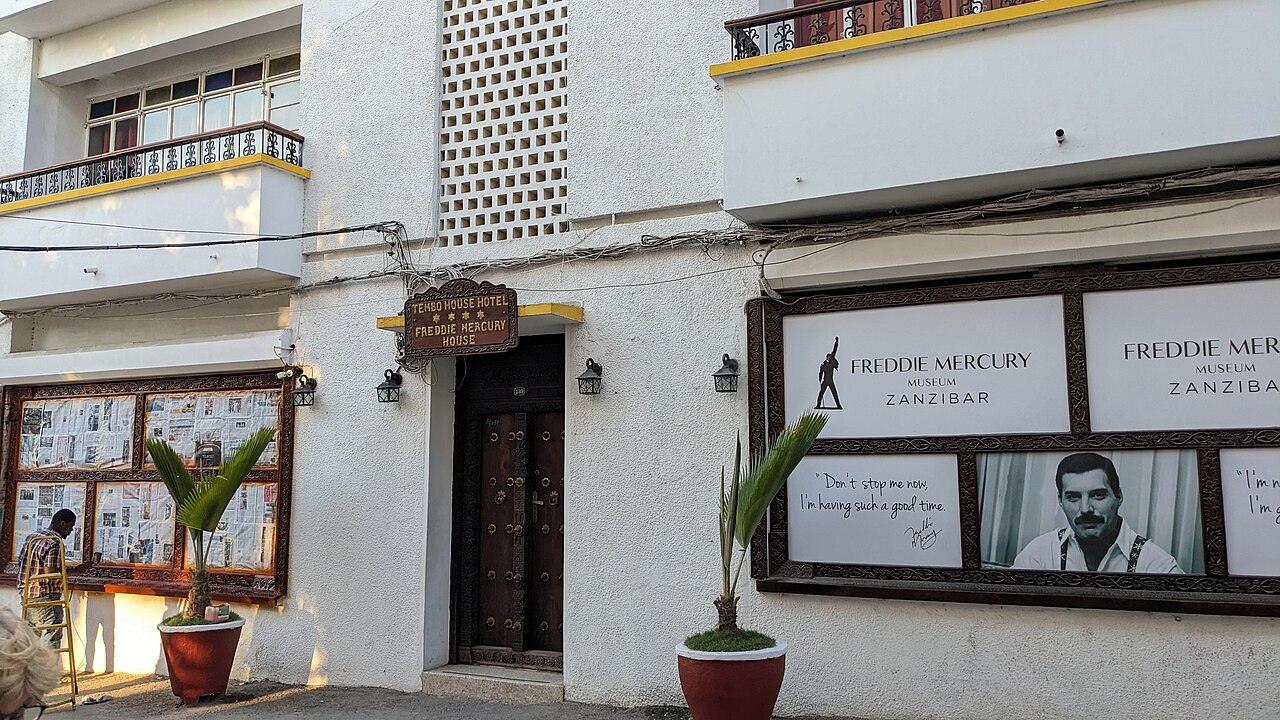
Freddie Mercury Museum
- Must see
- Museum
Language · 11 published
Historic monument · Zanzibar City

Read from the OpenStreetMap access tags; anything not listed has no tag recorded.
Set the group type to family in the planner and the day window contracts to about three quarters of a solo day.
Tippu Tip's House is the historic residence of Hamed bin Mohammed al-Murjebi, the notorious nineteenth-century Zanzibari merchant whose trading empire spanned Central and East Africa. Located in Stone Town, the building stands as physical testimony to the commercial wealth that flowed through Zanzibar during the era of Indian Ocean trade. The UNESCO World Heritage listing for Stone Town recognises this layered history. The house embodies the island's entanglement with ivory extraction and the East African slave trade, which Tippu Tip both participated in and profited from enormously.
Checked 2026-08-26
The interior retains architectural features characteristic of wealthy Stone Town residences, including carved wooden doors, coral stone construction, and spatial arrangements reflecting mercantile domestic life. Specific room functions, original furnishings, and display contents are Not recorded pending review. Visitors should expect a historic building rather than a curated museum environment. The structure's fabric itself constitutes the primary evidence of mercantile power. Cautious visitor judgement suggests verifying current access arrangements before travel, as interior conditions and interpretive materials may vary significantly from published descriptions found in secondary sources.
Checked 2026-08-26
A thorough examination of the exterior and accessible interior areas typically requires between thirty minutes and one hour, depending on individual interest in architectural detail and historical interpretation. Those engaging deeply with the building's significance within broader Stone Town heritage may wish to allocate additional time for contextual reading. The visit duration remains variable because interior access conditions are Not recorded pending review. Visitors often combine this stop with broader Stone Town walking itineraries, integrating the merchant's residence within a longer exploration of the UNESCO-listed urban fabric.
Checked 2026-08-26
Stone Town's tropical climate produces distinct wet and dry seasons that influence visitor comfort. March through May brings heavy rainfall, making outdoor navigation between heritage sites more challenging. June through October offers drier conditions generally preferred for walking exploration. Midday temperatures and humidity can prove taxing regardless of season. Early morning visits may provide more comfortable conditions and reduced crowding at nearby attractions. Visitors should verify current access arrangements directly before travel, as opening schedules for historic private properties in Stone Town frequently change without widespread notification. Check the operator's own site for the travel date before relying on a schedule or fare.
Checked 2026-08-26
Entry fee structures for historic residences in Stone Town vary considerably, with some properties operating through informal arrangements while others maintain established ticketing. Visitors should anticipate that payment may be requested in Tanzanian shillings, though US dollars are widely accepted throughout Zanzibar. Cautious visitor judgement recommends carrying small denomination notes and confirming costs before entry. Some heritage sites operate donation-based access or combine entry with guided tour arrangements. No advance booking systems are documented for this specific property. Check the operator's own site for the travel date before relying on a schedule or fare.
Checked 2026-08-26
Tippu Tip's House sits within Stone Town's dense pedestrian street network, inaccessible to vehicles beyond the immediate perimeter. Visitors arrive on foot from elsewhere in the historic core or via taxi, daladala minibus, or bicycle to Stone Town boundaries followed by walking. The property lies within the area inscribed on UNESCO World Heritage List 173. Street signage is often minimal; navigation requires attention to landmark buildings and asking local residents for directions. Cautious visitor judgement suggests downloading offline maps before arrival, as mobile data connectivity proves unreliable in narrow stone-built thoroughfares.
Checked 2026-08-26
Structural conditions in historic Stone Town buildings demand visitor vigilance. Uneven floors, deteriorating staircases, and limited emergency exits characterise many properties of this era. No safety inspections or maintenance schedules are documented. Negotiating access may involve interactions with caretakers or residents whose authority is informal. Visitors should assess personal risk tolerance regarding building stability and fire safety. The surrounding streets present standard urban hazards including uneven paving, motorcycle traffic in narrow passages, and limited street lighting after dark. Travel insurance covering heritage site visits is prudent given uncertain liability frameworks.
Checked 2026-08-26
Photography policies are Not recorded pending review. Historic residences in Stone Town often restrict or charge for interior photography, while exterior views from public thoroughfares generally present no impediment. Flash photography may damage sensitive interior surfaces where permitted. Drone operation faces strict regulatory requirements throughout Tanzania and is inadvisable without specific Civil Aviation Authority authorisation. Visitors should request explicit permission before photographing individuals associated with the property. Cautious visitor judgement suggests respecting any photography restrictions encountered, as enforcement practices vary and confrontations with property custodians can disrupt visits.
Checked 2026-08-26
Not recorded. The property functions primarily as a historic residence rather than a purpose-built museum, though interpretive arrangements may exist.
Not recorded pending review. Access arrangements for historic private properties in Stone Town frequently change; verify current conditions before travel.
Not recorded. Guided walking tours of Stone Town may include exterior commentary; dedicated interior guided services are not documented.
Cautious visitor judgement is required. Historic structures present unquantified risks including uneven surfaces and limited emergency exits.
The residence embodies Stone Town's entanglement with the East African slave trade, which Tippu Tip participated in and profited from.
Not recorded pending review. Historic residences in Stone Town rarely maintain visitor amenities; plan accordingly.
Loading the interactive map…
The interactive map could not be loaded.


Last updated:
Source: OpenStreetMap contributors, Wikidata ·