

2 min walk
Old Fort of Zanzibar
- Must see · Heritage site
- Museum
Language · 11 published
Museum · Zanzibar City
Reviewed by Elena Voss · SSMTour Travel Editor
Read from the OpenStreetMap access tags; anything not listed has no tag recorded.
Set the group type to family in the planner and the day window contracts to about three quarters of a solo day.
This place is a Museum. It opened in 1883. It is built of iron. It carries the part of UNESCO World Heritage Site heritage designation.
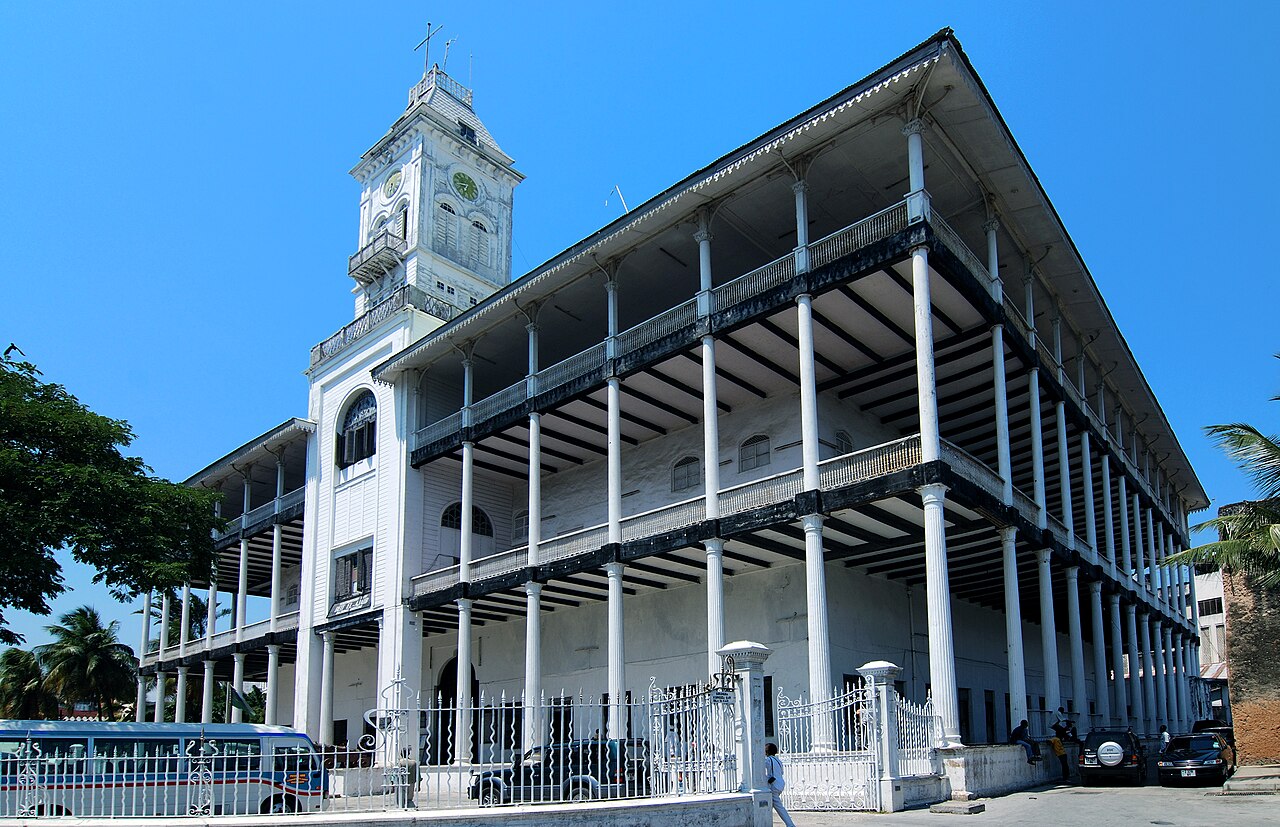
The House of Wonders, known locally as Beit al-Ajaib, stands as a ceremonial palace and former royal residence on Stone Town's waterfront. Built in the late nineteenth century, it served as a symbol of modernity for the Zanzibar Sultanate, reportedly becoming the first building in East Africa to receive electricity and an elevator. Its distinctive clock tower dominates the seafront skyline and remains the most recognizable landmark of Stone Town's historic core, which UNESCO recognizes as a World Heritage site for its cultural significance and Swahili coastal trading town character.
Checked 2026-08-26
The interior historically contained ceremonial halls, reception rooms, and exhibitions reflecting Zanzibar's maritime and royal heritage. The building once housed the National Museum of History and Culture, displaying artifacts related to the sultanate era and Swahili civilization. However, following structural concerns and partial collapse of portions of the building, the interior is no longer accessible to visitors. The specific current disposition of collections and any relocated materials are Not recorded. The exterior facade and clock tower remain visible from public thoroughfares. House of Wonders also earns time in a zanzibar city itinerary because Despite its closure and partial collapse, the ceremonial palace and clock tower remain the dominant symbol of Stone Town's royal waterfront. Its value becomes clearer when the stop is compared with the surrounding streets and the other ranked places nearby.
Checked 2026-08-26
A complete visit to the House of Wonders is currently not possible due to its closure. Visitors typically allocate time to observe and photograph the exterior architecture and clock tower from the surrounding streets and waterfront promenade. Most travelers combine this with exploration of adjacent Stone Town landmarks, including the Old Fort and the Palace Museum. The duration of exterior appreciation varies by individual interest, though thirty minutes to one hour suffices for thorough observation of the visible structural elements and waterfront context.
Checked 2026-08-26
The exterior of the House of Wonders may be viewed at any time from public spaces, as Stone Town's waterfront streets remain accessible throughout daylight and evening hours. Visitors should exercise cautious judgement regarding personal safety after dark in any urban historic district. Weather considerations for Zanzibar include tropical conditions with distinct rainy seasons; dry months from June to October and December to February generally offer more comfortable conditions for extended outdoor walking and photography of architectural subjects. Check the operator's own site for the travel date before relying on a schedule or fare.
Checked 2026-08-26
No admission fee is required to view the House of Wonders exterior from public streets and the waterfront area. Should the building reopen for interior access in future, visitors should seek current pricing from official sources. The surrounding Stone Town area contains multiple heritage sites with varying access arrangements; travelers may wish to inquire at the Zanzibar Tourist Corporation or official museum services for comprehensive information regarding any heritage passes or guided tour options that might include this landmark. Check the operator's own site for the travel date before relying on a schedule or fare.
Checked 2026-08-26
The House of Wonders occupies a prominent position on Mizingani Road along Stone Town's seafront. Visitors arriving by ferry from Dar es Salaam disembark at nearby Malindi Port, within comfortable walking distance. The site lies within the compact pedestrian maze of Stone Town, where narrow streets render vehicular access impractical. Taxis and daladala minibuses serve the broader Stone Town area, though final approach requires walking. The landmark's distinctive tower makes self-navigation straightforward from multiple points within the historic district. Cautious visitors should remain alert to uneven paving and motorcycle traffic in shared alleyways.
Checked 2026-08-26
The partial collapse of structural elements necessitates strict respect for any barriers or exclusion zones established by authorities. Visitors should not attempt to enter the building or approach visibly damaged sections. The surrounding streets experience regular pedestrian and vehicle congestion; vigilance against petty theft is prudent in any busy tourist area. Stone Town's narrow alleyways can be disorienting; carrying a map or offline navigation assists orientation. Sun exposure along the unshaded waterfront is intense; adequate hydration and protection are advisable. Construction or stabilization activity may affect access routes unpredictably.
Checked 2026-08-26
The House of Wonders presents exceptional photographic subject matter, particularly the ornate facade, carved wooden doors, and clock tower against maritime backdrops. Morning light illuminates the seafront facade favorably; sunset creates dramatic silhouettes. The public street and waterfront promenade offer numerous vantage points without restriction. Wide-angle lenses accommodate the tower's height from close quarters. Drone operation should follow Tanzanian aviation regulations and respect privacy and safety considerations. The landmark's prominence in tourist imagery reflects its status as the defining visual symbol of Stone Town; patient timing avoids pedestrian obstruction in compositions.
Checked 2026-08-26
The House of Wonders is closed to the public following structural concerns and partial collapse. The exterior remains visible from surrounding streets.
Interior access is not possible. The disposition of former museum collections is Not recorded.
No fee applies to viewing the exterior from public spaces. Check the operator's own site for the travel date before relying on a schedule or fare.
The ferry terminal at Malindi Port lies within walking distance along the waterfront. Follow Mizingani Road; the clock tower is visible from multiple approaches.
Cautious visitor judgement is advised. Standard precautions against petty theft and awareness of uneven surfaces and traffic apply in Stone Town's historic district.
Restoration prospects and timelines are Not recorded. Visitors should consult official Zanzibari heritage authorities for any updates regarding structural stabilization or reopening plans.
Loading the interactive map…
The interactive map could not be loaded.
Last updated:
Source: OpenStreetMap contributors, Wikidata ·