


.jpg)

2 min walk
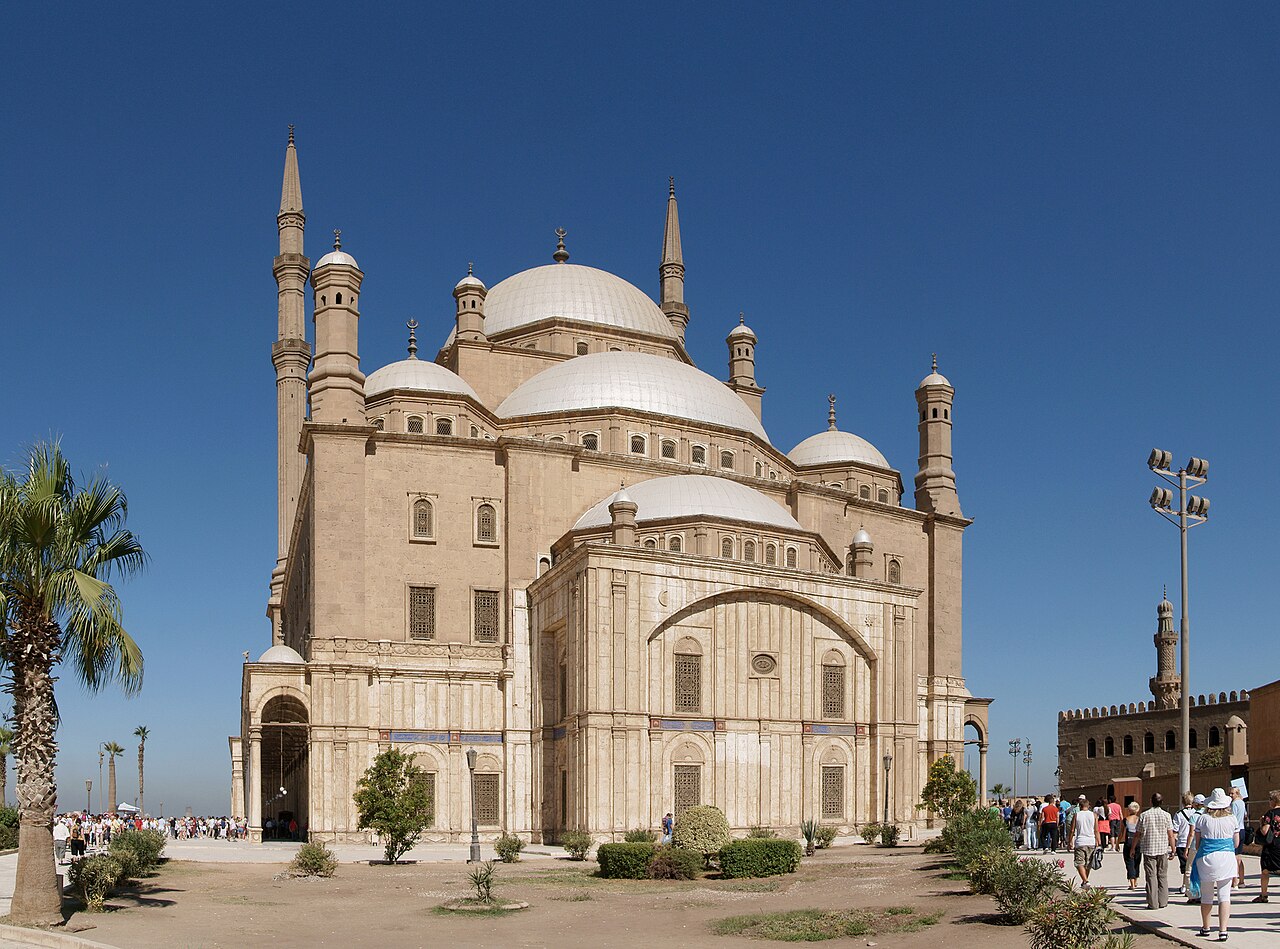
Mosque of Muhammad Ali
- Must see
- Historic monument
Language · 11 published
Historic monument · Cairo
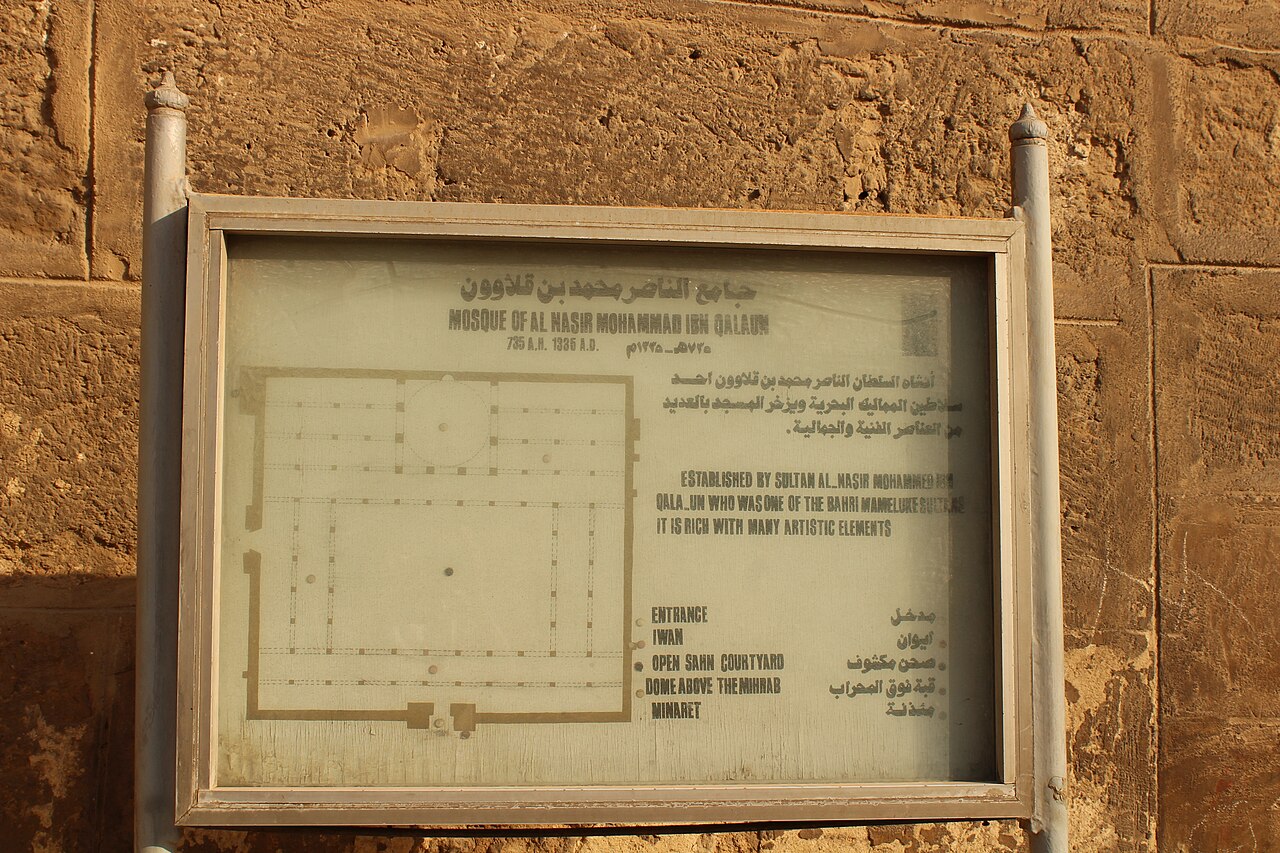
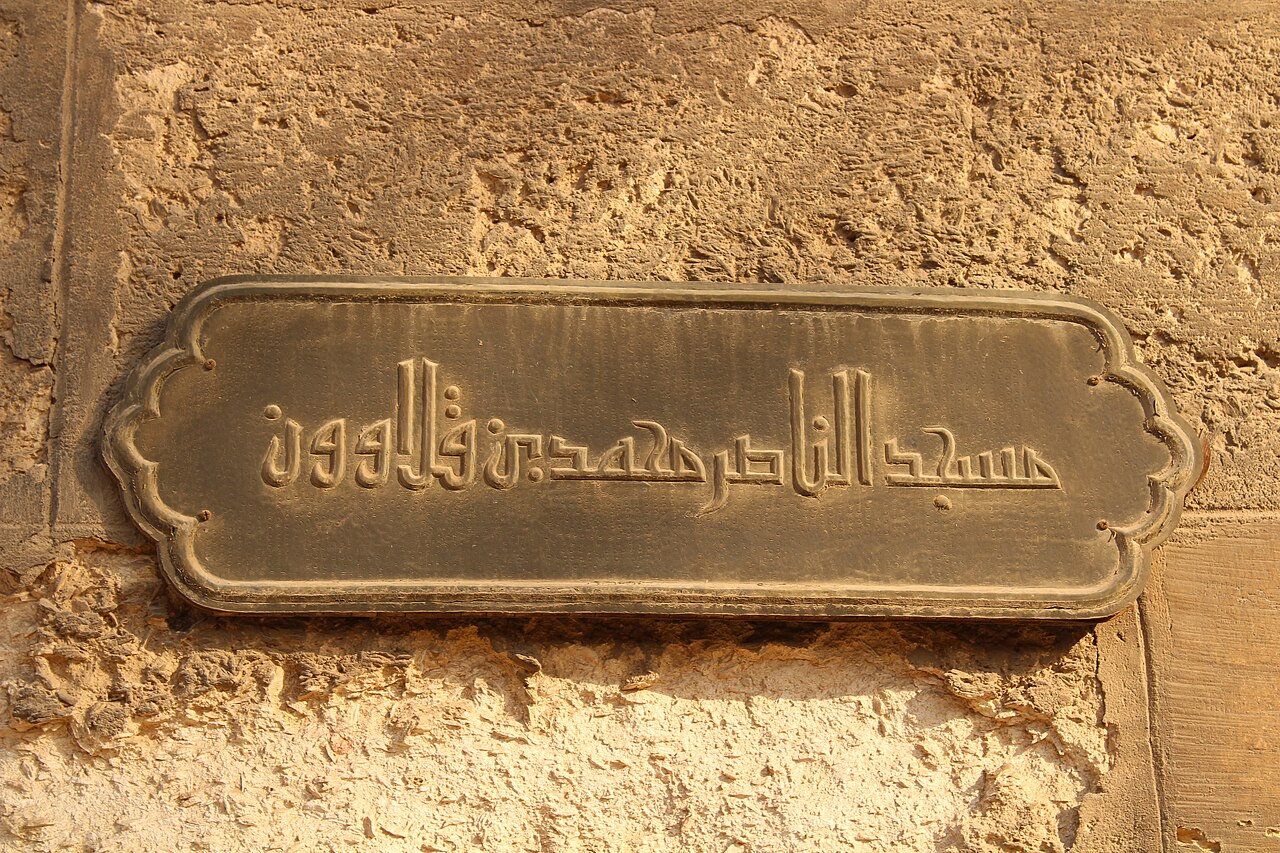
جامع الناصر محمد بن قلاوون
| Monday | 09:00 – 16:00 |
|---|---|
| Tuesday | 09:00 – 16:00 |
| Wednesday | 09:00 – 16:00 |
| Thursday | 09:00 – 16:00 |
| Friday | 09:00 – 16:00 |
| Saturday | 09:00 – 16:00 |
| Sunday | 09:00 – 16:00 |
Checked 2026-08-31 · Source
Read from the OpenStreetMap access tags; anything not listed has no tag recorded.
Set the group type to family in the planner and the day window contracts to about three quarters of a solo day.
Al-Nasir Muhammad Mosque is a Mamluk-era hypostyle mosque located within the Cairo Citadel complex. Commissioned by Sultan Al-Nasir Muhammad ibn Qalawun, it represents a significant example of early 14th-century Islamic architecture in Egypt. The structure serves as a key historical contrast to the later Ottoman-style Muhammad Ali Mosque that dominates the same fortress enclosure. Daily 09:00–16:00. The mosque-specific Ministry page lists the same hours for all seven days, with no regular weekly closure day. The wider Cairo Citadel opens daily 08:00–17:00, but the mosque-specific hours are narrower.
Checked 2026-08-31 · Source
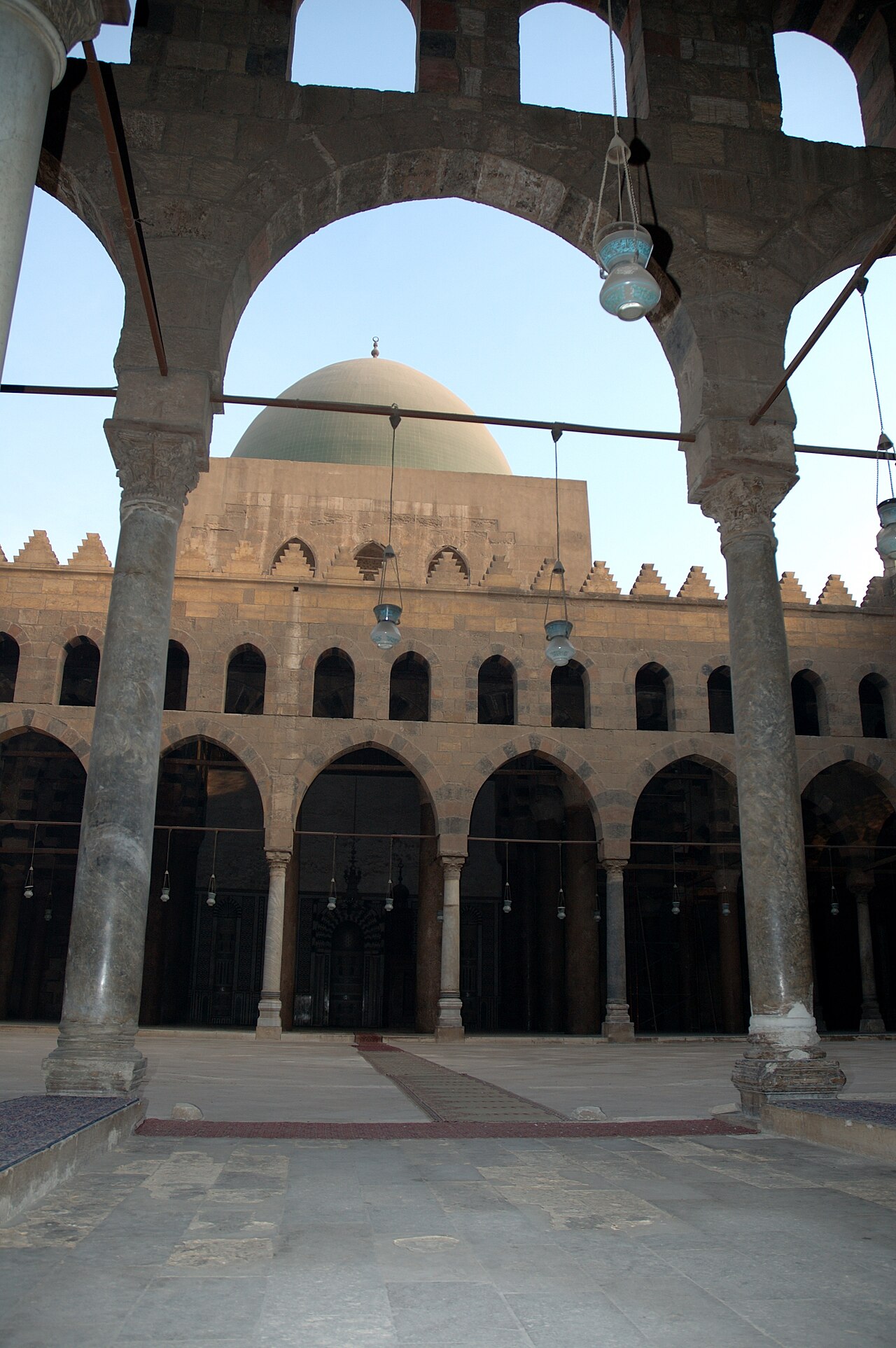
The mosque features a hypostyle prayer hall with multiple rows of columns supporting a flat wooden roof, characteristic of Mamluk architectural tradition. The courtyard, or sahn, provides open space for congregational gathering. Decorative elements include carved stonework and marble paneling typical of the period's craftsmanship. The minaret demonstrates the transitional architectural vocabulary of the early 14th century. The ablution facilities and ancillary spaces support ritual functions. The mosque-specific Ministry page lists the same hours for all seven days, with no regular weekly closure day. The wider Cairo Citadel opens daily 08:00–17:00, but the mosque-specific hours are narrower.
Checked 2026-08-31 · Source
A focused visit to Al-Nasir Muhammad Mosque requires approximately thirty to forty-five minutes for architectural observation and spatial appreciation. Visitors exploring the broader Cairo Citadel complex, which includes multiple monuments and viewpoints, should allocate two to three hours total. The mosque rewards careful examination of its column capitals, roof construction, and proportional relationships between courtyard and prayer hall. Those with particular interest in Mamluk architecture or comparative Islamic design may wish to extend their stay. No separate mosque ticket: admission is included in the Cairo Citadel area ticket. Adult admission is EGP 550 for foreign visitors and EGP 60 for Egyptian visitors.
Checked 2026-08-31 · Source

Visitors should verify current opening schedules through official channels before planning their visit. The mosque's interior spaces offer partial shade, making midday visits potentially viable year-round. Cairo's summer months bring intense heat that may affect comfort during outdoor circulation between Citadel monuments. Winter months generally provide more temperate conditions for extended exploration. Daily 09:00–16:00. Cairo Public Transport Authority bus 1026 runs between Mokattam and Abdel Moneim Riad via Salah Salem, Al-Sayeda Aisha and Midan al-Qalaa (Citadel Square). Alight at Midan al-Qalaa, enter the Cairo Citadel through its ticketed visitor entrance, and continue to the mosque in the Citadel’s southern section.
Checked 2026-08-31 · Source
The Al-Nasir Muhammad Mosque sits within the Cairo Citadel complex, which typically operates under a unified admission system covering multiple monuments. Visitors should verify whether separate fees apply for specific structures or whether comprehensive entry covers all sites. International visitors often face differential pricing structures common at Egyptian heritage sites. No separate mosque ticket: admission is included in the Cairo Citadel area ticket. Adult admission is EGP 550 for foreign visitors and EGP 60 for Egyptian visitors. Vehicle access into the Citadel can avoid the main approach steps.
Checked 2026-08-31 · Source
The mosque occupies the Cairo Citadel in the Muqattam Hills overlooking central Cairo. Multiple transportation options serve the general Citadel area, including taxis and ride-hailing services from downtown locations. Public transit approaches require walking through surrounding neighborhoods with significant elevation change. Cairo Public Transport Authority bus 1026 runs between Mokattam and Abdel Moneim Riad via Salah Salem, Al-Sayeda Aisha and Midan al-Qalaa (Citadel Square). Alight at Midan al-Qalaa, enter the Cairo Citadel through its ticketed visitor entrance, and continue to the mosque in the Citadel’s southern section.
Checked 2026-08-31 · Source
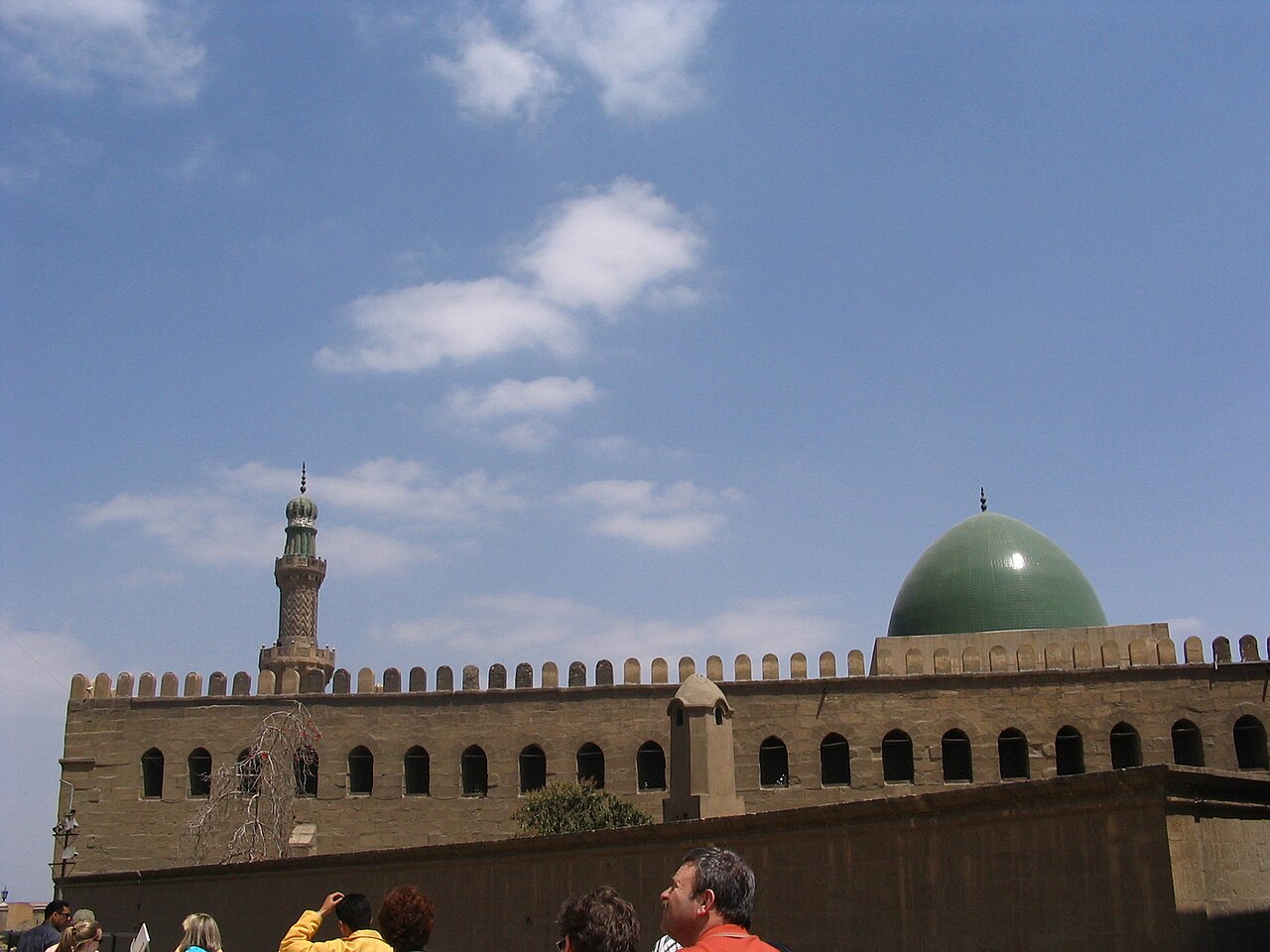
The Citadel's uneven stone surfaces and varying elevations demand appropriate footwear and attention to walking conditions. Interior mosque spaces require modest dress covering shoulders and knees for all visitors; shoes must be removed before entering prayer areas. The mosque remains an active religious site where visitor behavior should demonstrate respect for worshippers and ongoing ritual functions. Vehicle access into the Citadel can avoid the main approach steps. The Citadel toilets marked with an accessibility symbol were reported as too small for wheelchair access. It stands in the Citadel’s southern residential section.
Checked 2026-08-31 · Source

The hypostyle interior offers distinctive photographic opportunities emphasizing repetitive column rhythms and spatial depth. Natural lighting conditions vary significantly throughout the day, affecting interior exposure requirements. The courtyard permits documentation of proportional relationships between architectural components. Exterior views contextualize the mosque within the broader Citadel ensemble. Visitors should obtain explicit clarification regarding any photography permits or equipment restrictions before shooting. Tripod use may face limitations due to spatial constraints and visitor circulation. It stands in the Citadel’s southern residential section. Sultan al-Nasir Muhammad commissioned it in 718 AH/1318 CE and rebuilt or extensively enlarged it in 735 AH/1335 CE.
Checked 2026-08-31 · Source
It stands in the Citadel’s southern residential section.
Sultan al-Nasir Muhammad commissioned it in 718 AH/1318 CE and rebuilt or extensively enlarged it in 735 AH/1335 CE.
It was the Mamluk sultans’ royal mosque and served the Citadel’s civil and military population for Friday prayer.
The rectangular building measures approximately 57 by 63 metres and has an open central courtyard surrounded by four columned, roofed arcades; the eastern qibla arcade is the largest.
The northwestern minaret directed the call to prayer toward the Citadel’s military quarter, while the southeastern minaret faced the sultans’ residential palaces.
The mosque has a marble-and-mother-of-pearl mihrab, a coffered wooden ceiling of small octagons, and an ivory-and-mother-of-pearl-inlaid wooden minbar inscribed with King Farouk’s name.
Loading the interactive map…
The interactive map could not be loaded.

Last updated:
Source: OpenStreetMap contributors, Wikidata ·