

3 min walk
Historic Cairo
- Must see
- Historic monument
Language · 11 published
Place of worship · Cairo
إبن طولون
| Monday | 09:00 – 17:00 |
|---|---|
| Tuesday | 09:00 – 17:00 |
| Wednesday | 09:00 – 17:00 |
| Thursday | 09:00 – 17:00 |
| Friday | 09:00 – 17:00 |
| Saturday | 09:00 – 17:00 |
| Sunday | 09:00 – 17:00 |
Checked 2026-08-31 · Source
Read from the OpenStreetMap access tags; anything not listed has no tag recorded.
Set the group type to family in the planner and the day window contracts to about three quarters of a solo day.
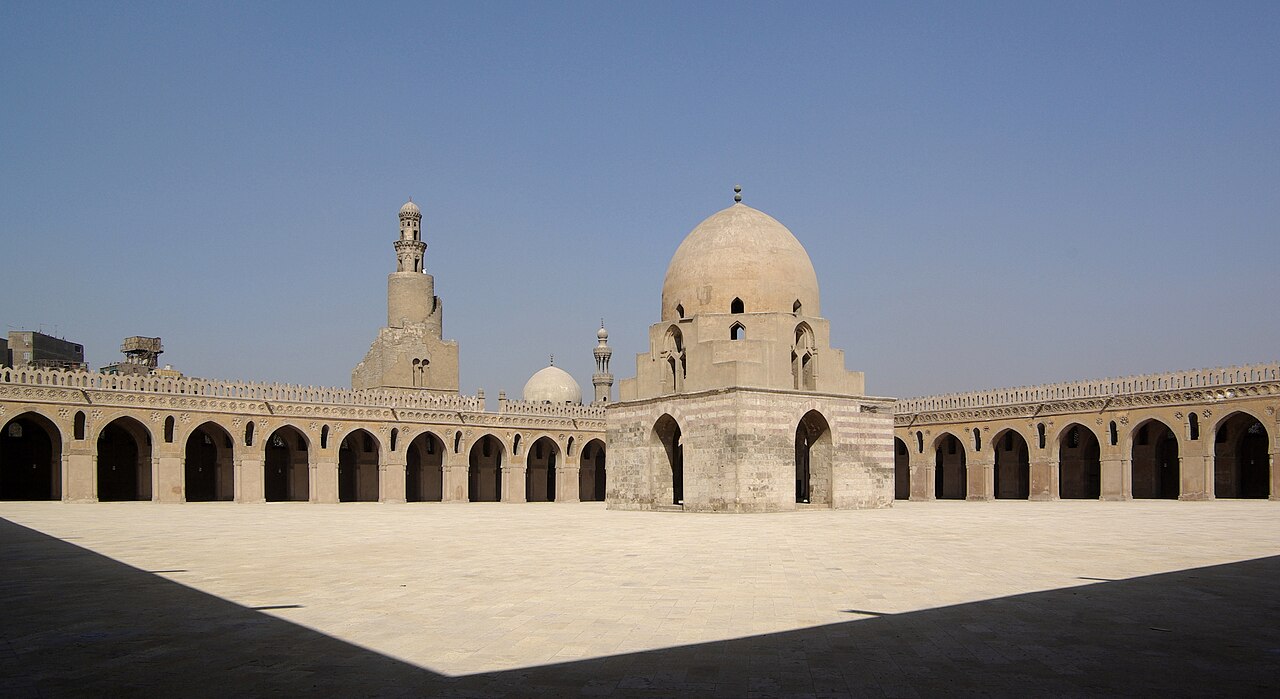
The Mosque of Ibn Tulun is Cairo's great ninth-century congregational mosque, constructed during the Abbasid period. It stands as one of the oldest and best-preserved Islamic monuments in Egypt. The complex is recognized by UNESCO as part of Historic Cairo World Heritage Site. Its architectural significance lies in its exceptional courtyard and distinctive spiral minaret, features that survive from the original construction. Daily 09:00–17:00. The Ministry of Tourism and Antiquities lists the same hours from Sunday through Saturday, with no weekly closure day.
Checked 2026-08-31 · Source
The mosque preserves an exceptional courtyard, a defining feature of its original design. The spiral minaret remains a notable architectural element, distinctive in form and historically significant. The structure demonstrates Abbasid-era construction techniques and spatial organization. Interior prayer halls and arcades reflect early Islamic architectural principles. The building's fabric includes original and restored elements from various periods. Visitors can observe the large open courtyard surrounded by roofed galleries on four sides, creating the characteristic hypostyle plan of early congregational mosques. The Ministry of Tourism and Antiquities lists the same hours from Sunday through Saturday, with no weekly closure day.
Checked 2026-08-31 · Source
Visitors typically spend between forty-five minutes and ninety minutes exploring the mosque complex. This duration allows for circumambulation of the courtyard, examination of architectural details, and ascent of the spiral minaret where accessible. Photography enthusiasts may require additional time. The spaciousness of the courtyard and the extent of the arcades reward unhurried observation. Those with particular interest in Islamic architecture or Abbasid history may wish to allocate up to two hours for thorough appreciation of the monument's features and historical layers. Free general admission. The Ministry of Tourism and Antiquities tariff assigns no ticket price to the mosque for Egyptian or foreign visitors.
Checked 2026-08-31 · Source
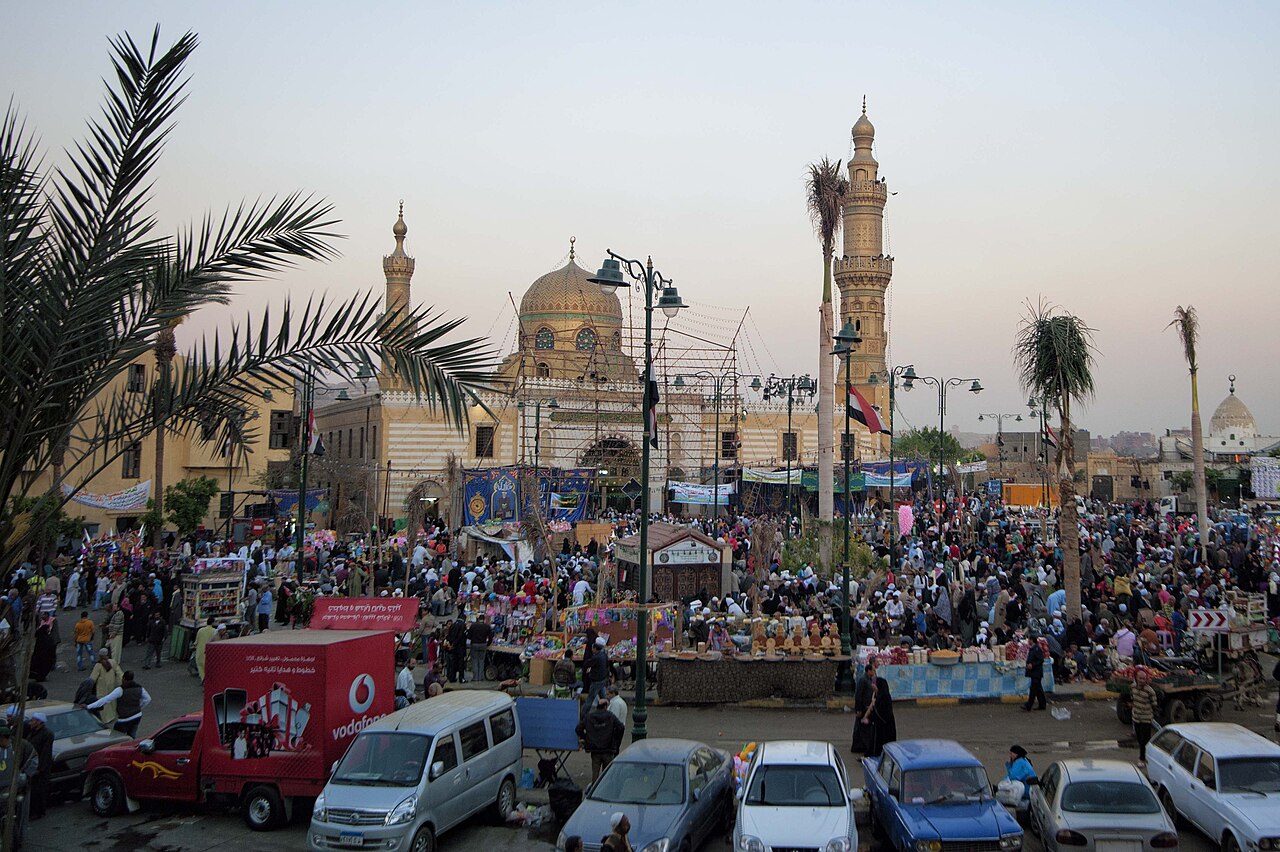
Visitors should verify current opening times through official channels before planning their visit. The mosque functions as a religious site, so prayer times may affect accessibility for non-worshippers. Early morning or late afternoon visits may offer more favorable lighting conditions for observation and photography. Daily 09:00–17:00. Take Cairo Metro Line 1 to El Sayeda Zeinab station; the metro operator names Ibn Tulun Mosque among the monuments served by this station. Continue to Ahmed Ibn Tulun Square on Al-Saliba Street in the Sayyida Zeinab district. For a road drop-off, use Ahmed Ibn Tulun Square as the destination.
Checked 2026-08-31 · Source
Visitors should verify current admission fees through official channels before arrival. The site may operate under Egyptian government heritage administration or religious endowment management, affecting fee structures. Some heritage sites in Egypt employ differential pricing for residents and international visitors. Additional fees may apply for photography permits or guided services if offered. Free general admission. The Ministry of Tourism and Antiquities tariff assigns no ticket price to the mosque for Egyptian or foreign visitors. Internal visitor entrances are reached by circular steps, preventing a continuously step-free route.
Checked 2026-08-31 · Source
The mosque occupies a location within Historic Cairo, accessible from various points in the city center. Public transportation options include Cairo's metro system with walking connections, and various bus and microbus routes serving the surrounding district. Taxis and ride-hailing services operate throughout Cairo and can provide direct access. Take Cairo Metro Line 1 to El Sayeda Zeinab station; the metro operator names Ibn Tulun Mosque among the monuments served by this station. Continue to Ahmed Ibn Tulun Square on Al-Saliba Street in the Sayyida Zeinab district. For a road drop-off, use Ahmed Ibn Tulun Square as the destination.
Checked 2026-08-31 · Source
The mosque is an active religious site requiring respectful behavior and appropriate dress covering shoulders and knees. Footwear must be removed before entering prayer areas. The spiral minaret ascent, where permitted, involves steep stairs and narrow passages unsuitable for those with mobility limitations or vertigo. The historic structure presents uneven surfaces and varying floor levels. Internal visitor entrances are reached by circular steps, preventing a continuously step-free route. The mosque is open daily from 09:00 to 17:00, including Friday. No. General admission is free; the ministry tariff assigns no Egyptian or foreign visitor ticket price.
Checked 2026-08-31 · Source
The exceptional courtyard and spiral minaret offer significant photographic subjects. Natural lighting varies dramatically across the day, with morning and late afternoon producing contrasting effects in the courtyard. The minaret's spiral form presents distinctive geometric compositions. Interior photography may face low light conditions requiring appropriate equipment. Visitors should observe any restrictions on flash use or tripod deployment. Photography of worshippers requires discretion and respect for privacy. Permits may be required for professional or commercial photography. No. General admission is free; the ministry tariff assigns no Egyptian or foreign visitor ticket price.
Checked 2026-08-31 · Source
The mosque is open daily from 09:00 to 17:00, including Friday.
No. General admission is free; the ministry tariff assigns no Egyptian or foreign visitor ticket price.
Construction began in 876 and was completed in 879.
Ahmad Ibn Tulun, the Abbasid governor who established the Tulunid state in Egypt, commissioned it for his new capital, al-Qata’i.
The complex has a large courtyard with a domed fountain, a spiral minaret, decorated stucco arches and windows, and six mihrabs.
Only partially. Circular entrance steps interrupt the visitor route, and the elevated spiral minaret requires stairs.
Loading the interactive map…
The interactive map could not be loaded.

Last updated:
Source: OpenStreetMap contributors, Wikidata ·