

9 min walk
Bayt El Kritliya
- Notable
- Museum
Language · 11 published
Place of worship · Cairo
مسجد السيدة نفيسة
Read from the OpenStreetMap access tags; anything not listed has no tag recorded.
Set the group type to family in the planner and the day window contracts to about three quarters of a solo day.
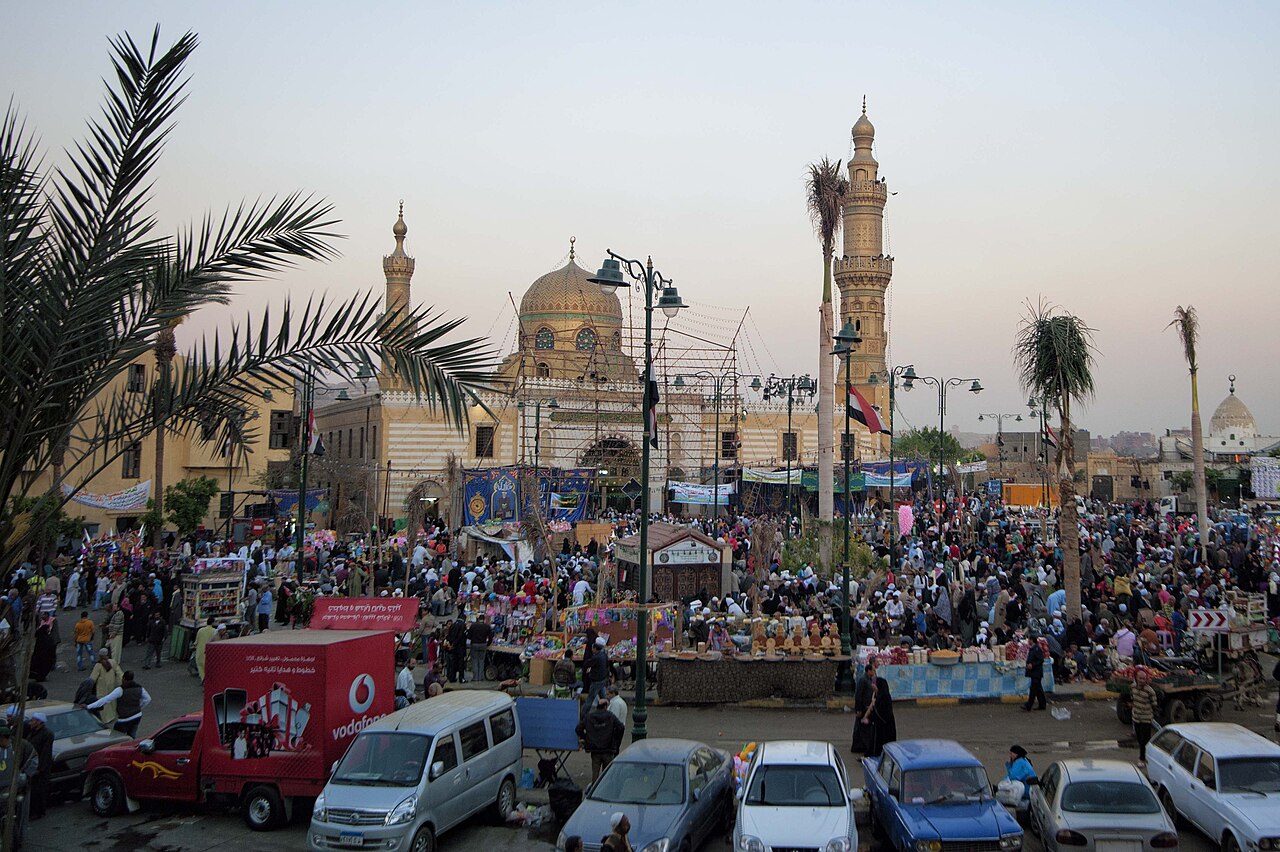
The Mosque of Sayyida Nafisa is a historic Islamic religious complex in southern Historic Cairo, Egypt. It centers on the shrine of Sayyida Nafisa, a descendant of the Prophet Muhammad revered in Islamic tradition. The site forms part of the UNESCO World Heritage listed Historic Cairo area, recognized for its outstanding universal value. The mosque functions as both a place of worship and a significant pilgrimage destination. The structure represents centuries of Egyptian Islamic architectural and devotional heritage. Daily: a separate opening for Fajr prayer, then 09:00 until after Isha prayer.
Checked 2026-08-31 · Source
The interior contains the shrine chamber of Sayyida Nafisa, which serves as the focal point for visitor devotion and pilgrimage. Prayer halls accommodate worshippers, while the tomb structure draws visitors seeking spiritual connection. The compound includes spaces for ritual observance and visitor circulation. The shrine's religious significance transcends its physical dimensions, making the interior experience primarily devotional rather than aesthetic. Visitors should expect an active religious environment with worshippers engaged in prayer and pilgrimage practices throughout the complex. The mosque and shrine are active. Shrine visits are permitted outside prayer times; no weekly closure day is designated.
Checked 2026-08-31 · Source
A visit duration depends substantially on individual purpose and religious observance. Pilgrims engaging in prayer, recitation, and shrine visitation may spend considerable time within the complex. Casual visitors observing architectural and cultural aspects might require less duration. The compact nature of historic Cairo religious sites suggests visits are typically measured in hours rather than full days. Visitors should allocate sufficient time for respectful observation without disrupting worshippers. Combining this site with nearby monuments in southern Historic Cairo could extend the overall excursion. Free general admission to the working mosque and shrine; no visitor ticket is required.
Checked 2026-08-31 · Source
Visitors should independently verify current opening times before planning their visit. Religious sites in Cairo typically observe patterns tied to daily prayer times, with potential variations during Ramadan and Islamic holidays. Friday congregational prayer brings heightened activity. Early morning and late afternoon may offer relatively quieter periods for observation, though worship occurs throughout daylight hours. Daily: a separate opening for Fajr prayer, then 09:00 until after Isha prayer. Cairo Governorate's public-transport directory lists route 17 to Sayyida Nafisa via Ramses, Tahrir and Magra El-Oyoun, and route 30 to Sayyida Nafisa via Sayyida Aisha and Salah Salem.
Checked 2026-08-31 · Source
Many historic mosques and shrines in Cairo operate without formal admission charges, particularly functioning religious sites. Voluntary donations may be customary or requested for maintenance purposes. Some monument complexes administered by government authorities implement ticket systems, but specific fee structures for this site remain unverified. Visitors should carry small denominations for potential contributions. Free general admission to the working mosque and shrine; no visitor ticket is required. The Ministry of Awqaf states that the renovated mosque provides an electric lift for female visitors. The official description does not document a complete step-free route through every visitor area.
Checked 2026-08-31 · Source
The mosque occupies a position in southern Historic Cairo, accessible through the dense street network characteristic of this ancient urban area. Public transportation options including the Cairo Metro serve the general district, with walking required through historic quarters. Cairo Governorate's public-transport directory lists route 17 to Sayyida Nafisa via Ramses, Tahrir and Magra El-Oyoun, and route 30 to Sayyida Nafisa via Sayyida Aisha and Salah Salem. The official description does not document a complete step-free route through every visitor area. It stands on Al-Ashraf Street in Cairo's Al-Khalifa area, near Old Cairo.
Checked 2026-08-31 · Source
Visitors must observe appropriate conduct at this active religious site. Modest dress covering shoulders and legs is essential for all genders. Shoes must be removed before entering prayer areas. Photography restrictions may apply, particularly near the shrine itself; respectful observation of local practice is necessary. Women may encounter gender-specific access protocols at certain times or spaces. The Ministry of Awqaf states that the renovated mosque provides an electric lift for female visitors. It stands on Al-Ashraf Street in Cairo's Al-Khalifa area, near Old Cairo. The mosque contains the tomb and shrine of Sayyida Nafisa bint al-Hasan.
Checked 2026-08-31 · Source
Active religious shrines in Cairo frequently impose restrictions, particularly prohibiting photography of worshippers, shrine interiors, or tomb chambers. Flash photography is generally inappropriate in any mosque interior. Discretion and verbal permission-seeking demonstrate respect for devotional contexts. Some Egyptian religious sites permit photography in exterior courtyards while restricting interior capture. Equipment should be kept unobtrusive. Visitors prioritizing photography should prepare for potential limitations and focus attention on permitted areas, or inquire with custodial staff upon arrival for current regulations. The mosque contains the tomb and shrine of Sayyida Nafisa bint al-Hasan.
Checked 2026-08-31 · Source
It stands on Al-Ashraf Street in Cairo's Al-Khalifa area, near Old Cairo.
The mosque contains the tomb and shrine of Sayyida Nafisa bint al-Hasan.
Yes. It reopened after restoration on 8 August 2023 and continues to host prayers and Ministry of Awqaf programs.
An electric lift was installed for female visitors.
The official description identifies an elevated main entrance, a decorated wooden ceiling, a shukhshaykha roof lantern, a marble mihrab and a brass tomb enclosure beneath the dome.
The Ministry of Awqaf states that she came to Egypt and died there in Ramadan 208 AH; her burial place became the present shrine.
Loading the interactive map…
The interactive map could not be loaded.

Last updated:
Source: OpenStreetMap contributors ·