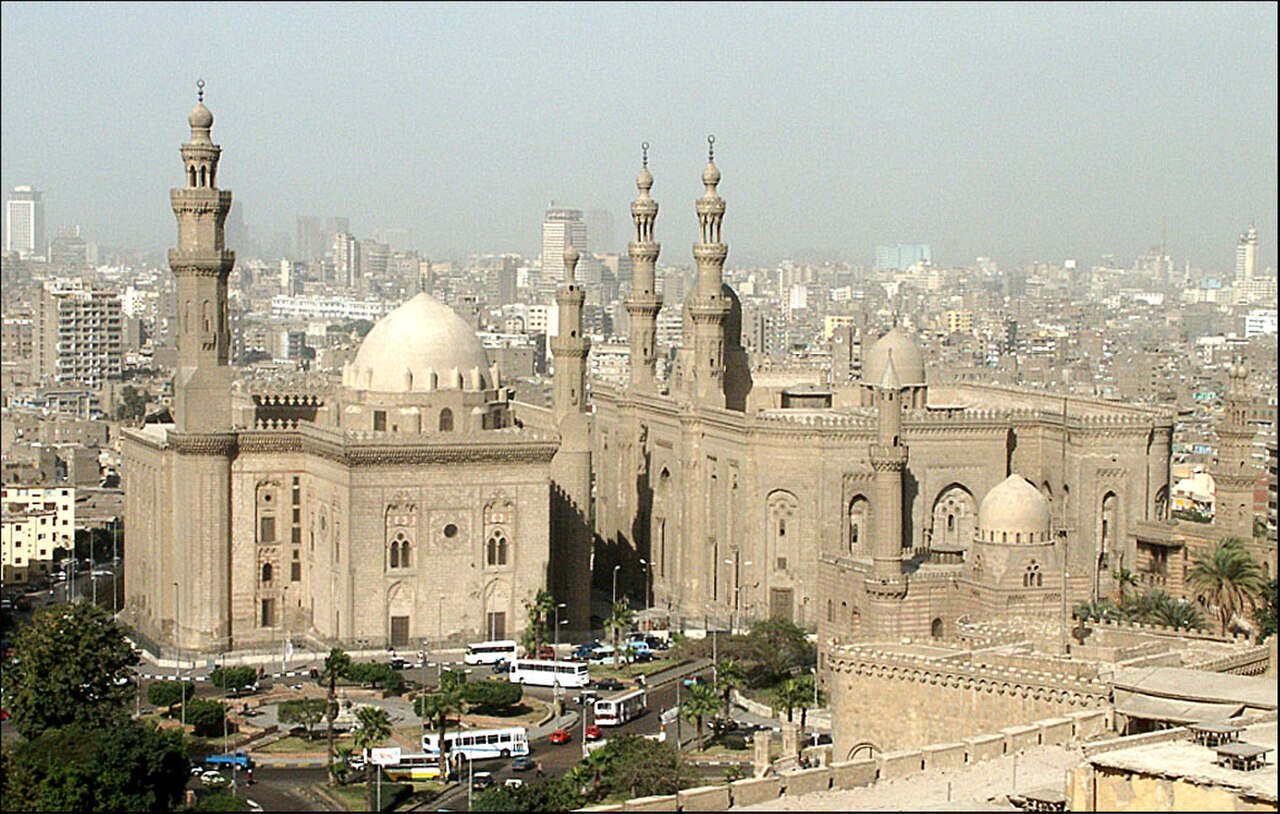
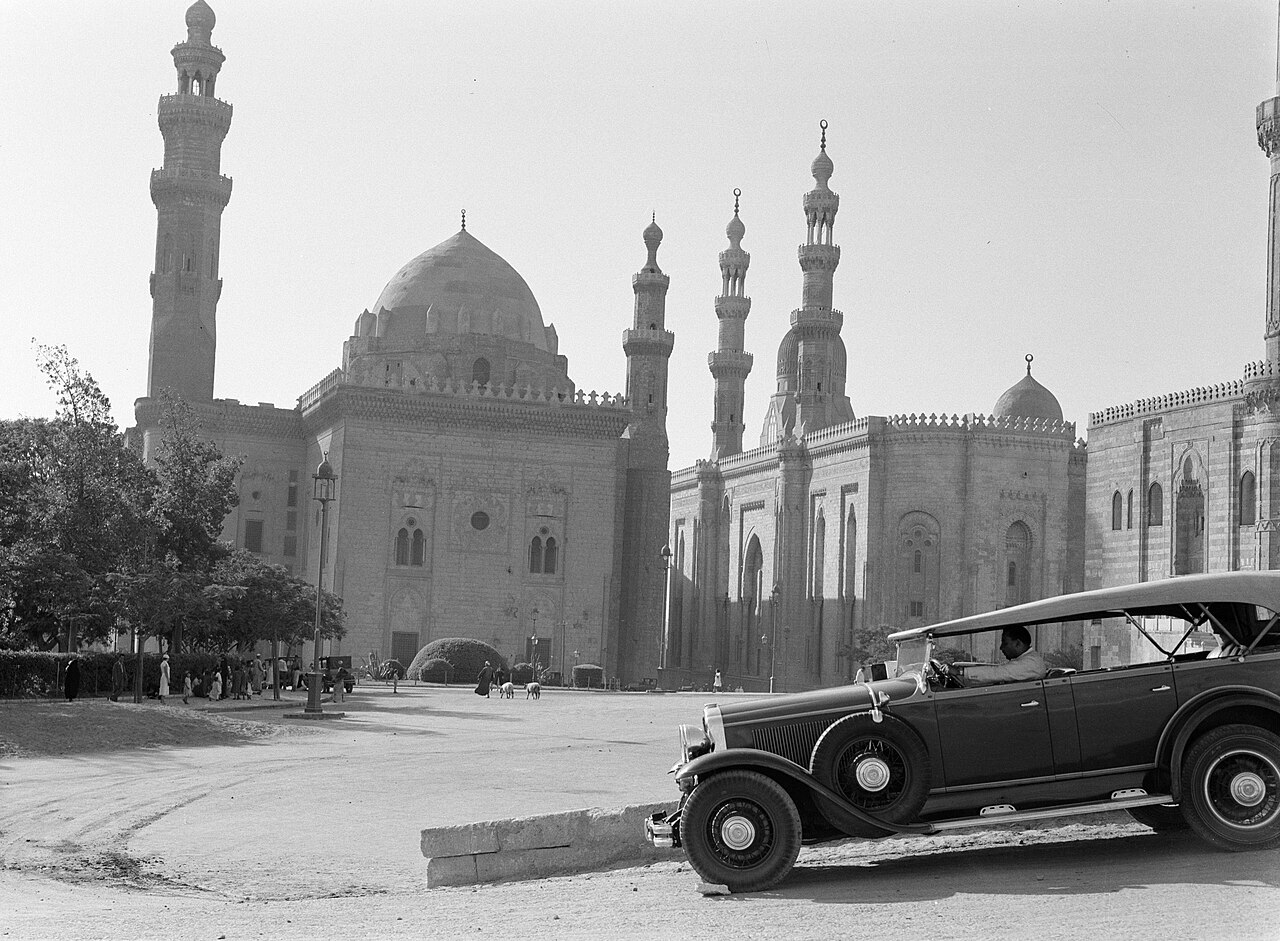
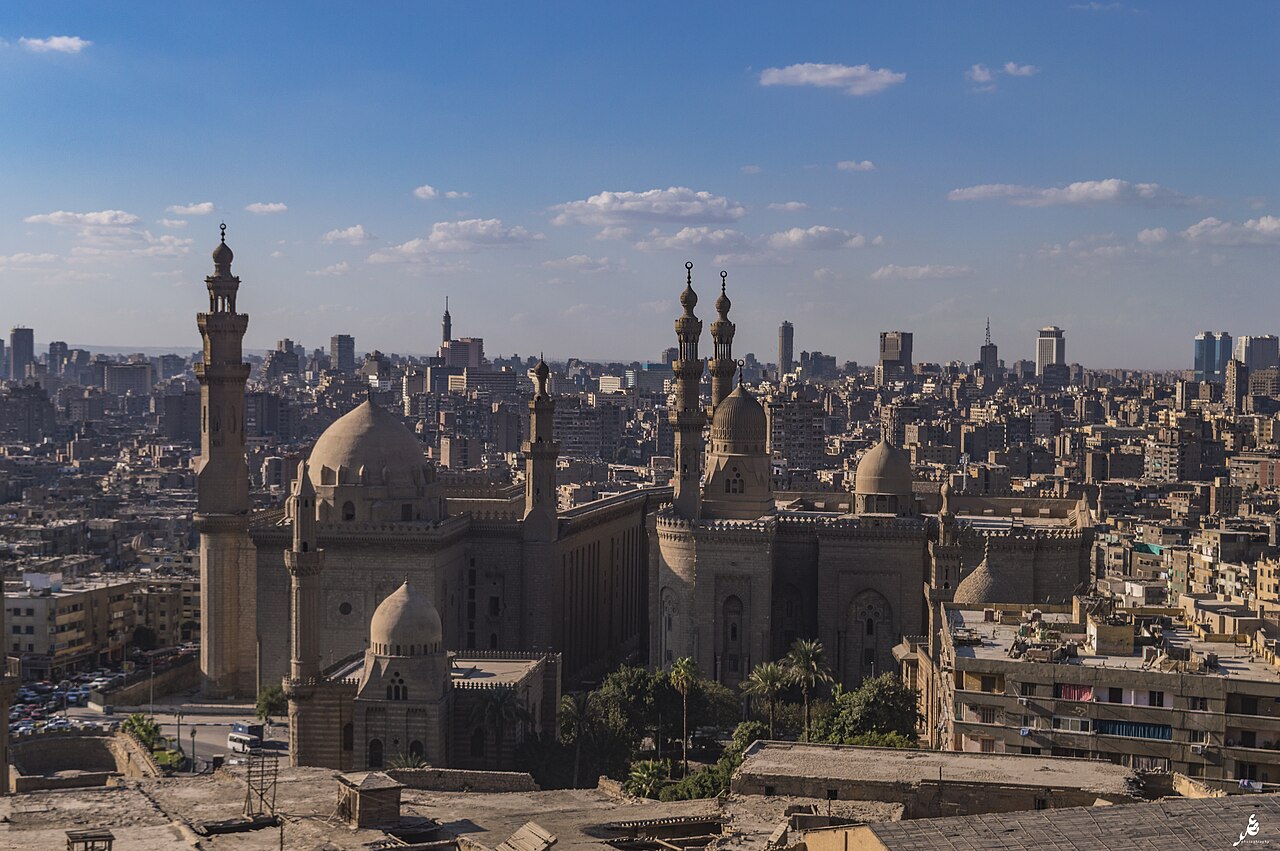
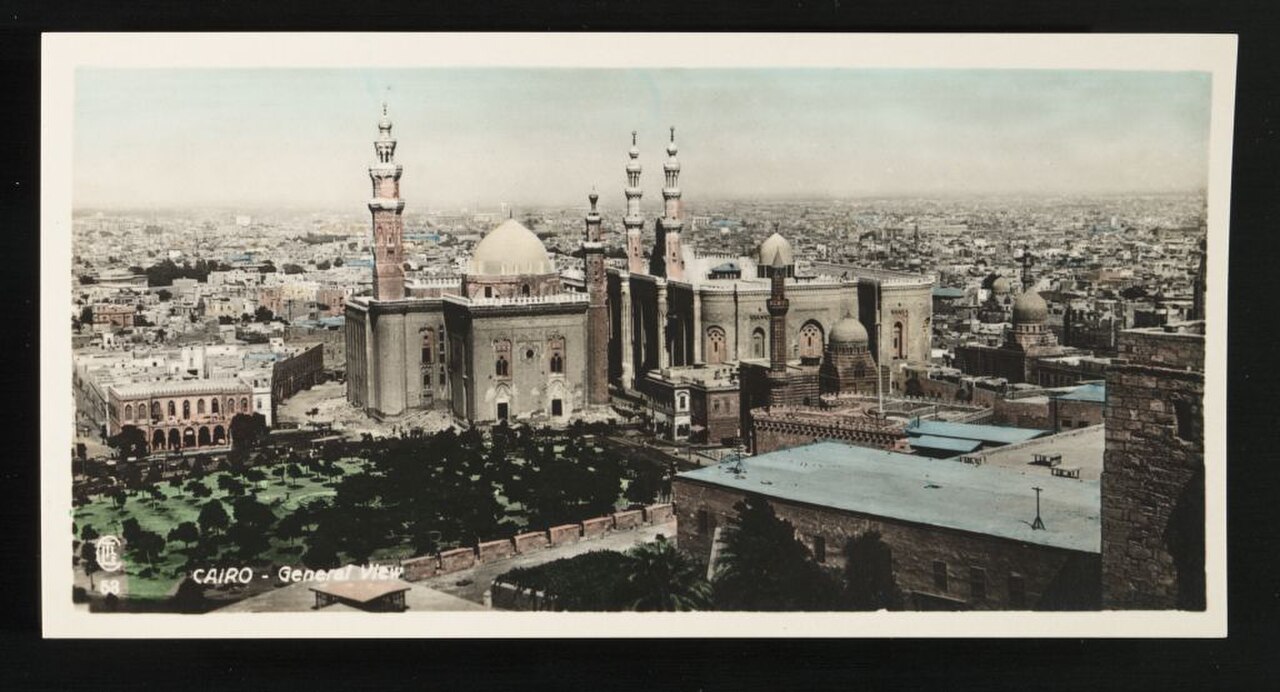
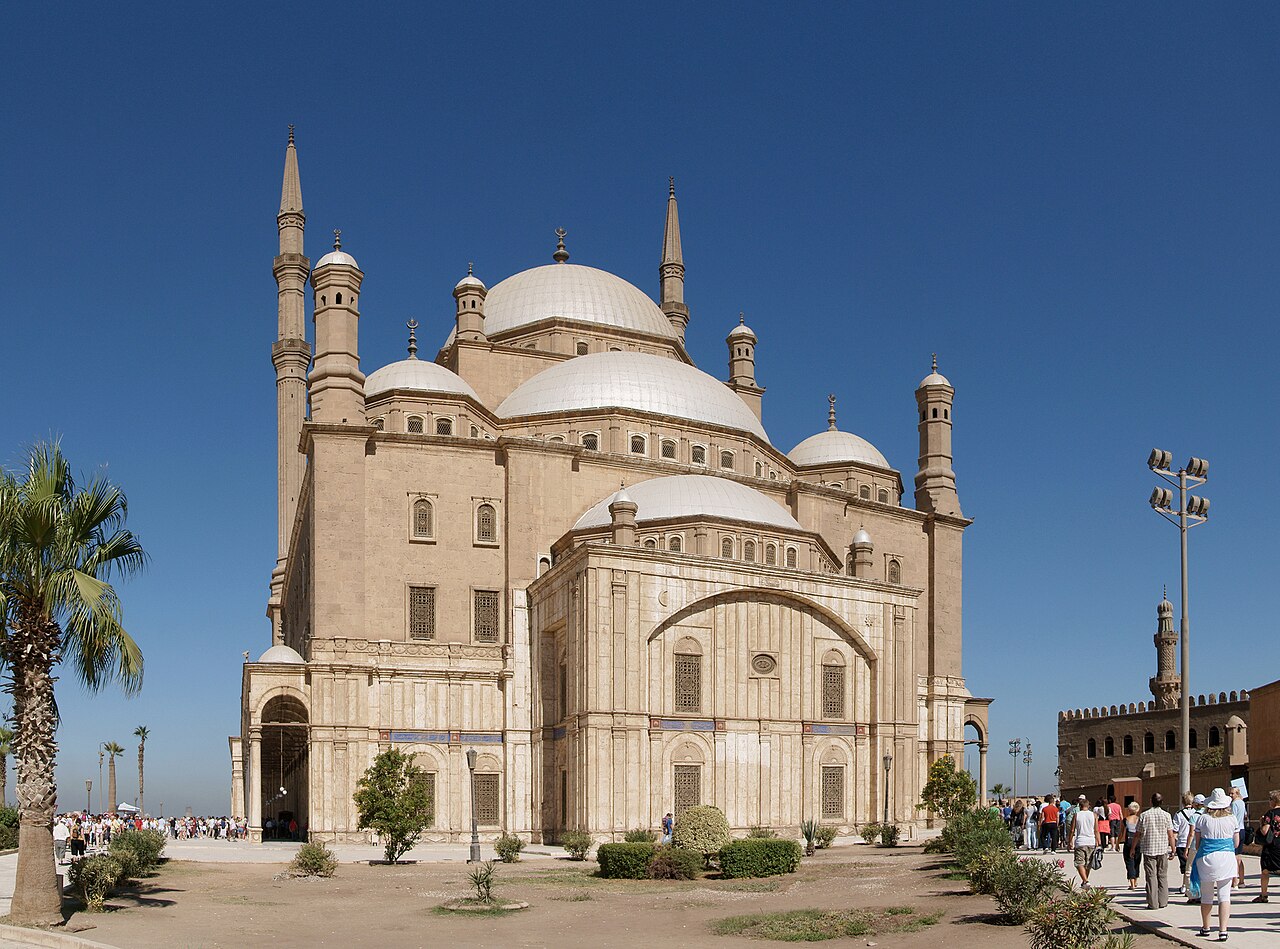
Al-Rifa'i Mosque is a grand nineteenth-century mosque in Cairo, Egypt. Its local name is مسجد الرفاعي. The mosque faces the Mosque of Sultan Hassan and together they form a defining ensemble near the Citadel. The building represents a significant example of royal mosque architecture from the Khedival period. It serves as both an active place of worship and a historical monument. The structure contains the royal mausoleum of the Muhammad Ali dynasty and is associated with the Al-Rifa'i Sufi order. Its prominent location makes it a landmark in the Historic Cairo area.
The mosque interior features large prayer halls with ornate decoration characteristic of its period. The royal mausoleum contains tombs of members of the Muhammad Ali dynasty, including King Farouk's father. The mosque also houses the tomb of Reza Shah of Iran. Decorative elements include stonework, woodwork, and metal fixtures. The architectural design incorporates elements intended to complement the facing Sultan Hassan Mosque. Sizable domes and minarets define the exterior profile. The interior spaces reflect the ceremonial and religious functions of a state mosque, with areas designated for prayer, commemoration, and visitation.
A visit to Al-Rifa'i Mosque typically requires between thirty minutes and one hour for a general observation of the main spaces. Visitors interested in architectural details, historical tombs, and comparative viewing with the adjacent Sultan Hassan Mosque may extend their stay. The mosque's scale and the presence of multiple interior chambers reward unhurried examination. Those combining this site with the facing mosque should allocate additional time. Prayer times may affect access duration. Visitors should observe ongoing religious activities and adjust their pace accordingly. The proximity to other Historic Cairo monuments allows for efficient itinerary planning.
Visitors should verify current opening times before travel. The mosque functions as an active religious site, so prayer times influence accessibility. Friday prayers typically draw larger congregations and may limit visitor access. Early morning or late afternoon visits may offer more favorable conditions for observation, though this depends on operational schedules. Seasonal factors including Cairo's summer heat should inform planning. Ramadan and other Islamic observances may alter regular patterns. Visitors are advised to consult local sources or official channels for definitive timing information prior to their visit. Check the operator's own site for the travel date before relying on a schedule or fare.
Entry fees, if applicable, are subject to change and should be verified through official sources. Some religious sites in Historic Cairo operate under combined ticketing arrangements with nearby monuments, though specific arrangements for Al-Rifa'i Mosque are not confirmed. Visitors should carry appropriate payment methods. Photography permits, if required, may involve separate charges. Students, children, and other categories may qualify for reductions where a fee system operates. Current pricing information should be obtained from the Supreme Council of Antiquities, local tourism offices, or on-site staff before visiting. Check the operator's own site for the travel date before relying on a schedule or fare.
Al-Rifa'i Mosque occupies a prominent position in the Citadel area of Historic Cairo, facing the Mosque of Sultan Hassan. The location is accessible from multiple directions within the historic district. Taxis and ride services can approach the general area, though final access may require walking through narrow streets. The nearest Cairo Metro stations require onward connection by other means. Buses and microbuses serve routes in the broader area. Walking from nearby monuments including the Citadel is feasible. Visitors should anticipate urban traffic conditions and plan accordingly. Signage in Arabic assists local navigation.
Visitors should dress modestly covering shoulders and knees as appropriate for an active mosque. Shoes must be removed before entering prayer areas. Ongoing religious observances take priority over tourism; maintain respectful silence and avoid disrupting worshippers. Photography restrictions may apply in certain zones, particularly near tombs. The site may be crowded during prayer times and religious occasions. Uneven surfaces and steps require attention. Be cautious of unofficial guides offering services. Verify any claimed historical information independently. The adjacent Sultan Hassan Mosque may have separate access arrangements. Heat and limited shade in exterior areas warrant sun protection and hydration.
Photography conditions at Al-Rifa'i Mosque are subject to operational discretion. Visitors should assume restrictions may apply and seek explicit permission before capturing images. Tripods and professional equipment typically require advance authorization. Flash photography may be prohibited to protect interior surfaces and respect worshippers. The mosque's architectural relationship with Sultan Hassan offers exterior photographic opportunities from the intervening plaza. Interior lighting conditions vary and may affect image quality. Respect for religious activity and other visitors must govern all photographic behavior. Specific rules should be confirmed with on-site staff. Drone use would require appropriate permits and is unlikely to be permitted.
Checked 2026-08-26
Common questions
Is Al-Rifa'i Mosque open to non-Muslim visitors for Al-Rifa'i Mosque in Cairo?
Non-Muslim visitors are generally permitted to enter many historic mosques in Cairo, though access may be restricted during prayer times and religious observances. Current policies should be verified locally.
Can I visit Al-Rifa'i Mosque and Sultan Hassan Mosque together for Al-Rifa'i Mosque in Cairo?
The two mosques face each other and form a defined ensemble, making combined visits practical. Separate access arrangements and any entry requirements should be confirmed for each site.
Are there guided tours available for Al-Rifa'i Mosque in Cairo?
Official guided tour availability is not confirmed. Visitors may encounter unofficial guides and should exercise judgment regarding services and fees.
Is the mosque wheelchair accessible for Al-Rifa'i Mosque in Cairo?
Accessibility provisions are not recorded. Historic mosque architecture typically includes steps and uneven surfaces that may present difficulties.
Does the mosque have facilities for visitors for Al-Rifa'i Mosque in Cairo?
Visitor facilities such as restrooms, seating, or refreshment areas are not confirmed. Planning for basic needs before arrival is advisable.
What is the historical significance of the tombs inside for Al-Rifa'i Mosque in Cairo?
The mosque contains the royal mausoleum of Egypt's Muhammad Ali dynasty and the tomb of Reza Shah of Iran, reflecting its political and religious importance.
Nothing non-essential is set before you choose, in regions where consent is required. If you decline, ads still appear but they are non-personalised, and analytics is switched off entirely.





_-_front_-_TIMEA.jpg)


_(n.d.)_-_front_-_TIMEA.jpg)