

5 min walk
Museum of Islamic Ceramics
- Must see
- Museum
Language · 11 published
Historic monument · Cairo
قصر عائشة فهمي
| Monday | 09:00 – 18:00 |
|---|---|
| Tuesday | 09:00 – 18:00 |
| Wednesday | 09:00 – 18:00 |
| Thursday | 09:00 – 18:00 |
| Friday | Closed |
| Saturday | 09:00 – 18:00 |
| Sunday | Closed |
Checked 2026-08-31 · Source
Read from the OpenStreetMap access tags; anything not listed has no tag recorded.
Set the group type to family in the planner and the day window contracts to about three quarters of a solo day.
Aisha Fahmy Palace is a restored early twentieth-century residential palace located in Zamalek on Gezira Island, Cairo. The building represents a significant example of Cairo's riverside residential architecture from this period, situated along the Nile. Named after Aisha Fahmy, a member of the prominent Fahmy family, the palace has been preserved and repurposed for public use. Its architectural character reflects the cosmopolitan elite culture of pre-revolutionary Cairo, blending European and local design influences typical of wealthy Egyptian residences built during this era. Monday–Thursday and Saturday: 09:00–18:00; Friday and Sunday: closed.
Checked 2026-08-31 · Source
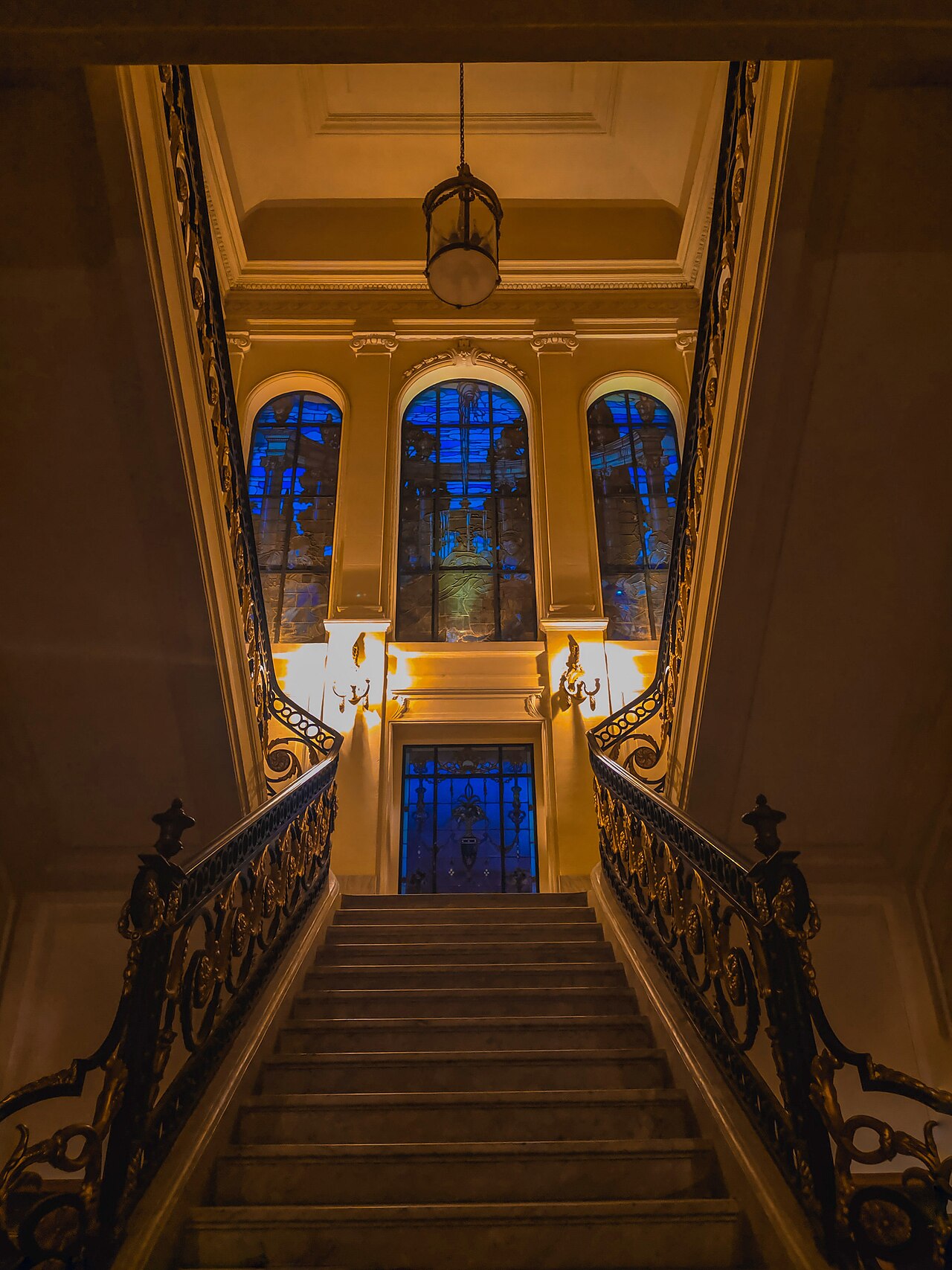
The palace interior contains preserved architectural features representative of early twentieth-century elite Cairo residences. Visitors can observe period rooms, decorative elements, and spatial arrangements that illustrate the lifestyle of prominent Egyptian families. The building's restoration has maintained significant original fabric, allowing appreciation of craftsmanship in woodwork, plaster, and other decorative arts. Exhibition spaces within the palace host rotating cultural displays, including art exhibitions and heritage presentations. The palace is open for the free Image of Egypt exhibition through 6 October 2026. The exhibition schedule supersedes the palace’s general hours. Free general admission to the current Image of Egypt exhibition.
Checked 2026-08-31 · Source
A thorough visit to Aisha Fahmy Palace typically requires between sixty and ninety minutes, depending on current exhibitions and individual interest in architectural details. Visitors with particular enthusiasm for early twentieth-century Egyptian residential design or decorative arts may wish to allocate additional time for careful observation of preserved features. The compact scale of the palace relative to larger institutional museums allows for a focused visit without excessive duration. Free general admission to the current Image of Egypt exhibition.
Checked 2026-08-31 · Source
Visitors should verify current opening schedules through official channels before planning their visit, as cultural institutions in Cairo may operate with seasonal variations or special arrangements. The Zamalek location offers relatively pleasant walking conditions during cooler months from late autumn through early spring, when Cairo's heat is less intense. Monday–Thursday and Saturday: 09:00–18:00; Friday and Sunday: closed. Take Cairo Metro Green Line 3 to Safaa Hegazy station. The metro operator’s local map marks Aisha Fahmy Palace on Aziz Abaza Street, and Safaa Hegazy station is PRM-accessible with elevators and escalators.
Checked 2026-08-31 · Source
Admission policies for Egyptian cultural sites vary significantly between institutions, with differential pricing sometimes applied for residents and foreign visitors. Some heritage buildings in Cairo operate with nominal charges, while others may be free during certain periods or for specific exhibitions. Group arrangements or educational visits may require advance booking. Free general admission to the current Image of Egypt exhibition. The Fine Arts Sector’s renovation brief explicitly required entrance and exit arrangements for visitors with disabilities and older visitors. The official accessibility information covers entry and exit but does not identify a step-free route between the palace’s two visitor floors.
Checked 2026-08-31 · Source
Aisha Fahmy Palace occupies a Zamalek location accessible from central Cairo via several bridges connecting Gezira Island to the mainland, including Qasr El Nil Bridge and 6th October Bridge. Taxis and ride-hailing services serve the Zamalek district, though traffic congestion is characteristic of Cairo and should be anticipated. Take Cairo Metro Green Line 3 to Safaa Hegazy station. The metro operator’s local map marks Aisha Fahmy Palace on Aziz Abaza Street, and Safaa Hegazy station is PRM-accessible with elevators and escalators. The official accessibility information covers entry and exit but does not identify a step-free route between the palace’s two visitor floors.
Checked 2026-08-31 · Source
Visitors should exercise standard urban awareness appropriate to Cairo, including securing personal belongings and negotiating taxi fares where meters are not used. The palace's historic fabric may present accessibility challenges for those with mobility limitations, as early twentieth-century residential architecture typically predates modern accessibility standards. Interior photography restrictions may apply and should be confirmed on arrival. The Fine Arts Sector’s renovation brief explicitly required entrance and exit arrangements for visitors with disabilities and older visitors. The palace is hosting Image of Egypt, a Fine Arts Sector exhibition running through 6 October 2026.
Checked 2026-08-31 · Source
Many Egyptian cultural institutions permit exterior photography while restricting or prohibiting interior imaging, particularly of exhibition contents. Flash photography is commonly prohibited in heritage interiors due to conservation concerns. The palace's riverside facade and architectural details offer exterior photographic interest, though surrounding urban context may limit ideal vantage points. It presents Egypt’s historical struggles from the thirteenth century through the 30 June Revolution using paintings, sculpture, documents, photographs, newspapers and documentary film.
Checked 2026-08-31 · Source
The palace is hosting Image of Egypt, a Fine Arts Sector exhibition running through 6 October 2026.
It presents Egypt’s historical struggles from the thirteenth century through the 30 June Revolution using paintings, sculpture, documents, photographs, newspapers and documentary film.
The palace was built in 1907 to a design by Italian architect Antonio Lasciac.
The Fine Arts Sector of Egypt’s Ministry of Culture operates it as the Arts Complex in Zamalek.
The first floor contains galleries for visual-art exhibitions, while the second preserves historic residential rooms.
The Japanese Room contains Japanese inscriptions and images on its walls and two gilded statues.
Loading the interactive map…
The interactive map could not be loaded.

Last updated:
Source: OpenStreetMap contributors ·