
66 min walk
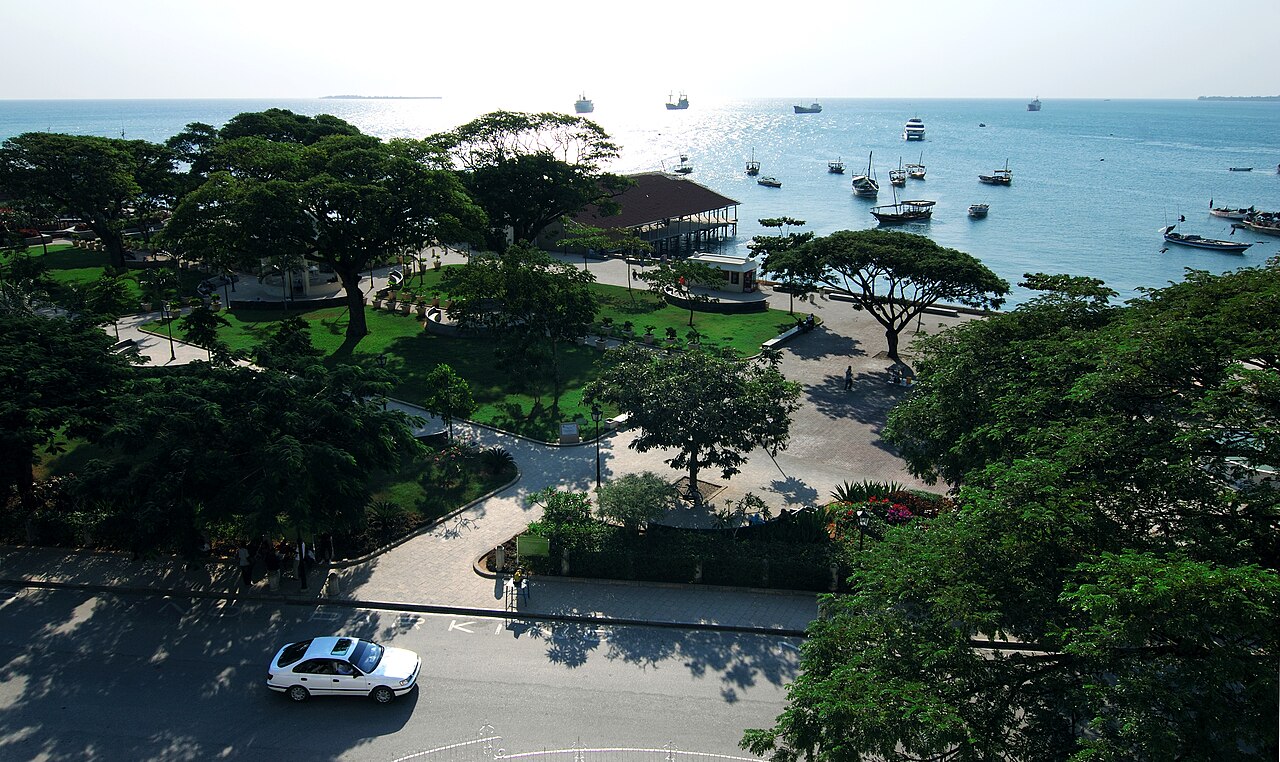
Forodhani Gardens
- Notable
- Activity
Language · 11 published
Nature site · Zanzibar City
Changuu Island

| Monday | 09:00 – 15:30 |
|---|---|
| Tuesday | 09:00 – 15:30 |
| Wednesday | 09:00 – 15:30 |
| Thursday | 09:00 – 15:30 |
| Friday | 09:00 – 15:30 |
| Saturday | 09:00 – 15:30 |
| Sunday | 09:00 – 15:30 |
Checked 2026-08-31 · Source
Read from the OpenStreetMap access tags; anything not listed has no tag recorded.
Set the group type to family in the planner and the day window contracts to about three quarters of a solo day.
Prison Island, locally known as Changuu Island, sits offshore from Stone Town in Zanzibar City. The name derives from its intended use as a prison in the 1890s under British colonial administration, though it ultimately served primarily as a quarantine station for yellow fever cases rather than a penal facility. The island occupies a compact coral formation visible from the Zanzibar waterfront. Its historical layers include the quarantine-era stone structures, later uses, and its current status as a visitor destination combining heritage elements with wildlife attractions.
Checked 2026-08-26
The island contains ruins from its quarantine station period, including the main building complex that dominates the interior. The most prominent living feature is the population of Aldabra giant tortoises, originally a gift from the Seychelles in the early twentieth century, which have been bred and maintained on the island for over a century. The compact terrain includes vegetation cover and shoreline coral formations. Interpretive elements regarding the quarantine history and tortoise conservation program are present, though the depth of signage and presentation varies. The setting offers views back toward Stone Town across the channel.
Checked 2026-08-26
The excursion duration depends on boat scheduling and visitor pacing. The crossing from Stone Town takes approximately twenty to thirty minutes each way by motorized craft. On the island itself, most visitors spend between one and two hours walking the compact grounds, observing the tortoises, examining the ruins, and enjoying the shoreline perspective. Combined with waiting time for return boats, the total commitment typically extends to half a day. Those with strong interest in colonial medical history or tortoise conservation may wish to linger longer, while others treat it as a brief adjunct to Stone Town exploration.
Checked 2026-08-26
Zanzibar experiences distinct rainy seasons that affect boat operations and comfort. The long rains from March to May bring heavier precipitation and rougher seas that can interrupt transport. The short rains in November are generally less disruptive. Dry season months from June through October and December through February offer more reliable conditions. Midday visits coincide with stronger sun exposure on the exposed coral terrain. Morning departures often encounter calmer water. Visitors should verify current schedules with boat operators in Stone Town before planning, as departure frequencies fluctuate with demand and conditions. Check the operator's own site for the travel date before relying on a schedule or fare.
Checked 2026-08-26
Access requires payment of separate fees for boat transport and island admission. Multiple boat operators compete in Stone Town, with negotiation expected. Island entry fees are collected separately upon arrival. Prices vary by season, group size, and operator. Some arrangements bundle boat and entry fees while others itemize them. Cash payment in Tanzanian shillings or US dollars is standard practice. Visitors should establish complete costs before departure, confirm whether return transport is included, and retain receipts. No advance booking infrastructure is reliably documented; most arrangements form on the day in Stone Town waterfront areas. Check the operator's own site for the travel date before relying on a schedule or fare.
Checked 2026-08-26
All access is by boat from Stone Town waterfront. Operators congregate near the Forodhani Gardens area and along the main seafront, with departure points shifting based on tide and vessel size. No regular public ferry serves the island; transport is exclusively through private operators offering shared or chartered departures. Shared boats depart when sufficient passengers assemble, while private hire offers immediate departure at higher cost. The crossing is short but exposed; vessels range from covered motorboats to open launches. Visitors with mobility limitations should assess boarding conditions carefully, as docks and boats present uneven surfaces and steps without standardized accessibility features.
Checked 2026-08-26
The Aldabra tortoises are wild animals despite their accustomed presence near humans; visitors should maintain respectful distance and avoid sudden movements or attempts to ride or harass them. The coral terrain is sharp and uneven; appropriate footwear prevents cuts and ankle injuries. Sun exposure is intense with limited natural shade over much of the island; water, sun protection, and head covering are essential. Boat safety equipment varies by operator; visitors may wish to assess vessel condition and life jacket availability. The channel crossing can become rough with wind; those prone to seasickness should prepare accordingly. No medical facilities exist on the island.
Checked 2026-08-26
The tortoises permit close approach photography at ground level, with their distinctive scale patterns and aged features providing strong subjects. The quarantine ruins offer textured stone surfaces and architectural detail against sky and vegetation. The Stone Town skyline viewed from the island provides a contextual establishing shot. Morning light illuminates the main building facade favorably. Underwater photography is possible from the shoreline with appropriate housing, though coral conditions immediately adjacent vary. Drone operation would require verification of Tanzanian aviation regulations and any specific site restrictions. The compact area means diverse angles require creative positioning within limited terrain.
Checked 2026-08-26
The island was intended as a prison in the 1890s but primarily functioned as a quarantine station for yellow fever cases. The name persists despite the different actual use.
The Aldabra tortoise population was established in the early twentieth century with gifts from the Seychelles. Individual ages vary; some individuals have lived well over a century.
The shoreline is coral terrain with variable swimming conditions. Visitors should assess conditions on arrival and exercise caution regarding sharp coral and boat traffic in the channel.
Not recorded. Visitors should not assume provisions are available and should carry adequate water and any needed sustenance for the excursion duration.
Guided interpretation may be available but is not standardized. The depth of historical information visitors receive depends on arrangements made with boat operators or independent guides in Stone Town.
The coral terrain is uneven and presents significant challenges. Boat boarding involves steps and unstable surfaces. Comprehensive accessibility is not documented; visitors with mobility considerations should assess conditions directly with operators.
Loading the interactive map…
The interactive map could not be loaded.

Last updated:
Source: OpenStreetMap contributors, Wikidata ·