

2 min walk
Al-Hakim Mosque
- Must see
- Historic monument
Language · 11 published
Historic monument · Cairo
باب الفتوح
| Monday | 09:00 – 17:00 |
|---|---|
| Tuesday | 09:00 – 17:00 |
| Wednesday | 09:00 – 17:00 |
| Thursday | 09:00 – 17:00 |
| Friday | 09:00 – 17:00 |
| Saturday | 09:00 – 17:00 |
| Sunday | 09:00 – 17:00 |
Checked 2026-08-31 · Source
Read from the OpenStreetMap access tags; anything not listed has no tag recorded.
Set the group type to family in the planner and the day window contracts to about three quarters of a solo day.
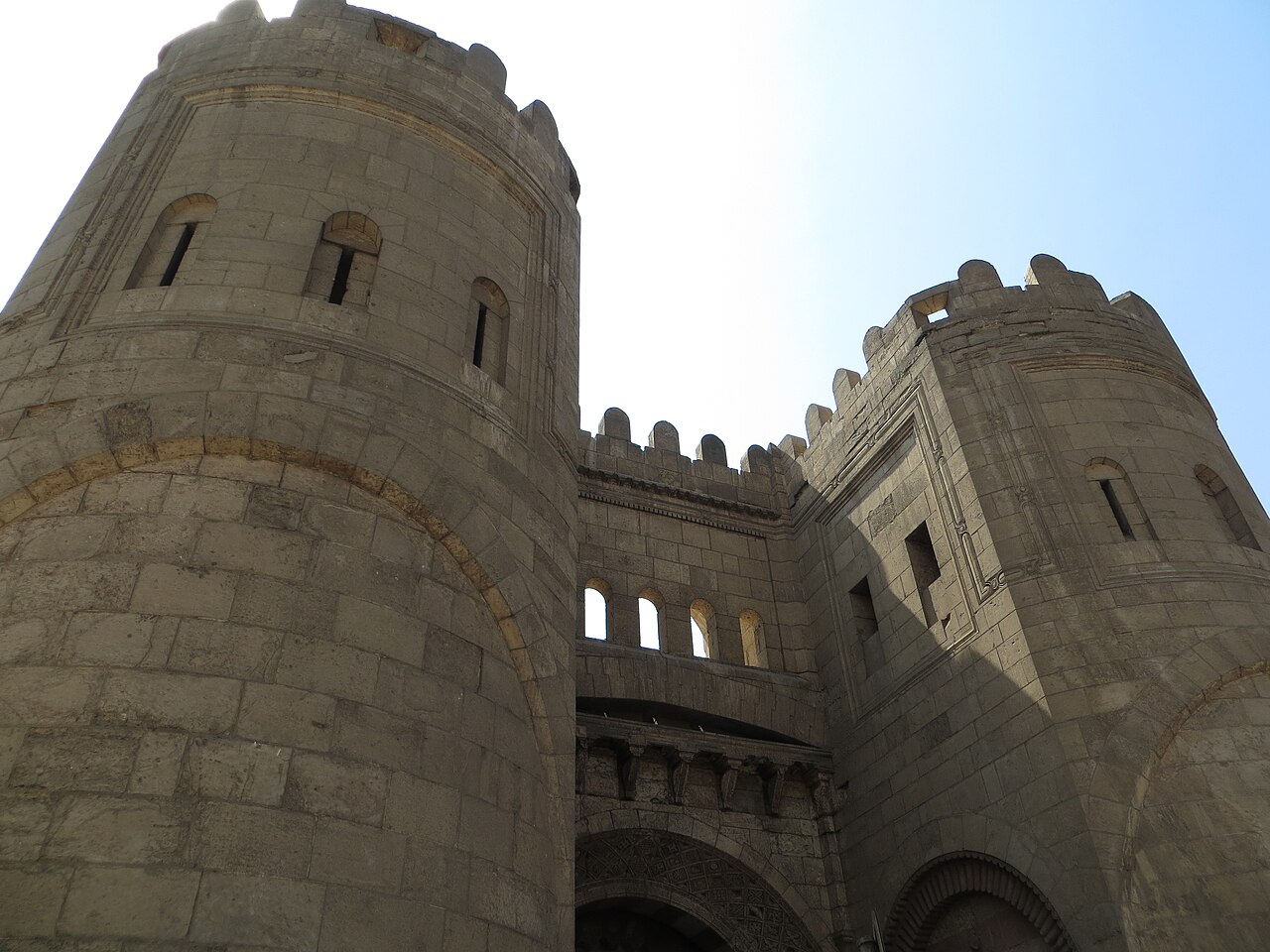
Bab al-Futuh is a massive northern gate in Cairo's medieval fortification system, built during the Fatimid period. The name translates to Gate of Conquests. It stands as one of the key surviving monuments from the era when Cairo was established as a new capital city. The gate formed part of the defensive walls that once encircled the historic core of Islamic Cairo. Its substantial stone construction demonstrates the military architecture of the time, designed to protect the city from external threats. Daily 09:00–17:00; Ramadan daily 09:00–16:00. No weekly closure day. Final admission is one hour before closing: 16:00 normally and 15:00 during Ramadan.
Checked 2026-08-31 · Source
The gate itself is a freestanding monumental structure rather than an enclosed building with interior rooms. Visitors can examine the stonework and architectural details from the exterior and pass through the gateway opening. The massive scale of the construction is apparent when standing adjacent to or beneath the structure. The surrounding area contains other historic monuments and forms part of the broader UNESCO World Heritage site of Historic Cairo. No weekly closure day. Final admission is one hour before closing: 16:00 normally and 15:00 during Ramadan. Free admission for all visitors.
Checked 2026-08-31 · Source
A visit to Bab al-Futuh typically requires a brief stop of approximately fifteen to thirty minutes for most travelers. The experience consists primarily of observing and photographing the exterior architecture and passing through the gateway. Some visitors choose to spend additional time examining the stone details and construction techniques. The gate is often incorporated into longer walking tours of Islamic Cairo that include multiple historic sites in the district. Free admission for all visitors. The entrance passage runs between the two towers and opens directly onto Al-Muizz Street. Upper guard rooms, towers and roof are reached by stone stairs, so those areas are not step-free.
Checked 2026-08-31 · Source
Visitors should verify current accessibility before planning a visit, as the gate functions as a passage in an active urban area rather than a managed attraction with regulated entry times. The structure is located in a public thoroughfare, which suggests it may be passable at various times. Daily 09:00–17:00; Ramadan daily 09:00–16:00. Use Cairo Metro Line 3 to Bab El Shaaria station, identified by Cairo Governorate as the closest station to northern Islamic Cairo. Continue to Al-Banhawy Street in Al-Gamaliya and approach Bab al-Futuh at the northern end of Al-Muizz Street. For taxi arrival, use “Bab al-Futuh, Al-Banhawy Street, Al-Gamaliya.”.
Checked 2026-08-31 · Source
As a historic gate integrated into the public street network, Bab al-Futuh may not require an admission fee for passing through or viewing from the exterior. If the gate is incorporated into a guided tour or broader site complex, separate fee structures may apply. Travelers should confirm current arrangements through official sources or on-site signage. Free admission for all visitors. The entrance passage runs between the two towers and opens directly onto Al-Muizz Street. Upper guard rooms, towers and roof are reached by stone stairs, so those areas are not step-free.
Checked 2026-08-31 · Source
Bab al-Futuh is located in the historic Islamic district of Cairo, north of the central city core. The area is accessible by various forms of urban transport common in Cairo, including taxis and ride services. Public transit options exist though specific routes require local verification. Use Cairo Metro Line 3 to Bab El Shaaria station, identified by Cairo Governorate as the closest station to northern Islamic Cairo. Continue to Al-Banhawy Street in Al-Gamaliya and approach Bab al-Futuh at the northern end of Al-Muizz Street. For taxi arrival, use “Bab al-Futuh, Al-Banhawy Street, Al-Gamaliya.”.
Checked 2026-08-31 · Source
The surrounding neighborhood comprises active urban streets with regular traffic and commercial activity requiring standard pedestrian awareness. The historic lanes nearby may be uneven and poorly lit in some sections. Visitors should exercise customary caution regarding personal belongings in busy areas. The structure itself is ancient stonework that may present uneven surfaces or debris. The entrance passage runs between the two towers and opens directly onto Al-Muizz Street. It is open daily from 09:00 to 17:00, with final admission at 16:00. During Ramadan it opens 09:00–16:00, with final admission at 15:00.
Checked 2026-08-31 · Source
The exterior of Bab al-Futuh offers substantial photographic interest due to its scale and historic character. The massive stonework provides textural detail suitable for architectural photography. The gateway opening creates natural framing opportunities. Lighting conditions vary throughout the day, with morning and late afternoon potentially offering more favorable angles. The narrow surrounding streets may limit distance for capturing the full structure. Visitors should remain aware of pedestrian and vehicle traffic while photographing. Yes. Egypt’s Ministry of Tourism and Antiquities explicitly states that admission is free. Badr al-Jamali, vizier and commander-in-chief under the Fatimid caliph al-Mustansir Billah, built it in 480 AH/1087 AD.
Checked 2026-08-31 · Source
It is open daily from 09:00 to 17:00, with final admission at 16:00. During Ramadan it opens 09:00–16:00, with final admission at 15:00.
Yes. Egypt’s Ministry of Tourism and Antiquities explicitly states that admission is free.
Badr al-Jamali, vizier and commander-in-chief under the Fatimid caliph al-Mustansir Billah, built it in 480 AH/1087 AD.
Yes. Its foundation inscription names it Bab al-Iqbal, meaning Gate of Prosperity, although Cairo residents retained the older name Bab al-Futuh.
Two rounded-front stone towers flank a recessed entrance and are linked by an upper platform; the arch carries a diamond lattice with carved motifs and decorated corbels.
Bab al-Nasr is approximately 250 metres east, the Mosque of al-Hakim bi-Amr Allah stands nearby, and Al-Muizz Street begins at the gate and runs south toward Bab Zuwayla.
Loading the interactive map…
The interactive map could not be loaded.


Last updated:
Source: OpenStreetMap contributors ·