.jpg)


9 min walk
Bat Chum
- Must see
- Historic monument
Language · 11 published
Historic monument · Siem Reap
ស្រះស្រង់

| Monday | 05:00 – 17:30 |
|---|---|
| Tuesday | 05:00 – 17:30 |
| Wednesday | 05:00 – 17:30 |
| Thursday | 05:00 – 17:30 |
| Friday | 05:00 – 17:30 |
| Saturday | 05:00 – 17:30 |
| Sunday | 05:00 – 17:30 |
Checked 2026-08-31 · Source
Read from the OpenStreetMap access tags; anything not listed has no tag recorded.
Set the group type to family in the planner and the day window contracts to about three quarters of a solo day.
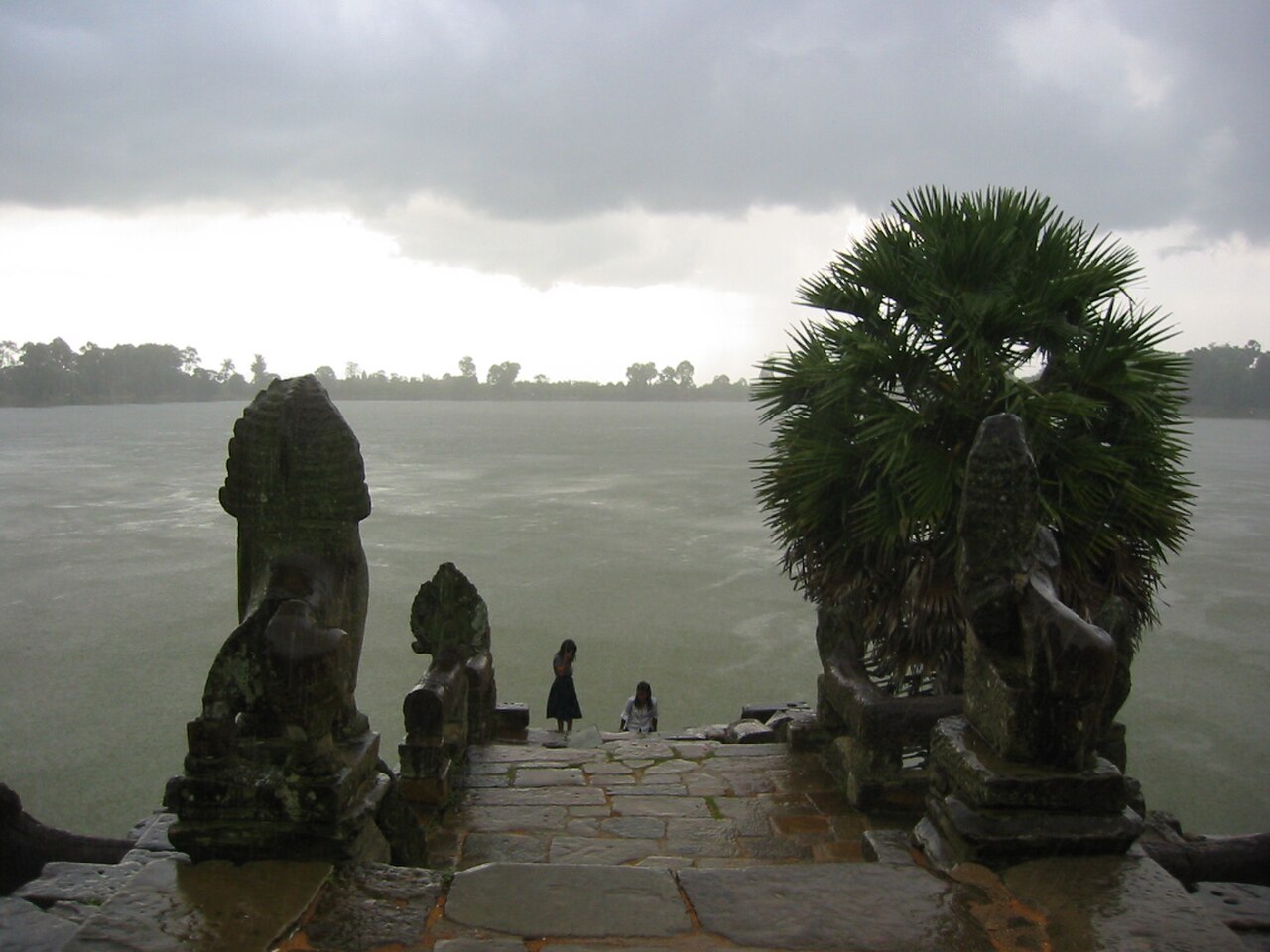
Srah Srang is a baray, or reservoir, situated within the Angkor Archaeological Park near Siem Reap, Cambodia. Constructed during the Khmer Empire, it forms part of the UNESCO World Heritage Site inscribed in 1992. The monument is associated with the larger temple complex of Angkor and reflects the sophisticated hydraulic engineering of the period. Srah Srang served ritual and practical purposes in the ancient city. Today it remains a visitor landmark, valued for its atmospheric setting and historical significance within the broader Angkor complex.
Checked 2026-08-26
The site features a large rectangular water basin with stone steps and landing stages on its western edge. A prominent cruciform terrace extends toward the water, constructed with laterite and sandstone. The eastern side originally connected to temple structures. The surrounding area contains scattered architectural fragments and vegetation typical of the Angkor park environment. The reservoir's dimensions and depth reflect substantial ancient earthworks. No contemporary buildings or reconstructions are present. The monument preserves its ruined state, offering visitors an unembellished encounter with Khmer hydraulic architecture and the natural reclamation of historical structures.
Checked 2026-08-26
A visit to Srah Srang typically requires between thirty minutes and one hour, depending on individual interest in architectural detail and atmospheric conditions. The site is often combined with nearby temples in a broader Angkor itinerary, particularly Banteay Kdei which stands adjacent. Visitors frequently pause at sunrise or sunset when light conditions transform the water surface. Extended stays may appeal to photographers and those seeking contemplative moments. The unstructured nature of the monument permits flexible timing. Most guided tours allocate brief stops, while independent travellers determine their own pace without fixed circuits or mandatory routes.
Checked 2026-08-26
Cambodia experiences distinct wet and dry seasons affecting visitor conditions at outdoor Angkor sites. The dry season from November to March offers reduced rainfall and more predictable access. The wet season brings lush vegetation and filled reservoirs, though paths may become challenging. Morning and evening hours provide softer light and moderate temperatures. Visitors should consult current official sources before planning. Crowd patterns follow broader Angkor trends, with peak visitation during international holiday periods. Dawn arrivals are popular for atmospheric photography across the archaeological park. Check the operator's own site for the travel date before relying on a schedule or fare.
Checked 2026-08-26
Access to Srah Srang requires a valid Angkor Archaeological Park admission pass, purchased at official ticket checkpoints. Multiple-day options are typically available for the entire park complex. Specific pricing for individual monuments is not standard practice. Visitors must verify current rates through authorised channels. The park employs electronic ticket verification at principal entrances. No separate fee structure applies exclusively to Srah Srang. International visitors should carry identification matching ticket registration. Payment methods and currency acceptance should be confirmed in advance through official tourism authorities. Check the operator's own site for the travel date before relying on a schedule or fare.
Checked 2026-08-26

Srah Srang lies within the Angkor Archaeological Park, approximately five to seven kilometres northeast of Siem Reap town centre. The route follows paved roads through the park's regulated zone. Transport options include hired motorbike, tuk-tuk, bicycle, or organised tour vehicle. Private cars require appropriate permits. The site sits immediately east of Banteay Kdei temple, making combined visits practical. Signage within the park indicates monument locations. Road conditions vary seasonally. Visitors should arrange return transport in advance, as the immediate area lacks persistent commercial services. Navigation applications may assist independent travellers, though offline preparation is advisable.
Checked 2026-08-26

The water's edge presents uneven stone surfaces and potential slip hazards, particularly when wet or algae-covered. No safety barriers exist at the terrace perimeter. Visitors should exercise caution with children near the basin. Wildlife including monkeys and insects inhabits the surrounding forest. Sun exposure is substantial during midday hours; adequate hydration and protection are essential. The remote setting means limited immediate assistance for emergencies. Respect for archaeological integrity is mandatory; climbing on fragile structures is prohibited. Personal belongings require vigilance. Weather conditions can change rapidly during transitional seasons, affecting road access and site conditions.
Checked 2026-08-26

Srah Srang offers distinctive photographic opportunities centred on water reflections and ancient stonework. The cruciform terrace provides structured foreground elements against the expansive basin. Sunrise and sunset yield dramatic tonal variations across the water surface. The eastern orientation favours morning illumination on the principal architectural features. Tripod use should not obstruct pathways or damage surfaces. Drone operation falls under Cambodian aviation and heritage regulations requiring permits. Natural vegetation frames compositions throughout the year. Water levels significantly affect reflective qualities. The absence of modern intrusions supports historically evocative imagery. Patience rewards visitors seeking unpopulated views during peak tourism periods.
Checked 2026-08-26
No. Srah Srang is a baray, or reservoir, serving hydraulic and ritual functions rather than primary religious worship. It lacks the tower structures characteristic of Khmer temples.
Swimming is not appropriate. Srah Srang is an archaeological monument within a protected UNESCO site. Water quality and safety conditions are unmonitored for recreational use.
Dedicated on-site guides are not stationed at Srah Srang. Visitors typically engage guides in Siem Reap or through tour operators covering multiple Angkor monuments.
Night illumination is not recorded. Angkor Archaeological Park generally closes to visitors during evening hours, and Srah Srang lacks artificial lighting infrastructure.
Permanent restroom facilities at Srah Srang itself are not recorded. Visitors should expect minimal amenities and plan accordingly before arrival.
Yes. Independent travel is possible with valid park admission and appropriate transport. The monument requires no advance booking for individual visitors.
Loading the interactive map…
The interactive map could not be loaded.
Last updated:
Source: OpenStreetMap contributors, Wikidata ·