Smart Self-Managed Tours

City guide · Serbia

Belgrade

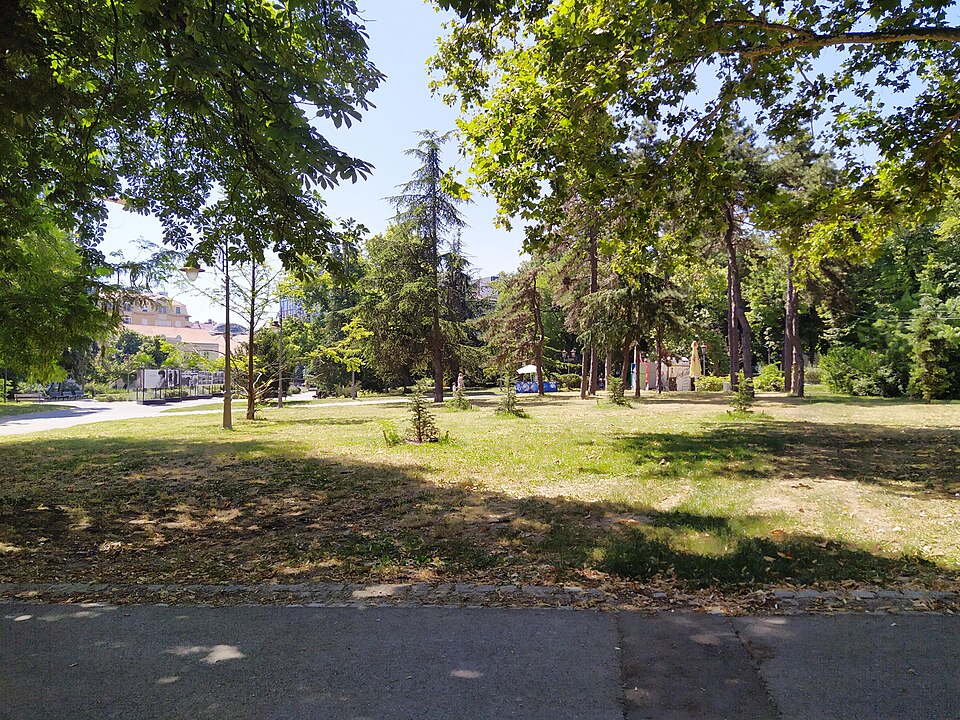
A photograph of Belgrade
Photograph · Radosław Botev · CC BY 3.0 pl

Belgrade is 389.12 km² holding 1,197,714 people, and it stands on the point where the Sava runs into the Danube. That confluence is why the city exists and why it has been fought over so relentlessly: it has been battled over in 115 wars and razed 44 times. The name Beograd means white city. The administrative area holds 1,682,720 people across 3,234.96 km² in 17 municipalities. The part a visitor uses is a fraction of that — the old town on the ridge above the rivers, and the streets running down from it.

Practical information

Language spoken
Serbian
Written in both Cyrillic and Latin; English is understood in tourist districts
Dialling code
+381 11
Belgrade landlines; drop the leading 0 of 011 when calling from abroad
Currency
Serbian dinar (RSD)
Euros are not accepted; cards are widely taken in Belgrade
Emergency number
112
One number across the country; 194 reaches an ambulance directly
Plug type
Type C and F · 230 V
Standard European two-pin
Tap water
Not recorded
No verified national source in the dataset

Planning a visit

Suggested stay
2–3 days
Getting around
Tram, bus and on foot
  1. January: seasonal closure recorded
  2. February: seasonal closure recorded
  3. March: seasonal closure recorded
  4. April: no seasonality data recorded
  5. May: recorded as a best month to visit
  6. June: recorded as a best month to visit
  7. July: no seasonality data recorded
  8. August: no seasonality data recorded — this month
  9. September: recorded as a best month to visit
  10. October: seasonal closure recorded
  11. November: seasonal closure recorded
  12. December: seasonal closure recorded

Top things to see

Ranked by importance — sitelinks, pageviews and heritage status, not editor preference.

  1. National Library of Serbia
    02 15 min

    National Library of Serbia

    The National Library of Serbia is the country's central legal-deposit library, housed since 1973 in a purpose-built structure on the Vračar plateau, next to the Temple of Saint Sava.

    • Must see
    • Historic monument
    • Stari Grad
  2. Singidunum
    03 30 min

    Singidunum

    Singidunum is the Roman name for the fortified settlement that stood on the ridge now occupied by Belgrade Fortress, at the point where the Sava River meets the Danube.

    • Must see
    • Historic monument
    • Stari Grad
  3. Semlin concentration camp
    04 45 min

    Semlin concentration camp

    Staro Sajmište was a trade fair before it was a camp, and people live on the site now.

    • Must see
    • Historic monument
    • New Belgrade
  4. Pobednik
    05 15 min

    Pobednik

    Pobednik, meaning The Victor, is a bronze statue by the Croatian sculptor Ivan Meštrović standing on the ramparts of Belgrade Fortress at the point where the Sava and Danube rivers meet.

    • Must see
    • Historic monument
    • Stari Grad
  5. Gardoš Tower
    06 30 min

    Gardoš Tower

    The Gardoš Tower was built by Hungary to mark a thousand years in the Pannonian plain, and it stands on the edge of what was then the empire.

    • Must see
    • Historic monument
    • Zemun
  6. Beli dvor
    07 1 hr 30 min

    Beli dvor

    Beli dvor, the White Palace, was built between 1934 and 1937 in Dedinje as the private residence of Prince Regent Paul of Yugoslavia, who ruled as regent for the young King Peter II from 1934 to 1941.

    • Must see
    • Historic monument
    • Savski Venac
  7. Belgrade Main railway station
    08 5 min

    Belgrade Main railway station

    Belgrade Main railway station is a disused 19th-century station building on Savski trg, built between 1882 and 1885 to a design begun by the Austrian architect Wilhelm von Flattich and completed by Dragiša Milutinović.

    • Must see
    • Historic monument
    • Savski Venac
  8. Belgrade Synagogue
    09 20 min

    Belgrade Synagogue

    The Belgrade Synagogue, known as Sukkat Shalom, is the only functioning synagogue in Serbia today and the religious centre of Belgrade's Ashkenazi Jewish community.

    • Must see
    • Historic monument
    • Stari Grad
  9. Prince Mihailo Monument
    10 15 min

    Prince Mihailo Monument

    The Monument to Prince Mihailo is a bronze equestrian statue standing at the centre of Republic Square, Belgrade's main square.

    • Must see
    • Historic monument
    • Stari Grad
  10. Ičko’s House
    11 20 min

    Ičko’s House

    Ičko's House at 18 Bežanijska street in Zemun is one of the oldest surviving town houses in the Belgrade area, built in 1793 in a plain Classical style — and it takes its name from a diplomat who hid there…

    • Must see
    • Historic monument
    • Zemun
  11. Monument of Gratitude to France
    12 10 min

    Monument of Gratitude to France

    Twenty thousand people filled Kalemegdan Park on 11 November 1930 to watch King Alexander I, Queen Maria, Prince Paul and Princess Olga unveil a bronze woman striding forward with one arm raised — Belgrade's Monument of Gratitude to France, dedicated…

    • Must see
    • Historic monument
    • Stari Grad
  12. Tomb of national heroes on Kalemegdan
    13 10 min

    Tomb of national heroes on Kalemegdan

    The Tomb of the People's Heroes sits under the walls of Belgrade Fortress, and it was not filled all at once: four communist figures were buried there one at a time over nine years, from 1948 to 1957, as each…

    • Must see
    • Historic monument
    • Stari Grad
  13. Čukur Fountain
    14 5 min

    Čukur Fountain

    The Čukur Fountain is a monument in Dobračina Street, Dorćol, marking the spot where a killing in 1862 set off a night of street fighting and, two days later, an Ottoman bombardment of Belgrade.

    • Must see
    • Historic monument
    • Stari Grad
  14. Zindan Gate
    16 45 min

    Zindan Gate

    • Must see
    • Historic monument
    • Stari Grad
  15. Ramadan
    45 45 min

    Ramadan

    • High
    • Historic monument
    • Palilula
  16. Taurunum
    48 45 min

    Taurunum

    • High
    • Historic monument
    • Zemun

Source: OpenStreetMap contributors, Wikidata ·

Where to base yourself

District boundaries come from OSM administrative relations, so a district page holds exactly the places inside it — plus, for the islands and the coast, the nearest district by proximity.

  • Stari Grad

    Places
    571
    Across the district
    35 min
  • Savski Venac

    Places
    222
    Across the district
    1 hr 24 min
  • New Belgrade

    Places
    184
    Across the district
    2 hours
  • Vračar

    Places
    135
    Across the district
    40 min
  • Zemun

    Places
    127
    Across the district
    4 hr 56 min
  • Palilula

    Places
    131
    Across the district
    7 hr 42 min
  • Zvezdara

    Places
    116
    Across the district
    1 hr 48 min
  • Čukarica

    Places
    95
    Across the district
    3 hr 6 min
  • Voždovac

    Places
    87
    Across the district
    4 hr 29 min
  • Rakovica

    Places
    60
    Across the district
    1 hr 55 min

How the city is laid out

Two Belgrades, split by the Sava.

Old Belgrade sits on the ridge on the right bank, above the confluence. The fortress is at the point; Stari Grad, the old town, runs back from it; Vračar rises behind that with the Church of Saint Sava on top; Dorćol drops north towards the Danube and Savamala south towards the Sava.

New Belgrade is on the left bank of the Sava, built from 1948 onward on empty ground to demonstrate that Yugoslavia was at the forefront of progress. It is towers and boulevards on a grid and it is a different city.

Zemun, further up the Danube on the left bank, was a separate town under Austria-Hungary until the twentieth century and still reads as one — low houses, a hill with a tower, and the border of an empire running through it.

Checked 2026-08-23

Getting around

Trams, buses, trolleybuses and walking. There is no metro.

A metro has been discussed for decades and is not in operation; anyone reading about the Belgrade metro is reading about a construction programme, not a way to get across the city today.

The old town is compact and the walk from the fortress to the Church of Saint Sava takes about half an hour, all of it through the parts a visitor came for. New Belgrade and Zemun need transport.

Taxis are cheap by western European standards and are the usual way across the river at night.

Checked 2026-08-23

Common questions

How many days does Belgrade need?

Two to three. Two cover the fortress, Kalemegdan, the old town and the Church of Saint Sava. A third adds Zemun on the Danube and a look at New Belgrade.

Is there a metro?

No. Belgrade runs trams, buses and trolleybuses, and a metro has been discussed for decades without entering service. The old town is walkable and taxis are cheap.

What does Beograd mean?

White city. The name is literal.

Why is the city so scarred?

It stands where the Sava meets the Danube, which made it the frontier between empires. It has been fought over in 115 wars and razed 44 times.

What is the difference between Old and New Belgrade?

The Sava. Old Belgrade is the ridge above the confluence with the fortress at its point. New Belgrade is on the left bank, built from 1948 on empty ground as a demonstration of Yugoslav modernity.

Which districts should I stay in?

Stari Grad for the old town, Vračar behind it for a quieter residential base, Dorćol towards the Danube and Savamala on the Sava for the nightlife. Zemun is a separate town in feel and is further out.

Turn this list into a plan

Set your days, your pace and the hours you actually want to be out. The planner works around closing days and travel time, and leaves room to eat.

Plan Belgrade