The National Library of Serbia is the country's central legal-deposit library, housed since 1973 in a purpose-built structure on the Vračar plateau, next to the Temple of Saint Sava. The library itself dates back to 1832, when the bookbinder Gligorije Vozarović organised it out of his own bookstore; that founding institution and almost its entire collection, roughly 500,000 volumes together with 1,424 Cyrillic manuscripts, medieval manuscripts, maps and newspaper archives, were destroyed on 6 April 1941 when the Luftwaffe bombed Belgrade on the order of Adolf Hitler.
The library reopened to the public in 1947 on rebuilt but temporary premises. Construction of a permanent home on Vračar was approved in 1954, to mark the 150th anniversary of the First Serbian Uprising, and the building designed by architect Ivo Kurtović opened on 6 April 1973, the thirty-second anniversary of the original library's destruction.
The library holds 7,324,842 items: books, periodicals, newspapers, manuscripts, maps, sound recordings and databases, run today by a staff of around 270 under director Vladimir Pištalo. Its digital repository carries about 1.2 million scanned pages, and the library contributes to the World Digital Library and Europeana, the international projects that put historic manuscripts and printed material online.
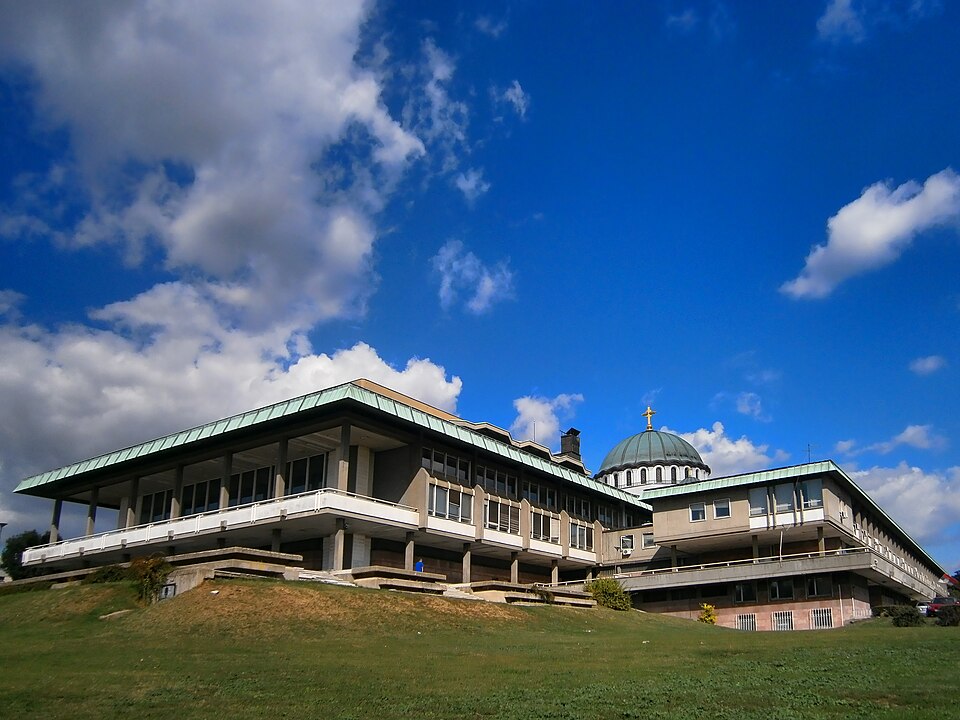
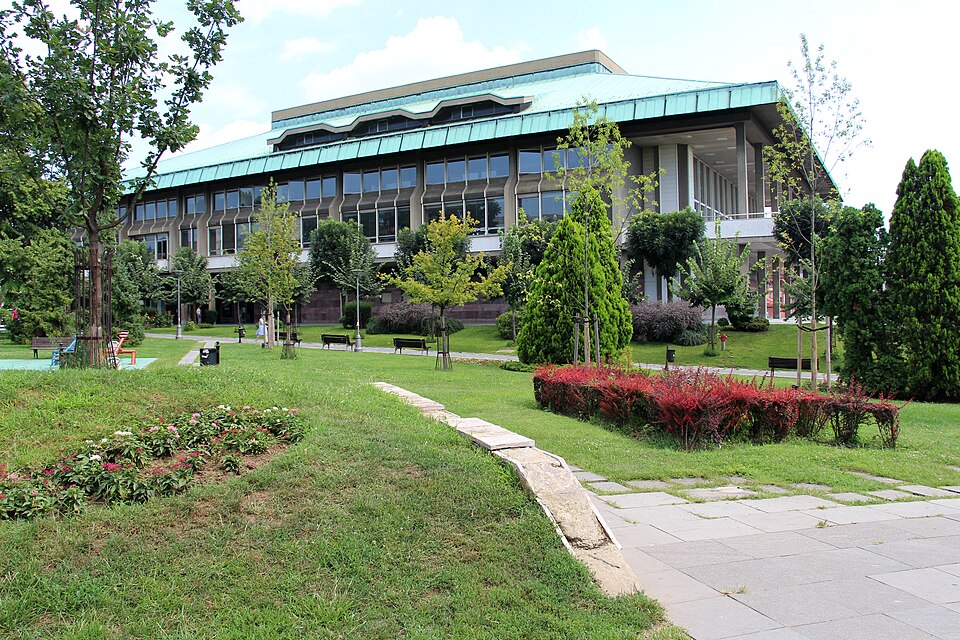
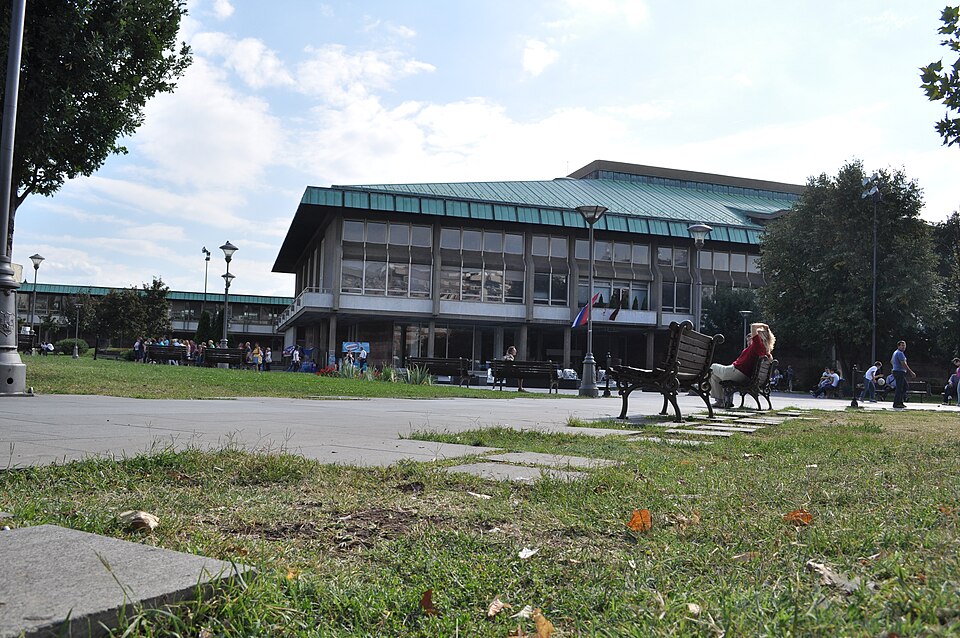
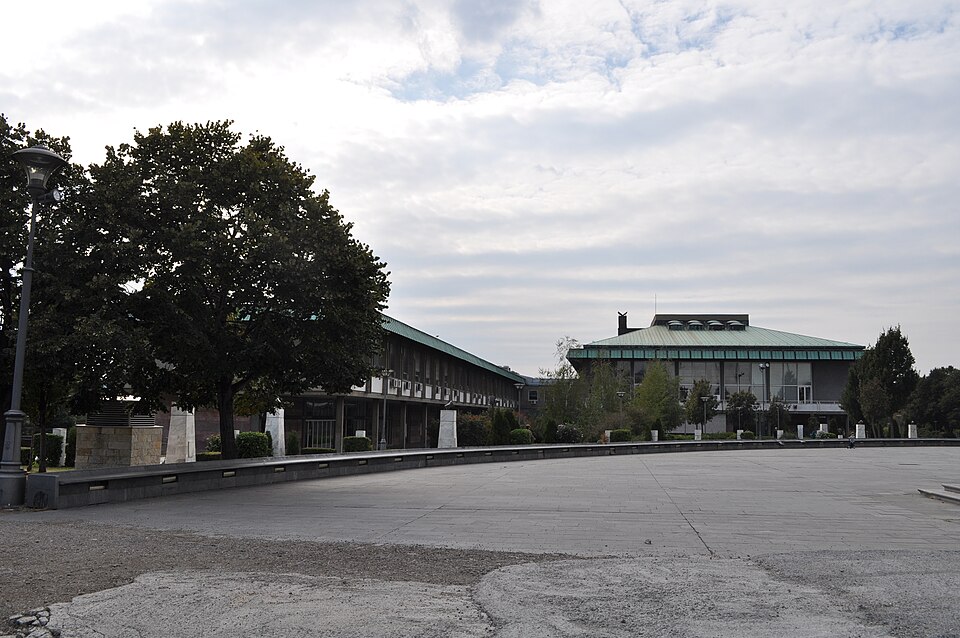
The building itself, on the plateau beside the Temple of Saint Sava, was renovated internally between 2007 and 2011, updating reading rooms and storage without altering Kurtović's 1973 exterior. It functions as a working national library rather than a museum, so its rooms are reading and reference spaces built around the collection rather than a fixed exhibition. What is held here today is largely material acquired or reconstructed since 1941, since so little of the pre-war collection survived the bombing that destroyed the original building's holdings.
How long to allow depends on why the library is being visited: a look at the exterior and plateau alongside the Temple of Saint Sava takes ten to fifteen minutes, while using a reading room or consulting the collection is a working visit measured in hours rather than minutes and should be planned as such rather than folded into a short sightseeing stop.
The library's exterior and the surrounding Vračar plateau can be seen at any time of day; the square between the library and the Temple of Saint Sava is at its most open and photogenic in the morning, before the plateau fills with visitors heading to the temple. Reading-room access follows the library's own service calendar and academic-year rhythm rather than tourist opening hours, and current hours are not reproduced on the sources this page uses.
No admission price applies to viewing the building from the plateau. Access to reading rooms and the collection is generally a matter of library registration rather than a tourist ticket, but current registration terms, fees if any, and opening hours are not published on the sources this page uses and are not reproduced here.
The library sits on the Vračar plateau beside the Temple of Saint Sava, roughly two kilometres south of Republic Square and Knez Mihailova. Belgrade has no metro, so the approach is by tram or bus toward Slavija or Vračar, followed by a short walk up to the plateau; the walk from the old town centre takes about twenty-five to thirty minutes on foot.
This is a working legal-deposit library, not a museum with a standing exhibition, so a visitor expecting a ticketed tour through display rooms will not find one; reading rooms are for research use and may require registration or identification rather than being open to walk into. Quiet is expected inside working areas the way it would be in any national library.
The plateau outside is shared with the Temple of Saint Sava, one of Belgrade's busiest sights, so the immediate surroundings can be crowded even when the library itself is quiet. Photographing the exterior and plateau is unrestricted; photography inside working reading rooms follows the library's own rules rather than a tourist policy and is not detailed on the sources this page uses.
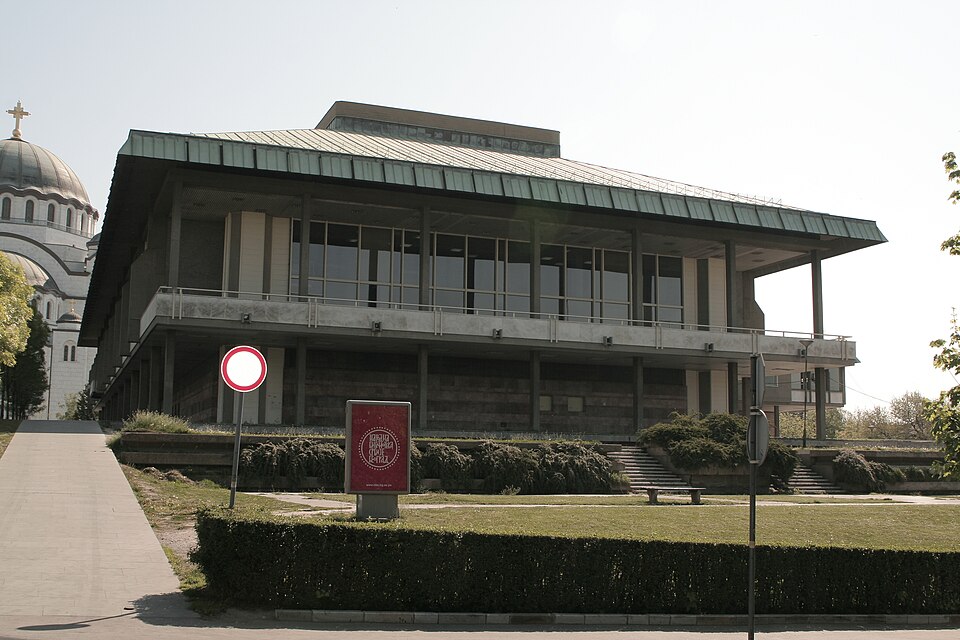
The library's plain, low, modernist 1973 façade reads best from across the plateau, with the domed Temple of Saint Sava as a deliberate contrast in the same frame. Morning light on the open square, before crowds gather for the temple, gives the clearest view of both buildings together without people crossing the foreground.
Checked 2026-08-23
Common questions
What happened to the National Library of Serbia's original collection?
It was destroyed on 6 April 1941, when the Luftwaffe bombed Belgrade on Adolf Hitler's order; the library lost roughly 500,000 volumes along with 1,424 Cyrillic manuscripts and other medieval manuscripts, maps and newspaper archives.
When did the current National Library building open?
On 6 April 1973, on the Vračar plateau beside the Temple of Saint Sava, exactly thirty-two years after the original library was destroyed in the 1941 bombing.
Who designed the National Library building?
The architect Ivo Kurtović. Construction was approved in 1954 to mark the 150th anniversary of the First Serbian Uprising and completed in time for the 1973 opening.
How large is the National Library of Serbia's collection today?
7,324,842 items, spanning books, periodicals, newspapers, manuscripts, maps, sound recordings and databases, cared for by a staff of about 270.
When was the library first founded?
In 1832, when the bookbinder Gligorije Vozarović organised it out of his own bookstore; Dimitrije Davidović wrote to Prince Miloš Obrenović about organising the library that same year.
Is the National Library of Serbia open to the general public?
It functions as a working legal-deposit library with reading rooms rather than a museum with a standing exhibition; its exterior and the Vračar plateau around it are open to view at any time.
Nothing non-essential is set before you choose, in regions where consent is required. If you decline, ads still appear but they are non-personalised, and analytics is switched off entirely.



.jpg)


