
_jeune_paysanne_(croate_en_costume_r%C3%A9gional)_remettant_%C3%A0_M._Champetier_de_Ribes_une_%C3%A9charpe_(qu%27elle_a_tiss%C3%A9e_de_ses_mains_et_qui_est_donn%C3%A9e_au_gar%C3%A7on)_d%27honneur..._-_btv1b53237490b.jpg)


.JPG)
.JPG)
1 min walk · Stari Grad
Bust of Jaša Prodanović
- High
- Historic monument
Language · 1 published
Historic monument · Градска општина Стари град, Belgrade
Споменик захвалности Француској
| Monday | 00:00 – 23:59 |
|---|---|
| Tuesday | 00:00 – 23:59 |
| Wednesday | 00:00 – 23:59 |
| Thursday | 00:00 – 23:59 |
| Friday | 00:00 – 23:59 |
| Saturday | 00:00 – 23:59 |
| Sunday | 00:00 – 23:59 |
Parsed from OpenStreetMap opening hours on 2026-08-25.
Twenty thousand people filled Kalemegdan Park on 11 November 1930 to watch King Alexander I, Queen Maria, Prince Paul and Princess Olga unveil a bronze woman striding forward with one arm raised — Belgrade's Monument of Gratitude to France, dedicated on the twelfth anniversary of the armistice that ended the First World War.
The idea started with the Belgrade City Council, which resolved on 17 December 1921 to honour the French soldiers who died defending Belgrade in 1915. The French Schools Alumni Association and the Society of Friends of France launched the fundraising in May 1924 under a committee chaired by Niko Miljanić, a physician and a founder of Belgrade University's School of Medicine, and it raised its budget quickly.
The original plan put the monument in Paris — the funds were large enough for it — but French diplomacy, through ambassador Émile Dard, redirected the project to Belgrade, betting that the new Yugoslav state would become a durable exponent of French interests in the region. France reciprocated with monuments to Serbian kings in Paris, Orléans and Marseille, though those came six years after Belgrade's went up.
In 1928 the city gave the monument a site inside Kalemegdan that carried its own history: the former spot of a 1913 monument to Karađorđe, leader of the First Serbian Uprising, which occupying Austro-Hungarian forces had dynamited in 1916 to make room for a statue of Franz Joseph. That statue never stood — after the war it was found on a Sava barge and melted down for church bells, the largest of which went to Ružica church nearby.
Checked 2026-08-24 · Source
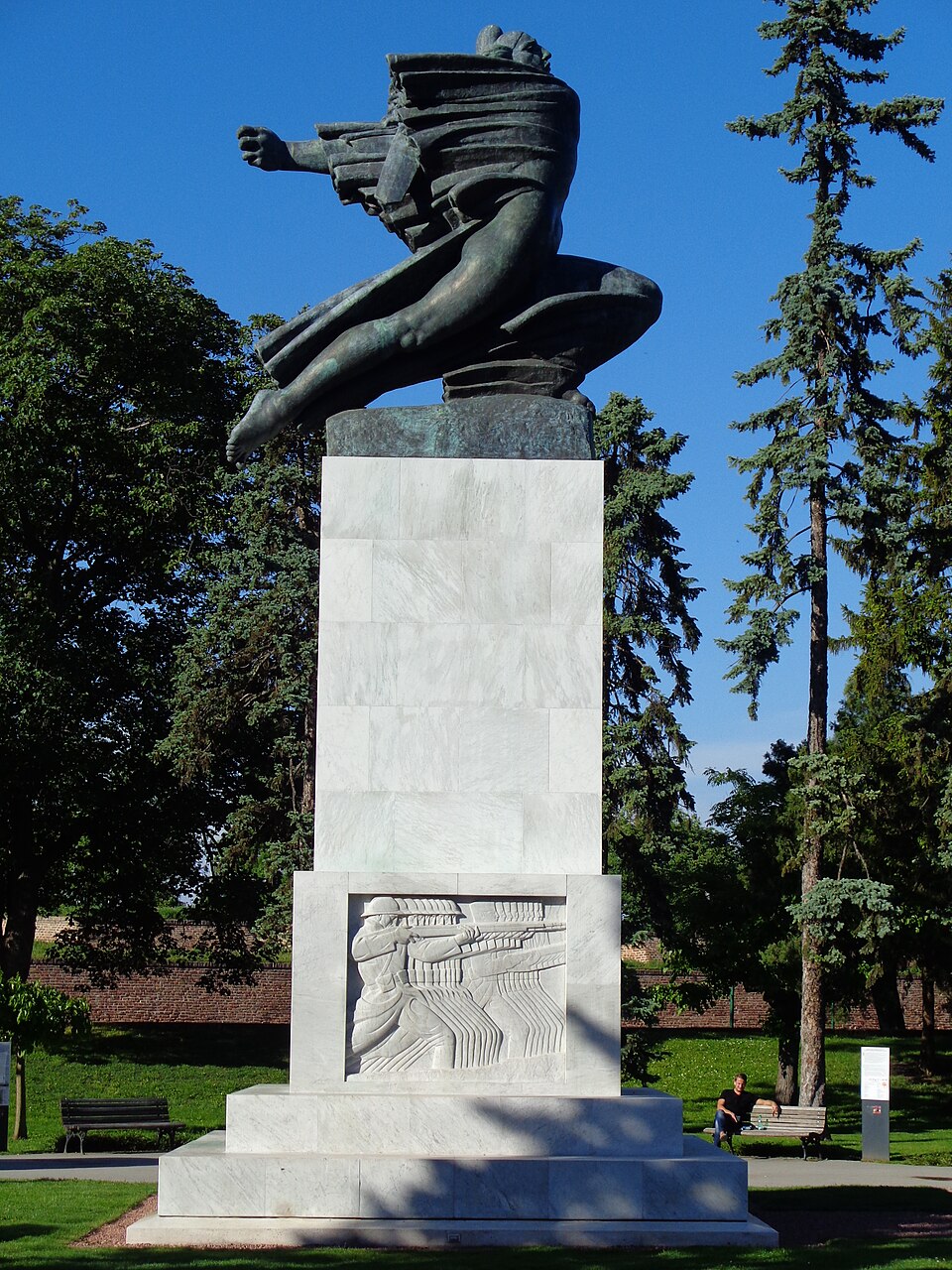
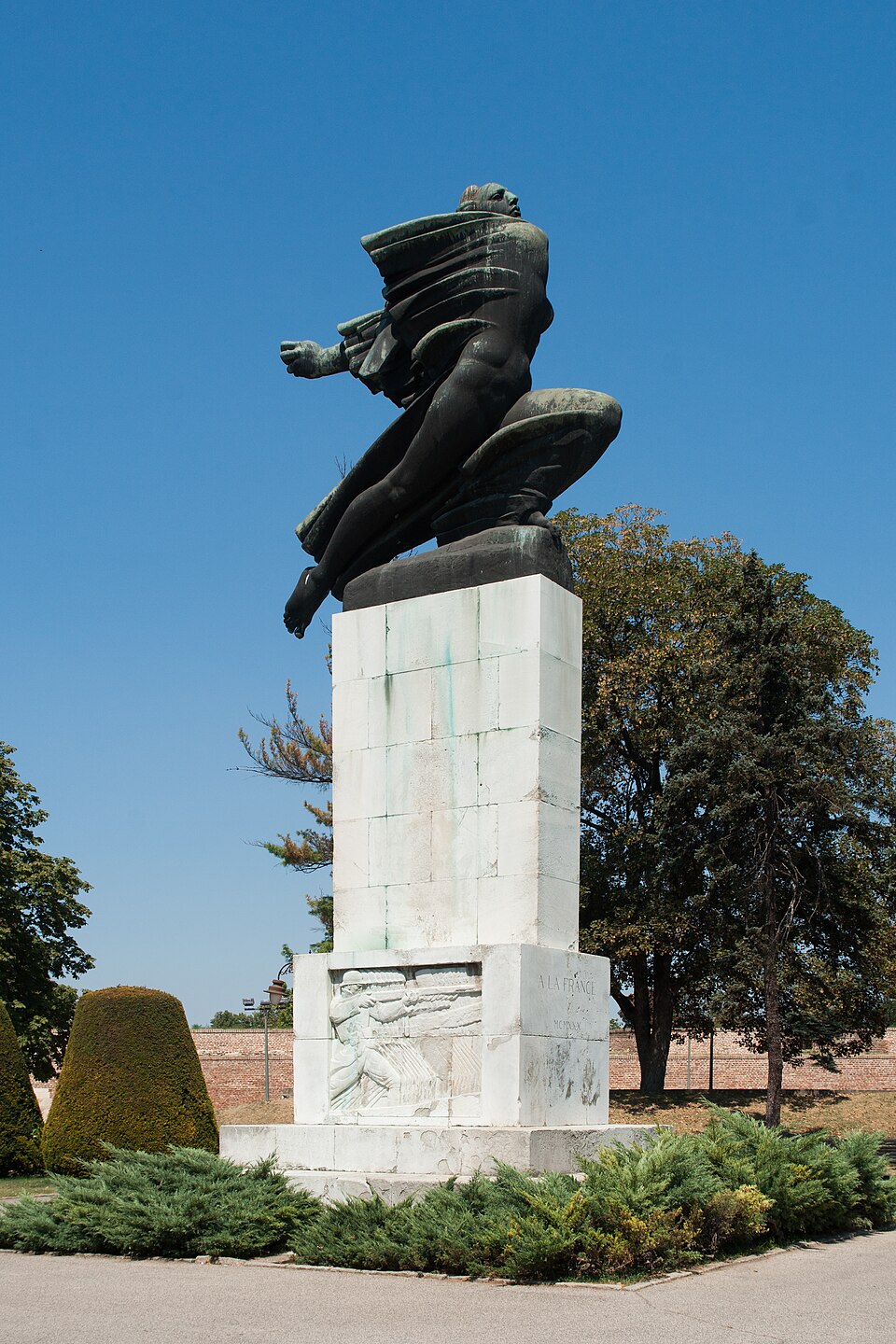
The commission for the design went to the sculptor Ivan Meštrović, championed by Bogdan Popović, a Sorbonne-educated academic who chaired the selection committee. Meštrović chose an Art Deco monumental form: a female figure with a heavy, striding body, one arm extended, her head raised.
He modelled it first in alabaster, then cast the bronze at the Artistic Academy in Zagreb, where he served as rector, between 3 July and 20 October 1930, using the ancient lost-wax method. The figure was cast in fourteen pieces, assembled into two sections for transport, and joined on site at Kalemegdan.
While the casting went on, associates in Split carved the two-stepped pedestal from Brač marble. Two side reliefs came from Meštrović's own students, working from his models: Frano Kršinić carved the panel known as "Sorbonne", and Antun Augustinčić carved "Warriors". The parts reached Belgrade in late October 1930, and it took eight days to set the monument in place before the 11 November unveiling.
Checked 2026-08-24 · Source

Ten minutes covers the statue itself and its two reliefs; it stands as a single open-air sculpture rather than a site with rooms or a route to follow. Most visitors see it in passing on a longer walk through Kalemegdan Park and the fortress.
Checked 2026-08-24 · Source
Any time the park is open suits an outdoor bronze; there is no interior lighting or crowd pattern recorded to plan around. Late afternoon light on the fortress side of Kalemegdan tends to favour photographs of the park's monuments generally, this one included.
Checked 2026-08-24 · Source
Free. It stands in the open air inside Kalemegdan Park, with no fence, ticket booth or entry fee recorded, on the same unticketed basis as the park's other outdoor sculptures and the fortress ramparts around it. The only cost on record against the monument is the 2018 restoration itself, jointly funded by Serbia and France rather than paid for by any visitor charge.
Checked 2026-08-24 · Source
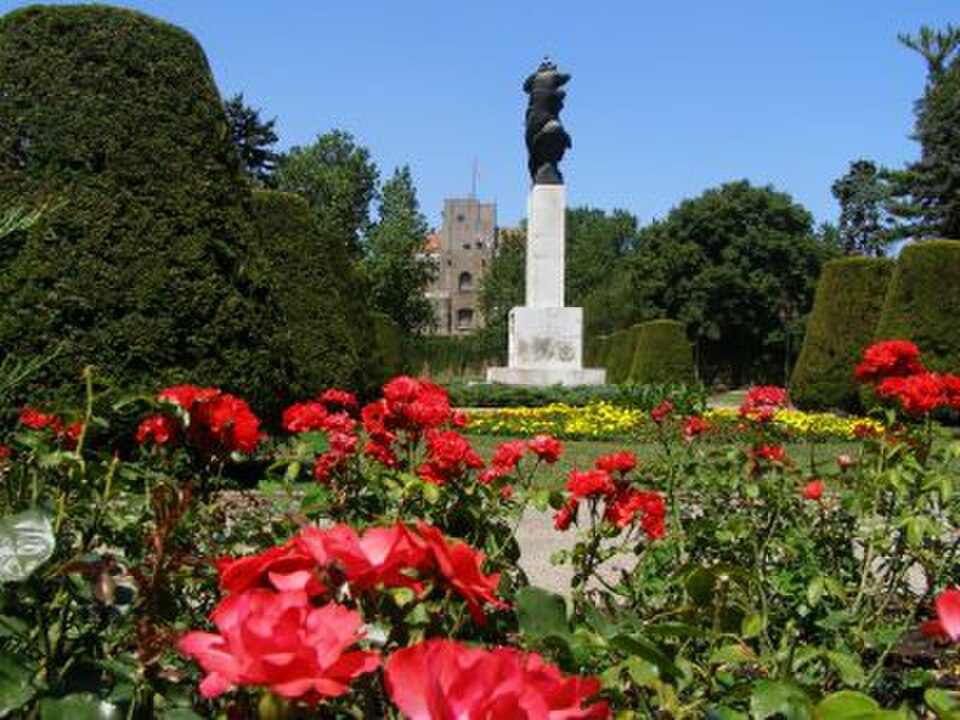
The monument stands inside Kalemegdan Park near Karađorđe's Gate, on the Belgrade Fortress side that overlooks the Sava-Danube confluence — an easy walk from Republic Square along the Knez Mihailova pedestrian street and into the park, on the same approach as Ružica Church, the Military Museum and the fortress's other Kalemegdan landmarks.
Checked 2026-08-24 · Source
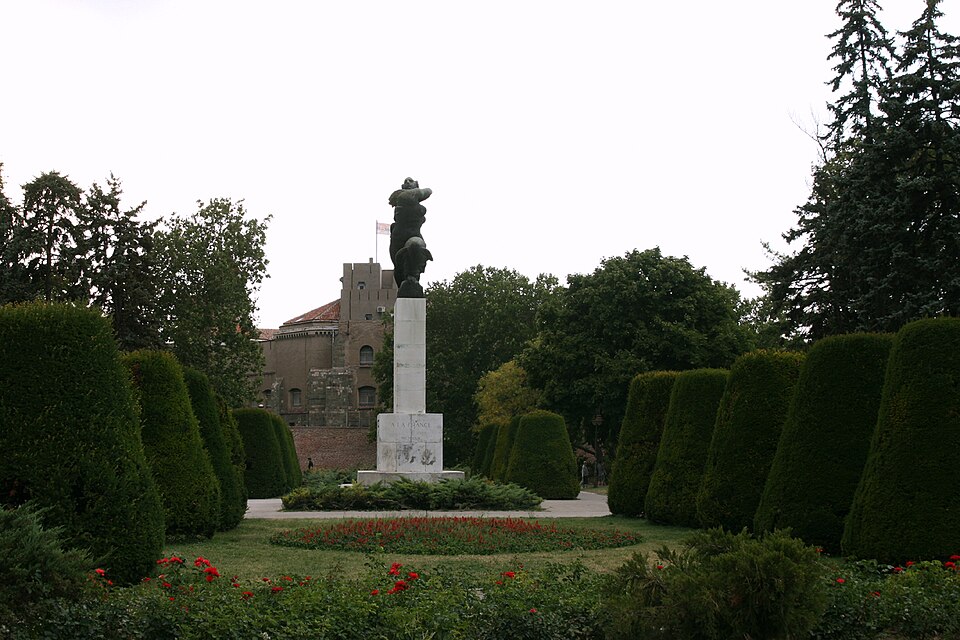
The monument was restored between 2018 and its rededication for the war's centenary that November: corrosion had damaged the internal metal armature, and a crack had opened in the figure's right foot in the early 1990s from bronze expanding and contracting with temperature. None of that repair changed how the statue reads from the ground today, but it explains why the surface looks newer than a bronze cast in 1930 otherwise would.
Checked 2026-08-24 · Source
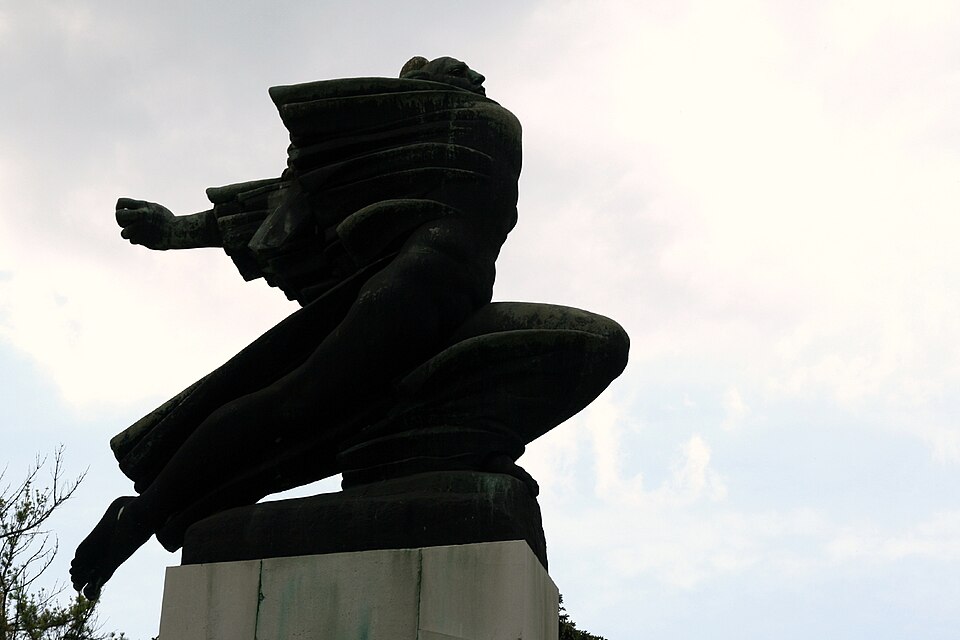
The figure stands on high ground on the fortress side of Kalemegdan, in the same stretch of park that gives the panorama over the Sava and Danube confluence — a wide shot that includes both the statue and the river view is the natural frame here, and there is no photography restriction recorded for an open-air public monument.
Checked 2026-08-24 · Source
Ivan Meštrović, commissioned in 1930 and cast in bronze at the Artistic Academy in Zagreb, where he was rector at the time.
On 11 November 1930, the twelfth anniversary of the armistice ending the First World War, before a crowd of about 20,000 and King Alexander I.
To thank France for its military and educational support to Serbia during and after the First World War, an initiative the Belgrade City Council authorised in 1921.
No. The original plan put it in Paris; French diplomacy redirected the project to Belgrade before construction began.
A 1913 monument to Karađorđe, leader of the First Serbian Uprising, which occupying Austro-Hungarian troops destroyed in 1916.
No. It stands in the open air in Kalemegdan Park with no fence or ticket booth.
Yes, between 2018 and its rededication that November, funded jointly by Serbia and France under a 2017 agreement, repairing corrosion and a crack in the figure's right foot.
Loading the interactive map…
The interactive map could not be loaded.
Last updated:
Source: OpenStreetMap contributors, Wikidata ·