


1 min walk · Stari Grad
Boško Buha Theatre
- High
- Art and culture venue
Language · 1 published
Historic monument · Градска општина Стари град, Belgrade
Споменик кнезу Михаилу

| Monday | 00:00 – 23:59 |
|---|---|
| Tuesday | 00:00 – 23:59 |
| Wednesday | 00:00 – 23:59 |
| Thursday | 00:00 – 23:59 |
| Friday | 00:00 – 23:59 |
| Saturday | 00:00 – 23:59 |
| Sunday | 00:00 – 23:59 |
Parsed from OpenStreetMap opening hours on 2026-08-25.
The Monument to Prince Mihailo is a bronze equestrian statue standing at the centre of Republic Square, Belgrade's main square. It was made by the Italian sculptor Enrico Pazzi and erected in 1882, showing Prince Mihailo Obrenović III mounted on a horse.
Mihailo Obrenović ruled Serbia in two periods, from 1839 to 1842 and again from 1860 until his assassination on 10 June 1868, and was the first ruler in modern Serbian history to declare Belgrade the country's official capital. The monument stands alongside the National Theatre and the National Museum, which together with it define the square's layout.
Checked 2026-08-23 · Source
The statue depicts Prince Mihailo on horseback with his hand pointed toward Constantinople, read as a gesture directing the Ottoman garrisons to leave Serbian soil. The pedestal beneath the horse carries plates engraved with the names of the cities whose liberation the monument commemorates.
The monument marks Mihailo's central achievement: securing the withdrawal of Ottoman troops from Serbia. After the 1862 Čukur Fountain incident, an international conference in Constantinople required the Ottoman military to withdraw except from its garrisons in Belgrade, Fetislam, Šabac and Smederevo; those garrisons were given up in 1867, completing the liberation the pedestal's inscriptions record.
Checked 2026-08-23 · Source
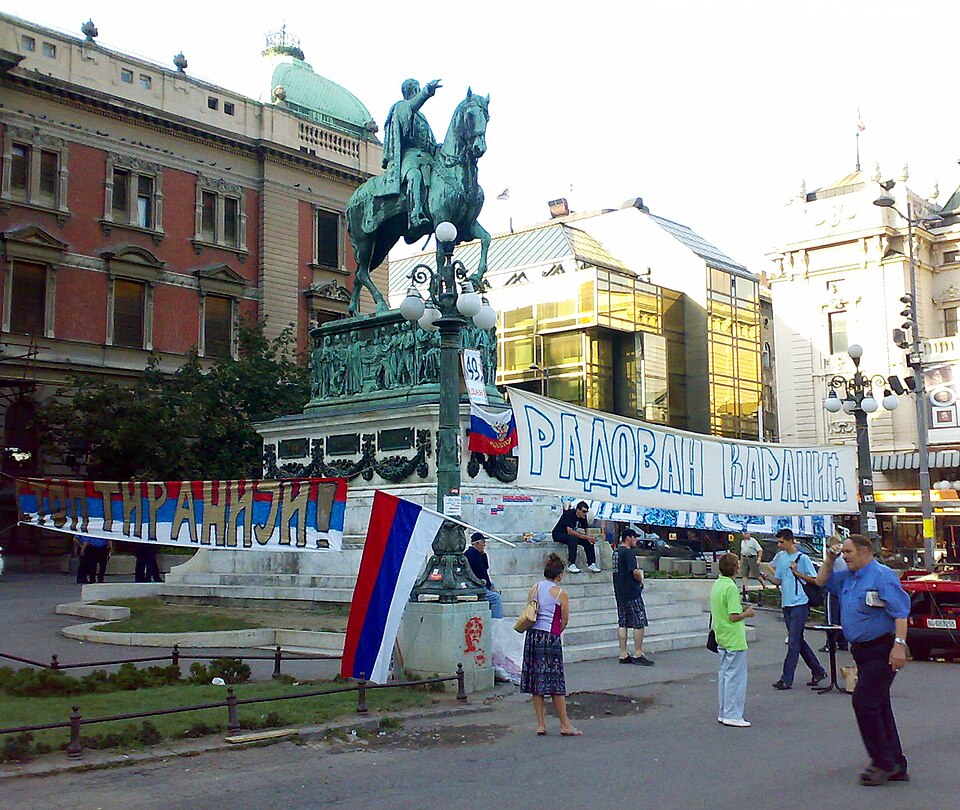
The monument itself takes only a few minutes to see and photograph, since it is a single equestrian statue at the centre of an open square rather than a site with rooms to move through. Most visitors take it in as part of a longer stop at Republic Square alongside the National Museum and the National Theatre.
Allow 10 minutes at the statue itself to read the pedestal's carved plates and circle it for different angles, on top of whatever time is set aside for the square as a whole.
Checked 2026-08-23
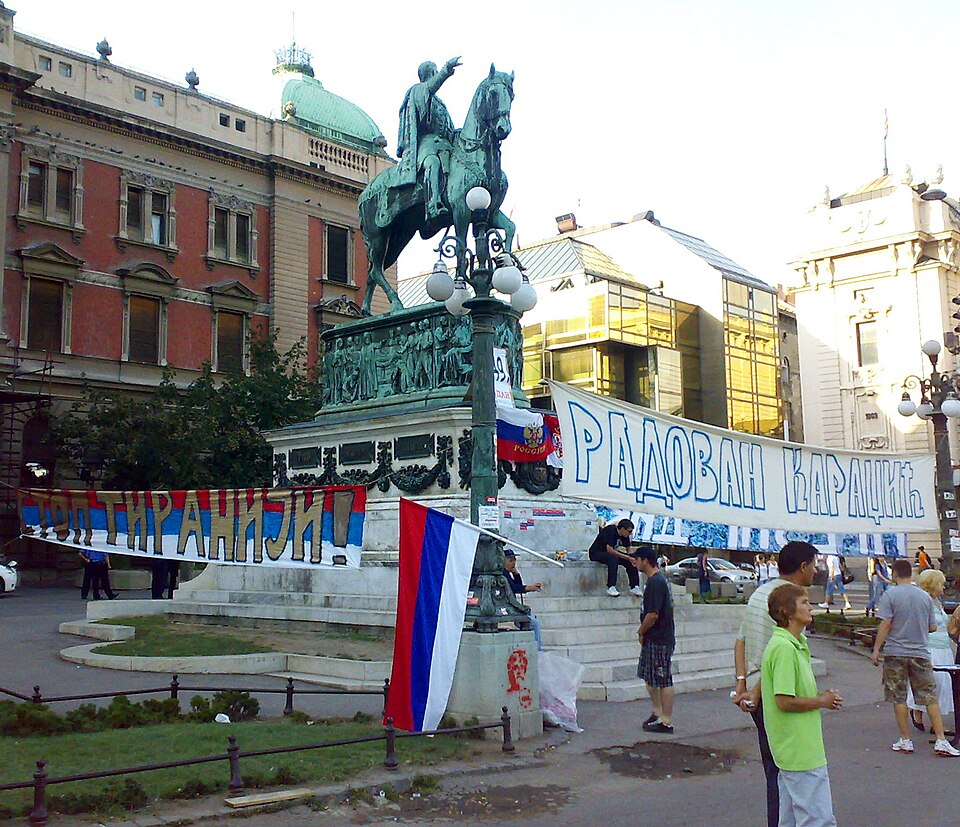
Republic Square is open at all hours with no gate or ticketed entry, so timing is a matter of light and crowd levels rather than opening times. The square is busiest in the late afternoon and evening, when it functions as Belgrade's default meeting point.
A visit earlier in the day, before the square fills with pedestrians crossing between Knez Mihailova and the surrounding streets, gives a clearer, less crowded view of the statue and its pedestal.
Checked 2026-08-23
There is no admission charge to see the Monument to Prince Mihailo: it stands in the open public space of Republic Square. Current rates for the National Museum and National Theatre nearby are not published on the sources this page uses and are not reproduced here.
No booking or timed entry applies to viewing the monument itself.
Checked 2026-08-23
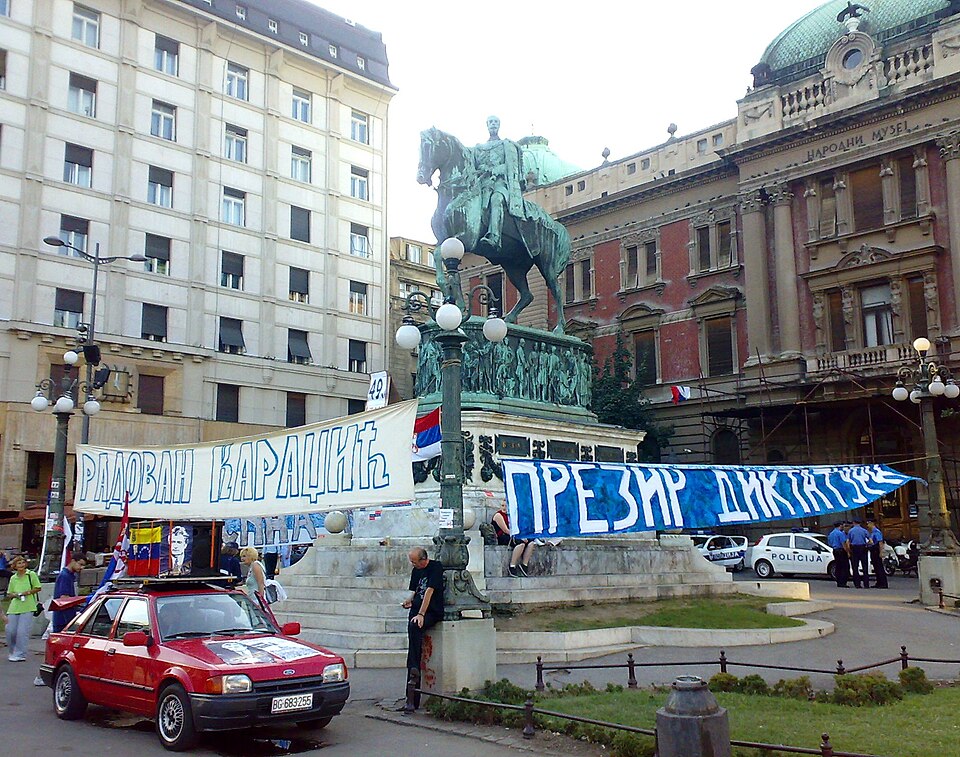
Belgrade has no metro, so Republic Square is reached on foot, by tram or by trolleybus. The square sits at the start of Knez Mihailova, the pedestrian street that runs toward Kalemegdan and Belgrade Fortress, making it the natural centre point of the old town.
Multiple tram and trolleybus lines converge at or near Republic Square, so a visitor arriving from any part of central Belgrade can reach the monument directly by surface transport without needing a car.
Checked 2026-08-23
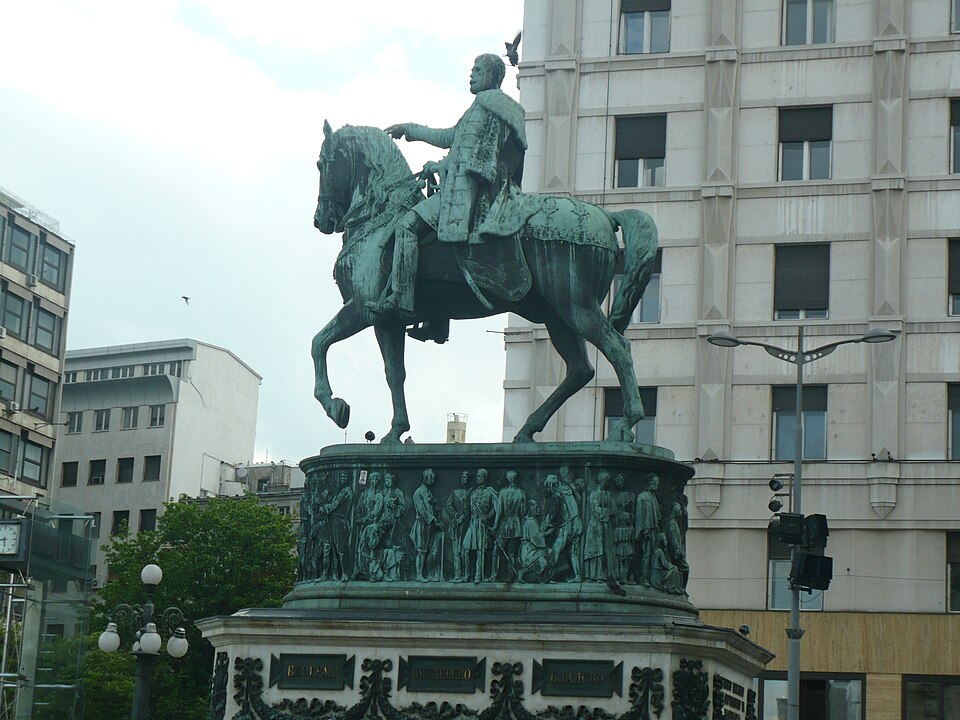
Republic Square is one of the busiest pedestrian junctions in Belgrade, with trams and traffic circling its edges, so crossing to the statue means using the marked crossings rather than cutting directly across traffic. The square draws street vendors, performers and, at busy times, pickpockets working the crowd, so keeping bags and phones secured is worth the same ordinary caution as any dense city-centre square anywhere.
There are no dress or conduct rules specific to the monument, since it stands in open, secular public space rather than a religious or ticketed site. Locals refer to the statue and its surrounding meeting spot colloquially as kod konja, meaning at the horse, and a nearby restaurant has taken the same name — a useful phrase for asking directions rather than a formal site name.
Checked 2026-08-23 · Source
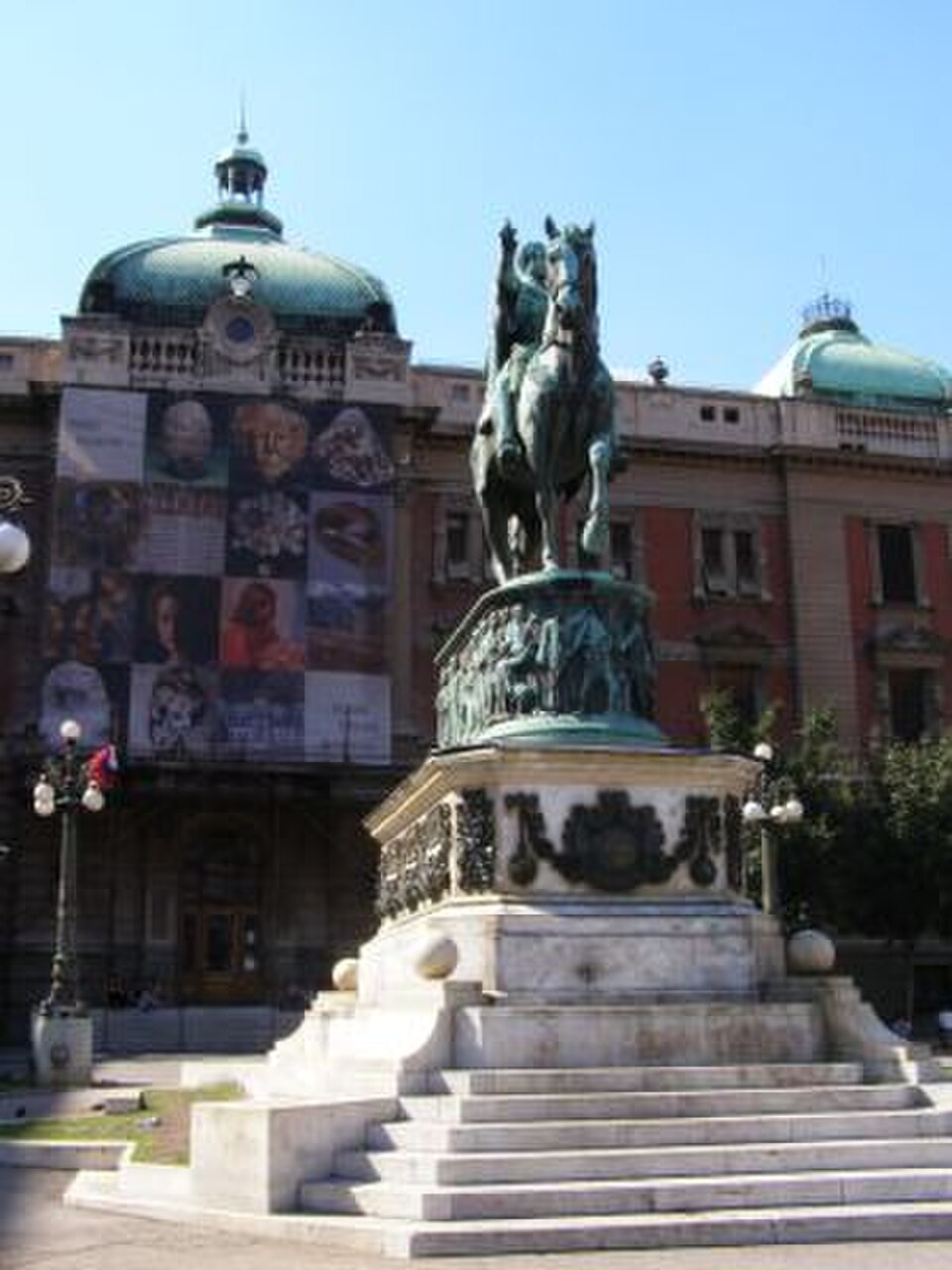
Photography of the monument and the square around it is unrestricted, and the statue is one of the most photographed fixed points in central Belgrade because of its position facing down Knez Mihailova. A low angle from the square's open paving captures both the horse and the National Museum building behind it in the same frame.
The square is busiest with pedestrians during the day, which makes an uncluttered shot of the pedestal harder in daylight; early morning, before the surrounding cafes and shops open, gives the clearest view of the monument without passers-by crossing the frame.
Checked 2026-08-23
The Italian sculptor Enrico Pazzi, who completed the bronze equestrian statue in 1882.
Mihailo Obrenović III ruled Serbia from 1839 to 1842 and again from 1860 until his assassination on 10 June 1868. He was the first ruler in modern Serbian history to declare Belgrade the country's official capital.
The withdrawal of Ottoman garrisons from Serbian cities, completed in 1867 after an 1862 international conference required Ottoman troops to leave except from Belgrade, Fetislam, Šabac and Smederevo.
The names of the cities whose liberation from Ottoman garrison the monument commemorates, engraved on plates on the statue's pedestal.
At the centre of Republic Square in Belgrade's Stari Grad municipality, alongside the National Theatre and the National Museum.
Kod konja means 'at the horse' in Serbian, a colloquial name Belgraders use for the square around the equestrian statue; a nearby restaurant has adopted the same name.
Loading the interactive map…
The interactive map could not be loaded.
Last updated:
Source: OpenStreetMap contributors, Wikidata ·