


3 min walk · Stari Grad
Klub književnika
- Notable
- Restaurant or café
Language · 1 published
Historic monument · Градска општина Стари град, Belgrade
Чукур чесма
| Monday | 00:00 – 23:59 |
|---|---|
| Tuesday | 00:00 – 23:59 |
| Wednesday | 00:00 – 23:59 |
| Thursday | 00:00 – 23:59 |
| Friday | 00:00 – 23:59 |
| Saturday | 00:00 – 23:59 |
| Sunday | 00:00 – 23:59 |
Parsed from OpenStreetMap opening hours on 2026-08-25.
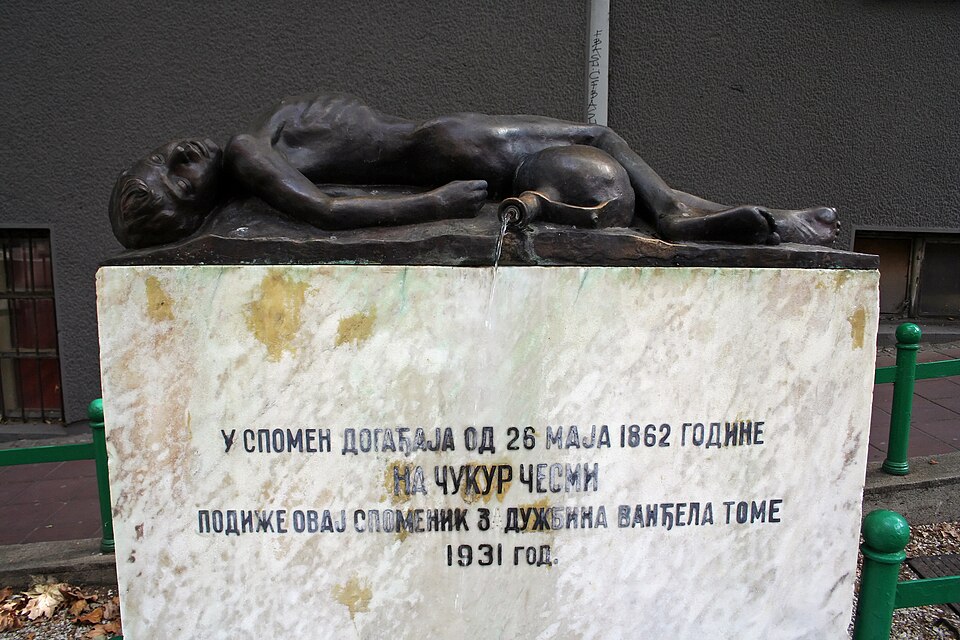
The Čukur Fountain is a monument in Dobračina Street, Dorćol, marking the spot where a killing in 1862 set off a night of street fighting and, two days later, an Ottoman bombardment of Belgrade.
On 15 June 1862 an apprentice boy, Savo (Sava) Petković, was sent to fill a pitcher at this fountain. An Ottoman soldier tried to take the pitcher from him; the boy resisted and was killed. Serbian gendarmes who came to arrest the soldier were met by other Ottoman troops, and fighting spread through the town and lasted the night, killing the Serbian interpreter Sima Nešić and gendarme Đorđe Nišlija at the main marketplace. A truce was agreed the next day, but on 17 June Ottoman cannons at Belgrade Fortress shelled the town, killing around 50 civilians and soldiers, destroying 20 houses and damaging 357 more. The Great Powers intervened, and the Ottoman garrison left Belgrade Fortress in 1867 as a direct result.
Checked 2026-08-24 · Source
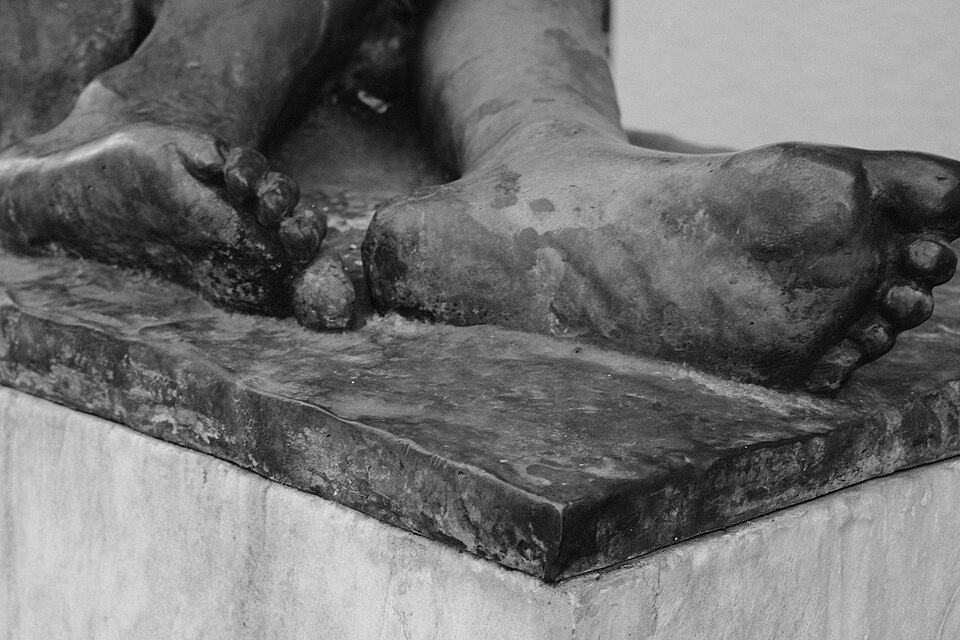
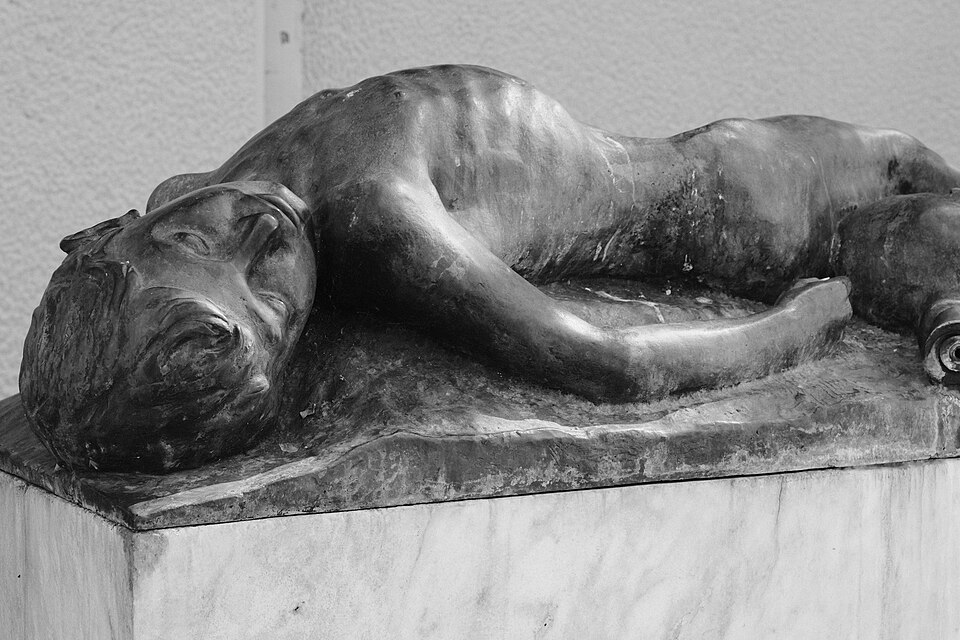
A bronze sculpture titled The Boy With a Broken Pitcher, by the Serbian Realist sculptor Simeon Roksandić, stands on a marble pedestal above a small pool where the fountain's water still spills, with a marble bench set beside it.
The monument was funded from the estate of Toma Vandđel, a tobacco merchant, and erected in 1931 — almost seventy years after the event it commemorates. The first design competition for it opened in 1912, but the outbreak of the First World War stopped the project, and it was not revived until sculptor Simeon Roksandić submitted a new design to the city in 1927. A thirteen-year-old, Vlastimir Petković, modelled for the sculpture; he happened to share a surname with the boy killed in 1862, though the two were unrelated. The monument was declared a cultural landmark on 5 February 1965.
Checked 2026-08-24 · Source
A few minutes. It is a street corner with a single sculpture, a small pool and a marble bench, not a site with rooms or exhibits to move through — reading the inscription and looking at the bronze boy is the whole visit, and there is nothing else on site to extend it. Most visitors reach it while walking through Dorćol rather than as a destination on its own.
Checked 2026-08-24 · Source
It is an open-air street monument with no gate and no recorded hours, so it can be seen at any time. Dorćol's narrow streets around it are quieter and easier to photograph earlier in the day, before the district's cafes and restaurants fill their outdoor tables in the evening.
Checked 2026-08-24 · Source
Free. It is a public monument on an open street in Dorćol, with no fee, no gate and no ticket booth of any kind — the fountain and its sculpture are as freely accessible as the street they stand on.
Checked 2026-08-24 · Source
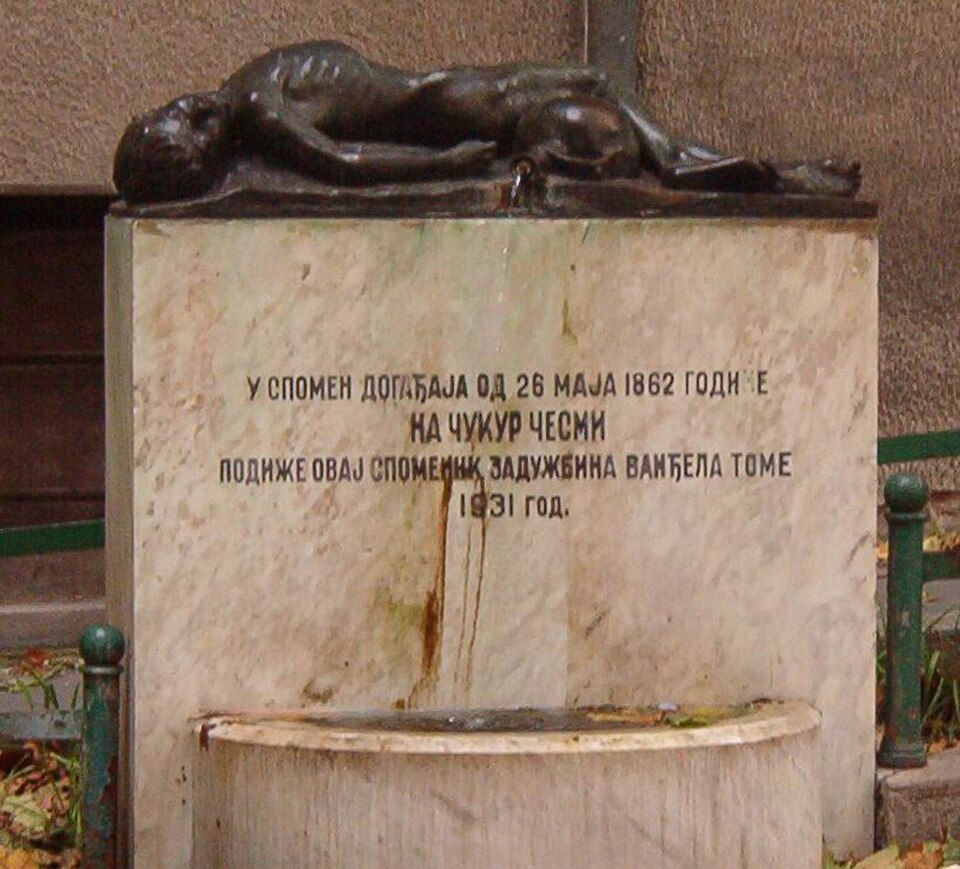
The monument stands in Dobračina Street in Dorćol, the old district north-east of Knez Mihailova and Republic Square, on the site of the original 1862 fountain — a walkable district of low 19th- and early 20th-century houses reached on foot from the city centre in about 15 to 20 minutes. The same walk through Dorćol passes several other 19th-century monuments and old merchant houses, so the fountain is easiest to take in as one stop on a longer walk through the district rather than a single dedicated trip.
Checked 2026-08-24 · Source
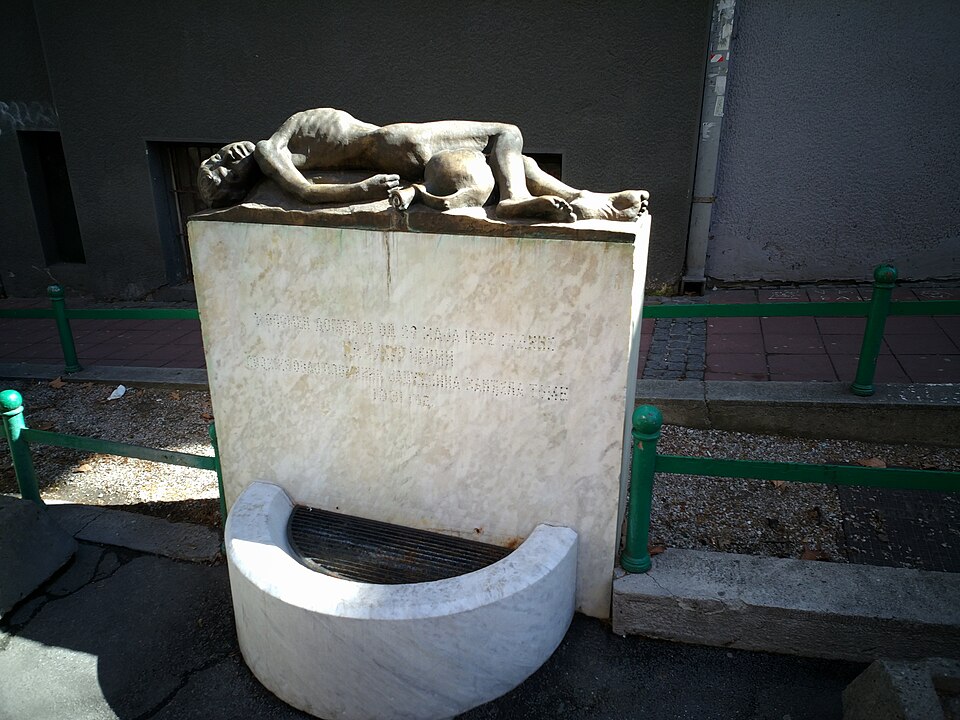
The bronze boy on display today is a reconstruction, not the untouched 1931 casting: in May 2010 vandals stole the sculpture, smashed it with a hammer into 22 pieces and sold it as scrap metal for 20,000 dinars. It was rebuilt over three months using a 3D scan taken before the theft. The inscription carved into the monument also dates the incident to 26 May 1862, while every historical source — including the monument's own English Wikipedia entry — gives 15 June 1862 (3 June by the old calendar); no source explains the discrepancy, so the carved date should not be repeated as the sourced one.
Checked 2026-08-24 · Source
A single, small sculpture on a marble pedestal in a narrow residential street: the direct shot is straight on from Dobračina Street, with the surrounding low Dorćol houses filling the background. Morning light along the street is softer than the flat midday sun a narrow corridor of houses otherwise leaves on the bronze. No photography restriction for the site is recorded on the sources used for this guide.
Checked 2026-08-24 · Source
On 15 June 1862 an Ottoman soldier killed an apprentice boy, Savo Petković, in a dispute at the fountain. The killing set off street fighting that night and an Ottoman bombardment of Belgrade two days later.
Serbian Realist sculptor Simeon Roksandić designed the bronze boy, titled The Boy With a Broken Pitcher, funded from tobacco merchant Toma Vandđel's estate and erected in 1931.
No. It was stolen and smashed into 22 pieces in May 2010, then rebuilt over three months from a 3D scan taken before the theft.
Yes. It is an open street monument with no fee and no gate.
Dobračina Street in Dorćol, on the site of the fountain where the 1862 incident began.
The Great Powers pressed the Ottoman Empire to withdraw its garrison, and Ottoman troops left Belgrade Fortress in 1867, five years after the incident.
Loading the interactive map…
The interactive map could not be loaded.
Last updated:
Source: OpenStreetMap contributors, Wikidata ·