


1 min walk · Stari Grad
Gunpowder magazine, Kalemegdan
- High
- Museum
Language · 1 published
Historic monument · Градска општина Стари град, Belgrade
Победник
| Monday | 00:00 – 23:59 |
|---|---|
| Tuesday | 00:00 – 23:59 |
| Wednesday | 00:00 – 23:59 |
| Thursday | 00:00 – 23:59 |
| Friday | 00:00 – 23:59 |
| Saturday | 00:00 – 23:59 |
| Sunday | 00:00 – 23:59 |
Parsed from OpenStreetMap opening hours on 2026-08-25.
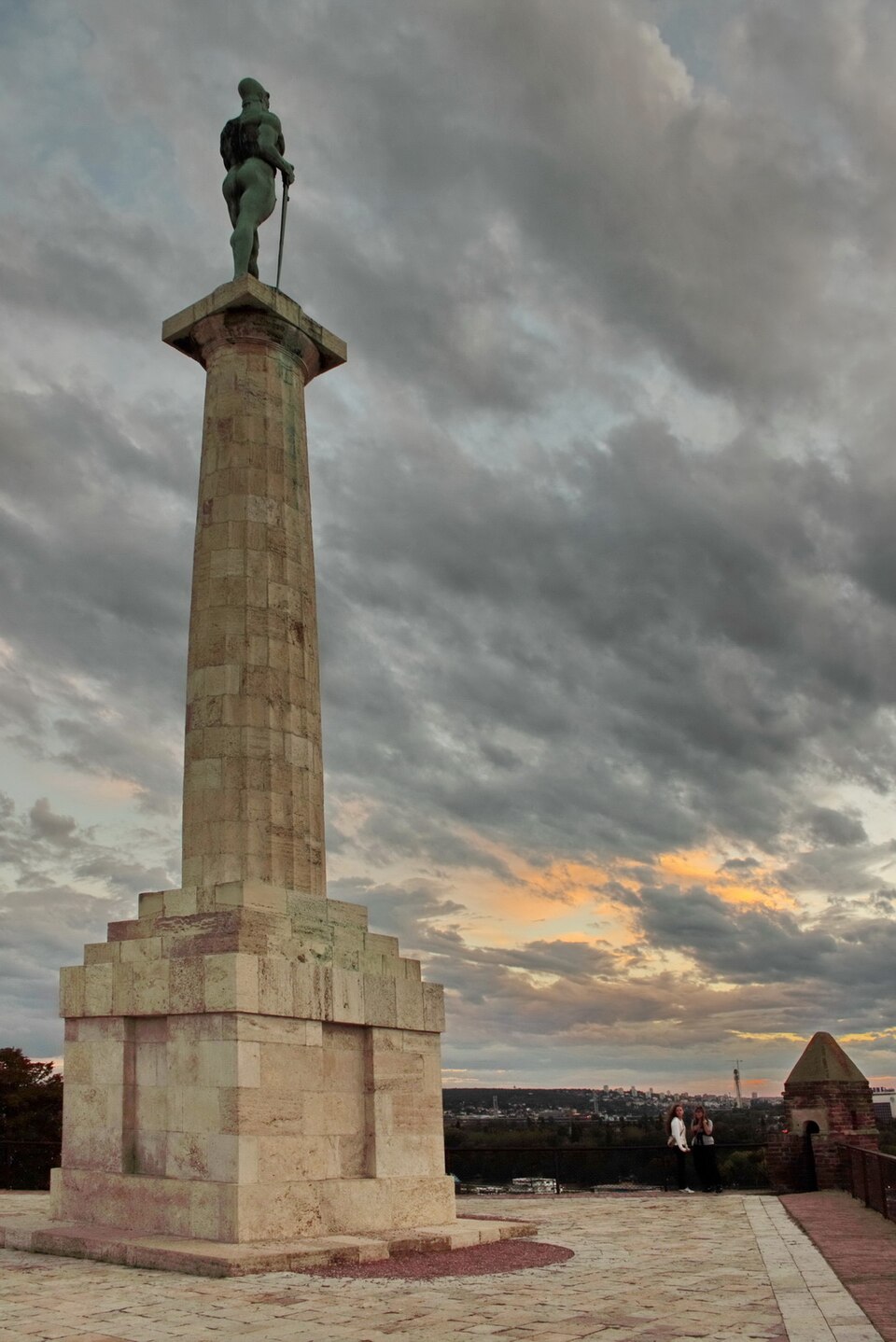
Pobednik, meaning The Victor, is a bronze statue by the Croatian sculptor Ivan Meštrović standing on the ramparts of Belgrade Fortress at the point where the Sava and Danube rivers meet. It was unveiled on 7 October 1928. The figure is a nude man 14 metres above his Doric-column pedestal, holding a falcon in his left hand and a sword in his right, read as symbols of peace and war.
The pedestal itself was designed by the architect Petar Bajalović. The bronze figure weighs about one tonne. Pobednik has become one of the fixed reference points of the Belgrade skyline from the river side, visible from boats and from the New Belgrade bank opposite the fortress.
Checked 2026-08-23 · Source
There is no interior to visit: Pobednik is a single outdoor bronze figure on a stone column, not a building. The composition itself carries the content worth reading on site — the falcon and the sword in the figure's two hands, and the plain Doric detailing of Petar Bajalović's pedestal beneath it.
The statue was originally conceived in 1913 as the centrepiece of a monumental fountain planned for Terazije Square, with an 8-metre basin, lions and bronze masks meant to represent five centuries of Ottoman occupation. The First World War and its costs ended that plan, and the fountain was never built; only the standing figure survived into the version erected at the fortress in 1928.
Checked 2026-08-23 · Source
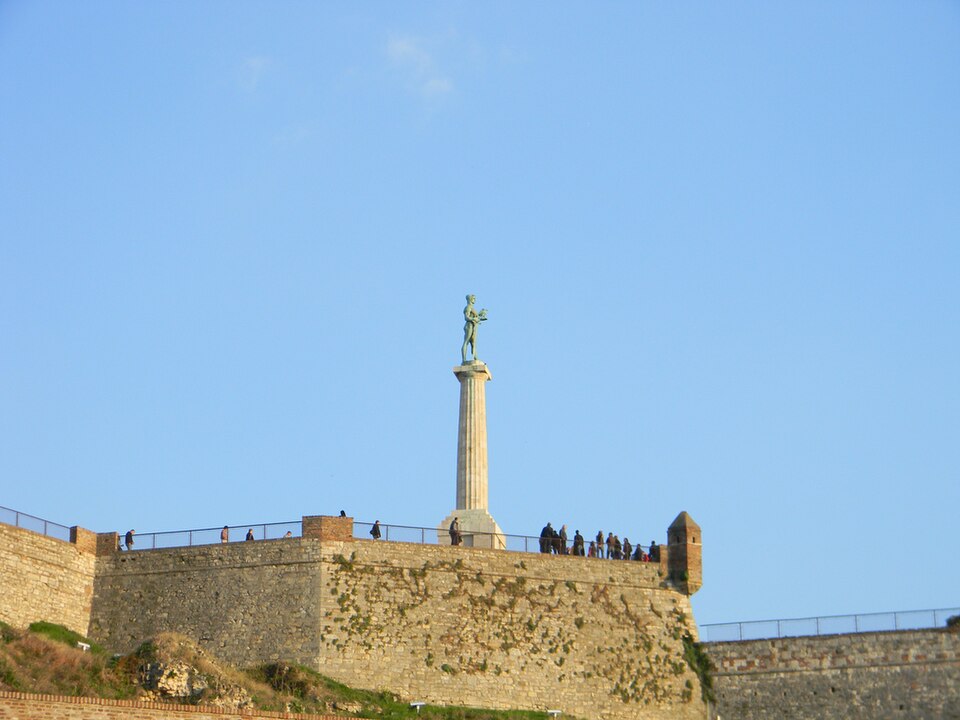
Pobednik itself takes only a few minutes to look at and photograph from the surrounding rampart, since it is a single monument rather than a site with rooms or exhibits. Most visitors see it as one stop on a longer walk across the Upper Town ramparts toward the King's Gate and the river viewpoint beside it.
Allow 10 to 15 minutes at the monument itself if reading the plaques and circling it for different angles, on top of whatever time is set aside for the fortress ramparts as a whole.
Checked 2026-08-23
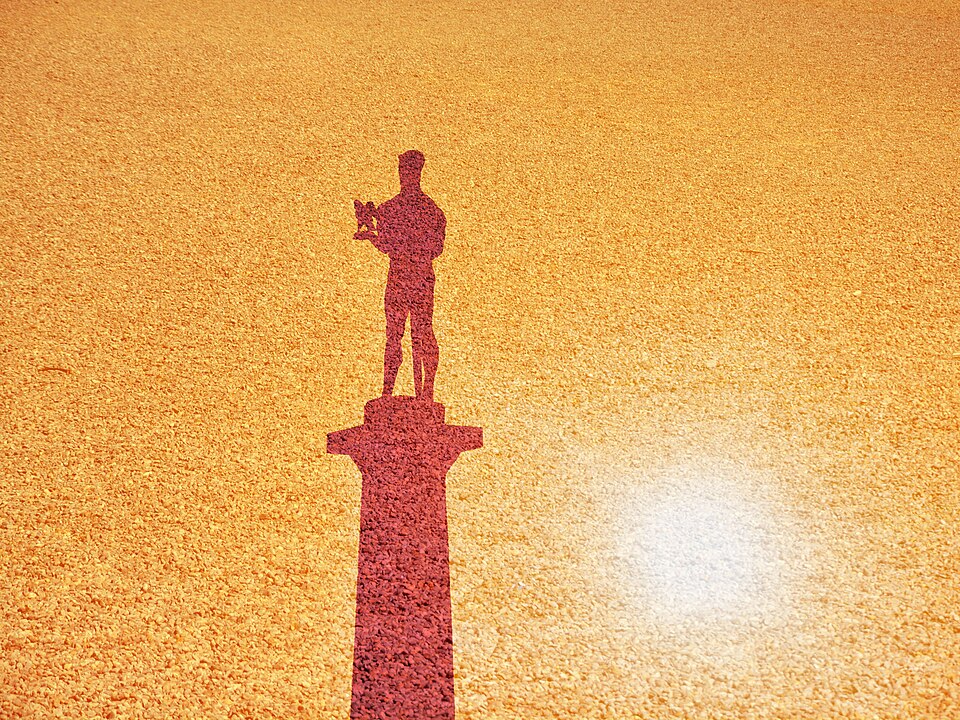
The monument stands in open air with unrestricted access, so timing a visit is about light and crowds rather than opening hours. Late afternoon puts the sun behind the statue from the river side, which back-lights the silhouette against the sky; a visitor wanting a lit front view should come in the morning instead.
The rampart around Pobednik is one of the fortress's busiest viewpoints at sunset, when visitors gather to watch the Sava and Danube confluence below, so arriving earlier avoids the densest crowds at the railing.
Checked 2026-08-23
Pobednik stands on the open ramparts of Belgrade Fortress, which carry no admission charge, so there is no ticket to see the statue itself. Current rates for any separately ticketed structures elsewhere in the fortress complex are not published on the sources this page uses and are not reproduced here.
No booking or timed entry applies to viewing the monument, since it sits in unenclosed public parkland rather than behind a gate.
Checked 2026-08-23

Pobednik sits on the southwest rampart of the fortress's Upper Town, near the King's Gate, reached by the same walk that leads to the rest of the fortress. Belgrade has no metro; visitors come on foot from the old town or by tram and trolleybus to the Kalemegdan stops nearby.
From Republic Square, the walk up Knez Mihailova and through the park to the ramparts takes roughly 15 to 20 minutes; the final approach to the statue itself is a short, mildly uphill walk along the rampart path from the main fortress gates.
Checked 2026-08-23

The rampart around Pobednik has a low parapet with a long drop toward the river confluence below, so supervising children close to the edge matters more here than elsewhere in the park. The stone paving underfoot is worn and uneven in places, which is worth minding in wet weather.
The statue's nudity caused a public controversy when it was first proposed for central Belgrade in 1927 — women's organisations and citizens objected to it standing in the city centre, which is the direct reason the city council relocated it to the fortress ramparts instead of Terazije Square. During restoration work in 2019 and 2020, conservators found more than 30 bullet and shrapnel holes in the bronze, evidence of the damage the monument absorbed over the 20th century; the statue was removed for that restoration in October 2019 and returned to its pedestal on 14 February 2020, with the work completed on 5 March 2020. There are no dress or conduct rules specific to the monument itself, since it stands in open parkland rather than a religious site.
Checked 2026-08-23 · Source

Photography of Pobednik from the rampart is unrestricted, and the monument is one of the most photographed viewpoints in Belgrade because it combines the statue with the river confluence in a single frame. A wide-angle shot from below the pedestal captures both the figure and the sky behind it.
Because the statue faces the river and is often photographed against the sky, a visitor shooting toward it in the middle of the day should expect a strongly backlit silhouette; shooting from the side, or waiting for early morning or late afternoon light, keeps the bronze detail of the falcon and the sword visible rather than lost to a dark outline.
Checked 2026-08-23
The Croatian sculptor Ivan Meštrović. The pedestal beneath it was designed by the architect Petar Bajalović.
It was unveiled on 7 October 1928, on the ramparts of Belgrade Fortress.
The bronze figure stands 14 metres above its column pedestal and weighs about one tonne.
It was originally planned for Terazije Square, but a 1927 public controversy over the nude figure led the city council to relocate it to the fortress ramparts instead.
The figure holds a falcon in its left hand and a sword in its right, read as symbols of peace and war respectively.
Yes. It was removed from its pedestal in October 2019, and conservators found more than 30 bullet and shrapnel holes in the bronze; it was returned on 14 February 2020 and the restoration was completed on 5 March 2020.
Loading the interactive map…
The interactive map could not be loaded.
Last updated:
Source: OpenStreetMap contributors, Wikidata ·