

1 min walk
Great Temple
- Must see
- Historic monument
Language · 11 published
Historic monument · Wadi Musa
| Monday | 06:30 – 17:00 |
|---|---|
| Tuesday | 06:30 – 17:00 |
| Wednesday | 06:30 – 17:00 |
| Thursday | 06:30 – 17:00 |
| Friday | 06:30 – 17:00 |
| Saturday | 06:30 – 17:00 |
| Sunday | 06:30 – 17:00 |
Checked 2026-08-31 · Source
Read from the OpenStreetMap access tags; anything not listed has no tag recorded.
Set the group type to family in the planner and the day window contracts to about three quarters of a solo day.
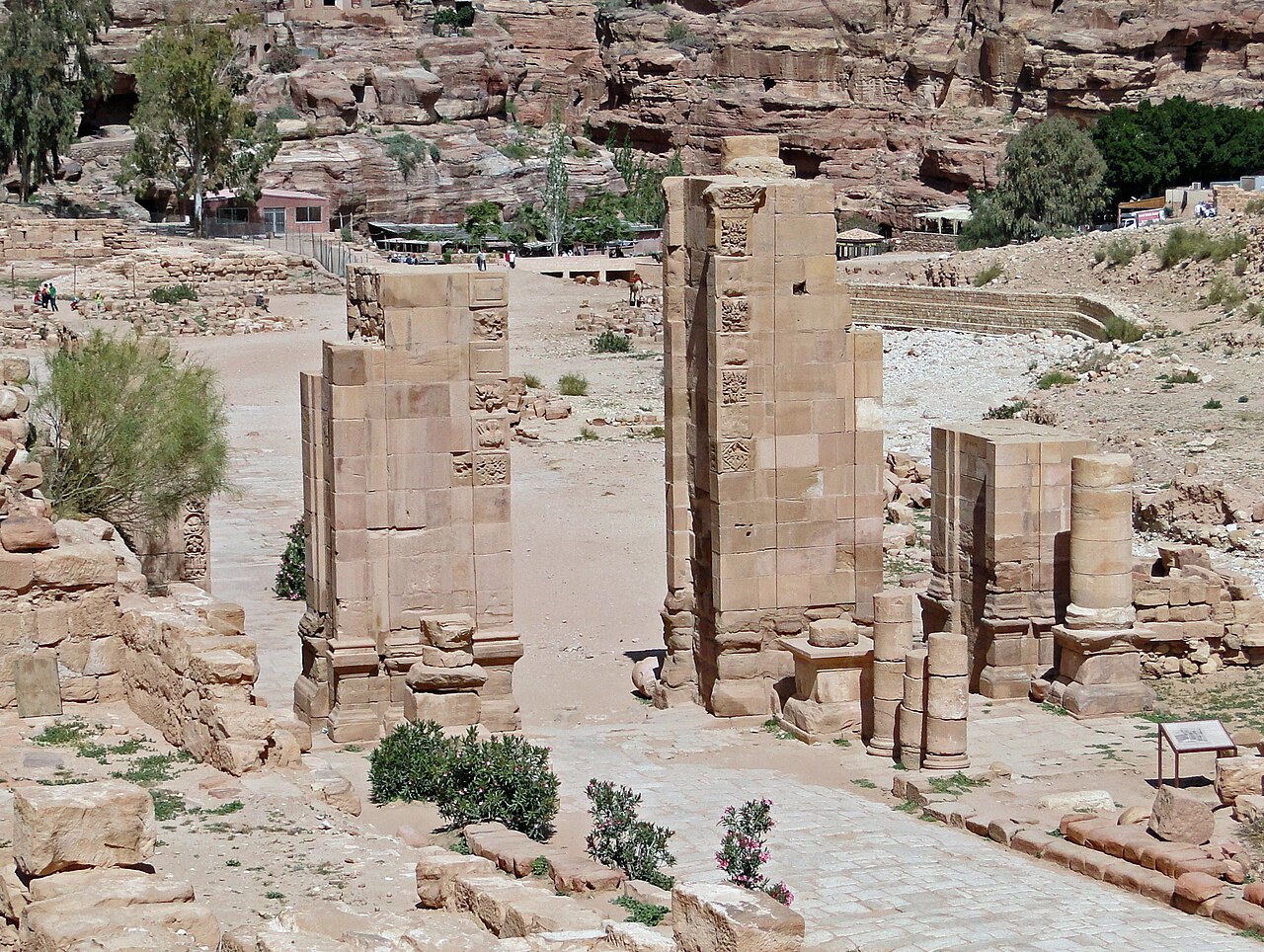
Temenos Gate is a monumental gateway within the Petra archaeological park in southern Jordan. It stands as a significant architectural feature along the ancient processional route through the city. The gate marks a transitional point in the urban layout of Petra, historically separating sacred and civic zones. Constructed in the Nabataean period and later modified, it reflects the layered history of the site. Visitors encounter the gate while traversing the main archaeological trail, where it serves as both a physical passage and a symbolic threshold within the ancient cityscape.
Checked 2026-08-26
The Temenos Gate structure consists of a substantial arched passage flanked by remains of architectural elements. The gate retains portions of its original Nabataean design alongside later Roman modifications, demonstrating the adaptive reuse characteristic of Petra's monuments. Surrounding the gate, visitors observe foundation walls, column bases, and fragmented decorative stonework. The immediate area includes paved surfaces and adjacent building remains that suggest the gate's integration into a larger complex. No interior chambers are accessible; the experience centers on passing through and examining the exterior fabric and contextual ruins from the surrounding archaeological zone.
Checked 2026-08-26
A visit to Temenos Gate typically requires ten to twenty minutes as part of a broader Petra itinerary. The gate functions as a waypoint rather than a standalone destination, with most visitors pausing briefly to observe its architecture and read any available signage. Those with specialized interest in Nabataean or Roman gateway design may spend additional time examining construction details and comparing phases of building. The duration depends entirely on individual pacing and whether visitors are passing through with a guide or conducting self-directed exploration of the archaeological trail.
Checked 2026-08-26
Temenos Gate is an open-air monument accessible whenever the park is open, with no separate entry restrictions. Early morning and late afternoon generally offer more comfortable temperatures for walking the site and softer light for viewing stonework details. Midday visits during warmer months can be strenuous due to sun exposure along the exposed trail. Seasonal variations in visitor density affect the experience, with spring and autumn typically drawing larger crowds to the overall park. Check the operator's own site for the travel date before relying on a schedule or fare.
Checked 2026-08-26
Access to Temenos Gate is included within the general admission to Petra archaeological park. Ticket options for Petra typically include single-day and multi-day passes purchased at the visitor center near Wadi Musa. International visitors should expect standard foreign tourist rates applicable throughout the park. No supplementary fee is collected specifically at Temenos Gate. Valid park admission must be carried while visiting, as checkpoint verification occurs along the main trail. Payment methods and precise fee structures should be confirmed through official Jordanian tourism channels before arrival. Check the operator's own site for the travel date before relying on a schedule or fare.
Checked 2026-08-26
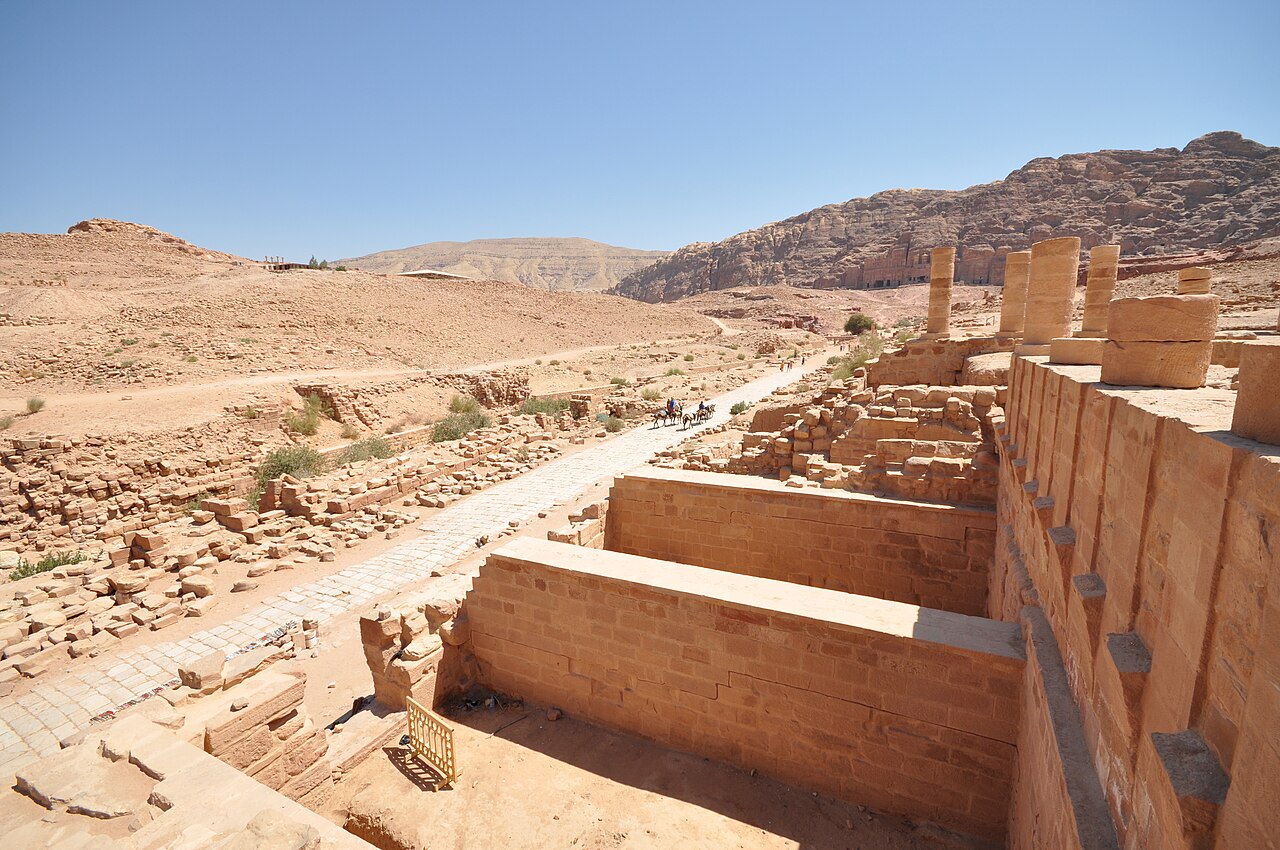
Temenos Gate lies along Petra's primary visitor trail, accessible on foot after entering through the Siq and passing the Treasury. The gate appears beyond the central colonnaded street area, requiring substantial walking from the park entrance. Visitors should anticipate uneven terrain, ascents, and descents throughout the route. Horse-drawn carriages and donkey transport are available for hire at various points, though arrangements and conditions vary. No motorized vehicle access reaches the gate directly. Sturdy footwear and adequate water are essential, as the trail offers limited shade and services between major landmarks within the archaeological zone.
Checked 2026-08-26
The terrain approaching and surrounding Temenos Gate features uneven stone surfaces, loose fragments, and variable footing that demand careful attention. No protective barriers separate visitors from archaeological fabric; touching or climbing on remains accelerates deterioration. Sun exposure is intense along this trail section with minimal natural shade. Animal transport operators nearby may approach visitors persistently. Water and refreshment availability is unpredictable beyond central zones, so self-sufficiency is prudent. The gate's structural condition, while stable in appearance, reflects centuries of weathering; visitors should maintain respectful distance and avoid entering restricted areas that may be demarcated by low barriers or signage.
Checked 2026-08-26
Temenos Gate presents photographic opportunities capturing its arched passage and textured stonework against the broader Petra landscape. Morning and late afternoon light accentuate the weathered surfaces and architectural contours. The gate's position along the trail allows for approach shots, frontal documentation, and contextual images including adjacent ruins. Tripod use may attract attention from site staff and should be discreet if employed. No specific photography restrictions are documented for this monument, though drone operation is prohibited throughout the archaeological park. Visitors should remain aware of pedestrian traffic while composing images, as the route through the gate remains an active passage for other visitors and any transport animals.
Checked 2026-08-26
No, Temenos Gate is included within the general admission to Petra archaeological park. No separate ticket is required to view or pass through the gate.
The gate functions as a passage along the trail, and visitors typically walk through or alongside it. Current access conditions should be observed on-site respecting any temporary restrictions.
The gate originates in the Nabataean period with later Roman modifications, though precise construction dates are Not recorded.
Dedicated guides for this single monument are not typical. Licensed Petra guides may discuss the gate as part of broader site tours.
The gate and surrounding trail section have minimal natural shade. Sun protection and adequate hydration are strongly recommended.
Permanent restroom facilities near this specific monument are Not recorded. Visitors should plan accordingly using central area facilities.
Loading the interactive map…
The interactive map could not be loaded.

Last updated:
Source: OpenStreetMap contributors ·