

1 min walk
Unfinished Tomb
- Must see
- Historic monument
Language · 11 published
Historic monument · Wadi Musa
قصر البنت
| Monday | 06:30 – 17:00 |
|---|---|
| Tuesday | 06:30 – 17:00 |
| Wednesday | 06:30 – 17:00 |
| Thursday | 06:30 – 17:00 |
| Friday | 06:30 – 17:00 |
| Saturday | 06:30 – 17:00 |
| Sunday | 06:30 – 17:00 |
Checked 2026-08-31 · Source
Read from the OpenStreetMap access tags; anything not listed has no tag recorded.
Set the group type to family in the planner and the day window contracts to about three quarters of a solo day.
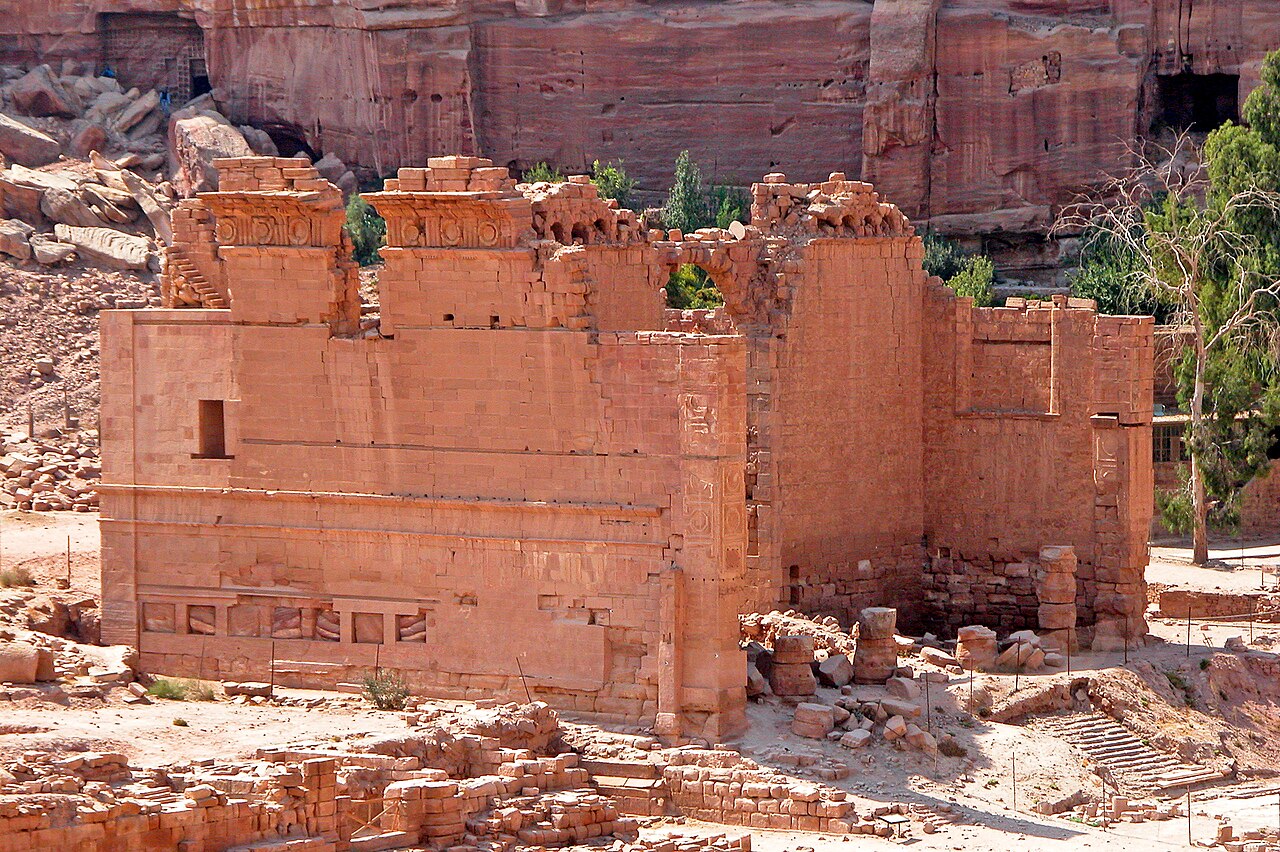
Qasr al-Bint, meaning Palace of the Daughter or Maiden, stands as one of Petra's most significant freestanding ancient structures. This well-preserved temple sits at the western end of the Colonnaded Street and dates to the first century BCE or first century CE. The Nabataean builders constructed this monumental religious complex with a distinctive raised podium and massive walls. Its survival amid Petra's largely rock-cut architecture makes it architecturally exceptional. The structure later saw Roman modification and Byzantine church conversion, reflecting Petra's evolving religious history across centuries of occupation and cultural change.
Checked 2026-08-26
The temple interior originally contained a cella, or sacred inner chamber, where cult statues and religious ceremonies took place. Visitors can observe the substantial stone walls, doorways, and the raised platform that formed the temple's sacred core. The structure once rose considerably higher than its present remains suggest. Archaeological evidence indicates multiple construction phases and later adaptations. The surrounding temenos, or sacred precinct, would have contained additional altars and ritual installations. The adjacent ruins include remains of domestic and commercial structures that supported temple activities, offering glimpses into the operational complexity of this major religious center.
Checked 2026-08-26
A thorough visit to Qasr al-Bint requires approximately thirty to forty-five minutes, though dedicated visitors may spend longer examining architectural details and contextual surroundings. The site rewards integration with the broader Petra visit rather than isolated examination. Most travelers encounter this monument during their progression through the ancient city center, typically after traversing the Siq and viewing the Treasury. The structure's location at the Colonnaded Street terminus positions it naturally within standard Petra touring routes. Visitors should allocate sufficient time to appreciate both the monument and its relationship to adjacent archaeological features and urban planning elements.
Checked 2026-08-26
Petra's general visiting patterns suggest early morning and late afternoon offer optimal conditions for experiencing Qasr al-Bint, as midday heat intensifies dramatically in this exposed location. The summer months bring extreme temperatures that challenge comfortable exploration. Winter visits may encounter occasional rainfall and cooler conditions. The structure lacks shade, making seasonal and daily timing consequential for visitor comfort. Religious and national holidays potentially affect site accessibility. Visitors should verify current operational status through official Jordanian tourism channels before finalizing travel arrangements to ensure accurate scheduling expectations. Check the operator's own site for the travel date before relying on a schedule or fare.
Checked 2026-08-26
Petra operates under a unified ticketing system covering the entire archaeological park rather than individual monument admissions. Ticket categories typically differentiate between single-day and multi-day access, with variable pricing for Jordanian nationals, residents, and international visitors. The Jordan Pass, available to tourists, frequently incorporates Petra admission alongside other heritage sites. Accommodation within Wadi Musa, the adjacent modern town, sometimes influences ticket validity periods. Visitors should consult official Petra authorities or authorized tourism providers for current fee structures, as pricing modifications occur periodically without extensive advance notification. Check the operator's own site for the travel date before relying on a schedule or fare.
Checked 2026-08-26
Qasr al-Bint occupies the western terminus of Petra's Colonnaded Street, accessible only by foot or animal transport within the archaeological zone itself. Visitors must first reach Petra's visitor center near Wadi Musa, approximately three kilometers distant, then proceed through the Siq gorge to emerge at the Treasury. From this iconic starting point, the route continues past the Street of Facades, the Theater, and along the Colonnaded Street. The entire walk from entrance to Qasr al-Bint extends several kilometers over uneven ancient paving and sand, demanding appropriate footwear and physical preparation for substantial walking distances.
Checked 2026-08-26
The exposed position of Qasr al-Bint eliminates natural shade, creating significant sun exposure and dehydration risks during warmer periods. Uneven ground surfaces throughout the approach and immediate vicinity present trip hazards requiring attentive foot placement. The structure's elevated platform edges lack protective barriers in all locations. Animal transport operators in the surrounding area may approach visitors persistently. Limited emergency services exist within the archaeological zone itself. Visitors should carry adequate water supplies, sun protection, and maintain awareness of personal physical limits given the substantial walking distances required to reach and depart from this monument location.
Checked 2026-08-26
Qasr al-Bint presents strong photographic subjects due to its freestanding architectural form and relative isolation from cliff faces that dominate other Petra compositions. Morning light illuminates the temple's main facade favorably, while afternoon conditions create different shadow patterns across the stonework. The open surroundings permit varied angles and distances for capturing the complete structure. Adjacent ruins and the Colonnaded Street approach offer contextual shots establishing the monument's urban setting. Drone usage requires specific authorization and is generally prohibited without permits. Tripod employment may attract security attention; visitors should observe any posted restrictions or staff guidance regarding equipment.
Checked 2026-08-26
The name translates to Palace of the Daughter or Maiden, though the structure functioned as a temple rather than a royal residence.
Nabataean builders constructed this temple during the first century BCE or first century CE, with later Roman modifications.
No, it is one of Petra's few major freestanding constructed monuments rather than rock-cut architecture.
The interior cella and raised platform are accessible for examination, though original upper levels have not survived.
The temple served Nabataean religious cults initially, later converted to Byzantine Christian church use.
It ranks among Petra's headline visitor priorities due to its architectural uniqueness and historical significance as a major religious center.
Loading the interactive map…
The interactive map could not be loaded.
Last updated:
Source: OpenStreetMap contributors, Wikidata ·